Trying to get rid of bermuda?
This guide is for growing bermuda as your lawn. If it is creeping into a fescue or bluegrass lawn and you want it gone, you need a control plan instead. Read the bermudagrass weed guide
How to identify Bermuda Grass
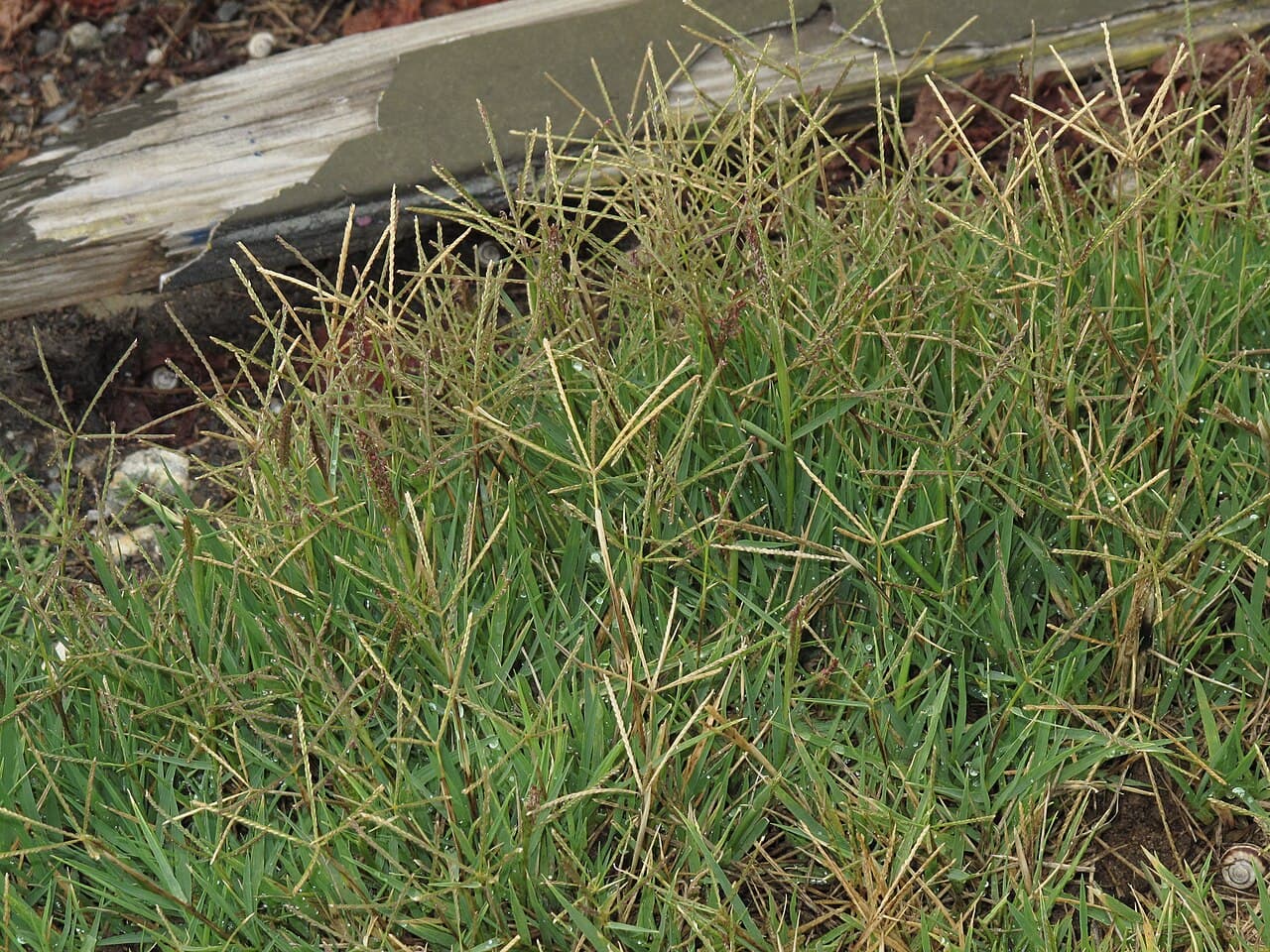
A healthy bermuda lawn is low and dense, with narrow blades that end in a sharp point. Runners creep across the surface and under the soil, rooting as they go, which is why bermuda turns up in flower beds and along walks. Seeded common bermuda tends to be lighter green, thinner and coarser than hybrid sod. In most areas it turns straw-brown after frost and stays that way until spring.
- Hairy ligule
- Bend a leaf back from its stem. Where the blade meets the sheath there is a fringe of short white hairs, not a papery membrane.
- Bird’s-foot seedhead
- Three to seven thin spikes fan out from the top of a single stalk. Common types often flower heavily.
- Stolons and rhizomes
- It spreads by stolons on the surface and rhizomes underground, and both root at the joints. Both kinds of stem carry hard, pointed scales.
- Narrow, pointed blades
- Blades are flat, about 1/16 to 1/8 inch wide, and taper to a sharp point. They can be smooth or lightly hairy.
- Folded new leaf
- Split a shoot open and the youngest leaf is folded in half lengthwise. Zoysia’s youngest leaf is rolled like a tube.
- Winter color
- Leaves and stems turn straw-brown as the grass goes dormant in late fall or early winter, then green up as the soil warms in spring.
Photo: Robert Flogaus-Faust · CC BY 4.0 · via Wikimedia Commons
Not sure it's Bermuda Grass?
Snap a close-up of a few blades — our free AI identifies your grass in seconds. No app needed.
Patch & repair picks for Bermuda Grass
Seeded bermuda fills bare ground fast. Many bermuda lawns are sod-only hybrids, though, so for a seamless match on an established lawn use sod or plugs from a local farm.
Paid links. As an Amazon Associate, MeasureLawn earns from qualifying purchases.

Scotts EZ Seed Patch & Repair Bermudagrass
Patch & repairBeginner friendlyBermudagrass seed pre-mixed with a mulch that expands around the seed, a controlled-release fertilizer, a tackifier that helps keep seed from washing away, and a seedling protectant. Bermudagrass spreads by runners, so a seeded spot knits back into the lawn around it as it establishes.

Pennington Smart Patch Bermudagrass Mix
Patch & repairBeginner friendlyBermudagrass and chewings fescue seed pre-mixed with fertilizer, mulch, microbials with organic matter, and a water-soluble tackifier that helps hold seed in place on slopes and in rain. The mulch turns a lighter color as it dries, so you can see when to water.

Hancock's Highlander Turf Bermuda Grass Seed (Hulled & Coated)
Bermuda seedHighlander turf bermuda from Hancock Seed, bred to handle wear, heat and drought. A 10 lb bag covers up to 5,000 sq ft.

Outsidepride Oasis Bermuda Grass Seed
Bermuda seed
Scotts Turf Builder Starter Food for New Grass
For new grassBeginner friendly
Scotts Turf Builder Lawn Soil (1.5 cu ft)
Fills bare spotsBeginner friendlyEnriched lawn soil for topdressing and leveling. Contains fertilizer.
How to fix bare patches in Bermuda Grass
- 1Fix the cause first. Bermuda thins in shade, on compacted paths and in spots that stay wet, and a patch will fail again if nothing changes.
- 2Wait for warm weather. Repairs take hold best from late spring through midsummer, while the grass is actively growing. In the upper South, sow seed by early June so seedlings are established before winter.
- 3For small bare spots, loosen the soil and let the surrounding runners creep in. A light feeding and regular watering in summer usually close the gap without replanting.
- 4For larger areas, match the grass you have. Patch a hybrid lawn with sod, sprigs or plugs of the same variety, because seed grows common bermuda that will look different.
- 5If you seed, rake it in lightly and keep the surface damp with light waterings several times a day until it sprouts.
- 6Keep new sod or sprigs moist until they root, then water deeply and less often. Start mowing as soon as the new grass reaches mowing height to push it to spread sideways.
Working out how much seed to buy? The grass seed calculator does the math for your square footage.
When to plant or repair Bermuda Grass
Best time: May–June. Also workable: April, July.
- Grows from
- Seed, sod, sprigs or plugs
- Soil temperature
- 65–70°F and rising
- Seed rate, new lawn
- 1–2 lb hulled seed per 1,000 sq ft (more if coated)
- Sprouts in
- 7–10 days in warm soil
Only common and improved common types, such as Riviera and Yukon, are grown from seed. Hybrids such as Tifway 419, TifTuf and Latitude 36 are sterile, and Celebration is not sold as seed, so those go in as sod, sprigs or plugs.
In Australia or New Zealand? The seasons flip — shift these months by six, or see the Southern Hemisphere lawn calendar.
Bermuda Grass care at a glance
- Mowing height
- 1–2 in
- Water
- About 1 inch per week in summer
- Sun
- Full sun (6+ hours minimum)
- Soil pH
- 6.0–7.0
- Fertilizer
- 3 lb nitrogen per 1,000 sq ft a year
- Growth habit
- Stolons and rhizomes
- Texture
- Medium
- USDA zones
- 7-11
How it holds up
Mowing height by season
| Spring | Summer | Fall | Winter |
|---|---|---|---|
| 1"–1.5" | 1"–1.5" | 1.5"–2" | Dormant |
Varieties you'll see
Want these turned into a month-by-month schedule for your yard? Build a free lawn plan.
Bermuda Grass pros and cons
Strengths
- Stands up to heavy foot traffic and recovers quickly from wear
- Handles heat, drought and salt well
- Spreads fast, so damaged areas fill back in
- Common and improved common types can be started from seed
- Dense, healthy turf resists weed invasion
Weaknesses
- Very poor in shade; thins under trees and beside buildings
- Invades flower beds, walks and borders and is hard to remove
- Brown for months while dormant in winter
- Builds thatch quickly and may need mowing twice a week at peak growth
- Needs more fertilizer than zoysia or centipede to stay dense
- The finest hybrids are sold only as sod or sprigs
Problems to watch for
Where Bermuda Grass grows best
Bermuda is a standard sunny lawn grass across the Southern US, from Virginia and Tennessee south to Florida and west through Texas to California. Cold-hardy varieties now reach well into the transition zone, including Kentucky. In Australia the same species is called couch and is commonly grown for lawns and sports turf.
A common lawn choice in
Commonly confused with
Zoysia blades feel stiff and have upright hairs on the upper surface, and the youngest leaf is rolled rather than folded. Its seedhead is a single short spike, not a spray of thin spikes.
Crabgrass is a summer annual with wider, often hairy blades and a papery membrane where the blade meets the stem. It dies with the first frost, while bermuda has a fringe of hairs there and comes back each spring.
Nimblewill
Nimblewill looks similar and also creeps along the surface, but it has a short papery membrane where the blade meets the stem instead of bermuda’s fringe of hairs.
Know your grass? Put it to work →
Get a free 12-month plan built for Bermuda Grass
Measure your yard on a satellite map in 30 seconds. We'll build a care schedule for bermuda grass in your climate — mowing height, fertilizer, seed and weed control, with exact product amounts.
Measure my lawn — it's free →Bermuda Grass FAQ
Will Bermuda grass grow in shade?
Not well. Bermuda needs full sun and turns thin and weedy in medium to heavy shade, such as under trees or beside buildings. Varieties like Celebration, TifGrand and TifTuf cope with a little more shade than others, but none are truly shade-tolerant. For shady spots, zoysia or St. Augustine are better choices where they grow.
Can you grow Bermuda grass from seed?
Yes, but only common and improved common types such as Riviera, Yukon and Princess 77. Hybrids like Tifway 419, TifTuf and Latitude 36 are sterile, and Celebration is sold only as sod, sprigs or plugs. Sow seed in late spring once the soil has warmed, and keep the surface damp until it sprouts.
Why does Bermuda grass turn brown in winter?
It goes dormant. Cold weather stops this warm-season grass from growing, so the leaves turn straw-brown until the soil warms again in spring. The roots and runners are still alive underneath. Some homeowners overseed with ryegrass in fall for winter color, and it pays to hold off on fertilizer until the lawn has fully greened up.
How do I keep Bermuda grass out of flower beds?
Keep a sharp edge along the beds and pull runners before they root. Wood-chip mulch alone will not stop it, because runners push up through it; landscape fabric underneath helps if the sheets overlap with no gaps. Stem pieces left in moist soil can root again, so bag what you pull.
How fast does Bermuda grass spread?
Fast, as long as it has sun and summer heat. Plugs set 1 to 2 feet apart can cover the ground in about three to nine months, and small bare spots in an established lawn usually fill in from the edges during the growing season. Regular water and a light feeding while it is actively growing speed things up.
Other warm-season grasses

Sources
- UF/IFAS Extension: Bermudagrass for Florida Lawns (ENH19)
- University of Tennessee Extension: Bermudagrass (W159-A)
- NC State TurfFiles: Bermudagrass
- University of Arkansas Extension: Establishing Seeded Bermudagrass (MP477)
- UC IPM Pest Notes: Bermudagrass
- UGA CAES Field Report: TifTuf Bermuda grass ideal for home lawns
- Penn State Extension: Lawn and Turfgrass Weeds: Nimblewill
More free lawn tools:
Every lawn grass•Photo grass identifier•Grass seed calculator•Weed guide•Lawn care calendar