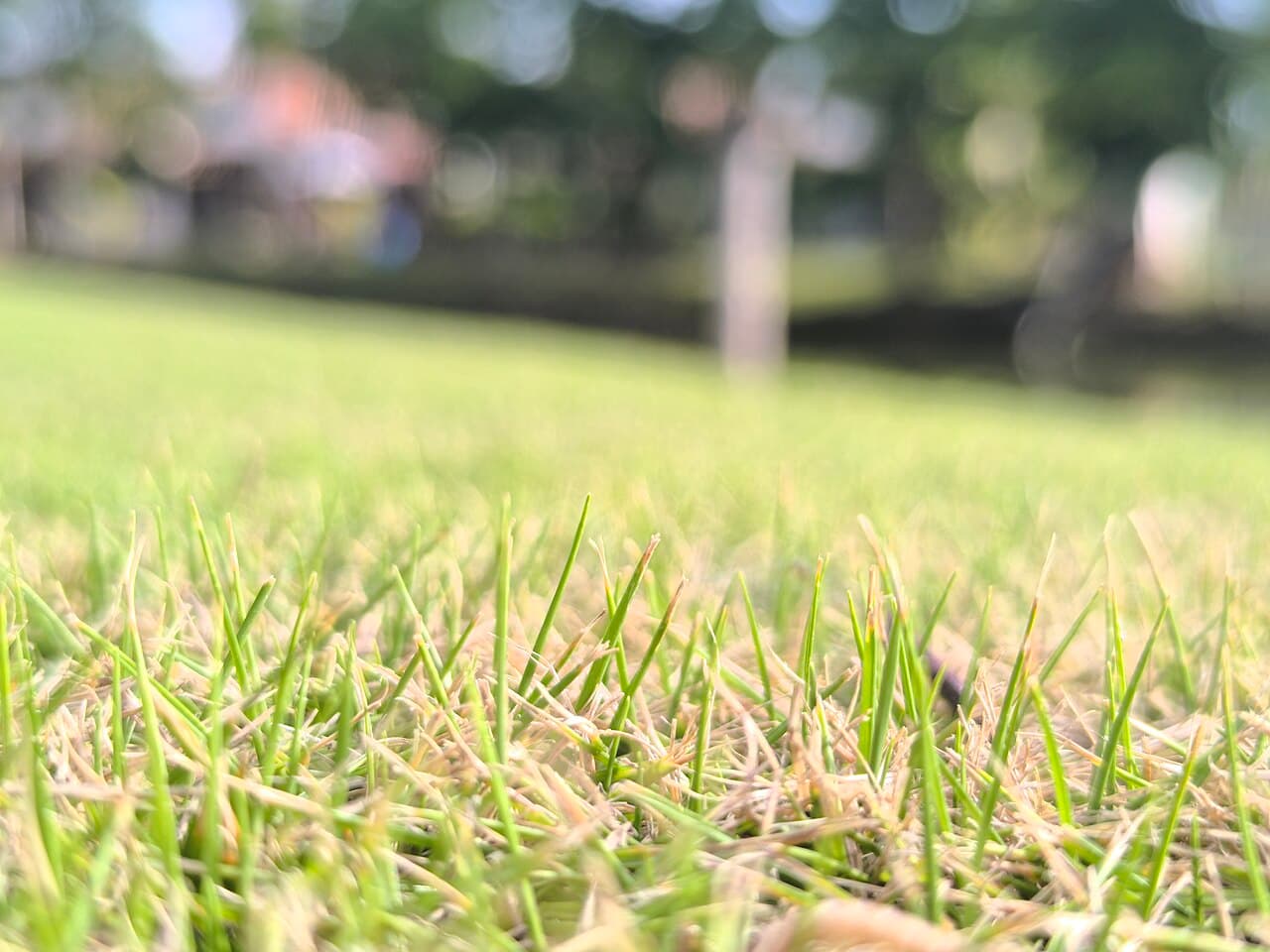
Know which zoysia you have
Japanese lawngrass (Zoysia japonica) has the widest blades, is the most cold-hardy and is the only zoysia sold as seed. Manilagrass (Z. matrella) is finer and denser and handles shade and salt better, but it is less winter-hardy. Mascarenegrass (Z. tenuifolia) is the finest and least cold-hardy. Patch with the same type you already have.
How to identify Zoysia Grass
Zoysia forms a dense, even turf that feels thick and firm underfoot. Its blades are stiff and sharp-tipped and stand up straight from the runners, which packs the lawn tightly. Japanese lawngrass types such as Meyer and Zenith have the widest blades, while Manila types such as Zeon are finer and denser. It turns golden-brown when it goes dormant in late fall.
- Rolled new leaf
- Split a shoot open and the youngest leaf is rolled like a tube inside the sheath. Bermuda, St. Augustine and centipede all fold theirs flat.
- Stiff, hairy blades
- Blades feel stiff when you run a hand across them and have fine hairs standing up on the upper surface. The tips are sharply pointed.
- Ligule
- A short fringe of hairs sits where the blade meets the sheath, and a small tuft of hairs may show at the throat of the sheath.
- Upright shoots
- Leaves and stems rise at close to a right angle from the runners, which is what makes the turf so dense.
- Runners
- It spreads by both stolons on the surface and rhizomes underground, but far more slowly than bermuda or St. Augustine.
- Seedhead
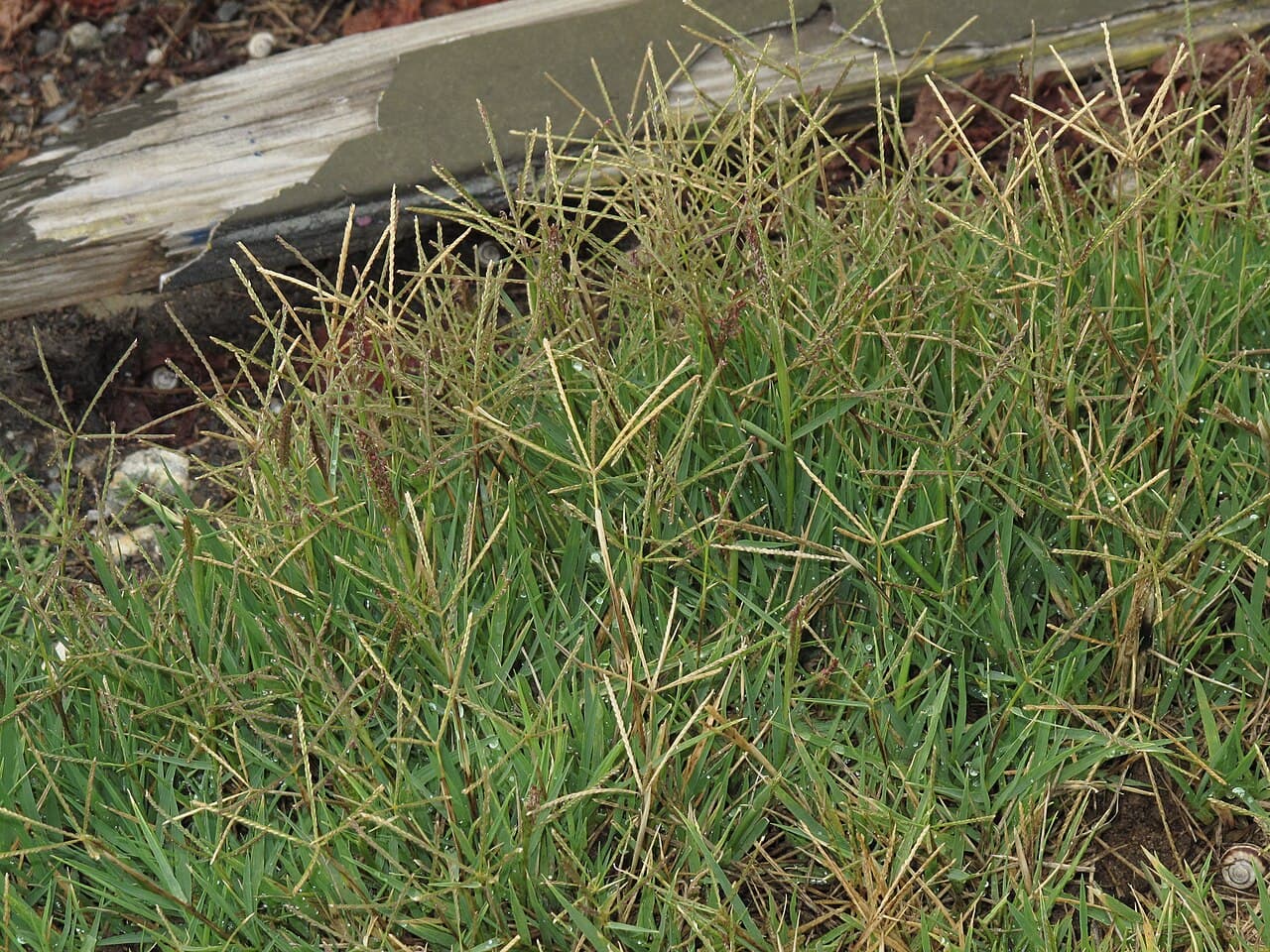
- A short, narrow spike on its own stalk, with seeds attached one after another along it. There is no bird’s-foot spray like bermuda’s.
- Width by species
- Japanese lawngrass has the widest blades and Manilagrass is finer. Mascarenegrass is the finest of all and tends to grow in puffy mounds.
Photo: RatUnderground · CC BY-SA 3.0 · via Wikimedia Commons
Not sure it's Zoysia Grass?
Snap a close-up of a few blades — our free AI identifies your grass in seconds. No app needed.
Seed & repair supplies for Zoysia Grass
Zoysia seed is slow and only comes in a few types. Most zoysia lawns are sod-grown varieties, so for a seamless patch on an established lawn use sod or plugs.
Paid links. As an Amazon Associate, MeasureLawn earns from qualifying purchases.
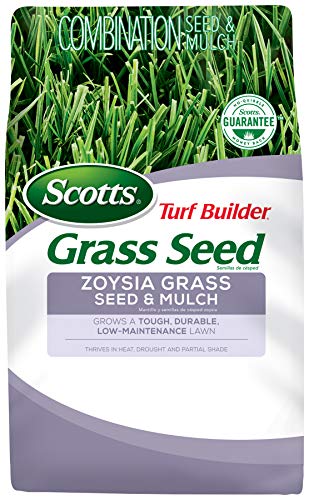
Scotts Turf Builder Zoysia Grass Seed & Mulch
Zoysia seedBeginner friendly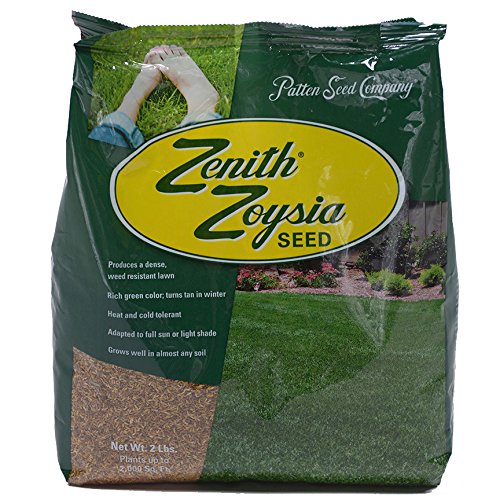
Zenith Zoysia Grass Seed (by Patten Seed)
Zoysia seed
Scotts Turf Builder Starter Food for New Grass
For new grassBeginner friendly
Scotts Turf Builder Lawn Soil (1.5 cu ft)
Fills bare spotsBeginner friendlyEnriched lawn soil for topdressing and leveling. Contains fertilizer.
How to fix bare patches in Zoysia Grass
- 1Fix the cause first. Zoysia recovers slowly, so shade, thick thatch, poor drainage or large patch disease will undo a repair.
- 2Plan repairs for late spring to early summer, once the lawn has fully greened up and is growing.
- 3Use sod or plugs of the same variety so the patch matches. Seed only makes sense if the lawn is a seeded type such as Zenith or Compadre.
- 4Loosen the soil, clear out dead thatch and set sod pieces level with the lawn, or space plugs closely. The closer the plugs, the faster they cover.
- 5Keep the patch moist until it roots, then water deeply and less often. Plugs usually take about two growing seasons to knit together, and longer when spaced widely.
- 6Feed at normal rates only. Heavy feeding builds thatch in zoysia.
Working out how much seed to buy? The grass seed calculator does the math for your square footage.
When to plant or repair Zoysia Grass
Best time: May–June. Also workable: April, July.
- Grows from
- Sod, plugs, sprigs or seed
- Soil temperature
- 70°F and rising
- Seed rate, new lawn
- 1–2 lb per 1,000 sq ft (2–3 lb if coated)
- Sprouts in
- 10–21 days
Most zoysias are sold only as sod, plugs or sprigs. Seed exists only for a few Japanese lawngrass types, such as Zenith and Compadre; it sprouts slowly and needs warm soil, steady moisture and light, so press it in rather than covering it.
In Australia or New Zealand? The seasons flip — shift these months by six, or see the Southern Hemisphere lawn calendar.
Zoysia Grass care at a glance
- Mowing height
- 1–2 in
- Water
- 0.5 to 1 inch per week
- Sun
- Full sun to light shade (6–8 hours ideal)
- Soil pH
- 6.0–7.0
- Fertilizer
- 2 lb nitrogen per 1,000 sq ft a year
- Growth habit
- Rhizomes and stolons
- Texture
- Medium
- USDA zones
- 5-11
How it holds up
Mowing height by season
| Spring | Summer | Fall | Winter |
|---|---|---|---|
| 1"–2" | 1.5"–2" | 1.5"–2" | Dormant |
Varieties you'll see
Want these turned into a month-by-month schedule for your yard? Build a free lawn plan.
Zoysia Grass pros and cons
Strengths
- Very dense turf that holds up well to foot traffic
- More shade-tolerant than bermuda, especially the fine-bladed types
- Good heat, drought and salt tolerance
- Survives dry spells by going dormant, then greens up again after rain
- Needs less fertilizer than bermuda
- Japanese lawngrass types are hardy enough for transition-zone winters
Weaknesses
- Slow to establish and slow to recover from damage
- Builds thatch, especially when overfed
- Most varieties are sod or plugs only, and seed choices are few
- Loses density in medium to heavy shade
- Fine Manila and Mascarene types are less cold-hardy
- Brown from late fall until it greens up in spring
Problems to watch for
Where Zoysia Grass grows best
Zoysia is grown from Florida and Texas up through the transition zone, including Tennessee and North Carolina. Cold-hardy Japanese lawngrass types such as Meyer handle transition-zone winters, while fine-bladed Manila and Mascarene types need milder winters and do best farther south.
A common lawn choice in
Commonly confused with
Bermuda blades are softer with no upright hairs on top, and its youngest leaf is folded, not rolled. Its seedhead is a spray of three or more thin spikes.
Centipede is a lighter apple-green, its youngest leaf is folded, and its hairs sit only along the blade edges near the base. It spreads by surface runners alone, with no rhizomes.
Nimblewill
Nimblewill often invades zoysia lawns and can blend in, but it has a short papery membrane where the blade meets the stem instead of a fringe of hairs.
Know your grass? Put it to work →
Get a free 12-month plan built for Zoysia Grass
Measure your yard on a satellite map in 30 seconds. We'll build a care schedule for zoysia grass in your climate — mowing height, fertilizer, seed and weed control, with exact product amounts.
Measure my lawn — it's free →Zoysia Grass FAQ
Can you grow zoysia grass from seed?
Yes, but only a few types. Seed is sold for some Japanese lawngrass varieties, such as Zenith and Compadre. Most popular zoysias, including Meyer, Empire, Zeon and Emerald, are sold only as sod, plugs or sprigs. Seed is slow: it can take two to three weeks to sprout, and it needs warm soil, steady moisture and light, so press it in rather than covering it.
How long does it take zoysia plugs to fill in?
Usually about two growing seasons, and sometimes three or four. Plugs set about 6 inches apart cover fastest; at 12 inches apart, complete cover often takes three years. Plant in late spring so the plugs get a full summer of growth, keep them watered, and pull weeds between them until they knit together.
Will zoysia grass grow in shade?
It handles light shade better than bermuda, but it thins out in medium to heavy shade. Fine-bladed types such as Zeon, Geo and Emerald hold up better in shade than Meyer or the seeded varieties Zenith and Compadre, which are not meant for moderate to heavy shade. No zoysia will thrive under dense trees.
What is the difference between Zoysia japonica and Zoysia matrella?
Zoysia japonica has wider blades, spreads faster and is the most cold-hardy zoysia. Zoysia matrella, or Manilagrass, is finer and denser with better shade and salt tolerance, but it is less winter-hardy and slower to spread. Japonica suits the transition zone; matrella is a better fit farther south.
Why is my zoysia grass turning brown?
In late fall it is normal winter dormancy, and the lawn greens up again in spring. In summer, brown zoysia is often drought dormancy, which can set in within a week or two without water. Roughly circular brown patches with orange or bronze edges in spring or fall point to large patch disease.
Other warm-season grasses
Sources
- UF/IFAS Extension: Zoysiagrass for Florida Lawns (ENH11)
- University of Tennessee Extension: Zoysiagrass (W159-H)
- Clemson HGIC: Zoysiagrass
- NC State TurfFiles: Zoysiagrass
- NC State Extension: Zoysiagrass Lawn Maintenance Calendar
- NC State Extension: Carolina Lawns
- University of Arkansas: Establishing Seeded Zoysiagrass on Lawns and Golf Courses (MP476)
- University of Missouri Extension: Establishment and Care of Zoysiagrass Lawns (G6706)
More free lawn tools:
Every lawn grass•Photo grass identifier•Grass seed calculator•Weed guide•Lawn care calendar