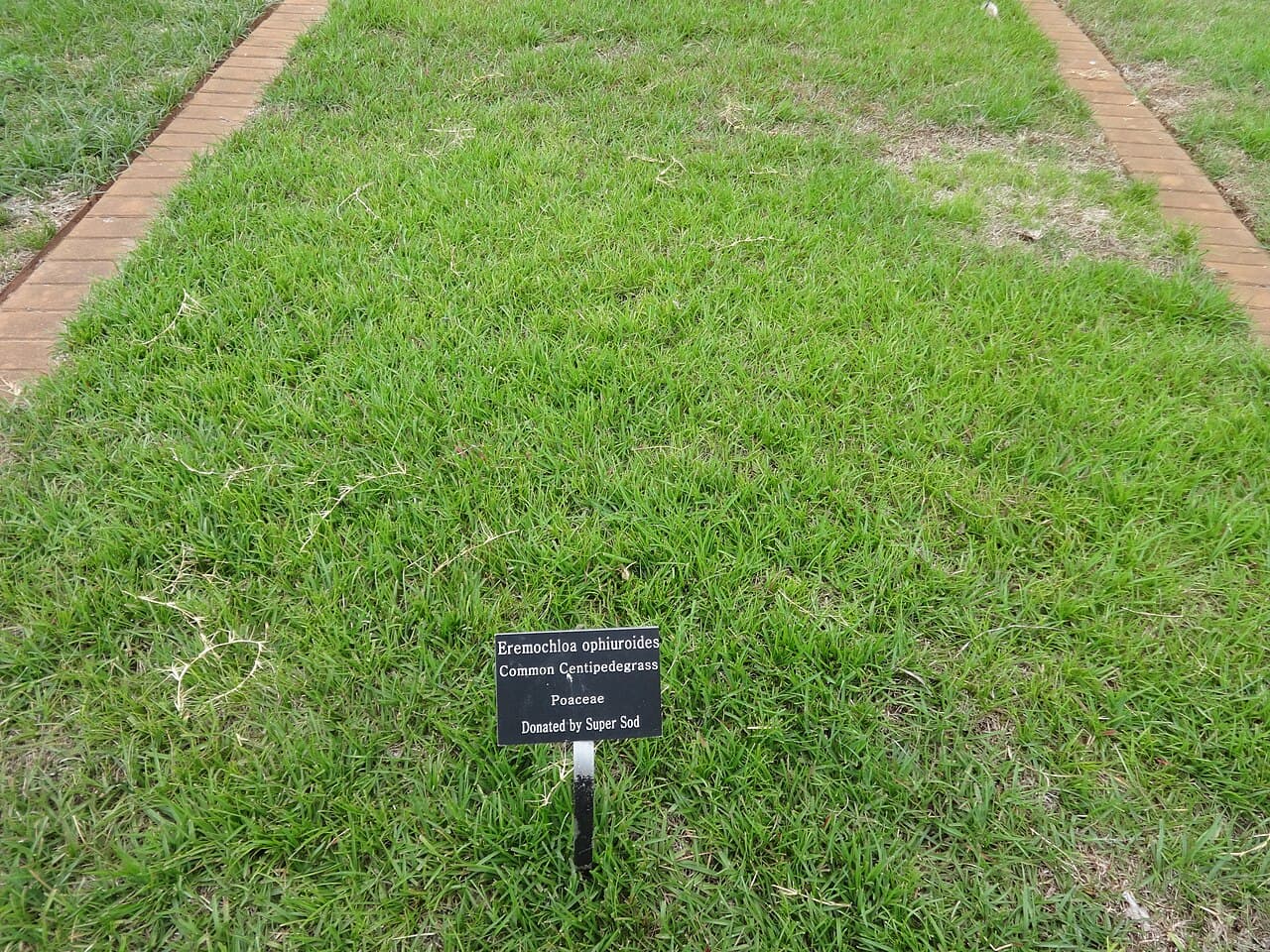
Too much fertilizer can kill centipede
Feeding centipede like a bermuda or fescue lawn is a leading cause of centipede decline. Keep feeding light, skip lime unless a soil test calls for it, and do not chase a darker green color.
How to identify Centipede Grass
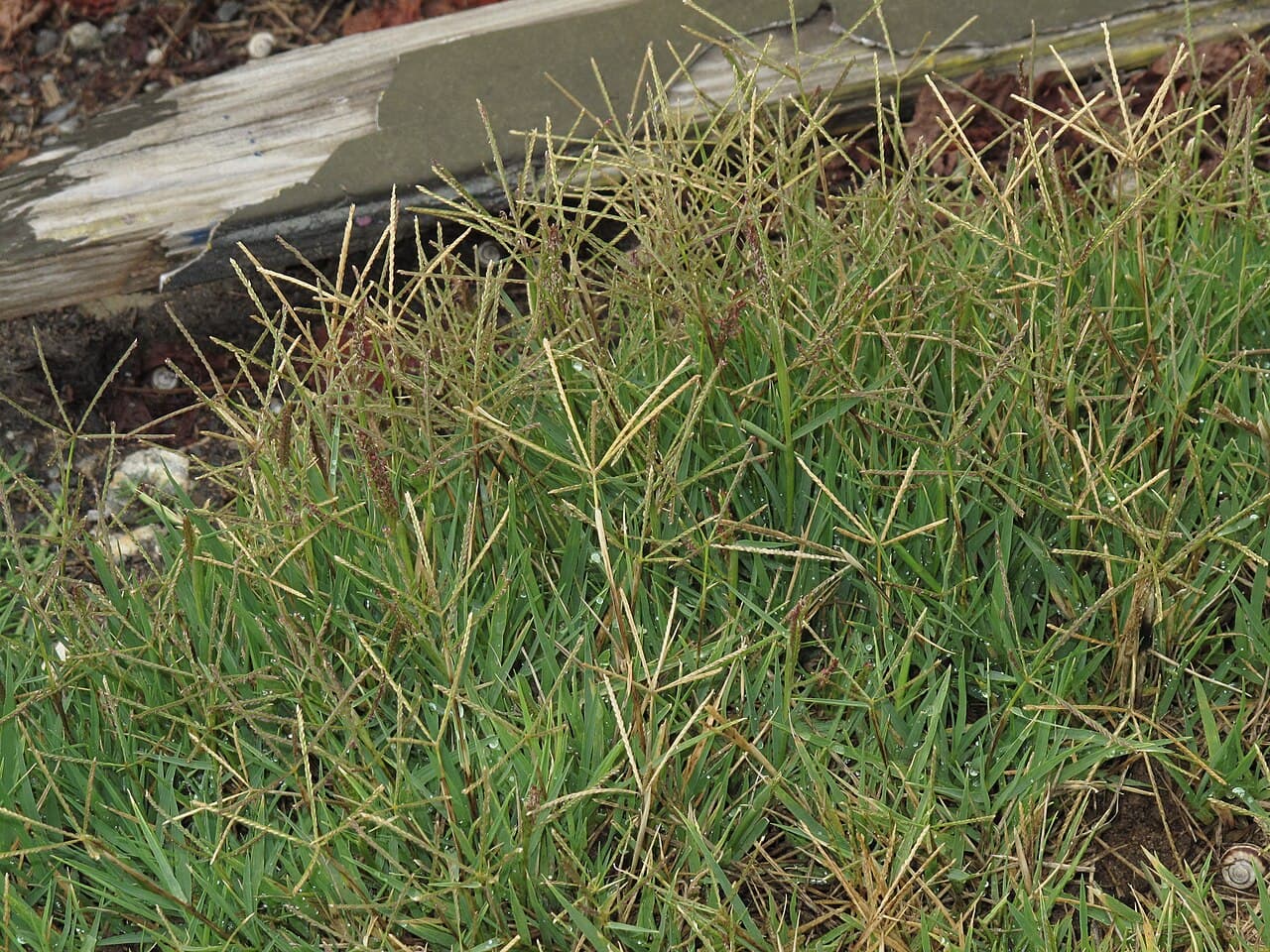
Centipede makes a low, medium-textured lawn with a light apple-green color. It spreads slowly by short, thick runners that look a little like centipedes, which is how it got its name. It is naturally paler than most lawn grasses, and pushing it darker with fertilizer is a common cause of centipede decline.
- Light apple-green color
- Even a healthy centipede lawn is paler than bermuda, zoysia or St. Augustine.
- Hairy blade edges
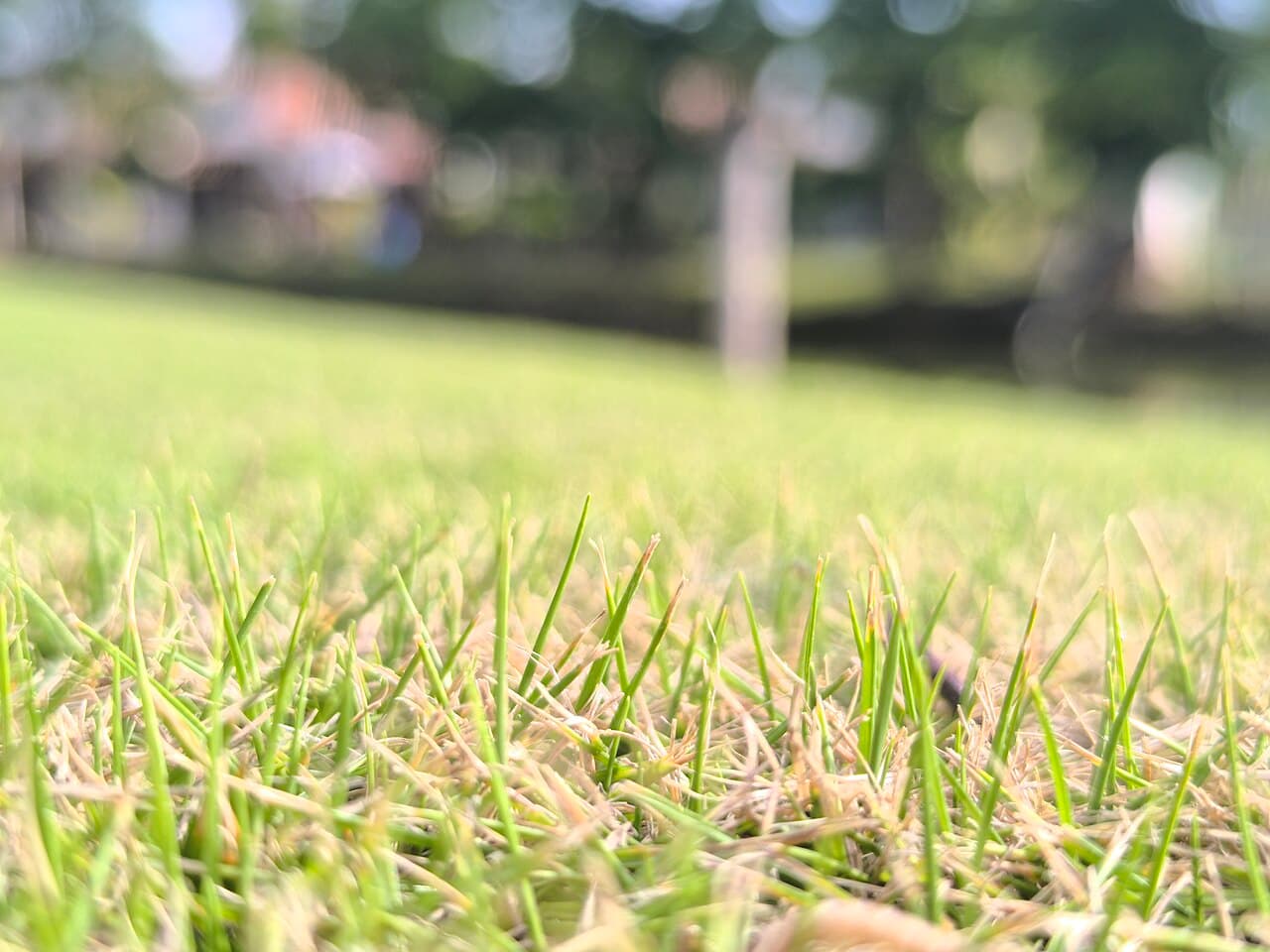
- Blades are smooth on the surface but have small hairs along the edges near the base. Carpetgrass, a close lookalike, lacks these hairs.
- Short, thick runners
- It spreads only by stolons on the surface, which are short and stout. It has no underground rhizomes.
- Leaf shape
- Medium-width blades, about 1/8 to 3/16 inch wide, with a boat-shaped or pointed tip. The youngest leaf is folded in the bud.
- Ligule and collar
- The ligule is a very short membrane edged with fine hairs, and the collar is pinched where the blade meets the sheath.
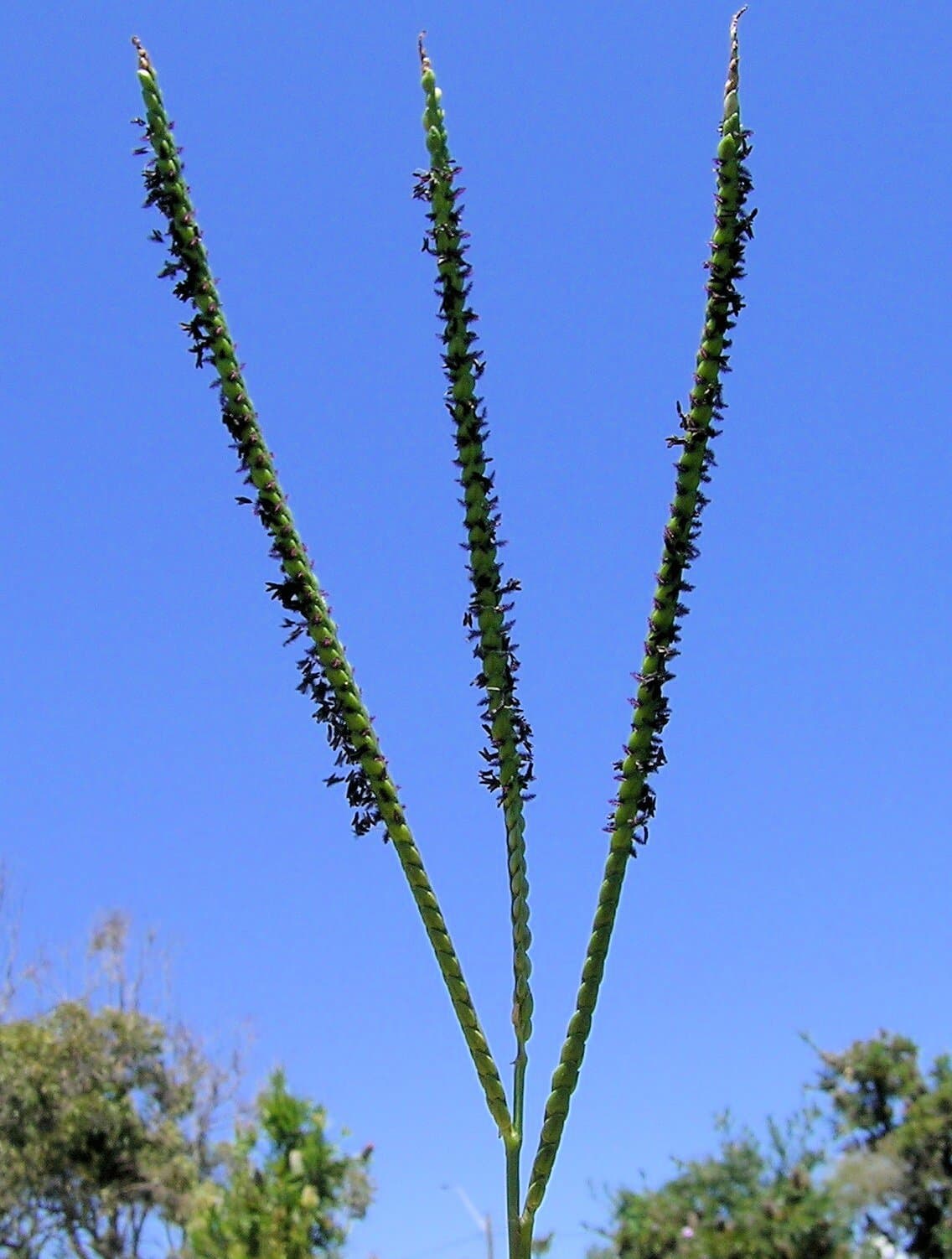
- Seedhead
- A single slender spike on a thin stalk, not a spray of several spikes.
Photo: Michael Rivera · CC BY-SA 4.0 · via Wikimedia Commons
Not sure it's Centipede Grass?
Snap a close-up of a few blades — our free AI identifies your grass in seconds. No app needed.
Seed & repair supplies for Centipede Grass
Use seed of the same grass, so the repair matches the rest of the lawn instead of showing up as an off-color patch.
Paid links. As an Amazon Associate, MeasureLawn earns from qualifying purchases.

Outsidepride Centipede Grass Seed
Centipede seed
Scotts Turf Builder Centipede Grass Seed & Mulch
Centipede seedBeginner friendly
Scotts Turf Builder Lawn Soil (1.5 cu ft)
Fills bare spotsBeginner friendlyEnriched lawn soil for topdressing and leveling. Contains fertilizer.
How to fix bare patches in Centipede Grass
- 1Find out why the grass died first. Common causes are too much fertilizer, soil pH that has crept too high, thick thatch, mowing too low, drought stress, and nematodes or ground pearls.
- 2Test the soil before adding lime. Centipede prefers acidic soil, and liming it without a test can bring on yellowing.
- 3Loosen the bare area and patch it in late spring with sod, plugs or seed. If you seed, use common centipede or TifBlair, the types sold as seed.
- 4If seeding, mix the tiny seed with fine sand so it spreads evenly, rake it in lightly and keep the surface moist with light, frequent watering until it sprouts.
- 5Keep sod and plugs moist until they root, then water deeply and less often.
- 6Feed the patch lightly, if at all. Extra nitrogen is a leading cause of centipede decline.
Working out how much seed to buy? The grass seed calculator does the math for your square footage.
When to plant or repair Centipede Grass
Best time: May–June. Also workable: April, July.
- Grows from
- Seed, sod, plugs or sprigs
- Soil temperature
- 70°F and rising
- Seed rate, new lawn
- ¼–½ lb per 1,000 sq ft
- Sprouts in
- 2–4 weeks
Common centipede and TifBlair are sold as seed, but the seed is slow to sprout and a seeded lawn can take up to three years to become thick and even. Sod is the fastest route to a finished lawn.
In Australia or New Zealand? The seasons flip — shift these months by six, or see the Southern Hemisphere lawn calendar.
Centipede Grass care at a glance
- Mowing height
- 1.5–2 in
- Water
- 1 inch per week
- Sun
- Full sun to light shade (6+ hours)
- Soil pH
- 5.0–6.0
- Fertilizer
- 1 lb nitrogen per 1,000 sq ft a year
- Growth habit
- Stolons
- Texture
- Medium
- USDA zones
- 7-11
How it holds up
Mowing height by season
| Spring | Summer | Fall | Winter |
|---|---|---|---|
| 1.5"–2" | 1.5"–2" | 1.5"–2" | Dormant |
Varieties you'll see
Want these turned into a month-by-month schedule for your yard? Build a free lawn plan.
Centipede Grass pros and cons
Strengths
- Needs less mowing and fertilizer than most lawn grasses
- Grows well in acidic, low-fertility soils
- Tolerates dry spells and can recover from drought dormancy
- Handles light shade better than bermuda
- Can be started from seed as well as sod
Weaknesses
- Poor tolerance of foot traffic and slow to recover from damage
- Shallow roots, so long dry spells stress it
- Turns yellow on alkaline soils (iron chlorosis)
- Declines when overfed, mowed too low or left with heavy thatch
- Poor salt tolerance
- Common centipede can winterkill in the upper South
- Sensitive to some weed killers used on other lawn grasses
Problems to watch for
Where Centipede Grass grows best
Centipede is a Southeastern grass, most at home on the acidic soils of the Carolinas, Georgia, Alabama and Florida. Common centipede is limited by cold in Tennessee and the upper South, where the cold-hardier TifBlair and TennTurf do better. It struggles on alkaline soils and in salty coastal sites.
A common lawn choice in
Commonly confused with
St. Augustine blades are noticeably wider, with smooth, blunt tips, and its runners are thicker. Centipede blades are narrower and paler, with small hairs along the edges near the base.
Carpetgrass
Carpetgrass looks very similar, but its blade edges have no hairs and its seedhead has two to five spikes, like crabgrass. Centipede has hairy edges near the base and a single slender spike.
Zoysia blades are stiff with upright hairs on the upper surface, and its youngest leaf is rolled. Centipede is lighter green and its youngest leaf is folded.
Know your grass? Put it to work →
Get a free 12-month plan built for Centipede Grass
Measure your yard on a satellite map in 30 seconds. We'll build a care schedule for centipede grass in your climate — mowing height, fertilizer, seed and weed control, with exact product amounts.
Measure my lawn — it's free →Centipede Grass FAQ
Why is my centipede grass turning yellow?
Usually it is iron chlorosis, caused by soil pH that is too high for centipede or by too much phosphorus. An iron spray will green it up for a while, but a soil test shows whether pH is the real problem. Yellow patches that appear as the lawn greens up in spring can also be an early sign of centipede decline.
Can you grow centipede grass from seed?
Yes. Common centipede and TifBlair are both sold as seed. The seed is tiny and slow, taking two to four weeks to sprout, and a seeded lawn can take up to three years to become thick and even. Sow in late spring into warm, moist soil, and mix the seed with sand to spread it evenly.
What is centipede decline?
It is a die-off in which patches of centipede fail to green up or turn brown and die in spring and early summer. It usually traces back to how the lawn is managed: too much fertilizer, high soil pH, heavy thatch, mowing too low and drought stress. Correcting those habits prevents most cases.
Why is centipede called lazy man’s grass?
Because it needs so little care. Centipede grows slowly, needs less mowing than most lawn grasses and gets by on very little fertilizer. The catch is that extra feeding and unneeded lime hurt it, so with centipede, doing less really is the right approach.
Can centipede grass handle heavy foot traffic?
No. Centipede has shallow roots, grows slowly and recovers poorly from wear, so it thins on play areas, dog runs and paths. It suits front yards and low-traffic lawns. If your yard gets hard use, bermuda or zoysia will hold up far better where they grow.
Other warm-season grasses

Sources
- Clemson HGIC: Centipedegrass
- UGA Extension: Centipedegrass Decline (C 1003)
- UF/IFAS Extension: Centipedegrass for Florida Lawns (ENH8)
- NC State TurfFiles: Centipedegrass
- University of Tennessee Extension: Centipedegrass (W159-C)
- NC State Extension: Centipedegrass Lawn Maintenance Calendar
- NC State Extension, Pamlico County: Grass Grows in Pamlico
- Alabama Extension: Home Lawns: Centipedegrass
More free lawn tools:
Every lawn grass•Photo grass identifier•Grass seed calculator•Weed guide•Lawn care calendar