Best Leaf Blowers: How to Pick One That Actually Clears Your Yard
Leaf blower specs are the most oversold numbers in the tool aisle. Here's what CFM and MPH really do, how to match a blower to your lawn size and leaf load, why runtime — not power — is what cordless owners run out of, and the free alternative that beats bagging for most lawns.
Key takeaways
- The best blower for most people is the one that shares batteries with tools you already own. Platform beats a 50-CFM spec advantage almost every time.
- CFM finishes the job; MPH breaks wet leaves loose. The two headline numbers come from different nozzles, so you rarely get both at once.
- Corded is a genuinely good buy for a small yard — lightest, quietest, cheapest tier, and it never runs out of runtime. The cord is the only catch.
- Cordless owners run out of battery, not power. On a half acre, a second pack does more for you than a bigger motor.
- Mulch-mowing leaves into the lawn beats bagging for most lawns — free, faster, and it feeds the soil. The blower's job is feeding the mower.
The short answer: three cordless blowers worth owning
Battery handhelds that cover most suburban lots. Corded picks for small yards, plus vacuums and mulchers, are further down — and the sizing table in the next section tells you which row you're in.
Paid links. As an Amazon Associate, MeasureLawn earns from qualifying purchases.

Greenworks 40V Leaf Blower (500 CFM)
Beginner friendlySmall to mid-size yards under about a quarter-acre with light to moderate leaf drop

EGO Power+ LB6504 Leaf Blower (650 CFM)
Beginner friendlyQuarter-acre to half-acre lots with a real fall leaf load, including wet, matted leaves

DEWALT 20V MAX XR Leaf Blower DCBL722P1 (450 CFM)
Beginner friendlySmaller lots and hard-surface cleanup, and anyone already holding DEWALT 20V MAX batteries
Which Blower for Your Yard
Two things decide the answer, and neither is brand: how much ground you have to cover, and how much canopy is dropping onto it. A quarter acre with two young maples and a quarter acre under three mature oaks are completely different jobs. Find your row:
| Yard + tree load | What actually works | Why |
|---|---|---|
| Under ¼ acre, a few trees | Corded electric, or an entry cordless on a battery platform you already own | You are never more than a cord away from the house, so runtime is a non-issue and the tool stays light |
| ¼–½ acre, moderate canopy | Cordless handheld around 500–700 CFM, plus a second battery | Enough volume to windrow an open lawn; the spare pack is what gets you to the end of the yard |
| ½–1 acre, heavy leaf drop | Cordless backpack, or a high-output handheld with two large packs | Weight sits on your hips instead of your wrist, and you get hours of trigger time instead of minutes |
| 1 acre+ under mature oaks | Backpack (gas or high-capacity cordless) — with a mulching mower doing most of the work | No handheld finishes an acre of oak leaves. At this scale the mower is the real leaf tool and the blower feeds it |
Guessing at your yard size skews every row above. Most people overestimate their lot and underestimate how much of it is driveway and beds. Measure it free on satellite imagery — two minutes, no account — and the rest of this page gets a lot more specific.
One more category exists for open acreage: the walk-behind wheeled blower, which moves more air than any backpack and rolls on its own wheels. It is a large, expensive, single-purpose machine — worth knowing about if you maintain several acres, and hard to justify below that.
Cordless vs Corded vs Backpack vs Gas
Four real categories, and only one of them is the default answer for most suburban lots. Honest strengths and honest costs:
Cordless handheld — the default
Brushless cordless now moves as much air as the gas handhelds it replaced, starts every time, and is quiet enough for a Saturday morning. The catch is runtime, not power: full throttle drains a mid-size pack in roughly 8–15 minutes.
Corded electric — the honest budget pick
Lightest, quietest, least expensive tier, unlimited runtime, and nothing to charge or maintain. You are tied to about 100 feet of outdoor extension cord, it snags on shrubs, and you need a GFCI outlet outside. For a small yard near the house, that is a fair trade.
Backpack — for real acreage
The only category that clears an acre of oak leaves without stopping. Weight rides on your hips, so you can run it for hours. It is heavier to store, louder, and genuine overkill on a quarter acre.
Gas handheld — a shrinking niche
Loud, needs mixed fuel and off-season maintenance, and increasingly restricted. At handheld size, cordless has caught up on output. If you are buying new for a suburban lot, there is very little left that a gas handheld does better.
Ergonomics decide whether you finish. A handheld much over 9–10 lb with the battery in gets heavy fast, and the specs on the box usually quote weight without the pack. Two features are worth more than any spec: a variable-speed trigger, so you can ease off around mulch beds, and a cruise-control lock so your finger isn't holding full throttle for an hour.
Cordless blowers worth owning
Battery handhelds with enough volume for a real lawn. If you already own a battery platform, start with that brand's blower before comparing anyone else's numbers.
Paid links. As an Amazon Associate, MeasureLawn earns from qualifying purchases.
Greenworks 40V Leaf Blower (500 CFM)
Beginner friendlySmall to mid-size yards under about a quarter-acre with light to moderate leaf drop
EGO Power+ LB6504 Leaf Blower (650 CFM)
Beginner friendlyQuarter-acre to half-acre lots with a real fall leaf load, including wet, matted leaves
DEWALT 20V MAX XR Leaf Blower DCBL722P1 (450 CFM)
Beginner friendlySmaller lots and hard-surface cleanup, and anyone already holding DEWALT 20V MAX batteries
Corded picks for small yards
Plug-in blowers for lots where you are never far from an outlet — lighter, quieter, and they never need charging.
Paid links. As an Amazon Associate, MeasureLawn earns from qualifying purchases.
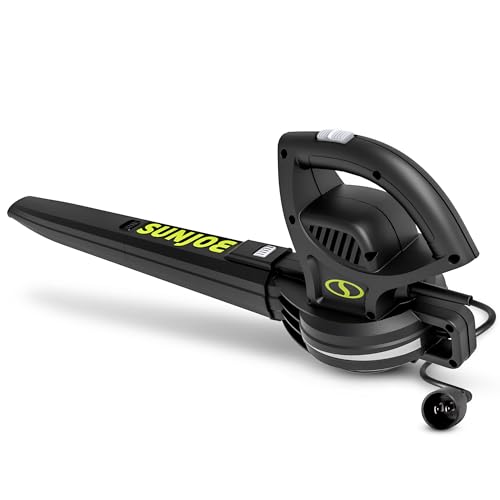
Sun Joe SBJ597E Electric Leaf Blower (6 Amp, 260 CFM)
Beginner friendlySmall yards, townhomes and condo patios with light leaf drop; decks, walks and garage sweeping

BLACK+DECKER BEBL750 Electric Leaf Blower (450 CFM)
Beginner friendlyQuarter-acre suburban lots with moderate leaf drop, and a sensible first blower for a new homeowner
What CFM and MPH Actually Mean
CFM (cubic feet per minute) is how much air the blower moves; MPH is how fast that air is travelling. They do different jobs, and the marketing treats them as one big number. CFM is the volume behind the stream, so it pushes a wide band of leaves at once — it is the number that decides how many passes your lawn takes. MPH is force concentrated on a small area, which is what peels wet, matted, or frost-stuck leaves off the grass and out of gravel.
What CFM and MPH Each Do
The nozzle trick in every spec sheet
Peak MPH is measured with the narrow concentrator nozzle fitted; peak CFM with the wide one. Both are true, and both are on the box, but they are not the same run. Narrowing the nozzle raises speed and drops volume; widening it does the reverse. So a blower advertising 200 MPH and 700 CFM does not deliver both simultaneously — and comparing two tools on their headline pair tells you less than you think.
If you want one number that behaves honestly, look for blowing force in newtons. Some manufacturers publish it, and it combines air mass and air speed into a single figure measured the same way for every model — which is exactly what CFM and MPH separately fail to do.
Practical translation: for open lawns and dry leaves, buy CFM. If your leaves come down wet, you have gravel or hardscape to clear, or you are in a climate where they freeze into the turf, weight the decision toward MPH and make sure the tool ships with a concentrator nozzle.
Batteries: Runtime, Watt-Hours, and Platform Lock-In
Cordless blowers are the loudest example of a rule that runs through every battery tool: you are not really buying a tool, you are joining a platform. Batteries do not cross brands. Once you own three packs and two chargers, the next tool you buy is decided for you — which is why the honest first question is not “which blower is best” but “whose batteries do I already have.”
Read watt-hours, not volts
Voltage (18V, 40V, 56V, 80V) is roughly the power ceiling; amp-hours (Ah) is the size of the fuel tank. The number that actually predicts runtime is the two multiplied together — watt-hours. A 40V 4Ah pack holds 160Wh, twice the energy of a 40V 2Ah pack, and more than a 56V 2.5Ah pack at 140Wh. Voltage on the front of the box sells tools; watt-hours finish yards.
Turbo is a sprint
Full throttle typically drains a mid-size pack in roughly 8–15 minutes. Use it for wet clumps and hard surfaces, then back off — dry leaves on grass move fine on low.
A spare pack beats a bigger motor
On a half acre, the thing you run out of is charge, not air. Two batteries and a fast charger turn a stop-and-wait afternoon into continuous work.
Buy the bare tool if you are already in
Most brands sell blowers without a battery or charger. If your mower or trimmer is on the same platform, that is the cheapest real upgrade available to you.
Check the charge time
A large pack on a slow charger can take hours. Rapid chargers matter more than people expect once you are running two batteries in rotation.
Lock-in cuts both ways, and it is not automatically a bad thing. Standardizing on one platform across the blower, string trimmer, and mower means every pack in the garage fits every tool — genuinely convenient. Just go in knowing that the platform decision outlives the blower.
Noise, Neighbors, and Gas Restrictions
Noise is a buying factor now, not a footnote. Manufacturers quote sound at 50 feet, which is the standard but also the flattering distance: cordless handhelds usually land around 59–65 dB there, gas backpacks around 70–80 dB. Decibels are logarithmic, so those 10-ish points are not a small gap — a 10 dB rise sounds roughly twice as loud. At the operator's ear everything is far louder than the spec, so wear hearing protection with anything gas-powered.
Check your local rules before buying gas
California has restricted the sale of new gas-powered blowers and mowers, and a growing list of towns and HOAs limit blower hours, decibel levels, or gas engines outright. None of that affects a tool you already own, but it is worth five minutes on your city's website before you buy a machine you may not be allowed to run on a Sunday morning.
The practical version: run the low setting for dry leaves on grass and save full throttle for the wet clumps. It is quieter, it doubles your runtime, and it keeps the leaves in front of you instead of blasting them across the property line.
The Blower / Vacuum / Mulcher 3-in-1
Three tools in one box is an appealing pitch, and the tradeoff is real. Converting between blow and vacuum takes a tube swap, the vacuum side is one-handed and slow, and the collection bag hangs off your shoulder and fills fast. What you gain is a shredder: the impeller chops leaves down to a fraction of their original volume — the 10:1 or 16:1 reduction ratios on the box — so a bag holds far more than it looks like it should.
| Where a vac genuinely wins | Where it wastes your afternoon |
|---|---|
| Flower beds, where blowing scatters the mulch with the leaves | Open lawns — you are vacuuming a nozzle-width strip at a time |
| Gravel borders and along fence lines where leaves pack in | Wet leaves, which clog the impeller and turn to paste |
| Small courtyards and townhouse yards with nowhere to blow to | Anywhere with sticks and acorns, unless the impeller is metal |
| Making leaf mold or compost — shredded leaves break down far faster | Big volume: the bag fills in minutes and gets heavy on one shoulder |
Buy it as a bed-and-border tool, not a lawn tool. If your reason for wanting one is “clearing the yard faster,” a plain blower plus a mulching mower does that job better. If your reason is tight spaces or filling a compost pile, a 3-in-1 is the right purchase.
Blower / vacuum / mulcher combos
For beds, borders, and tight yards where blowing just moves the problem. Metal impellers hold up better against sticks and acorns.
Paid links. As an Amazon Associate, MeasureLawn earns from qualifying purchases.

BLACK+DECKER 3-in-1 Electric Blower/Vacuum/Mulcher (12 Amp)
Beginner friendlySmall to mid-size yards under a quarter-acre, and a first vac-mulcher for someone testing whether they want one

WORX WG512 Trivac 3-in-1 Blower/Vacuum/Mulcher (600 CFM)
Beginner friendlyQuarter-acre to half-acre lots with heavy leaf drop where bagging volume is the bottleneck
Dedicated leaf shredders
Only worth it if you actually compost. Shredded leaves break down into leaf mold in a single season instead of sitting whole in the pile for two.
Paid links. As an Amazon Associate, MeasureLawn earns from qualifying purchases.

Sun Joe SDJ617E Bladeless Leaf Mulcher/Shredder (15 Amp)
Beginner friendlyHalf-acre and up with very heavy drop, including damp leaves that clog lighter shredders
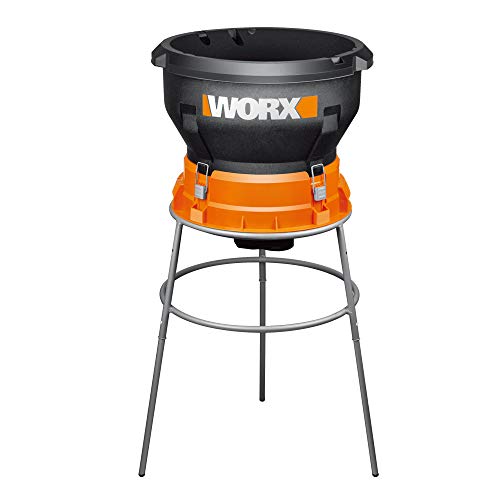
WORX WG430 Electric Leaf Mulcher/Shredder (13 Amp)
Beginner friendlyHalf-acre and up with heavy leaf drop, and anyone composting or mulching beds with their own leaves
Mulching Leaves Into the Lawn: The Free Option
Before you buy anything, know this: for most lawns, mowing the leaves into the turf beats bagging them. A mulching blade chops leaves into pieces small enough to fall between the grass blades, where soil organisms break them down over winter into organic matter and a modest amount of nitrogen. Michigan State turf trials that mulched leaves into lawns year after year found no harm to the turf and, over time, fewer dandelions in the mulched plots.
It is free, it is faster than raking and bagging, and it reframes what the blower is for. The blower stops being a collection tool and becomes a feeder — moving leaves off the beds, driveway, and patio onto open grass where the mower can reach them.
Where the Leaves Should End Up
How to mulch leaves properly
Mow when they are dry
Wet leaves smear and clump instead of shredding, and they pack the mower deck. Same rule as blowing: mid-morning, after the dew.
Use a mulching blade, deck closed
A high-lift bagging blade throws leaves out whole. A mulching blade keeps them circulating under the deck until they are small.
The see-the-grass test
After a pass, grass blades should show through the shredded pieces. If the lawn looks brown and blanketed, go over it again or take some off.
Little and often
Mow through peak drop rather than waiting. Two thin passes a week apart mulch easily; one deep mat does not.
When mulching is the wrong call
Mulching has limits, and pretending otherwise costs people grass. Take leaves off the lawn when: the layer is a deep wet mat that will not shred; the leaves are thick and leathery (magnolia, holly, some oaks) and stay whole; drifts have piled against a fence or in a low corner; you overseeded this fall and the seedlings need light; or winter is closing in and a blanket of whole leaves would sit under snow, which is how snow mold starts.
Leaf cleanup is one task in a season that also includes core aeration, overseeding, and the year's most important feeding. The fall lawn care checklist puts them in order, and the lawn care calendar times them to your grass type and region.
Fall cleanup quotes price off your lot, not your guess
Measure your lawn free on satellite imagery — about two minutes, no account — and you'll know your exact lawn, bed, and driveway square footage before you size a blower or take a cleanup quote.
Measure My Lawn — FreeHow to Clear Leaves Fast
Order of operations matters more than the tool. This is the sequence that turns an all-day job into an hour or two:
Wait for dry leaves, and look at the wind first
Mid-morning, after the dew
Wet leaves weigh several times what dry ones do and stick to the grass. The same blower feels twice as strong after the dew burns off — no upgrade required. Check which way the breeze is running before you pull the trigger; you are about to spend an hour either working with it or fighting it.
Pick one endpoint and work the whole yard toward it
Downwind, and downhill if you can
Decide where the leaves are going before you start — the tarp, the compost corner, the curb. Then push everything that direction in one continuous sweep. Moving the same pile twice because you started in the wrong corner is the most common wasted hour in fall cleanup.
Clear the hardscape before anyone walks on it
Driveway, walks, patio, deck
Leaves ground into a wet driveway stain concrete and turn slick. Do the hard surfaces first, with the narrow concentrator nozzle and a light trigger finger — full throttle on a gravel path or a mulched planter just redistributes your landscaping.
Blow the beds out onto the lawn
Low speed, shallow angle
This is the step most people do backwards. Beds are where leaves are hardest to collect, so move them out onto open grass where the mower can reach them. Hold the nozzle at a shallow angle on the low setting: high and steep excavates the mulch along with the leaves.
Mulch-mow what the mower can handle
Still see grass? You are done
Run the mower over the leaf layer with a mulching blade. If grass blades show through the shredded pieces afterward, the lawn keeps the organic matter and you never touch a bag — see the mulching section for how thick is too thick.
Windrow the excess onto a tarp, not into a pile
Lift once, not twice
Whatever is too deep to mulch, blow into long low rows and roll it straight onto a tarp laid on the grass. Raking a pile and then lifting it by the armful is two jobs; dragging a tarp is one.
Go little and often through the drop
Three short sessions beat one marathon
Thin layers mulch; deep wet mats have to be hauled. Working through peak leaf fall in short sessions keeps every pass in mulching range and stops the lawn from being blanketed for weeks at a time — which is what actually damages turf. It also fits neatly into the fall checklist alongside the season's feedings.
One accessory we won't link
Gutter-cleaning attachments — the long curved tubes that let you blast a gutter from the ground. In practice they move wet, packed debris a few inches, spray the rest across your roof and your face, and leave you no way to see whether the downspout is still blocked. We recommend plenty of gear on this site; this one does not do the job it promises.
Rakes, Tarps, and Bags
A blower does not replace everything. A rake is still the fastest tool along fence lines and under shrubs, where air only moves leaves sideways into the next obstruction. A tarp is what saves your back — blow onto it where it lies and you lift the pile once instead of twice. And the bagging step is where most of the actual time goes, so a holder that keeps the bag mouth open is worth more than it looks. Sizes to aim for: a rake head around 24–30 inches for open lawn work, and a tarp big enough to take a full windrow rather than half of one.
Rakes that still earn their place
For fence lines, under shrubs, and pulling a windrow onto the tarp — jobs where air just moves leaves sideways.
Paid links. As an Amazon Associate, MeasureLawn earns from qualifying purchases.

True Temper 30-Inch Greensweeper Poly Leaf Rake
Beginner friendlyOpen lawns up to about a quarter acre with normal fall leaf drop

JARDINEER Adjustable Leaf Rake (7-23 Inch Head)
Beginner friendlyClearing leaves out of mulch beds, between shrubs and along fence lines on any lot size
Hand scoops for lifting the pile
Oversized claws that pick up an armful at a time. The difference between four trips to the bag and one.
Paid links. As an Amazon Associate, MeasureLawn earns from qualifying purchases.

AMES Leaf Scoops with Pop-Up Garden Waste Bag
Beginner friendlyAnyone bagging leaves by hand who wants the pile-to-bag step solved in one purchase

GARDEASE Leaf Scoops (1 Pair)
Beginner friendlySmall to mid-size lots, or for the person loading bags while someone else rakes
Move the whole pile in one trip
Blow leaves straight onto a tarp on the grass, then drag it. Lifting once instead of twice is the single biggest time saver in cleanup.
Paid links. As an Amazon Associate, MeasureLawn earns from qualifying purchases.
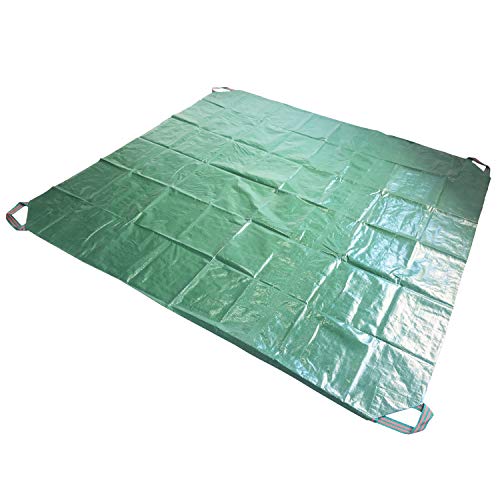
7 x 7 ft Yard and Leaf Tarp with 4 Corner Handles
Beginner friendlyQuarter acre and up where hauling beats bagging, especially with a compost pile or loose curbside pickup

Leaf Collection Tarp 5 x 7 ft with 6 Handles and Stakes
Beginner friendlyExposed or windy sites, and smaller lots where a 7-foot tarp is unwieldy
Bag holders and leaf bags
A holder that keeps the bag open ends the two-person wrestling match. Check whether your municipality requires paper bags for curbside yard-waste pickup.
Paid links. As an Amazon Associate, MeasureLawn earns from qualifying purchases.

Bag Buddy Bag Holder 23-Inch (55 Gallon Bags)
Beginner friendlyBagging alone with 55 gallon contractor bags or standard paper lawn bags

Bag Buddy Bag Holder Stand 30-Inch (39-45 Gallon Bags)
Beginner friendlyThe 39 to 45 gallon bag size most curbside yard-waste programs accept

Gardzen 72 Gallon Reusable Garden Waste Bags (3-Pack)
Beginner friendlyReplacing disposable paper bags on a quarter to half acre lot
Leaf Blower FAQ
What is a good CFM for a leaf blower?
For a small yard with a few trees, roughly 350–450 CFM clears dry leaves without fuss. A quarter to half acre under real canopy wants 500–700 CFM. Past an acre of heavy leaf drop you are in backpack territory, roughly 600–900 CFM. Higher CFM mostly buys you a wider swath, which means fewer passes and a shorter afternoon.
Is CFM or MPH more important on a leaf blower?
CFM decides how fast you finish; MPH decides whether stubborn leaves move at all. CFM is the volume of air, so it pushes a wide band of dry leaves across the lawn. MPH is air speed, which is what breaks wet, matted, or frost-stuck leaves loose from the grass. For open lawns with dry leaves, favor CFM. For wet leaves, gravel beds, and hard surfaces, favor MPH. Watch the spec sheet: peak MPH is usually measured with a narrow concentrator nozzle and peak CFM with a wide one, so the two headline numbers rarely happen at the same time.
Are cordless leaf blowers powerful enough?
For a suburban lot, yes. Modern brushless cordless handhelds move as much air as the gas handhelds they replaced, and they start every time with no fuel mixing. The limit is not power, it is runtime: on full throttle, a mid-size battery gives you something like 8–15 minutes. On a half acre or more, plan on a second battery rather than a bigger motor.
How long does a leaf blower battery last?
Anywhere from about 10 minutes to over an hour on the same tool, depending entirely on throttle. Turbo drains a battery fast; the low or eco setting handles dry leaves on grass and can run several times longer. Compare batteries by watt-hours, not volts — multiply volts by amp-hours. A 40V 4Ah pack (160Wh) holds twice the energy of a 40V 2Ah pack, whatever the voltage on the box says.
Is a corded electric leaf blower worth it?
For a small yard close to the house, a corded blower is a genuinely good buy and often the smart one. It never runs out of runtime, it is the lightest and quietest category, it needs no battery or maintenance, and it costs the least. The trade is real, though: you are tethered to about 100 feet of outdoor extension cord, the cord snags on shrubs and fence posts, and you need a GFCI outlet outside. Past a quarter acre the cord stops being worth it.
Do I need a backpack leaf blower?
Only if your leaf load justifies it. A backpack puts the weight on your hips instead of your wrist and gives you continuous trigger time, which is what an acre under mature oaks and maples actually needs. On a quarter acre it is overkill: heavier to store, louder, and more machine than the job. If you are not clearing leaves for a couple of hours at a stretch, a handheld is the better tool.
Can I mulch leaves with my mower instead of blowing them?
Yes, and for most lawns it is the better answer. Mowing dry leaves back into the turf chops them into pieces that fall between the blades and break down over winter, returning organic matter and a little nitrogen. Michigan State turf trials that mulched leaves into lawns year after year found no harm to the turf and, over time, fewer dandelions. It is free, it is faster than bagging, and the blower is still useful — its real job is moving leaves off the beds and driveway onto the lawn where the mower can eat them.
How many leaves are too many to mulch into the lawn?
The working rule: after a pass, you should still see grass blades through the shredded leaf bits. If the lawn looks brown and blanketed, that layer is too thick — mow it again, or blow some of it off and bag or compost the excess. Wet mats do not shred, so mulch when the leaves are dry, and mow more often during peak drop rather than waiting for one enormous cleanup.
Are leaf blower vacuum mulchers any good?
They are good at a narrow job and poor at a broad one. Vacuuming sucks up only the strip in front of the nozzle and the bag gets heavy quickly, so clearing a whole lawn with one takes forever. Where they earn their keep is tight spots a blower makes worse — flower beds where blowing scatters the mulch, gravel borders, along fences, and small courtyards — plus shredding leaves down for compost. Look for a metal impeller if you deal with sticks and acorns, and expect wet leaves to clog it.
How loud are leaf blowers, and are gas ones being banned?
Manufacturers quote noise at 50 feet: cordless handhelds land around 59–65 dB there, gas backpacks around 70–80 dB. Decibels are logarithmic, so a 10 dB difference sounds roughly twice as loud. At the operator ear everything is far louder than the spec sheet, so wear hearing protection with anything gas. On the regulations: California has restricted the sale of new gas-powered blowers and mowers, and a growing list of towns limit blower hours or gas engines outright. Check your local ordinance before you buy gas.
What is the best time of day to blow leaves?
Mid-morning, once the dew has burned off and before the afternoon wind picks up. Dry leaves take a fraction of the air to move that wet ones do, so the same blower feels twice as strong. Check the wind direction first and work with it — fighting a breeze across an open lawn wastes more time than any spec difference between two blowers.
Do I have to remove leaves from the lawn at all?
You have to keep them from blanketing it. A thin, chopped layer is a benefit; a solid mat of whole leaves blocks light, traps moisture against the crowns, and sets up snow mold over winter. Two situations demand a clean lawn: anywhere you overseeded in fall, where seedlings need light to survive, and everywhere before the first lasting snow.
Leaves are one task in the biggest season of the lawn year
Measure your lawn free on satellite imagery, then get a 12-month plan that schedules aeration, overseeding, feeding, and fall cleanup for your exact grass type and region.
Measure My Lawn — It's Free