How to identify Bahia Grass
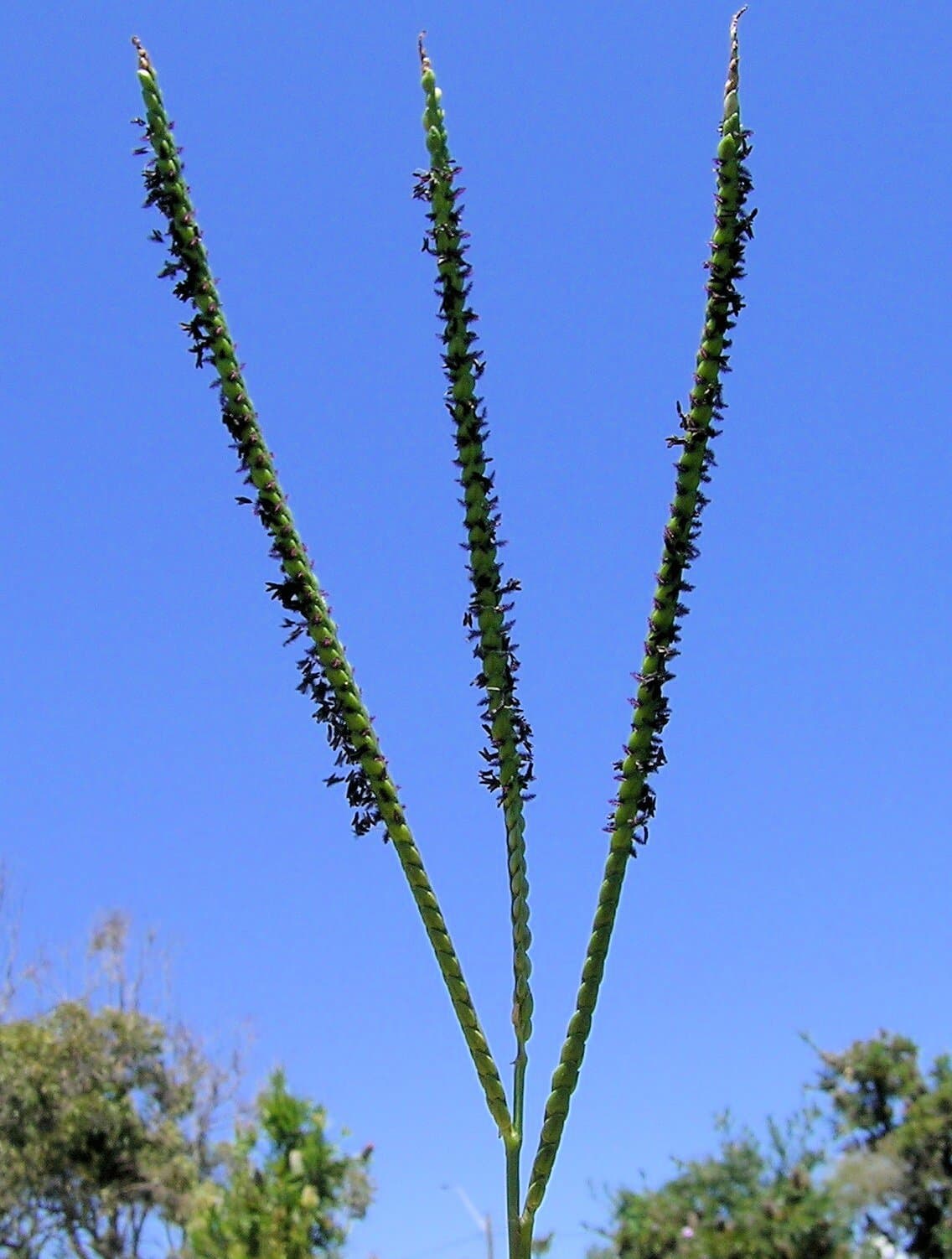
Bahia makes a coarse, open lawn of tough, flat blades. It never gets as thick and carpet-like as some other warm-season grasses. Through the long days of summer it keeps sending up tall, thin stalks, each topped with two spikes in a V. Argentine is darker green and denser, while Pensacola has longer, narrower blades and more seedheads.
- Seedhead
- A tall, thin stalk usually topped with two spikes, occasionally more, that fork in a V or Y shape. It is the quickest way to spot bahia.
- Rhizomes
- It spreads by thick, stout rhizomes (creeping stems) that run along or just below the soil surface.
- Blade
- Flat blades about 1/6 to 1/3 inch wide with a sharp point. A few hairs may show near the base.
- Toughness
- Leaves and seed stalks are very tough. A dull mower blade tears them and leaves ragged tips.
- Ligule
- Where the blade meets the stem there is a very short membrane, about 1 mm tall, with dense white hairs on its back.
- Leaf sheath
- The sheath wrapped around the stem is flattened, sharply creased and rather glossy.
Photo: Harry Rose from South West Rocks, Australia · CC BY 2.0 · via Wikimedia Commons
Not sure it's Bahia Grass?
Snap a close-up of a few blades — our free AI identifies your grass in seconds. No app needed.
Seed & repair supplies for Bahia Grass
Use seed of the same grass, so the repair matches the rest of the lawn instead of showing up as an off-color patch.
Paid links. As an Amazon Associate, MeasureLawn earns from qualifying purchases.

Barenbrug Pensacola Bahiagrass Seed
Bahia seedBeginner friendlyPensacola bahiagrass from Barenbrug, the standard seeded bahia for Southern lawns.

SeedRanch Pensacola Bahia Grass Seed
Bahia seed
Scotts Turf Builder Starter Food for New Grass
For new grassBeginner friendly
Scotts Turf Builder Lawn Soil (1.5 cu ft)
Fills bare spotsBeginner friendlyEnriched lawn soil for topdressing and leveling. Contains fertilizer.
How to fix bare patches in Bahia Grass
- 1Find the cause before you replant. Check for mole crickets by pouring 2 gallons of water mixed with 1 to 2 ounces of dish soap over 2 square feet, then watch for crickets coming to the surface.
- 2If the grass was yellow rather than thin, test the soil. Bahia turns yellow in high-pH soil because it cannot take up enough iron, and new grass there will yellow too.
- 3Rake out the dead grass and loosen the soil surface so seed or sod makes good contact.
- 4Fill small spots with pieces of bahia sod pressed firmly into place. For larger areas, sow scarified seed in spring or early summer and rake it in lightly.
- 5Keep the patch moist until the seed sprouts or the sod roots, then water only when the blades fold, wilt or turn blue-gray. Wait 30 to 60 days before fertilizing.
- 6Keep weed-and-feed products off the patch unless the label says they are safe on bahia grass. Some common lawn weed killers injure it.
Working out how much seed to buy? The grass seed calculator does the math for your square footage.
When to plant or repair Bahia Grass
Best time: April–June. Also workable: March, July–August.
- Grows from
- Seed or sod
- Soil temperature
- 65°F and rising
- Seed rate, new lawn
- 5–10 lb per 1,000 sq ft
- Sprouts in
- Slow and uneven: often only about half sprouts within 30 days
Seed works, but it sprouts and fills in slowly, so buy scarified seed when you can. Sod covers at once, though bahia sod does not hold together well and can fall apart as you lay it.
In Australia or New Zealand? The seasons flip — shift these months by six, or see the Southern Hemisphere lawn calendar.
Bahia Grass care at a glance
- Mowing height
- 3–4 in
- Water
- About 1/2 to 3/4 inch when blades start to wilt
- Sun
- Full sun (6+ hours)
- Soil pH
- 5.5–6.5
- Fertilizer
- 1 lb nitrogen per 1,000 sq ft a year
- Growth habit
- Rhizomes and stolons
- Texture
- Coarse
- USDA zones
- 7-11
How it holds up
Mowing height by season
| Spring | Summer | Fall | Winter |
|---|---|---|---|
| 3"–4" | 3"–4" | 3"–4" | Dormant |
Varieties you'll see
Want these turned into a month-by-month schedule for your yard? Build a free lawn plan.
Bahia Grass pros and cons
Strengths
- Deep, extensive roots that ride out drought
- Grows in sandy, infertile soil where many lawn grasses fail
- Needs less water and fertilizer than most warm-season lawns
- Few serious insect or disease problems
- Can be planted from seed
- Pensacola handles both heat and cold well
Weaknesses
- Tall seedheads all summer mean frequent mowing
- Open, coarse turf that never looks carpet-like
- Tough blades need a sharp mower blade
- Thins out in shade
- Turns yellow in high-pH soil
- Slow to establish from seed
- Injured by some weed-and-feed products
Problems to watch for
Where Bahia Grass grows best
Bahia came to Florida from South America in the early 1900s and was first used as a pasture grass on the sandy soils of the Southeast. It does best in Florida and the Deep South, on sunny, sandy, acidic ground. In North Carolina, extension experts do not recommend it for lawns, only for low-care areas such as roadsides.
A common lawn choice in
Commonly confused with
Dallisgrass grows in spreading clumps, and its seedhead has 3 to 8 short branches spaced up the stalk. Bahia usually has just two spikes, joined in a V at the top.
Carpetgrass
Carpetgrass creeps by above-ground runners and carries 2 to 5 thin spikes per seedhead. It favors wet, acidic soil and tolerates some shade, while bahia thrives on dry, sandy, sunny ground.
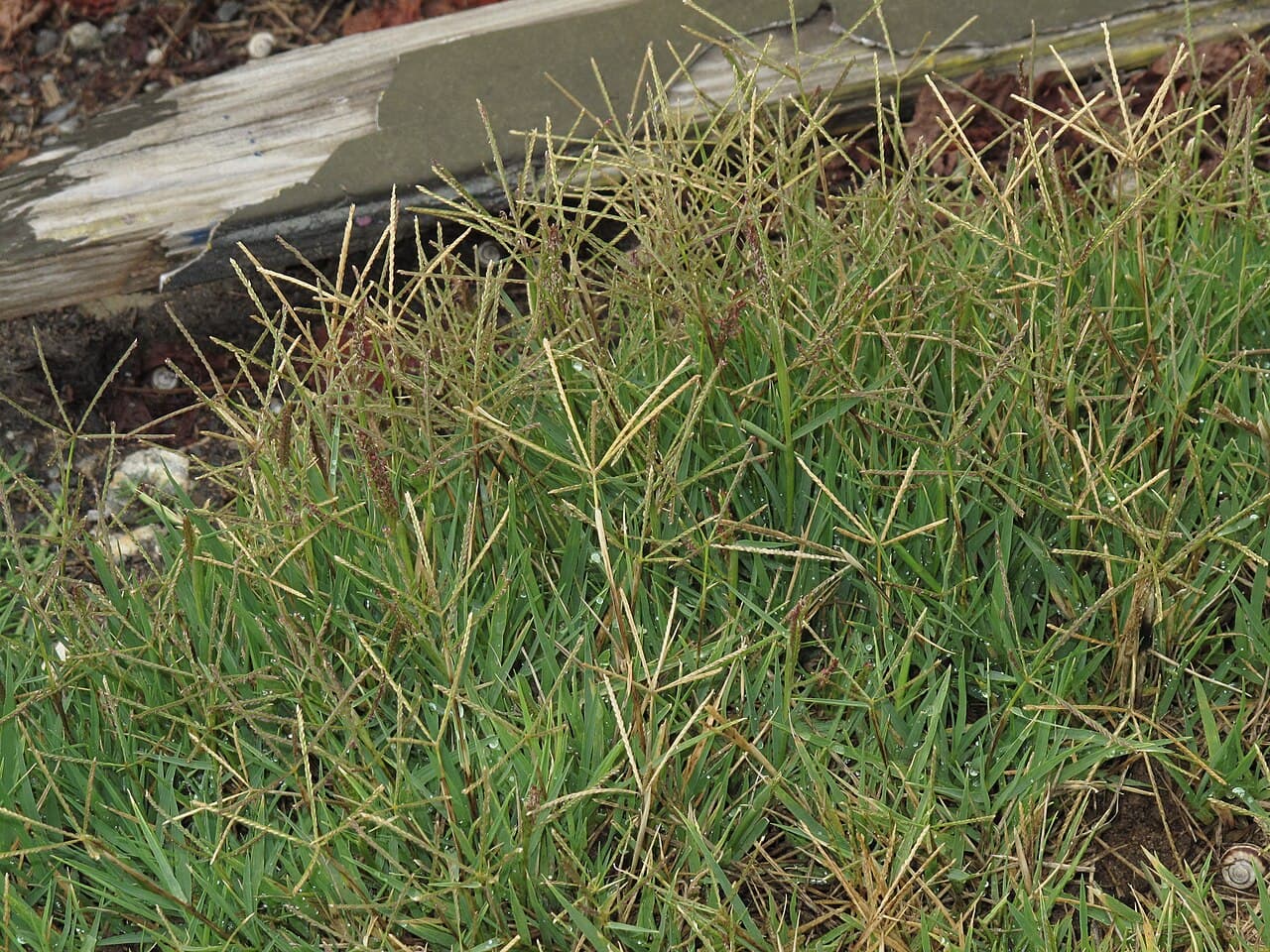
Crabgrass is a summer annual that dies after the first fall frosts, and its seedhead usually has 3 to 5 finger-like spikes. Bahia comes back every year from tough rhizomes, and its seedhead usually has just two.
Know your grass? Put it to work →
Get a free 12-month plan built for Bahia Grass
Measure your yard on a satellite map in 30 seconds. We'll build a care schedule for bahia grass in your climate — mowing height, fertilizer, seed and weed control, with exact product amounts.
Measure my lawn — it's free →Bahia Grass FAQ
Is bahia grass good for lawns?
It is a good choice for sunny, sandy yards in the Deep South where you want a tough lawn that needs little water or fertilizer. It is a poor choice if you want a thick, carpet-like lawn. Bahia stays open and coarse, and its tall summer seedheads need frequent mowing. Argentine is the usual pick for home lawns.
How often should you mow bahia grass?
Plan on every 7 to 14 days while it is growing. Bahia sends up tall seed stalks through the long days of summer, and regular mowing keeps them in check. Use a sharp, heavy-duty blade, because the leaves and stalks are tough and a dull blade tears them. Leave the clippings on the lawn.
Why is my bahia grass turning yellow?
A common cause is iron deficiency in high-pH soil. Bahia prefers acidic soil, and in alkaline soil it struggles to take up iron, so new growth turns yellow. A soil test will tell you. An iron treatment brings back color for a few weeks, but it does not replace nitrogen. A lawn short of water turns blue-gray, then brown.
Which is better for a lawn, Pensacola or Argentine bahia?
Argentine is usually the better lawn grass. It forms a denser, darker green turf with wider blades, and its seedheads are shorter and less crowded. Pensacola sends up more seedheads, which suits roadsides and pastures better than lawns. Pensacola does hold its color longer as the weather cools.
How long does bahia grass seed take to germinate?
Often a month or more. Generally only about half of bahia seed sprouts within 30 days, and some may wait until the next year. Buy scarified seed, which is treated to sprout faster, and keep the seedbed moist. Plant once the soil stays at 65°F or warmer, and expect it to take a while to fill in.
Other warm-season grasses
Sources
- UF/IFAS Extension: Bahiagrass for Florida Lawns (ENH6)
- UF/IFAS Extension: Selecting a Turfgrass for Florida Lawns (ENH04)
- UF/IFAS Extension: Bahiagrass Overview and Pasture Management (SS-AGR-332)
- NC State TurfFiles: Bahiagrass
- NC State Extension Gardener Handbook: Lawns
- UGA Extension: The Management and Use of Bahiagrass (B1362)
- UF/IFAS Extension: Establishing Your Florida Lawn (ENH-03)
- UF/IFAS Extension: Growing Turfgrass in the Shade (ENH151)
- Tropical Forages: Paspalum notatum (bahiagrass)
- N.C. Cooperative Extension, Pender County: Planting Summer Grass
- Penn State Extension: Smooth Crabgrass and Large Crabgrass
More free lawn tools:
Every lawn grass•Photo grass identifier•Grass seed calculator•Weed guide•Lawn care calendar