Warning: serious property risk
This page is about bermudagrass invading a cool-season lawn. If bermudagrass IS your lawn — common across the South — none of the herbicides below apply to you: they are how you remove bermuda, not how you improve it.
Is bermuda your lawn, not your problem? The Bermuda grass guide covers mowing height, bare-spot repair and the right seed.
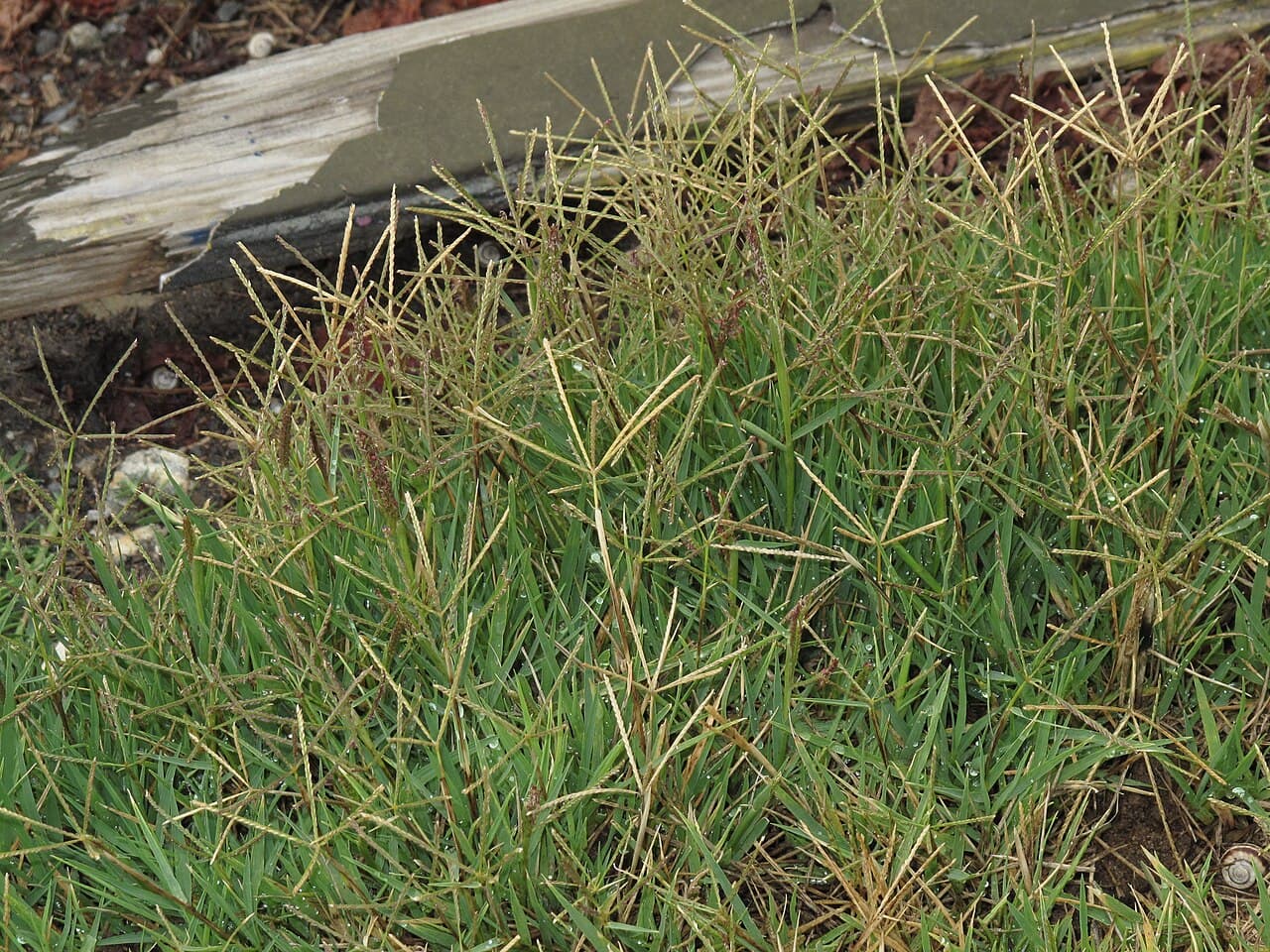
What Bermudagrass (in Cool-Season Lawns) looks like
Straw-brown patches with defined edges sitting in an otherwise green fescue or bluegrass lawn in autumn and early spring, turning lush green and spreading hard in midsummer heat while the grass around them thins. Tug the edge of a patch and a runner lifts up, rooting at every node; at the base of each leaf blade sits a fringe of fine hairs, which separates it from nimblewill.
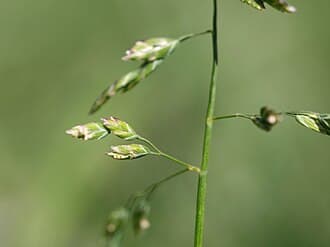
Photo: Wikimedia Commons
Not sure if it's Bermudagrass (in Cool-Season Lawns)?
Snap a photo — our free AI compares it to bermudagrass (in cool-season lawns) and tells you in seconds. No app needed.
Best approach: Herbicide spray
Digging is not realistic at any scale, because bermuda regrows from any rhizome fragment left behind. No programme achieves complete control in a single season — extension sources uniformly describe this as a multi-year commitment that depends as much on changing how you mow and feed as on what you spray.
Best products for Bermudagrass (in Cool-Season Lawns)
Formulated to kill bermudagrass (in cool-season lawns) without wiping out your grass — see the timing and chemistry below.

Hi-Yield Triclopyr Ester (8 oz)
✓ Kills bermudagrass (in cool-season lawns)Triclopyr is the strongest broadleaf-specific herbicide available to homeowners. When 2,4-D products fail on creeping charlie or wild violet, triclopyr gets the job done.

Acclaim Extra (Fenoxaprop-p-ethyl)
✓ Kills bermudagrass (in cool-season lawns)Professional concentrate; rate varies 0.3-0.46 oz per 1000 sqft by weed stage

Syngenta Tenacity Herbicide (8 oz)
✓ Kills bermudagrass (in cool-season lawns)Tenacity is unique — works as BOTH pre-emergent and post-emergent. Turns weeds white before killing them. Safe to use at seeding time.
How much do you need?
Herbicide is dosed by lawn size. Pick your yard size for a quick estimate:
Stop guessing
Get the exact amount for your lawn
Measure your lawn on a satellite map in about 30 seconds, then use its exact square footage to choose the right number of packs.
Measure my lawn free →Prefer to read how satellite measurement works first? See the lawn measuring tool.
As an Amazon Associate, Measure Lawn earns from qualifying purchases.
When to treat Bermudagrass (in Cool-Season Lawns)
Spot-treat while plants are young and actively growing; mature clumps usually need digging out.
Chemical treatment
Every effective programme is a repeated tank mix over several seasons, and each option is grass-specific — treat this as a compatibility chart, not a shopping list. Fluazifop plus triclopyr is the strongest widely sold option and is safe on tall fescue and zoysia, but it is not labelled for Kentucky bluegrass and ryegrass tolerates it poorly. Fenoxaprop plus triclopyr is the gentler cool-season choice, safe on tall fescue, ryegrass and fine fescue, though some bluegrass cultivars are injured in heat. Topramezone plus triclopyr is the modern best performer and the answer for bluegrass lawns, applied mid-August into September; expect dramatic white bleaching, which is normal. Mesotrione plus triclopyr holds the spread through summer on bluegrass, ryegrass and tall fescue but will not eradicate it. Triclopyr rides in every mix: full rate on tall fescue, half rate on Kentucky bluegrass and fine fescue, and never on St. Augustine or centipede. Glyphosate kills every grass it touches, so it is for spot treatment you intend to reseed, or full renovation — two passes three weeks apart, then seed. Whatever you use, killing bermuda leaves voids that must be reseeded in autumn or they become next year’s weed patch.
Non-chemical management
Mowing height is the biggest lever you own and it is not a minor one: research at Virginia Tech had tall fescue completely kill bermudagrass at a four-inch mowing height with no herbicide at all, and warns that mowing below three and a half inches makes chemical control nearly impossible. Feed in autumn, never in summer — July nitrogen feeds the bermuda, not your fescue. Water deeply and infrequently.
How to stop Bermudagrass (in Cool-Season Lawns) coming back
Keep a tall, dense stand at three and a half to four inches, overseed thin areas every autumn so voids never last a summer, and edge beds deeply. If a neighbour’s bermuda lawn meets yours at the property line, put in a physical edge — that is how most infestations start.
Stop fighting weeds one by one →
Get your free 12-month AI lawn care plan
A thick, healthy lawn is the best weed killer there is. Measure your yard on a satellite map in 30 seconds — we'll build a personalized schedule (fertilizer, seed, mowing, weed control) so bermudagrass (in cool-season lawns) doesn't come back.
Measure my lawn — it's free →FAQ
What does Bermudagrass (in Cool-Season Lawns) look like?
Straw-brown patches with defined edges sitting in an otherwise green fescue or bluegrass lawn in autumn and early spring, turning lush green and spreading hard in midsummer heat while the grass around them thins. Tug the edge of a patch and a runner lifts up, rooting at every node; at the base of each leaf blade sits a fringe of fine hairs, which separates it from nimblewill.
What's the best way to kill Bermudagrass (in Cool-Season Lawns)?
Herbicide spray. Digging is not realistic at any scale, because bermuda regrows from any rhizome fragment left behind. No programme achieves complete control in a single season — extension sources uniformly describe this as a multi-year commitment that depends as much on changing how you mow and feed as on what you spray.
Is Bermudagrass (in Cool-Season Lawns) hard to get rid of?
Bermudagrass (in Cool-Season Lawns) is rated hard to control. It usually requires multiple applications and a consistent plan.
How do I stop Bermudagrass (in Cool-Season Lawns) coming back?
Keep a tall, dense stand at three and a half to four inches, overseed thin areas every autumn so voids never last a summer, and edge beds deeply. If a neighbour’s bermuda lawn meets yours at the property line, put in a physical edge — that is how most infestations start.
Other grassy weeds
See every weed we cover:
Full weed guide•Photo identifier•Lawn care calendar•Free lawn care plan•Best mowers by size