Warning: serious property risk
All three of these are legitimate lawn grasses — the "weed" part is context. If the odd patch bothers no one, the cheapest option is to keep mowing it: a ryegrass-speckled northern lawn can be overseeded into more perennial ryegrass for a uniform stand, and a St. Augustine section in a shaded southern yard often outperforms the bermuda around it — it's the shade-tolerant one. Only creeping bentgrass truly earns removal: it browns out in summer and turns puffy and thatchy at lawn height.
Growing one of these on purpose? See the lawn grass guide for how to identify, care for and repair each one.
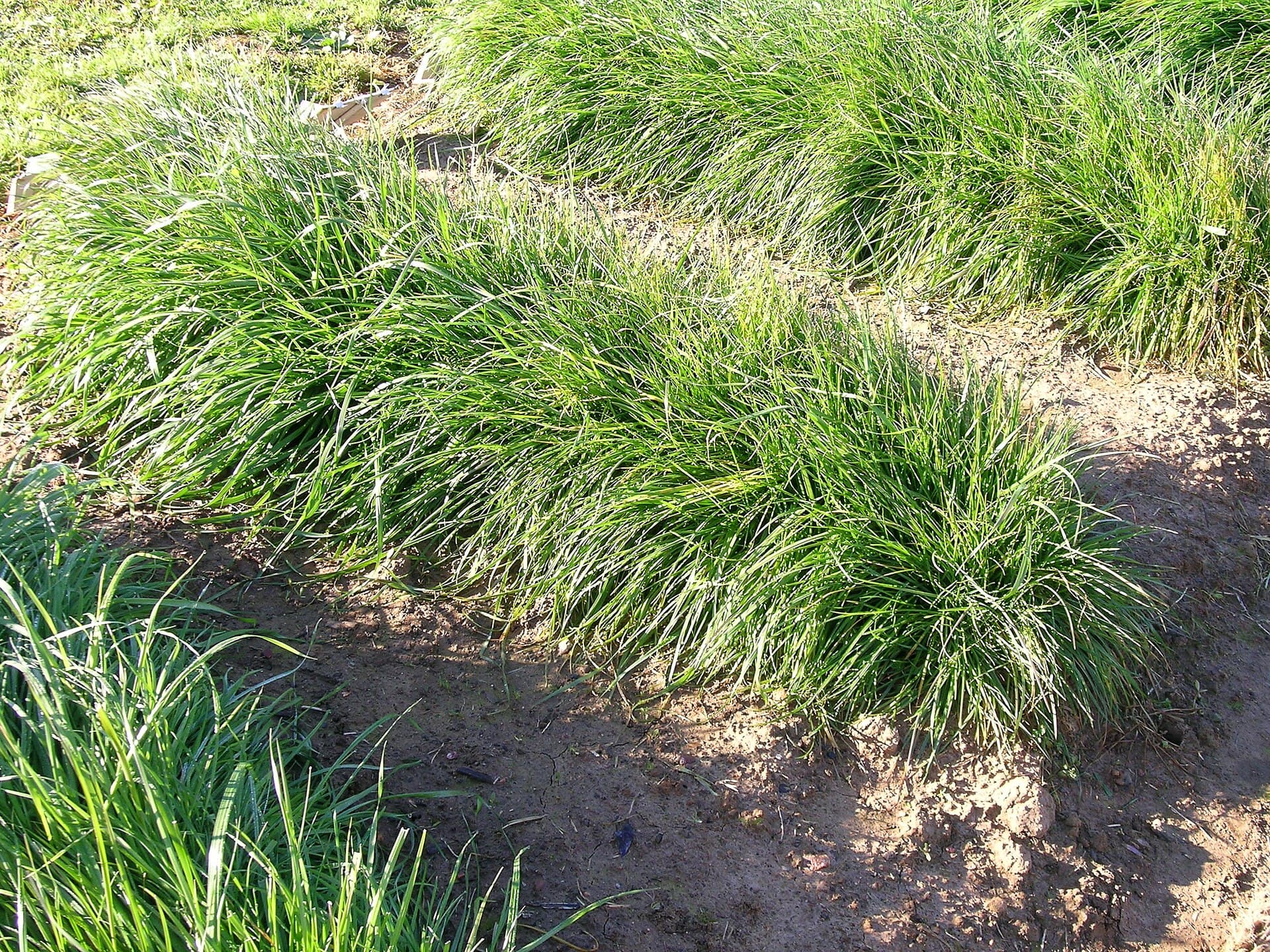
What Unwanted Lawn Grasses (Ryegrass, Bentgrass, St. Augustine) looks like
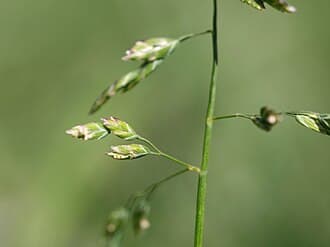
A patch of grass that is clearly not your lawn: a coarse, glossy clump growing twice as fast as everything around it (ryegrass), a fine-bladed, puffy, light-green mat that browns out in circles in summer heat (creeping bentgrass), or wide, flat-bladed runners creeping in from a neighbor's yard or an old sod job (St. Augustine). The tell that separates these from ordinary grassy weeds is that all three are genuine turfgrass species — which is exactly why they are the hardest "weeds" to kill, since most selective herbicides are designed to spare grasses.
Photo: Wikimedia Commons
Not sure if it's Unwanted Lawn Grasses (Ryegrass, Bentgrass, St. Augustine)?
Snap a photo — our free AI compares it to unwanted lawn grasses (ryegrass, bentgrass, st. augustine) and tells you in seconds. No app needed.
Best approach: Spray or dig
Which grass it is decides the method. Ryegrass grows in bunches with no runners, so digging genuinely works: cut the clump out with a shovel, take 2–3 inches of root, and reseed the divot. Bentgrass spreads by stolons, so strip the sod 1–2 inches deep and extend at least 6 inches beyond each visible patch to kill the runners already creeping into good lawn. St. Augustine runners can simply be severed at a maintained edge and raked or pulled back; for whole invaded areas, spot-kill and re-sod — no retail St. Augustine seed exists, so dead areas need sod. When spot-spraying, treat only the patch on a calm day (shield good turf with cardboard for small spots), wait the full 7–14 days for complete browning, hit any regrowth again, then reseed or re-sod. For the ryegrass and bentgrass kills you'll be reseeding, fall applications beat summer because more of the chemical translocates into the roots; St. Augustine patches in a bermuda lawn are the opposite — spot-spray them in summer, and bermuda's rhizomes and stolons refill the dead spots within weeks on their own, no re-sodding needed.
Best products for Unwanted Lawn Grasses (Ryegrass, Bentgrass, St. Augustine)
Formulated to kill unwanted lawn grasses (ryegrass, bentgrass, st. augustine) without wiping out your grass — see the timing and chemistry below.

Syngenta Tenacity Herbicide (8 oz)
✓ Kills unwanted lawn grasses (ryegrass, bentgrass, st. augustine)Tenacity is unique — works as BOTH pre-emergent and post-emergent. Turns weeds white before killing them. Safe to use at seeding time.
How much do you need?
Herbicide is dosed by lawn size. Pick your yard size for a quick estimate:
Stop guessing
Get the exact amount for your lawn
Measure your lawn on a satellite map in about 30 seconds, then use its exact square footage to choose the right number of packs.
Measure my lawn free →Prefer to read how satellite measurement works first? See the lawn measuring tool.
As an Amazon Associate, Measure Lawn earns from qualifying purchases.
When to treat Unwanted Lawn Grasses (Ryegrass, Bentgrass, St. Augustine)
Spot-treat while plants are young and actively growing; mature clumps usually need digging out.
Chemical treatment
Creeping bentgrass in a cool-season lawn is the one sub-case with a genuinely selective consumer answer: mesotrione, residential-labeled and sold in 8-ounce bottles (no applicator license needed in most states — check your state's registration), measured carefully by the teaspoon per gallon and mixed with a non-ionic surfactant. Run it as a program — 4 fl oz per acre every 14 to 21 days so the bentgrass can't recover: three to four applications delivered 91–99% bentgrass control in Kentucky bluegrass with no visible bluegrass injury; stay under the 16 oz-per-acre annual max, spray 6 inches past each visible patch to catch the stolons creeping outward, and expect to repeat the program every few years to run it fully out. Treated bentgrass bleaches white within 7 to 10 days — normal, and it means it's working — then goes tan after the second pass. Expect temporary whitening wherever the spray lands — including streaks on good turf it contacts — which grows out; that same bluegrass study showed no lasting injury. Time the program for late summer, finishing at least two weeks before fall overseeding, which fits because it's uniquely reseed-friendly (labeled for use at seeding of bluegrass, tall fescue and perennial rye — but not at seeding if the stand is over 20% fine fescue, and capped at 5 fl oz per acre where rye or fine fescue exceed 50%). For nearly everything else — ryegrass clumps in a fescue or bluegrass lawn, St. Augustine runners in bermuda — no selective consumer herbicide exists, so the honest tool is a glyphosate spot treatment: spray only the patch, wait the full 7 to 14 days for complete browning, retreat any regrowth, then reseed or re-sod. For St. Augustine patches in a bermuda lawn, though, spot-spray in summer and skip the re-sod — bermuda's rhizomes and stolons refill the dead spots within weeks on their own. The one extra consumer play for ryegrass in a bermuda lawn is that same non-selective at the labeled dormant-turf rate (up to 16 ounces per acre) on fully dormant bermudagrass in mid-winter, December through February, ideally on a winter day above 60°F — part the canopy and check the stolons for green tissue first, accept some spring green-up delay if any green was present, and never attempt it on St. Augustine, centipede or zoysia lawns, which rarely go fully dormant. Broadleaf weed killers — the three-way already in your garage — have zero effect on any grass, and the sulfonylurea "transition" herbicides lawn companies apply to bermuda between mid-April and mid-May (soil above 50°F) still manage only 50–60% control of clumpy ryegrass, so they're not worth chasing. For the mirror problem of bermuda invading St. Augustine, no herbicide takes bermuda out without hurting the St. Augustine; the honest partial lever is an atrazine-based St. Augustine weed-and-feed applied early April and again in May to weaken the bermuda without full elimination, and complete removal is licensed-applicator territory.
Non-chemical management
Dense, properly mowed turf resists all three invaders. Mow cool-season lawns at 3.5–4 inches — bentgrass thrives under short mowing, and patches usually trace back to lawns cut under 3 inches. Keep St. Augustine at 3 inches or taller and water it through drought so it shades out invading bermuda rather than the reverse. Clean your mower deck and shoes after cutting an infested or different-species lawn — stolon fragments and ryegrass seed ride along — and keep beds and property lines edged to intercept runners before they root.
How to stop Unwanted Lawn Grasses (Ryegrass, Bentgrass, St. Augustine) coming back
Buy certified, named-cultivar seed: cheap "contractor mixes" are how annual ryegrass and bentgrass contamination arrive in the first place. A 4–6 inch deep edging barrier or a maintained trench stops St. Augustine at the property line — it spreads by above-ground stolons only, no rhizomes, so a physical edge actually holds it (unlike bermuda, which tunnels underneath). And don't overseed a southern bermuda lawn with perennial ryegrass unless you're committed to removing it every spring — bermuda needs about 100 competition-free days.
Stop fighting weeds one by one →
Get your free 12-month AI lawn care plan
A thick, healthy lawn is the best weed killer there is. Measure your yard on a satellite map in 30 seconds — we'll build a personalized schedule (fertilizer, seed, mowing, weed control) so unwanted lawn grasses (ryegrass, bentgrass, st. augustine) doesn't come back.
Measure my lawn — it's free →FAQ
What does Unwanted Lawn Grasses (Ryegrass, Bentgrass, St. Augustine) look like?
A patch of grass that is clearly not your lawn: a coarse, glossy clump growing twice as fast as everything around it (ryegrass), a fine-bladed, puffy, light-green mat that browns out in circles in summer heat (creeping bentgrass), or wide, flat-bladed runners creeping in from a neighbor's yard or an old sod job (St. Augustine). The tell that separates these from ordinary grassy weeds is that all three are genuine turfgrass species — which is exactly why they are the hardest "weeds" to kill, since most selective herbicides are designed to spare grasses.
What's the best way to kill Unwanted Lawn Grasses (Ryegrass, Bentgrass, St. Augustine)?
Spray or dig. Which grass it is decides the method. Ryegrass grows in bunches with no runners, so digging genuinely works: cut the clump out with a shovel, take 2–3 inches of root, and reseed the divot. Bentgrass spreads by stolons, so strip the sod 1–2 inches deep and extend at least 6 inches beyond each visible patch to kill the runners already creeping into good lawn. St. Augustine runners can simply be severed at a maintained edge and raked or pulled back; for whole invaded areas, spot-kill and re-sod — no retail St. Augustine seed exists, so dead areas need sod. When spot-spraying, treat only the patch on a calm day (shield good turf with cardboard for small spots), wait the full 7–14 days for complete browning, hit any regrowth again, then reseed or re-sod. For the ryegrass and bentgrass kills you'll be reseeding, fall applications beat summer because more of the chemical translocates into the roots; St. Augustine patches in a bermuda lawn are the opposite — spot-spray them in summer, and bermuda's rhizomes and stolons refill the dead spots within weeks on their own, no re-sodding needed.
Is Unwanted Lawn Grasses (Ryegrass, Bentgrass, St. Augustine) hard to get rid of?
Unwanted Lawn Grasses (Ryegrass, Bentgrass, St. Augustine) is rated hard to control. It usually requires multiple applications and a consistent plan.
How do I stop Unwanted Lawn Grasses (Ryegrass, Bentgrass, St. Augustine) coming back?
Buy certified, named-cultivar seed: cheap "contractor mixes" are how annual ryegrass and bentgrass contamination arrive in the first place. A 4–6 inch deep edging barrier or a maintained trench stops St. Augustine at the property line — it spreads by above-ground stolons only, no rhizomes, so a physical edge actually holds it (unlike bermuda, which tunnels underneath). And don't overseed a southern bermuda lawn with perennial ryegrass unless you're committed to removing it every spring — bermuda needs about 100 competition-free days.
Other grassy weeds
See every weed we cover:
Full weed guide•Photo identifier•Lawn care calendar•Free lawn care plan•Best mowers by size