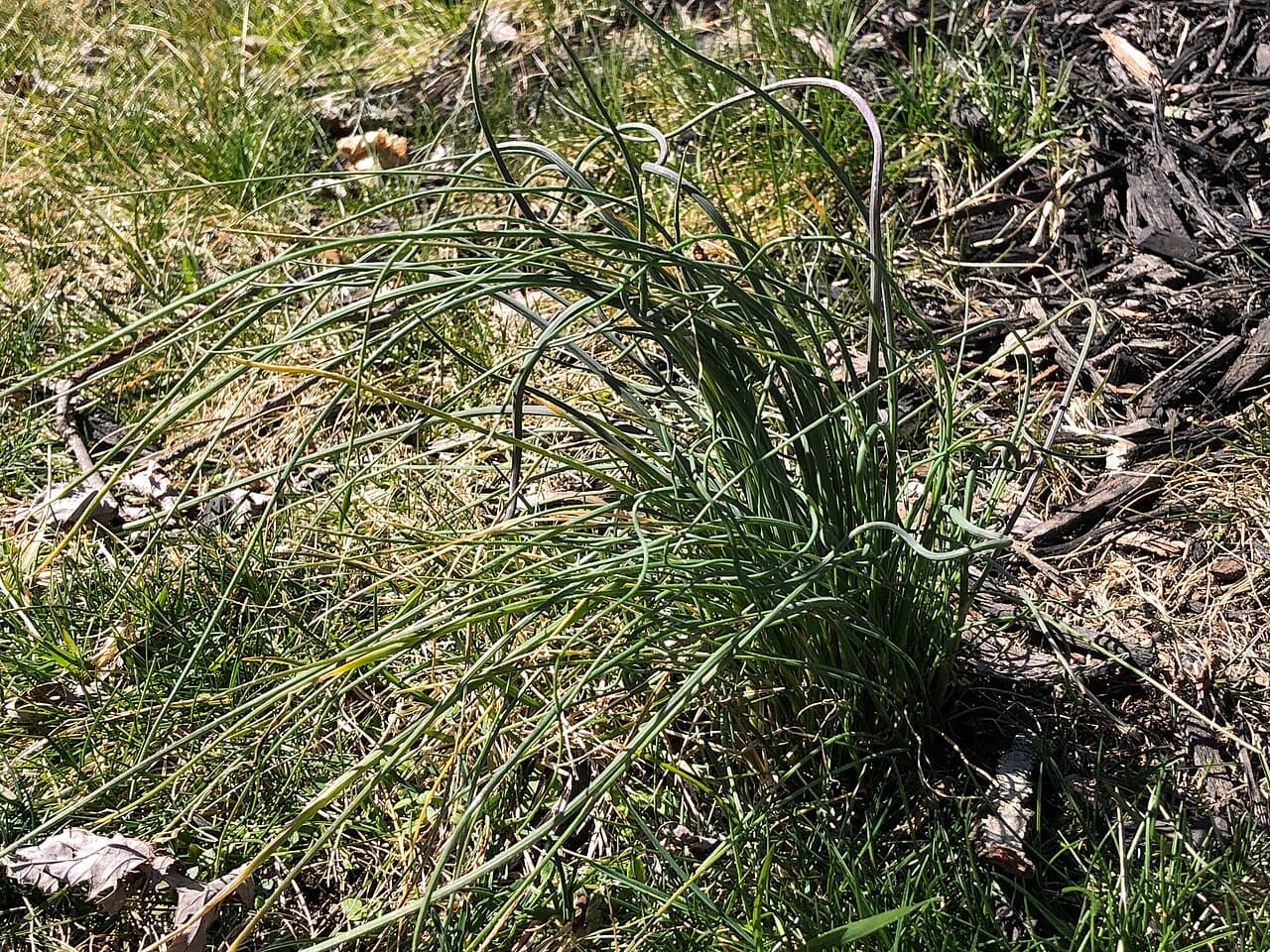
What Wild Garlic / Wild Onion looks like
Thin, dark green, upright spears that shoot up in clumps well above the rest of the lawn in late winter and early spring and smell strongly of onion when crushed or mowed; wild garlic's leaves are round and hollow like a drinking straw, wild onion's are flat and solid.
Photo: Wikimedia Commons
Not sure if it's Wild Garlic / Wild Onion?
Snap a photo — our free AI compares it to wild garlic / wild onion and tells you in seconds. No app needed.
Best approach: Spray or dig
A few scattered clumps come out with a narrow trowel if you lift the whole bulb cluster intact — pulling alone snaps the tops off and leaves the bulbs to regrow. A lawn full of them needs the fall-plus-late-winter spray program for two or three seasons, because one treatment only burns off the leaves.
Best products for Wild Garlic / Wild Onion
Formulated to kill wild garlic / wild onion without wiping out your grass — see the timing and chemistry below.
Paid links. As an Amazon Associate, MeasureLawn earns from qualifying purchases.

BioAdvanced All-In-One Weed & Feed (22-0-4)
✓ Kills wild garlic / wild onionBeginner friendly
Scotts Turf Builder Triple Action1
✓ Kills wild garlic / wild onionBeginner friendlyPrevents crabgrass for up to 4 months, kills dandelion, clover and other listed broadleaf weeds, and feeds. Apply to wet grass, no more than twice a year. Not for St. Augustine. Its label allows centipede, but centipede does better with a stand-alone weed killer and a lighter feeding.

Scotts Turf Builder Weed & Feed5
✓ Kills wild garlic / wild onionBeginner friendlyWeed killer plus 26-0-2 lawn food for dandelion, clover and other listed broadleaf weeds. Apply to wet grass. On bahia, wait until mid-April and the third mowing, and make fall applications before Nov 1. Not for St. Augustine. Its label allows centipede, but centipede does better with a stand-alone weed killer and a lighter feeding.
How much do you need?
Herbicide is dosed by lawn size. Pick your yard size for a quick estimate:
Stop guessing
Get the exact amount for your lawn
Measure your lawn on a satellite map in about 30 seconds, then use its exact square footage to choose the right number of packs.
Measure my lawn free →Prefer to read how satellite measurement works first? See the lawn measuring tool.
When to treat Wild Garlic / Wild Onion
Spray in spring or fall when temperatures are 60–80°F and the weed is actively growing. Avoid summer heat — stressed grass takes collateral damage.
Chemical treatment
On cool-season lawns (tall fescue, Kentucky bluegrass, ryegrass, fine fescue), spray a three-way 2,4-D + dicamba + MCPP with a non-ionic surfactant in November once shoots appear, again in late February or early March, and once more the following November — mow right before spraying so the herbicide sticks to the waxy leaves, then leave it unmowed for two weeks. Bermuda and zoysia tolerate the same three-way, but only while fully dormant or fully green — never during spring green-up. St. Augustine and centipede are sensitive to 2,4-D and dicamba: treat only while fully dormant, at the reduced label rate for those grasses. The stronger option for warm-season lawns only is imazaquin (Image) with surfactant — labeled for established bermuda, zoysia, centipede and St. Augustine, but it severely injures every cool-season grass, so never use it on tall fescue, bluegrass or ryegrass, and skip it on bahia and on lawns overseeded with ryegrass. Expect two to three seasons of fall-plus-late-winter treatments before the bulbs are exhausted.
Non-chemical management
Dig individual clumps with a narrow trowel and lift the entire bulb cluster; simply pulling snaps the tops off and leaves the bulbs behind to come back. Frequent mowing in spring weakens the plants and keeps the tufts and the smell down.
How to stop Wild Garlic / Wild Onion coming back
Keep a dense, well-fertilized lawn and treat small patches the first fall you notice them, before they multiply into new bulbs and bulblets.
Stop fighting weeds one by one →
Get your free 12-month AI lawn care plan
A thick, healthy lawn is the best weed killer there is. Measure your yard on a satellite map in 30 seconds — we'll build a personalized schedule (fertilizer, seed, mowing, weed control) so wild garlic / wild onion doesn't come back.
Measure my lawn — it's free →FAQ
What does Wild Garlic / Wild Onion look like?
Thin, dark green, upright spears that shoot up in clumps well above the rest of the lawn in late winter and early spring and smell strongly of onion when crushed or mowed; wild garlic's leaves are round and hollow like a drinking straw, wild onion's are flat and solid.
What's the best way to kill Wild Garlic / Wild Onion?
Spray or dig. A few scattered clumps come out with a narrow trowel if you lift the whole bulb cluster intact — pulling alone snaps the tops off and leaves the bulbs to regrow. A lawn full of them needs the fall-plus-late-winter spray program for two or three seasons, because one treatment only burns off the leaves.
Is Wild Garlic / Wild Onion hard to get rid of?
Wild Garlic / Wild Onion is rated hard to control. It usually requires multiple applications and a consistent plan.
How do I stop Wild Garlic / Wild Onion coming back?
Keep a dense, well-fertilized lawn and treat small patches the first fall you notice them, before they multiply into new bulbs and bulblets.
Other broadleaf weeds
See every weed we cover:
Full weed guide•Photo identifier•Lawn care calendar•Free lawn care plan•Best mowers by size