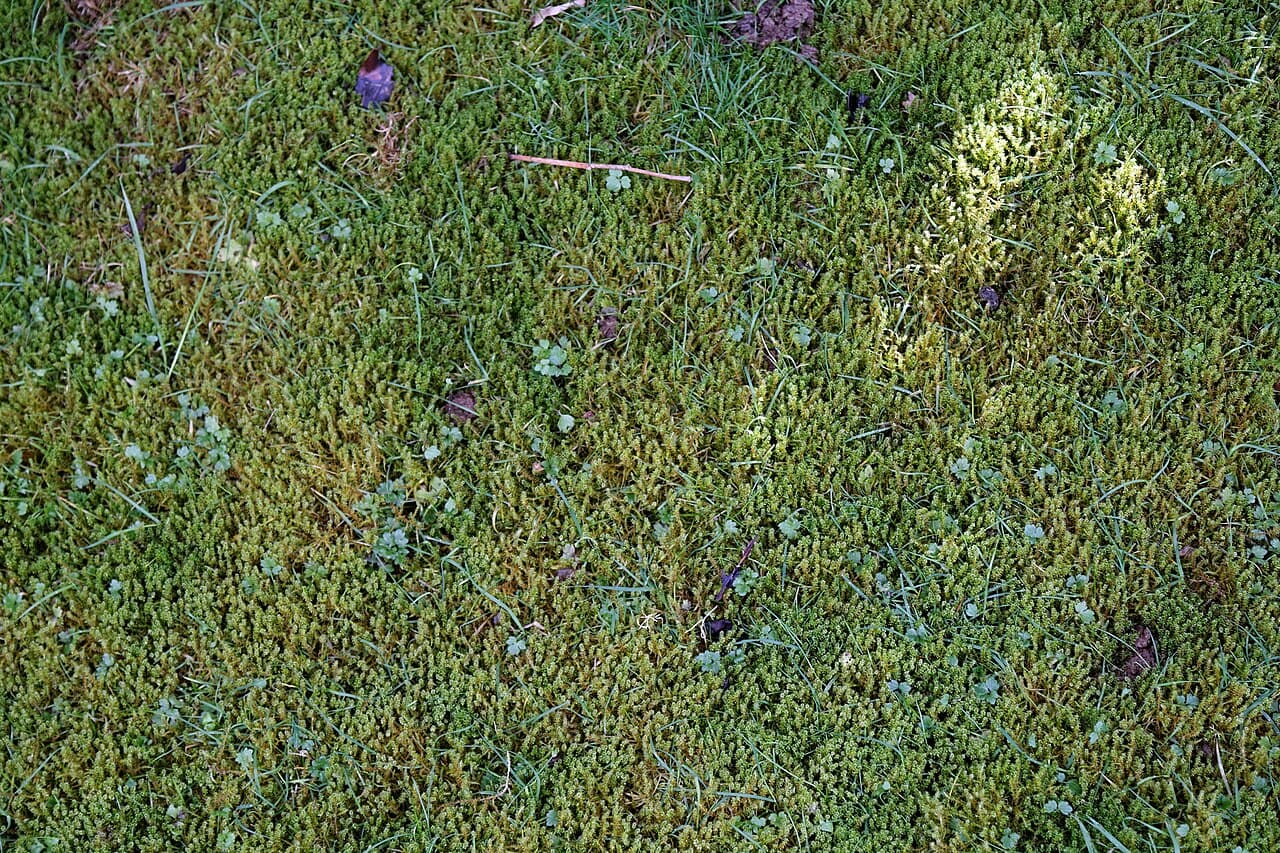
What Moss (in Lawns) looks like
A soft, spongy, low green mat of tiny threadlike shoots with no real stems, flowers or roots, sitting straight on bare soil in the shady, damp, thin parts of the lawn — it squashes like a sponge underfoot instead of springing back like grass.
Photo: Wikimedia Commons
Not sure if it's Moss (in Lawns)?
Snap a photo — our free AI compares it to moss (in lawns) and tells you in seconds. No app needed.
Best approach: Spray or dig
Rake or scrape the moss out and reseed rather than buying a weedkiller: iron products only burn off what is currently there, and every extension source says the moss returns within a season unless the shade, compaction, drainage or low pH that let it in is actually fixed.
When to treat Moss (in Lawns)
Spray in spring or fall when temperatures are 60–80°F and the weed is actively growing. Avoid summer heat — stressed grass takes collateral damage.
Chemical treatment
Moss is not a weed, and lawn weedkillers do nothing to it — 2,4-D, dicamba, quinclorac and crabgrass pre-emergents all miss it completely. Iron-based moss killers (ferrous sulfate or ferrous ammonium sulfate) blacken and kill moss within a few days and are safe on every common lawn grass at label rates, but iron permanently stains concrete, brick, stone and clothing, can temporarily darken your grass, and shouldn't be used on newly seeded lawns. Soap-type moss killers (potassium salts of fatty acids) also work, but only use a version labeled for lawns — roof-and-deck formulas will brown grass, and even lawn versions can burn blades they coat heavily. Apply in winter through early spring while the moss is green and growing, rake out the dead moss afterward, and expect it back unless you fix the real cause: shade, compaction, poor drainage, low fertility or low pH.
No catalog product confirmed yet
We do not currently have a product in our catalog confirmed for moss (in lawns). Follow the treatment guidance below and check any product label for your turf before applying.
Moss is not a weed, and lawn weedkillers do nothing to it — 2,4-D, dicamba, quinclorac and crabgrass pre-emergents all miss it completely. Iron-based moss killers (ferrous sulfate or ferrous ammonium sulfate) blacken and kill moss within a few days and are safe on every common lawn grass at label rates, but iron permanently stains concrete, brick, stone and clothing, can temporarily darken your grass, and shouldn't be used on newly seeded lawns. Soap-type moss killers (potassium salts of fatty acids) also work, but only use a version labeled for lawns — roof-and-deck formulas will brown grass, and even lawn versions can burn blades they coat heavily. Apply in winter through early spring while the moss is green and growing, rake out the dead moss afterward, and expect it back unless you fix the real cause: shade, compaction, poor drainage, low fertility or low pH.
Use the removal and non-chemical management steps below for this species. A thick, healthy lawn helps resist new invasions; measure your lawn to build a plan that keeps it dense.
Non-chemical management
Moss is a symptom, not the disease — it only fills in where grass cannot grow, so fix the cause: thin overhanging limbs to let light in, core-aerate compacted soil, improve drainage, soil-test and lime if pH is below about 6.0, and feed the lawn properly. Then rake out the dead moss and overseed the area with a shade-tolerant fine fescue.
How to stop Moss (in Lawns) coming back
Keep the shady side of the lawn fed and thick, mow at the taller end of the range, water deeply but rarely, and re-check soil pH every couple of years.
Stop fighting weeds one by one →
Get your free 12-month AI lawn care plan
A thick, healthy lawn is the best weed killer there is. Measure your yard on a satellite map in 30 seconds — we'll build a personalized schedule (fertilizer, seed, mowing, weed control) so moss (in lawns) doesn't come back.
Measure my lawn — it's free →FAQ
What does Moss (in Lawns) look like?
A soft, spongy, low green mat of tiny threadlike shoots with no real stems, flowers or roots, sitting straight on bare soil in the shady, damp, thin parts of the lawn — it squashes like a sponge underfoot instead of springing back like grass.
What's the best way to kill Moss (in Lawns)?
Spray or dig. Rake or scrape the moss out and reseed rather than buying a weedkiller: iron products only burn off what is currently there, and every extension source says the moss returns within a season unless the shade, compaction, drainage or low pH that let it in is actually fixed.
Is Moss (in Lawns) hard to get rid of?
Moss (in Lawns) is rated moderate to control. Consistent treatment over a season usually does the job.
How do I stop Moss (in Lawns) coming back?
Keep the shady side of the lawn fed and thick, mow at the taller end of the range, water deeply but rarely, and re-check soil pH every couple of years.
Other broadleaf weeds
See every weed we cover:
Full weed guide•Photo identifier•Lawn care calendar•Free lawn care plan•Best mowers by size