Warning: serious property risk
Toxic if eaten, in every part — leaves, stems, roots, seeds, and sap all carry the tremetol-complex toxins behind the historic "milk sickness," and the plant stays toxic even dried in hay. It is not a contact hazard: touching it is safe, eating it is the danger. It's also a native wildflower with real late-season value for small butterflies, leaf-cutting bees, and seed-eating songbirds — fine to keep (deadheaded) in a shaded back corner only if no grazing animals, no hay cut, and no pets or small children that chew plants. Anywhere horses, cattle, goats, or backyard livestock can reach — including dried material — remove it completely.
What White Snakeroot looks like
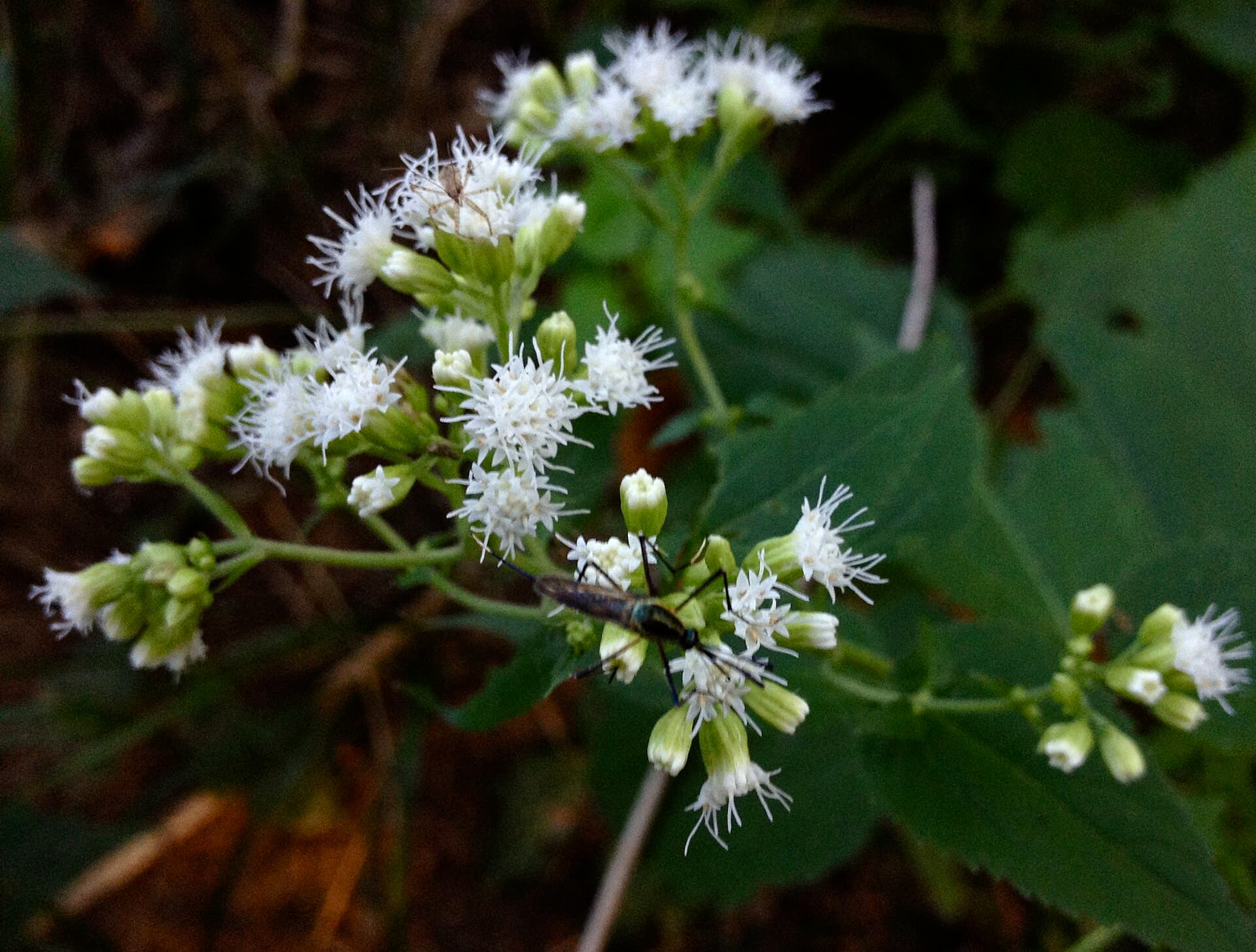
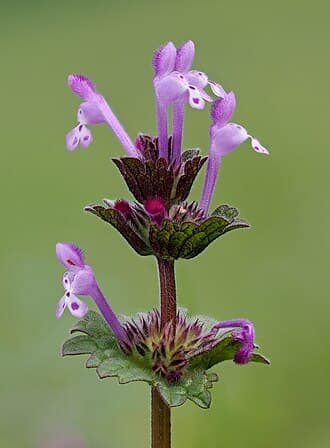
A patch-forming perennial, 1 to 5 feet tall, that lives in the shady parts of a yard — under trees, along fences, on the north side of the house — and gets ignored until September–October, when it's suddenly covered in flat-topped clusters of fluffy bright-white flowers at a time almost nothing else white is blooming in shade. Leaves are opposite and coarsely toothed, heart-shaped to ovate low on the plant with three main veins, on smooth branched stems. The tell against the boneset look-alikes: snakeroot's leaves sit on long, slender stalks, while common boneset's are stalkless and fused around the stem (blue mistflower is the same shape with blue flowers).
Photo: Wikimedia Commons
Not sure if it's White Snakeroot?
Snap a photo — our free AI compares it to white snakeroot and tells you in seconds. No app needed.
Best approach: Spray or dig
Yard colonies are usually small enough to dig out, and that's the default at shaded lawn edges: pull or dig when the soil is moist, wearing gloves — the plant is toxic and glove use is explicit extension guidance. It regrows from tough, knotty rhizomes as well as fibrous roots, so get the rhizome crown out; incomplete removal means resprouting. Bag it in the trash, not the compost, and finish before the September–October bloom sets seed. Spray only the large colonies, and remember repeated close mowing works wherever a mower reaches.
Best products for White Snakeroot
Formulated to kill white snakeroot without wiping out your grass — see the timing and chemistry below.

Hi-Yield Triclopyr Ester (8 oz)
✓ Kills white snakerootTriclopyr is the strongest broadleaf-specific herbicide available to homeowners. When 2,4-D products fail on creeping charlie or wild violet, triclopyr gets the job done.
How much do you need?
Herbicide is dosed by lawn size. Pick your yard size for a quick estimate:
Stop guessing
Get the exact amount for your lawn
Measure your lawn on a satellite map in about 30 seconds, then use its exact square footage to choose the right number of packs.
Measure my lawn free →Prefer to read how satellite measurement works first? See the lawn measuring tool.
As an Amazon Associate, Measure Lawn earns from qualifying purchases.
When to treat White Snakeroot
Spray in spring or fall when temperatures are 60–80°F and the weed is actively growing. Avoid summer heat — stressed grass takes collateral damage.
Chemical treatment
Spot-treatment with glyphosate is the extension-recommended chemical control for white snakeroot, and one pass will not finish the job — a single application won't control this rhizomatous perennial, so plan on treating regrowth multiple times. Glyphosate is non-selective and kills any turf it touches, so spray individual plants only; in practice snakeroot grows at shady, thin-turf edges where the collateral damage is small. The strongest window is late summer into early fall, on actively growing plants, before the September–October bloom sets wind-borne seed. Where you need a grass-safe selective — snakeroot creeping into the lawn proper — triclopyr is the option usually suggested for this species in grass settings, again with repeat applications; the evidence for it comes from pasture guidance rather than a dedicated turf trial, so treat it as the fallback, not the headline. Triclopyr belongs on cool-season turf only (tall fescue, Kentucky bluegrass, perennial ryegrass) — it injures bermudagrass and should never touch a St. Augustine or centipede lawn. Skip the standard weed-and-feed aisle entirely: ordinary broadleaf lawn sprays have no university evidence of controlling established snakeroot, and the best you can expect from them is top-kill with regrowth from the rhizomes.
Non-chemical management
White snakeroot is a shade-and-disturbance plant: dense turf in full sun almost never hosts it, and it colonizes thin, shaded, recently disturbed soil with ample moisture. Work on the site — prune limbs or thin the canopy so more light reaches shady edges and the grass thickens, improve drainage where the ground stays damp, and mulch bare shade beds. Repeated close mowing through the season before seed set controls it wherever a mower reaches; it does not persist in areas that get regular disturbance. If you keep horses, cattle, goats, or any grazing animal, fence off wooded margins and never let snakeroot into hay — the plant stays toxic dried, and a cumulative intake of roughly 1–10% of body weight can be lethal.
How to stop White Snakeroot coming back
Deadhead or mow every plant before its September–October flowers finish — the seed is abundant and wind-borne, and one skipped fall reseeds the whole shade line. Keep shaded lawn edges as dense as the light allows, mulch open soil under trees, and close any soil disturbance in shade quickly with grass or mulch so drifting seed has nowhere to land.
Stop fighting weeds one by one →
Get your free 12-month AI lawn care plan
A thick, healthy lawn is the best weed killer there is. Measure your yard on a satellite map in 30 seconds — we'll build a personalized schedule (fertilizer, seed, mowing, weed control) so white snakeroot doesn't come back.
Measure my lawn — it's free →FAQ
What does White Snakeroot look like?
A patch-forming perennial, 1 to 5 feet tall, that lives in the shady parts of a yard — under trees, along fences, on the north side of the house — and gets ignored until September–October, when it's suddenly covered in flat-topped clusters of fluffy bright-white flowers at a time almost nothing else white is blooming in shade. Leaves are opposite and coarsely toothed, heart-shaped to ovate low on the plant with three main veins, on smooth branched stems. The tell against the boneset look-alikes: snakeroot's leaves sit on long, slender stalks, while common boneset's are stalkless and fused around the stem (blue mistflower is the same shape with blue flowers).
What's the best way to kill White Snakeroot?
Spray or dig. Yard colonies are usually small enough to dig out, and that's the default at shaded lawn edges: pull or dig when the soil is moist, wearing gloves — the plant is toxic and glove use is explicit extension guidance. It regrows from tough, knotty rhizomes as well as fibrous roots, so get the rhizome crown out; incomplete removal means resprouting. Bag it in the trash, not the compost, and finish before the September–October bloom sets seed. Spray only the large colonies, and remember repeated close mowing works wherever a mower reaches.
Is White Snakeroot hard to get rid of?
White Snakeroot is rated moderate to control. Consistent treatment over a season usually does the job.
How do I stop White Snakeroot coming back?
Deadhead or mow every plant before its September–October flowers finish — the seed is abundant and wind-borne, and one skipped fall reseeds the whole shade line. Keep shaded lawn edges as dense as the light allows, mulch open soil under trees, and close any soil disturbance in shade quickly with grass or mulch so drifting seed has nowhere to land.
Other broadleaf weeds
See every weed we cover:
Full weed guide•Photo identifier•Lawn care calendar•Free lawn care plan•Best mowers by size