Warning: serious property risk
This is a native plant of eastern North America with real late-summer pollinator value — paper wasps, hornets, native bees and tachinid flies work its flowers, and deer avoid it. It's fine to tolerate in a meadow or along a back fence line, but it floats thousands of seeds into every bed downwind, so pull it before the fluff stage anywhere near your lawn and beds.
What American Burnweed (Fireweed) looks like
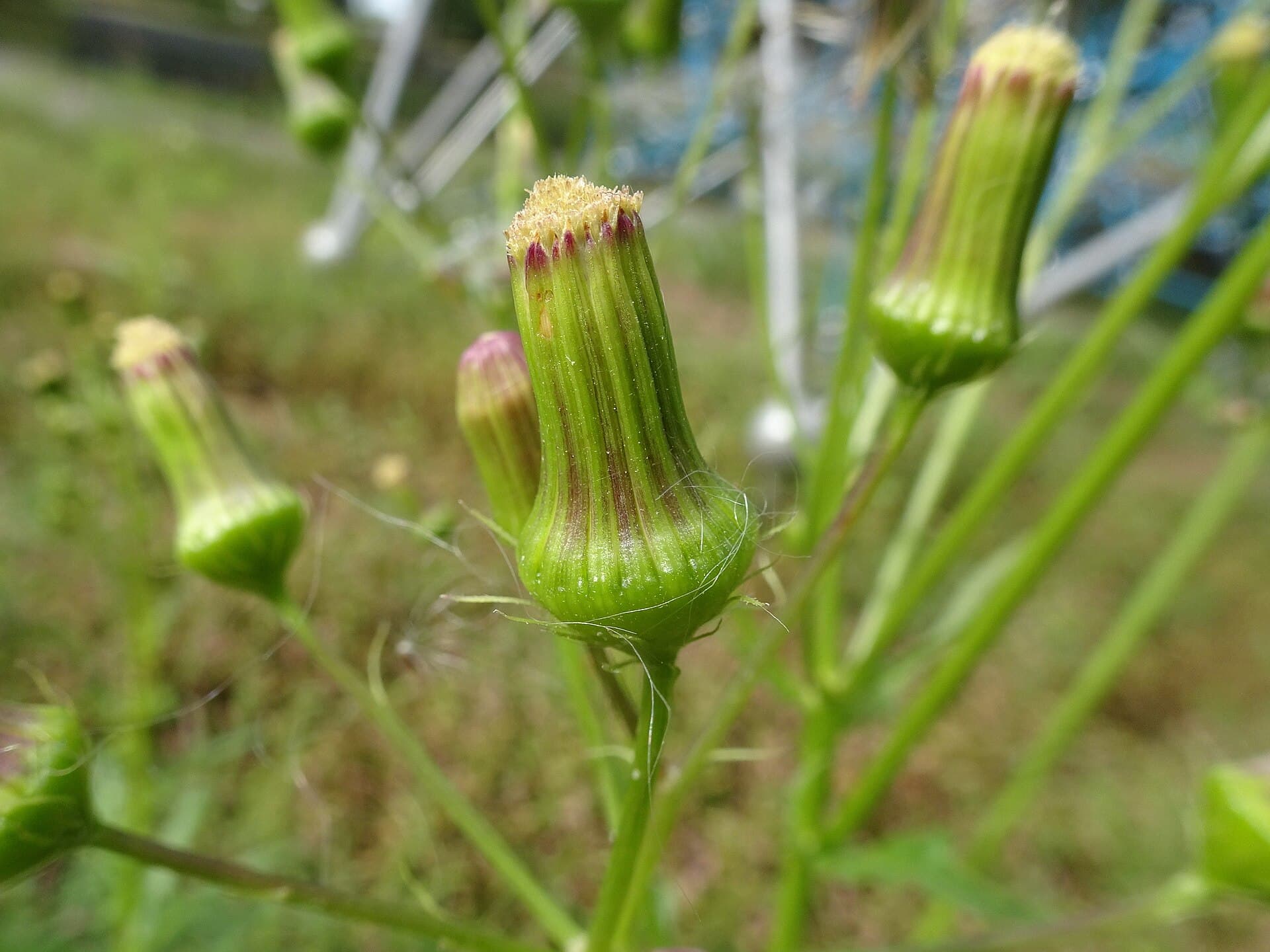
American burnweed seems to appear overnight in mid-to-late summer, rocketing from nothing to 3–8 feet (occasionally 10) on a single grooved, brittle stem in mulched beds, fence lines, and thin or unmowed turf. Look for bright-green, fleshy, raggedly toothed leaves that clasp the stem, an unpleasant odor when the foliage is crushed, and its signature flowers: green cigar-shaped heads topped with a bare cream tuft that look permanently about to open into something showy but never do, then burst into dandelion-like white parachute fluff. The tell against horseweed — the other tall late-summer annual — is that horseweed carries tiny, narrow, fuzzy, untoothed leaves and many small daisy-like heads, while burnweed's smooth toothed leaves and never-opening cylinder heads are unmistakable up close. And despite the fireweed nickname, this is not the showy pink fireweed of the West — that is an entirely different plant.
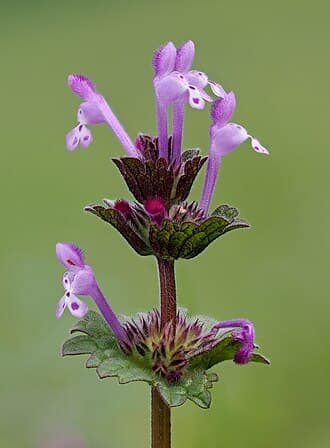
Photo: Wikimedia Commons
Not sure if it's American Burnweed (Fireweed)?
Snap a photo — our free AI compares it to american burnweed (fireweed) and tells you in seconds. No app needed.
Best approach: Spray or dig
Hand-pulling is genuinely the first-line answer: a short taproot with shallow fibrous secondary roots means the whole plant comes out in one hand from moist soil. No gloves needed — it isn't poisonous to touch, though the crushed foliage smells unpleasant. The critical timing is to remove it before the fluffy seedheads form, because each plant floats thousands of parachute seeds. Save the sprayer for large flushes; a hoe handles bed populations and frequent mowing handles it in turf.
Best products for American Burnweed (Fireweed)
Formulated to kill american burnweed (fireweed) without wiping out your grass — see the timing and chemistry below.

Spectracide Weed Stop + Crabgrass Killer Concentrate (40 oz)
✓ Kills american burnweed (fireweed)Beginner friendlyFour active ingredients in one bottle - knocks out broadleaf weeds, crabgrass and nutsedge in a single pass, so you treat a mixed-weed lawn without buying three products.

BioAdvanced All-In-One Weed & Feed (22-0-4)
✓ Kills american burnweed (fireweed)Beginner friendly
Scotts Turf Builder Triple Action1
✓ Kills american burnweed (fireweed)Beginner friendlyPrevents crabgrass for up to 4 months, kills dandelion, clover and other listed broadleaf weeds, and feeds. Apply to wet grass, no more than twice a year. Not for St. Augustine. Its label allows centipede, but centipede does better with a stand-alone weed killer and a lighter feeding.
How much do you need?
Herbicide is dosed by lawn size. Pick your yard size for a quick estimate:
Stop guessing
Get the exact amount for your lawn
Measure your lawn on a satellite map in about 30 seconds, then use its exact square footage to choose the right number of packs.
Measure my lawn free →Prefer to read how satellite measurement works first? See the lawn measuring tool.
As an Amazon Associate, Measure Lawn earns from qualifying purchases.
When to treat American Burnweed (Fireweed)
Spray in spring or fall when temperatures are 60–80°F and the weed is actively growing. Avoid summer heat — stressed grass takes collateral damage.
Chemical treatment
Treat it while it's small and actively growing: the best consumer choice in turf is a three-way broadleaf herbicide combining 2,4-D, dicamba and mecoprop (MCPP). Triclopyr also controls burnweed, and triclopyr-plus-clopyralid combinations delivered 87 percent or better control in university turf trials — but triclopyr belongs on cool-season lawns only; it injures bermudagrass and should never touch St. Augustine or centipede. A sulfentrazone plus metsulfuron combination also rated excellent in trials, though the data is for the combo — treat single-active sulfentrazone products as a supporting option, not a proven one. In beds, fence lines and gravel, spot-spray glyphosate instead of a turf herbicide. On St. Augustine and centipede, full-rate three-ways cause injury, so use a product specifically labeled for those grasses at reduced southern rates or an atrazine-based southern formulation; on bermuda, skip three-way sprays during spring green-up and summer heat stress; cool-season lawns tolerate three-ways normally. One honest note on prevention: crabgrass-preventer barriers give poor control here because the wind-blown parachute seed sits on top of the soil and thatch, above the herbicide layer — the pre-emergents that do work in trials, at 80 to 95-plus percent (simazine, indaziflam and certain dimethenamid-P combinations), are professional products.
Non-chemical management
Burnweed is a poor competitor that only wins on disturbed or neglected ground — it colonizes after tilling, construction, fresh mulch, thinning turf, or a lapse in mowing (it historically followed fires, hence the name). In lawns, ordinary frequent mowing through summer is itself the control: the more you can mow, the better, and infestations blow up exactly where mowing lapses. It germinates late April to mid-May, bolts and flowers in late summer, and dies at frost, so any plant removed or mowed out before seed set is gone for the year. In beds, hoeing or shallow cultivation cleans out whole flushes, and thickening thin turf closes the door on next season's seedlings.
How to stop American Burnweed (Fireweed) coming back
Keep turf dense — overseed thin and shaded areas and fertilize on schedule — and mow regularly through summer, which is burnweed's lethal weakness. In beds, refresh mulch to a 2–3 inch depth so seed sitting on the surface can't establish, and pull arrivals before the fluff stage, since each plant floats thousands of parachute seeds downwind. Because seed blows in from off your property, expect a few plants every year no matter what you do — prevention limits establishment, not arrival.
Stop fighting weeds one by one →
Get your free 12-month AI lawn care plan
A thick, healthy lawn is the best weed killer there is. Measure your yard on a satellite map in 30 seconds — we'll build a personalized schedule (fertilizer, seed, mowing, weed control) so american burnweed (fireweed) doesn't come back.
Measure my lawn — it's free →FAQ
What does American Burnweed (Fireweed) look like?
American burnweed seems to appear overnight in mid-to-late summer, rocketing from nothing to 3–8 feet (occasionally 10) on a single grooved, brittle stem in mulched beds, fence lines, and thin or unmowed turf. Look for bright-green, fleshy, raggedly toothed leaves that clasp the stem, an unpleasant odor when the foliage is crushed, and its signature flowers: green cigar-shaped heads topped with a bare cream tuft that look permanently about to open into something showy but never do, then burst into dandelion-like white parachute fluff. The tell against horseweed — the other tall late-summer annual — is that horseweed carries tiny, narrow, fuzzy, untoothed leaves and many small daisy-like heads, while burnweed's smooth toothed leaves and never-opening cylinder heads are unmistakable up close. And despite the fireweed nickname, this is not the showy pink fireweed of the West — that is an entirely different plant.
What's the best way to kill American Burnweed (Fireweed)?
Spray or dig. Hand-pulling is genuinely the first-line answer: a short taproot with shallow fibrous secondary roots means the whole plant comes out in one hand from moist soil. No gloves needed — it isn't poisonous to touch, though the crushed foliage smells unpleasant. The critical timing is to remove it before the fluffy seedheads form, because each plant floats thousands of parachute seeds. Save the sprayer for large flushes; a hoe handles bed populations and frequent mowing handles it in turf.
Is American Burnweed (Fireweed) hard to get rid of?
American Burnweed (Fireweed) is rated easy to control. Most homeowners can handle it in one or two treatments.
How do I stop American Burnweed (Fireweed) coming back?
Keep turf dense — overseed thin and shaded areas and fertilize on schedule — and mow regularly through summer, which is burnweed's lethal weakness. In beds, refresh mulch to a 2–3 inch depth so seed sitting on the surface can't establish, and pull arrivals before the fluff stage, since each plant floats thousands of parachute seeds downwind. Because seed blows in from off your property, expect a few plants every year no matter what you do — prevention limits establishment, not arrival.
Other broadleaf weeds
See every weed we cover:
Full weed guide•Photo identifier•Lawn care calendar•Free lawn care plan•Best mowers by size