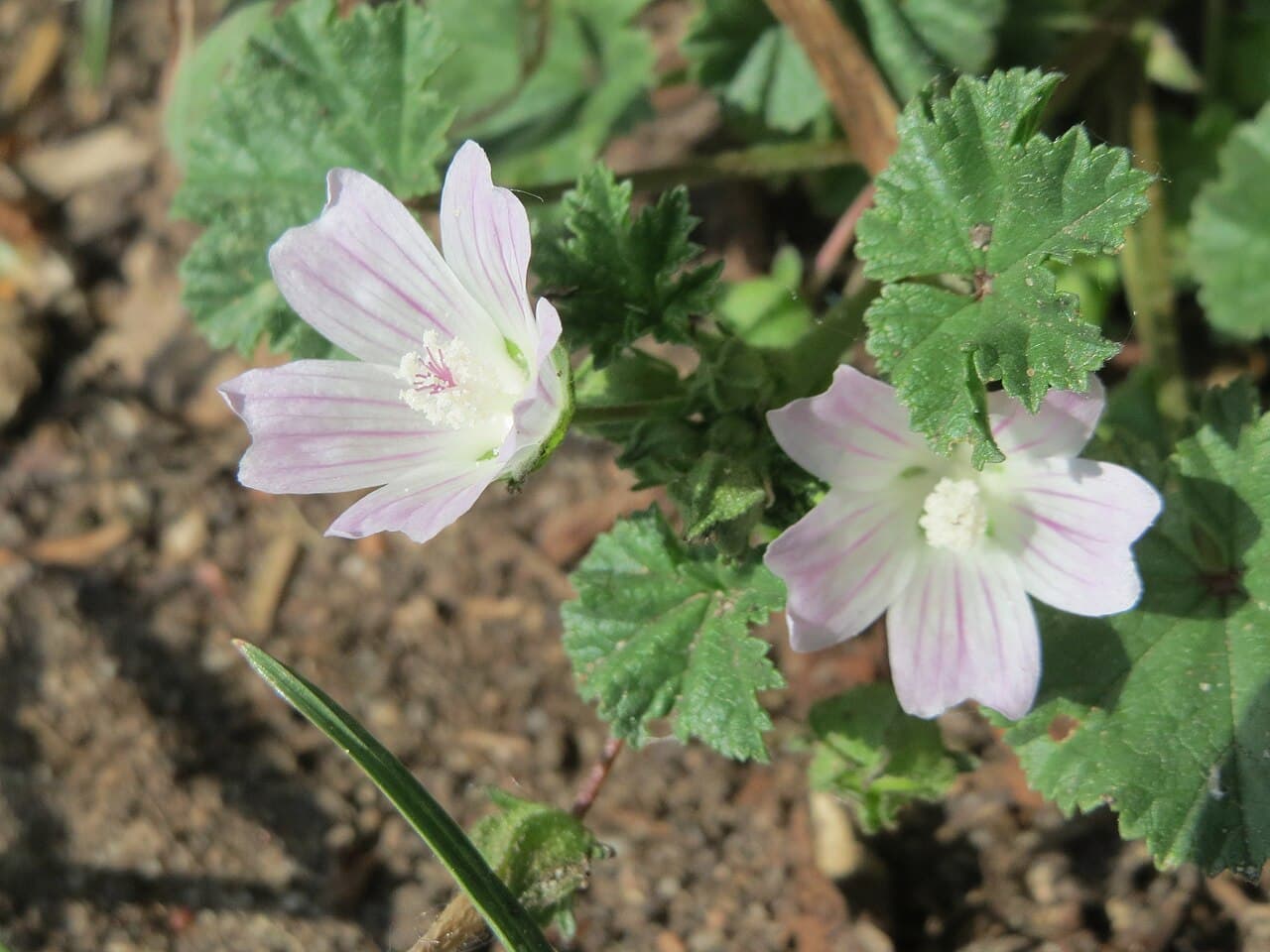
What Common Mallow looks like
Sprawling plant with nearly round, crinkled leaves that have scalloped edges and sit on long stalks, small white-to-pink five-petal flowers, and flat green seed pods that look like miniature wheels of cheese.
Photo: Wikimedia Commons
Not sure if it's Common Mallow?
Snap a photo — our free AI compares it to common mallow and tells you in seconds. No app needed.
Best approach: Spray or dig
Digging beats spraying once mallow matures — get the whole taproot with a weeding fork. Spray only while plants are young and small; a woody old mallow will survive most lawn herbicides.
Best products for Common Mallow
Formulated to kill common mallow without wiping out your grass — see the timing and chemistry below.
Paid links. As an Amazon Associate, MeasureLawn earns from qualifying purchases.

BioAdvanced All-In-One Weed & Feed (22-0-4)
✓ Kills common mallowBeginner friendly
Ortho WeedClear Lawn Weed Killer Concentrate (Northern)
✓ Kills common mallowBeginner friendlyBest value broadleaf herbicide that ALSO kills crabgrass. 250+ weeds controlled. Great beginner option.

Ortho WeedClear Ready-to-Spray Hose-End (Northern)
✓ Kills common mallowBeginner friendlyNo mixing, no pump sprayer needed. Hose-end applicator makes this the easiest weed killer to use. Perfect for beginners.
How much do you need?
Herbicide is dosed by lawn size. Pick your yard size for a quick estimate:
Stop guessing
Get the exact amount for your lawn
Measure your lawn on a satellite map in about 30 seconds, then use its exact square footage to choose the right number of packs.
Measure my lawn free →Prefer to read how satellite measurement works first? See the lawn measuring tool.
When to treat Common Mallow
Spray in spring or fall when temperatures are 60–80°F and the weed is actively growing. Avoid summer heat — stressed grass takes collateral damage.
Chemical treatment
Catch it young: small, actively growing plants in spring or early fall respond to a three-way broadleaf weed killer (2,4-D + dicamba + MCPP), and products that add triclopyr or fluroxypyr control it better — mature mallow resists selective sprays, and glyphosate does not control it. Repeat only after your label's interval (usually 3-4 weeks). Three-ways are safe on tall fescue, Kentucky bluegrass, ryegrass and fine fescue. On St. Augustine and centipede even a plain three-way can injure the lawn — use a southern-labeled product at its reduced rate, never above 85°F and never during spring green-up. Do not use triclopyr on St. Augustine, centipede, bahia or bermuda; do not use fluroxypyr on St. Augustine; do not use quinclorac on St. Augustine, centipede, bahia, or zoysia coming out of dormancy.
Non-chemical management
Dig seedlings while they still have four or fewer true leaves — after that the taproot turns woody and snaps off, leaving the crown to regrow. Mulch beds 3 inches deep to block germination.
How to stop Common Mallow coming back
Remove mallow before it flowers — one plant produces heavy seed that stays viable in soil for years.
Stop fighting weeds one by one →
Get your free 12-month AI lawn care plan
A thick, healthy lawn is the best weed killer there is. Measure your yard on a satellite map in 30 seconds — we'll build a personalized schedule (fertilizer, seed, mowing, weed control) so common mallow doesn't come back.
Measure my lawn — it's free →FAQ
What does Common Mallow look like?
Sprawling plant with nearly round, crinkled leaves that have scalloped edges and sit on long stalks, small white-to-pink five-petal flowers, and flat green seed pods that look like miniature wheels of cheese.
What's the best way to kill Common Mallow?
Spray or dig. Digging beats spraying once mallow matures — get the whole taproot with a weeding fork. Spray only while plants are young and small; a woody old mallow will survive most lawn herbicides.
Is Common Mallow hard to get rid of?
Common Mallow is rated hard to control. It usually requires multiple applications and a consistent plan.
How do I stop Common Mallow coming back?
Remove mallow before it flowers — one plant produces heavy seed that stays viable in soil for years.
Other broadleaf weeds
See every weed we cover:
Full weed guide•Photo identifier•Lawn care calendar•Free lawn care plan•Best mowers by size