Not the lawn sold as buffalo in Australia
This guide covers buffalograss (Bouteloua dactyloides, formerly Buchloe dactyloides), a fine-leaved grass native to the Great Plains of North America. The broad-leaf lawns sold as buffalo in Australia, such as Sir Walter, are St. Augustine grass (Stenotaphrum secundatum). Read the St. Augustine grass guide
How to identify Buffalo Grass
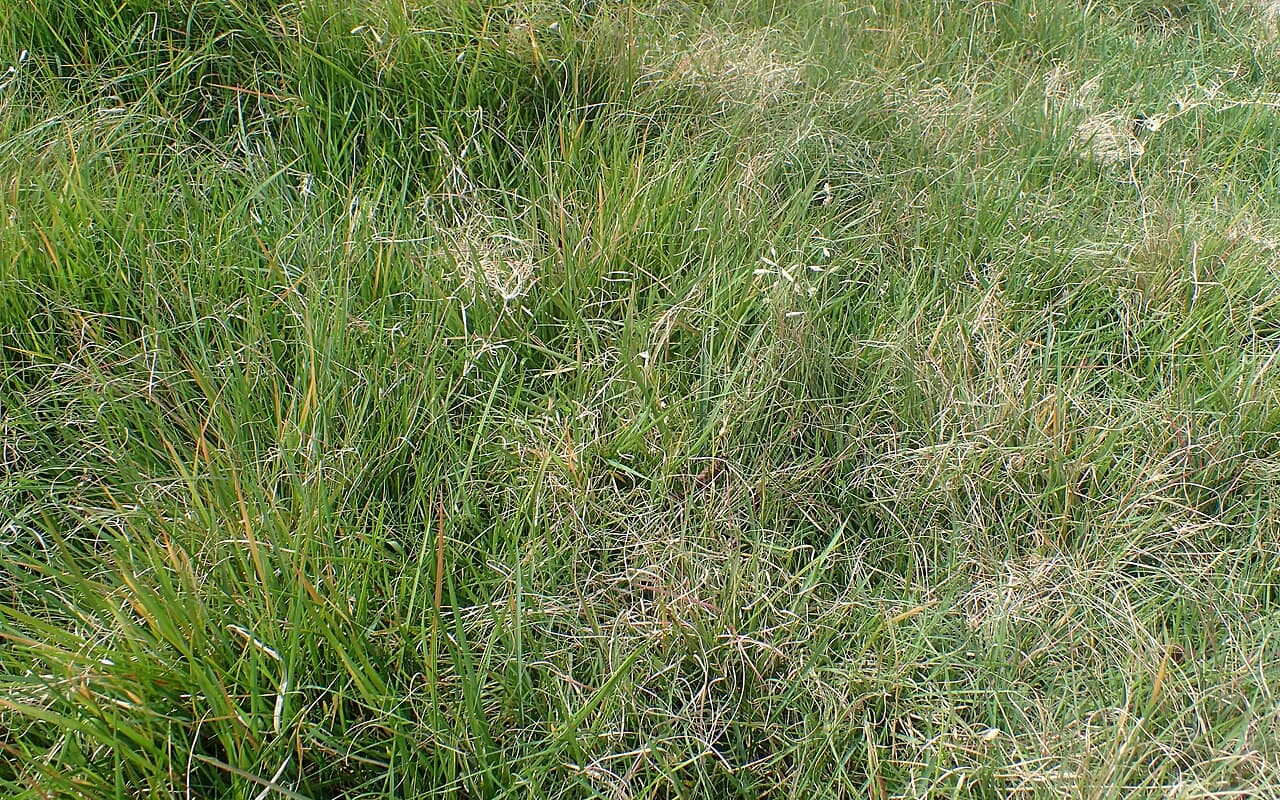
Buffalograss makes a low, soft lawn of fine, curly blades with a gray-green to blue-green cast. It stays short on its own, usually under 6 inches. Seed-grown lawns show small male flower spikes above the leaves in summer, while plug or sod lawns of female-only varieties look more even. It greens up late in spring and turns brown early in fall.
- Male flowers
- Male plants carry small, one-sided spikes on thin stalks, usually 4 to 8 inches tall, that rise above the leaves. They show mainly in lawns grown from seed.
- Female burs
- Female plants hold small, bur-like seed clusters down among the leaves near the ground. These burs are what you buy as seed.
- Blade
- Very fine blades, less than 1/8 inch wide, that curl and carry sparse hairs. The color is gray-green to blue-green.
- Runners
- It spreads mainly by above-ground runners (stolons) that root and start new plants at their joints.
- Ligule
- A short fringe of hairs sits where the blade meets the stem.
- Dormancy
- It stays brown for a long stretch each year. In Nebraska it greens up in May and starts going dormant in late September or early October.
Photo: Krzysztof Ziarnek, Kenraiz · CC BY-SA 4.0 · via Wikimedia Commons
Not sure it's Buffalo Grass?
Snap a close-up of a few blades — our free AI identifies your grass in seconds. No app needed.
Seed & repair supplies for Buffalo Grass
Use seed of the same grass, so the repair matches the rest of the lawn instead of showing up as an off-color patch.
Paid links. As an Amazon Associate, MeasureLawn earns from qualifying purchases.

Outsidepride Perennial Buffalo Grass Seed
Buffalo seed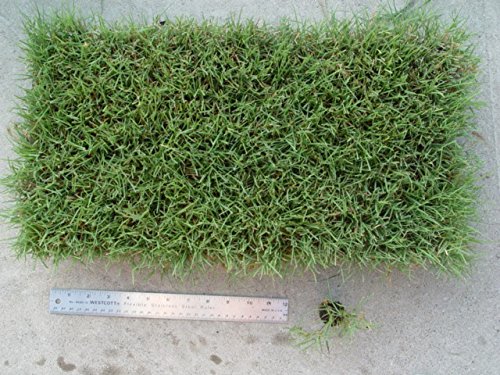
Legacy Buffalograss Plugs (Todd Valley Farms)
Buffalo plugsA tray of 70 plugs covers about 70 sq ft on 12 inch centers, or up to 160 sq ft on 18 inch centers.

Scotts Turf Builder Lawn Soil (1.5 cu ft)
Fills bare spotsBeginner friendlyEnriched lawn soil for topdressing and leveling. Contains fertilizer.
How to fix bare patches in Buffalo Grass
- 1Repair in late spring or early summer, once the lawn has greened up and the soil is at least 60°F. Buffalograss seed will not sprout in cold soil.
- 2Clear the patch of weeds and any cool-season grass, roots and all. Buffalograss cannot compete with them and will not establish in living turf.
- 3Patch a plug or sod lawn with plugs of the same variety set about 12 inches apart, since seed would add male flower stalks. Patch a seeded lawn by raking burs into loose soil.
- 4Keep the surface lightly moist until the new grass roots, then water less often. Extra water sprouts more weeds.
- 5Pull weeds while they are small, and mow off any that grow taller than the new grass.
- 6Feed lightly. A starter fertilizer at planting helps new grass, but on the rest of the lawn wait until mid-June to mid-July, when the runners are spreading. Fertilizer applied earlier mostly feeds weeds.
Working out how much seed to buy? The grass seed calculator does the math for your square footage.
When to plant or repair Buffalo Grass
Best time: May–June. Also workable: April, July.
- Grows from
- Seed, plugs or sod
- Soil temperature
- 60°F and rising
- Seed rate, new lawn
- 1–3 lb of treated burs per 1,000 sq ft
- Sprouts in
- 5–10 days for treated seed
Seed (sold as burs) works but needs weed control and steady watering while it fills in. Plugs and sod of female-only varieties such as Legacy and Prestige look more even because they have no male flower stalks, and sod covers fastest.
In Australia or New Zealand? The seasons flip — shift these months by six, or see the Southern Hemisphere lawn calendar.
Buffalo Grass care at a glance
- Mowing height
- 2–3 in
- Water
- 0.5 inches per week
- Sun
- Full sun (8+ hours ideal)
- Soil pH
- 6.5–7.5
- Fertilizer
- 1 lb nitrogen per 1,000 sq ft a year
- Growth habit
- Stolons
- Texture
- Fine
- USDA zones
- 3-8
How it holds up
Mowing height by season
| Spring | Summer | Fall | Winter |
|---|---|---|---|
| 2"–3" | 2"–3" | 2"–3" | Dormant |
Varieties you'll see
Want these turned into a month-by-month schedule for your yard? Build a free lawn plan.
Buffalo Grass pros and cons
Strengths
- Native to the Great Plains
- Very low water use once established, with roots that can reach 3 feet deep
- Needs little fertilizer
- Naturally short, so it needs little mowing
- Survives cold winters, summer heat and brief flooding once established
- Does well on clay and loam soils
Weaknesses
- Does not tolerate much shade
- Weeds move in when it is overwatered or overfed
- Brown for much of the year, from early fall to late spring
- Struggles in humid, high-rainfall areas
- Not suited to heavy foot traffic or salty soil
- Cannot be overseeded into a living cool-season lawn
- Slow to fill in from seed without steady watering and weed control
Problems to watch for
Where Buffalo Grass grows best
Buffalograss is native to the Great Plains, from the Canadian prairies south through the central United States into Mexico. It does best where summers are hot and rain is scarce, on clay and loam soils rather than sand. It struggles in humid, high-rainfall areas; in Texas, for example, it does poorly in the east, where yearly rainfall tops 30 inches.
A common lawn choice in
Commonly confused with
St. Augustine grass (sold as buffalo in Australia) →
The lawns sold as buffalo in Australia have broad, blunt-tipped blades about 1/6 to 2/5 inch wide on thick runners. Buffalograss blades are far finer, under 1/8 inch wide.
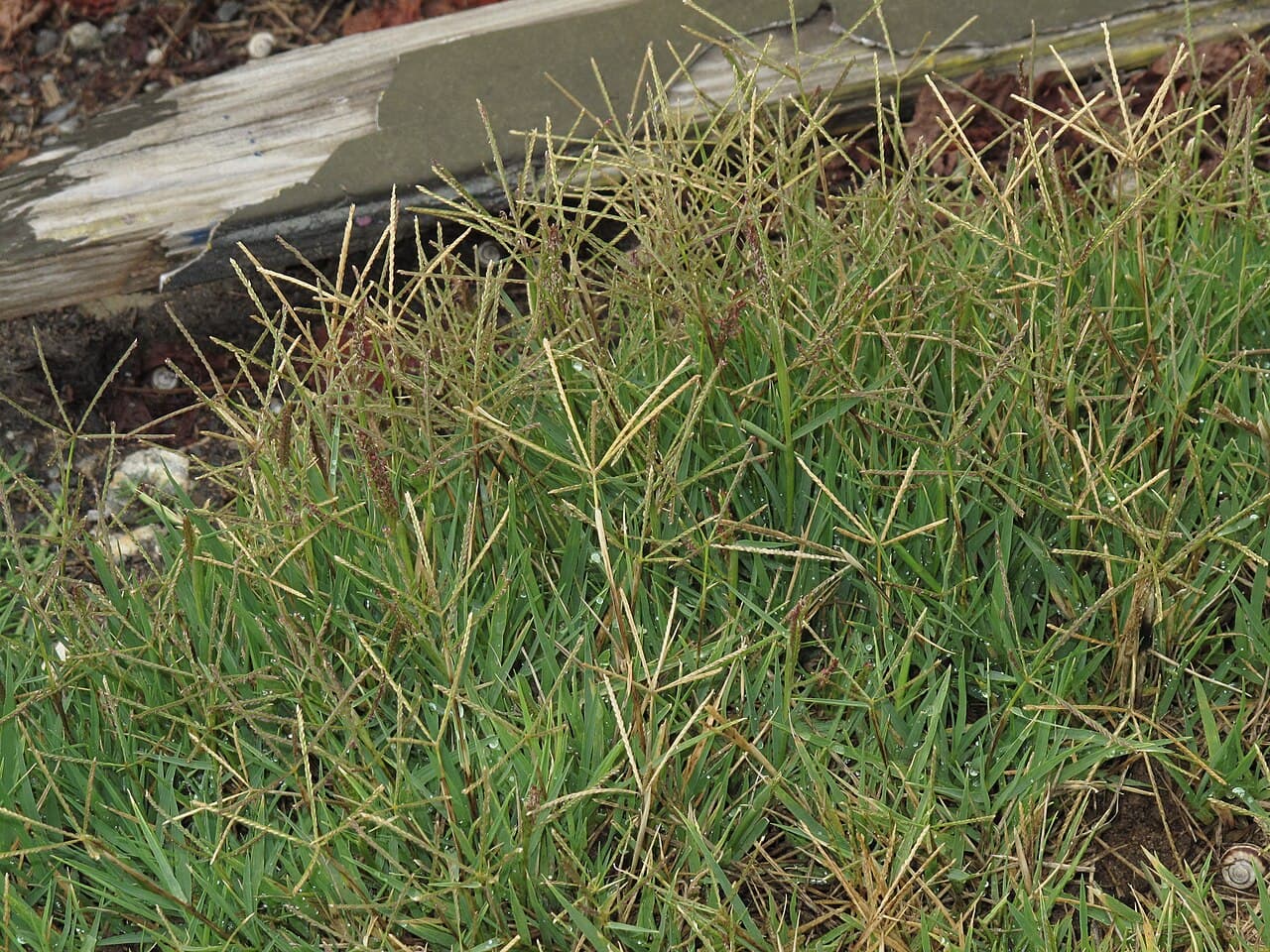
Bermuda's seedhead is 3 to 5 thin spikes joined at the top of the stem, and it spreads by underground rhizomes as well as runners. Buffalograss has short, one-sided male spikes or hidden burs, and spreads mainly by runners.
Blue grama
Blue grama grows in bunches and carries one-sided spikes about 1 1/2 inches long that curve like an eyebrow, on stalks about 6 to 12 inches tall. Buffalograss creeps by runners into a mat, and its male spikes are much smaller. The two are sometimes planted together.
Know your grass? Put it to work →
Get a free 12-month plan built for Buffalo Grass
Measure your yard on a satellite map in 30 seconds. We'll build a care schedule for buffalo grass in your climate — mowing height, fertilizer, seed and weed control, with exact product amounts.
Measure my lawn — it's free →Buffalo Grass FAQ
Does buffalo grass need to be mowed?
Not often. Buffalograss is naturally short, usually under 6 inches, so you can leave it unmowed for a natural look or mow every two to three weeks in summer for a tidier lawn. Lawns grown from plugs or sod of female-only varieties look even without mowing, because they have no male flower stalks.
Is buffalo grass the same as Sir Walter buffalo?
No. Sir Walter and the other buffalo lawns sold in Australia are St. Augustine grass, a broad-leaf grass for warm, humid areas. Buffalograss is a different, fine-leaved grass native to the Great Plains of North America. The two need very different care, so check which one you have before you buy seed, sod or products.
Does buffalo grass grow in shade?
Not well. Buffalograss needs full sun or close to it, and it is a poor choice where heavy shade lasts more than half the day. Under trees or on the shady side of a building it thins out, and weeds fill the gaps. For those spots, use a shade-tolerant grass or a groundcover instead.
How long does buffalo grass take to fill in?
From seed, usually one growing season when conditions are right, and sometimes two. In Nebraska trials, seed sown in early June gave full cover by mid-September, but without irrigation, or with heavy weeds, it takes longer. Plugs set 12 to 18 inches apart can cover in about 6 to 12 weeks, and sod covers right away.
Why is my buffalo grass lawn full of weeds?
Usually because it gets too much water or fertilizer, or gets it too early. Water and fertilizer in early spring, before buffalograss wakes up, feed weeds instead. Water only when the grass is actively growing in summer, and fertilize lightly, if at all, between mid-June and mid-July. Thin spots from shade or traffic also let weeds in.
Other warm-season grasses
Sources
- Nebraska Extension: Establishing Buffalograss Turf in Nebraska (G1946)
- Nebraska Extension: Management of Buffalograss Turf in Nebraska (G1947)
- Texas A&M AgriLife AggieTurf: Buffalograss
- NC State TurfFiles: Buffalograss
- Colorado State University Extension: Buffalograss Lawn Establishment Using Seed or Plugs
- Colorado State University Extension: Buffalograss Lawns
- USDA Forest Service Fire Effects Information System: Buffalograss
- Texas Parks and Wildlife: Buffalograss
- Brisbane City Council Weed Identification: Buffalo grass (Stenotaphrum secundatum)
More free lawn tools:
Every lawn grass•Photo grass identifier•Grass seed calculator•Weed guide•Lawn care calendar