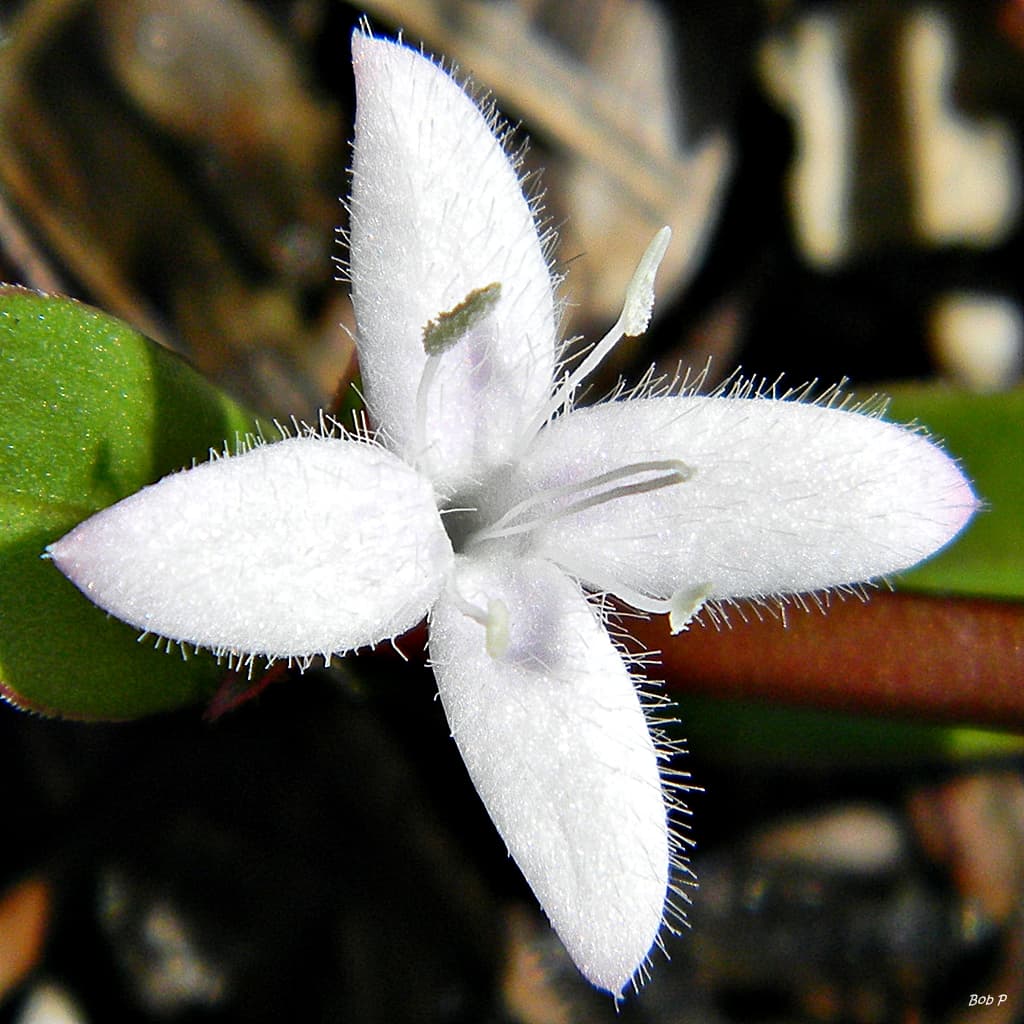
What Virginia Buttonweed looks like
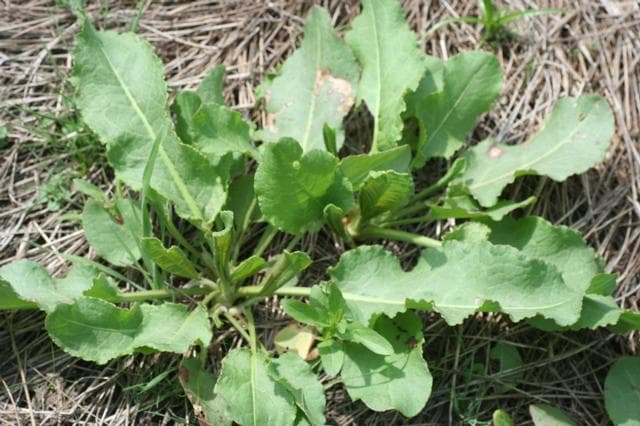
A low, sprawling mat of shiny dark-green lance-shaped leaves that sit directly opposite each other with no leaf stalk, topped by small white four-petal flowers shaped like a star; the leaves often show a blotchy yellow mottling and it takes over the wettest, soggiest parts of the lawn.
Photo: Wikimedia Commons
Not sure if it's Virginia Buttonweed?
Snap a photo — our free AI compares it to virginia buttonweed and tells you in seconds. No app needed.
Best approach: Herbicide spray
Spraying is the only route — never dig or till Virginia buttonweed, because it regrows from root and stem fragments, so cultivation spreads it. Plan on at least two applications a season, possibly for two seasons.
Best products for Virginia Buttonweed
Formulated to kill virginia buttonweed without wiping out your grass — see the timing and chemistry below.
Paid links. As an Amazon Associate, MeasureLawn earns from qualifying purchases.

Blindside Herbicide WDG (8 oz)
✓ Kills virginia buttonweedProfessional-grade dual-action herbicide. Kills both broadleaf weeds AND sedges in a single application. Extremely concentrated — lasts years for residential use.

Celsius WG Herbicide Easy Mix Packet (0.226 oz)
✓ Kills virginia buttonweedCelsius is the professional standard for warm-season weed control. This single-dose packet is the affordable homeowner option.

BioAdvanced All-In-One Weed & Feed (22-0-4)
✓ Kills virginia buttonweedBeginner friendlyHow much do you need?
Herbicide is dosed by lawn size. Pick your yard size for a quick estimate:
Stop guessing
Get the exact amount for your lawn
Measure your lawn on a satellite map in about 30 seconds, then use its exact square footage to choose the right number of packs.
Measure my lawn free →Prefer to read how satellite measurement works first? See the lawn measuring tool.
When to treat Virginia Buttonweed
Spray in spring or fall when temperatures are 60–80°F and the weed is actively growing. Avoid summer heat — stressed grass takes collateral damage.
Chemical treatment
Warm-season lawns only: metsulfuron-methyl, or thiencarbazone + iodosulfuron + dicamba (Celsius WG), sprayed with a non-ionic surfactant in warm summer weather while the weed is actively growing — repeat every 4-6 weeks with a final pass in early fall, because one application will not kill it. Both are safe on bermuda and zoysia; use the reduced labeled rate on centipede and St. Augustine (expect temporary yellowing) and never apply metsulfuron to bahia — it kills it. Do NOT use either product on a cool-season lawn: metsulfuron and Celsius severely injure or kill tall fescue, Kentucky bluegrass, ryegrass, fine fescue and bentgrass. On cool-season lawns your only option is repeat applications of a 2,4-D + dicamba + fluroxypyr (or triclopyr) mix — expect suppression, not eradication. Both warm-season products are professional turf products rather than big-box shelf brands.
Non-chemical management
Fix the wet spot first: core aerate to improve drainage, water deeply but less often, and mow high so the turf thickens and crowds it out. Do not hand-pull, because broken stem and root fragments each start a brand new plant.
How to stop Virginia Buttonweed coming back
Correct soggy, poorly drained areas and keep turf thick and well fed, since buttonweed establishes in wet, thin lawns.
Stop fighting weeds one by one →
Get your free 12-month AI lawn care plan
A thick, healthy lawn is the best weed killer there is. Measure your yard on a satellite map in 30 seconds — we'll build a personalized schedule (fertilizer, seed, mowing, weed control) so virginia buttonweed doesn't come back.
Measure my lawn — it's free →FAQ
What does Virginia Buttonweed look like?
A low, sprawling mat of shiny dark-green lance-shaped leaves that sit directly opposite each other with no leaf stalk, topped by small white four-petal flowers shaped like a star; the leaves often show a blotchy yellow mottling and it takes over the wettest, soggiest parts of the lawn.
What's the best way to kill Virginia Buttonweed?
Herbicide spray. Spraying is the only route — never dig or till Virginia buttonweed, because it regrows from root and stem fragments, so cultivation spreads it. Plan on at least two applications a season, possibly for two seasons.
Is Virginia Buttonweed hard to get rid of?
Virginia Buttonweed is rated hard to control. It usually requires multiple applications and a consistent plan.
How do I stop Virginia Buttonweed coming back?
Correct soggy, poorly drained areas and keep turf thick and well fed, since buttonweed establishes in wet, thin lawns.
Other broadleaf weeds
See every weed we cover:
Full weed guide•Photo identifier•Lawn care calendar•Free lawn care plan•Best mowers by size