Charlotte
Spot-treat61°F↑ warming
Winter weeds are up. Spot-treat them on a mild day, or in early spring before they flower.
Winter weeds are up
Live soil temperatures for Charlotte, Raleigh, Greensboro, Asheville and Wilmington, updated every three hours. Weeds sprout by soil temperature, not by the calendar, so the right week moves from year to year.
Most North Carolina lawns get pre-emergent twice a year: in spring for crabgrass and in fall for winter weeds. In Asheville, cool summers mean fall seeding, so it is spring only there.
Soil is 55–65°F now. Spot-treat them with a post-emergent on a mild day, or in early spring before they flower.
Soil 2 inches down, 5-day average: solid line = the last two weeks, dashed = the six-day forecast. Shaded = below 75°F, where winter weeds sprout — pre-emergent has to be down before the line gets there.
Winter weeds are up. Spot-treat them on a mild day, or in early spring before they flower.
Winter weeds are up
Soil has cooled to 75°F, so winter weeds are sprouting. Pre-emergent still stops later flushes.
Winter weeds are sprouting now
Winter weeds are up. Spot-treat them on a mild day, or in early spring before they flower.
Winter weeds are up
Fall is the best time to treat dandelions and clover: they pull weed killer down to their roots.
Broadleaf window Sep 1 – Nov 2
Soil has cooled to 75°F, so winter weeds are sprouting. Pre-emergent still stops later flushes.
Winter weeds are sprouting now
Spring pre-emergent stops crabgrass. The window runs from the typical day soil warms to 50°F to the day it holds 55°F, when crabgrass starts germinating (2016–2025). Fall pre-emergent stops winter weeds: have it down a week before soil usually cools to 75°F, when they start germinating.
| City | Spring pre-emergent (crabgrass) | Fall pre-emergent (winter weeds) |
|---|---|---|
| Charlotte | Feb 25 – Mar 17 | Apply by Aug 20 |
| Raleigh | Mar 4 – Mar 20 | Apply by Aug 29 |
| Greensboro | Mar 5 – Mar 28 | Apply by Aug 22 |
| Asheville | Mar 13 – Mar 31 | None (seeding season) · treat broadleaf Sep 1 – Nov 2 |
| Wilmington | Feb 12 – Mar 2 | Apply by Aug 29 |
These are typical-year dates (the median of 2016–2025); any one year can run a couple of weeks earlier or later, which is what the live readings above are for. For your exact yard, check soil temperature by ZIP.
Granular or liquid. Follow the label rate, and water it in.
Paid links. As an Amazon Associate, MeasureLawn earns from qualifying purchases.

Scotts Halts Crabgrass & Grassy Weed Preventer
Beginner friendly
The Andersons Barricade Professional-Grade Granular
Beginner friendly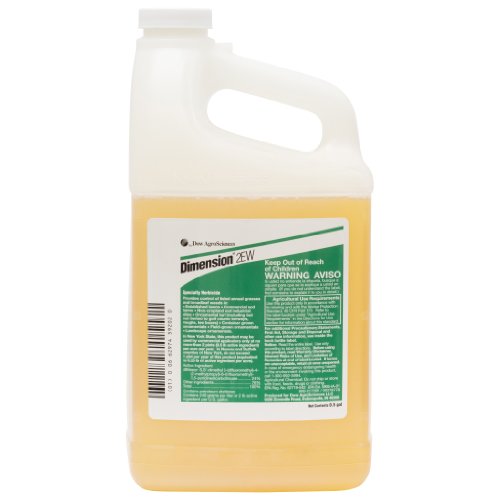
Dimension 2EW (Dithiopyr)
Liquid concentrate; 64 oz half gallon; mix with water and spray
We record the state each identification comes from. North Carolina's list appears here once it has at least 40 identifications spread over 7 or more days — so no single scan stands out. Until then, see the national list, or add yours:
Identify a weed from a photoPut crabgrass pre-emergent down as soil warms to 50°F, before it holds 55°F and crabgrass starts germinating. In a typical year (2016–2025) that window is Feb 25 – Mar 17 in Charlotte; Mar 4 – Mar 20 in Raleigh; Mar 5 – Mar 28 in Greensboro; Mar 13 – Mar 31 in Asheville; Feb 12 – Mar 2 in Wilmington.
Winter weeds such as annual bluegrass, henbit and chickweed start germinating as soil cools to about 75°F in late summer and fall, and most come up once it is below 70°F. Have fall pre-emergent down before they start: typically by Aug 20 in Charlotte; by Aug 29 in Raleigh; by Aug 22 in Greensboro; by Aug 29 in Wilmington. Skip it if you are overseeding this fall, because it stops grass seed too. In Asheville, cool summers mean cool-season lawns and fall seeding, so skip fall pre-emergent there and treat broadleaf weeds instead.
As of Nov 3, 1:18 AM CT: Charlotte 61°F, Raleigh 59°F, Greensboro 58°F, Asheville 55°F, Wilmington 65°F (5-day average, about 2.4 inches down). Winter weeds are up — spot-treat: Charlotte and Greensboro. Winter weeds are germinating — apply now if you haven't: Raleigh and Wilmington. Treat broadleaf weeds now: Asheville.
How the readings and dates are made, and their limits: Weed Watch method. Soil data: Open-Meteo.com (CC BY 4.0); typical dates: NASA POWER.