It will not fill in bare spots
Tall fescue grows in clumps and spreads very slowly, so bare or thin areas stay that way until you reseed. Plan to overseed thin areas in early fall, and buy turf-type seed rather than Kentucky 31, a pasture variety that makes coarse clumps in a lawn.
How to identify Tall Fescue
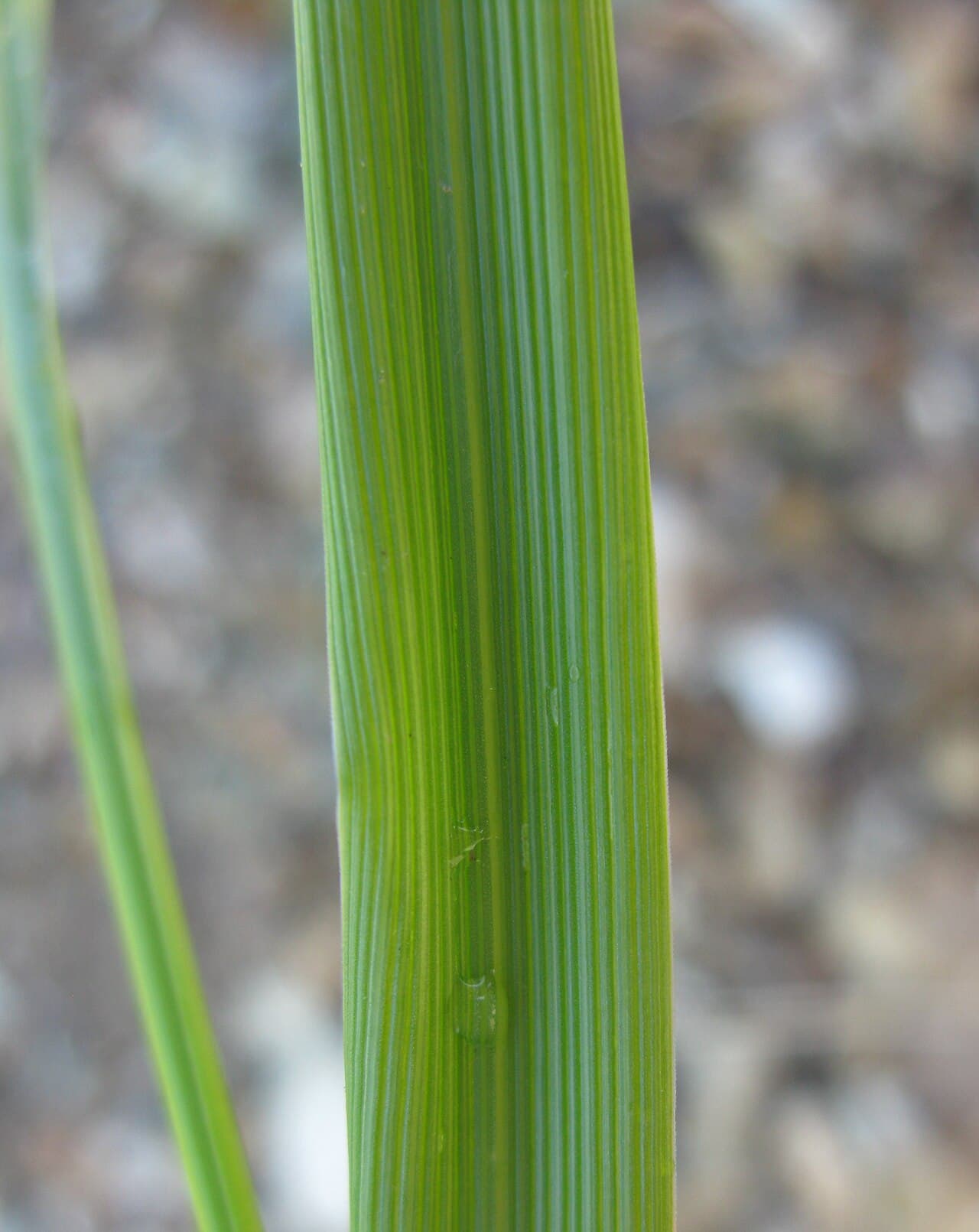
Tall fescue has wider, stiffer blades than bluegrass or ryegrass, with raised veins running the length of the leaf. Modern turf-type varieties are finer, darker and denser than old pasture types like Kentucky 31, and a thick stand looks even and uniform. Because each plant grows as a bunch instead of spreading, a thin stand can look clumpy.
- Rough leaf edge
- Gently rub the edge of a blade across your lip or fingertip and you will feel tiny teeth. Perennial ryegrass edges feel much smoother.
- Raised veins
- The top of the blade has many coarse veins of about the same size and no single strong center vein. Blades feel stiff rather than soft.
- Rolled bud
- The newest leaf comes out of the sheath rolled up like a scroll. Perennial ryegrass and bluegrass leaves come out folded.
- Collar and auricles
- Where the blade joins the stem, the collar often has a few tiny hairs at its edges. Any auricles are short and blunt, never long and wrapping around the stem.
- Blade width
- Blades are wider than those of other cool-season lawn grasses. Old pasture types such as Kentucky 31 are wider and lighter green than turf-type varieties.
- Bunch habit
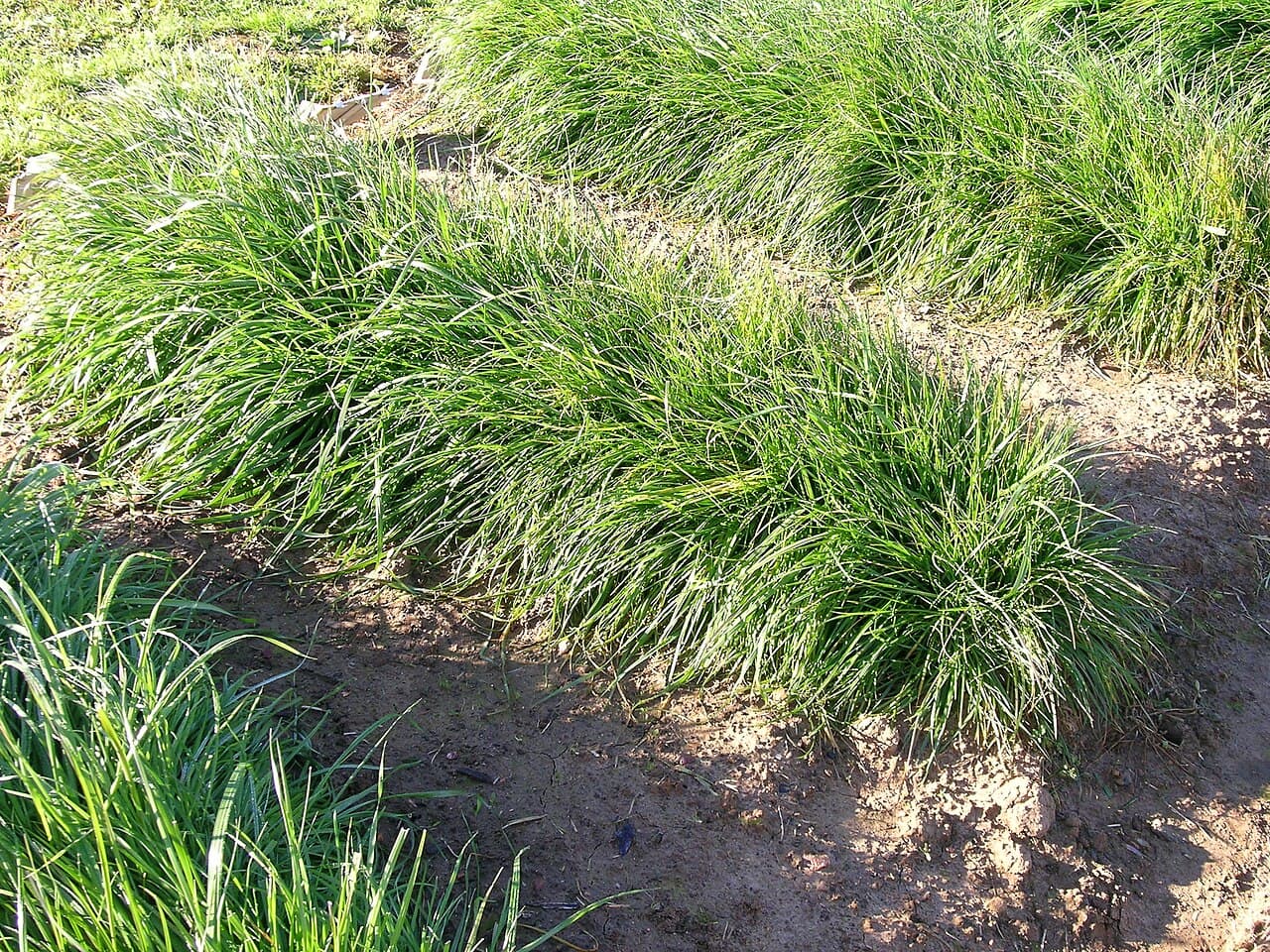
- Plants grow as clumps from a central crown. Some varieties make short rhizomes, but the spread is slow and limited.
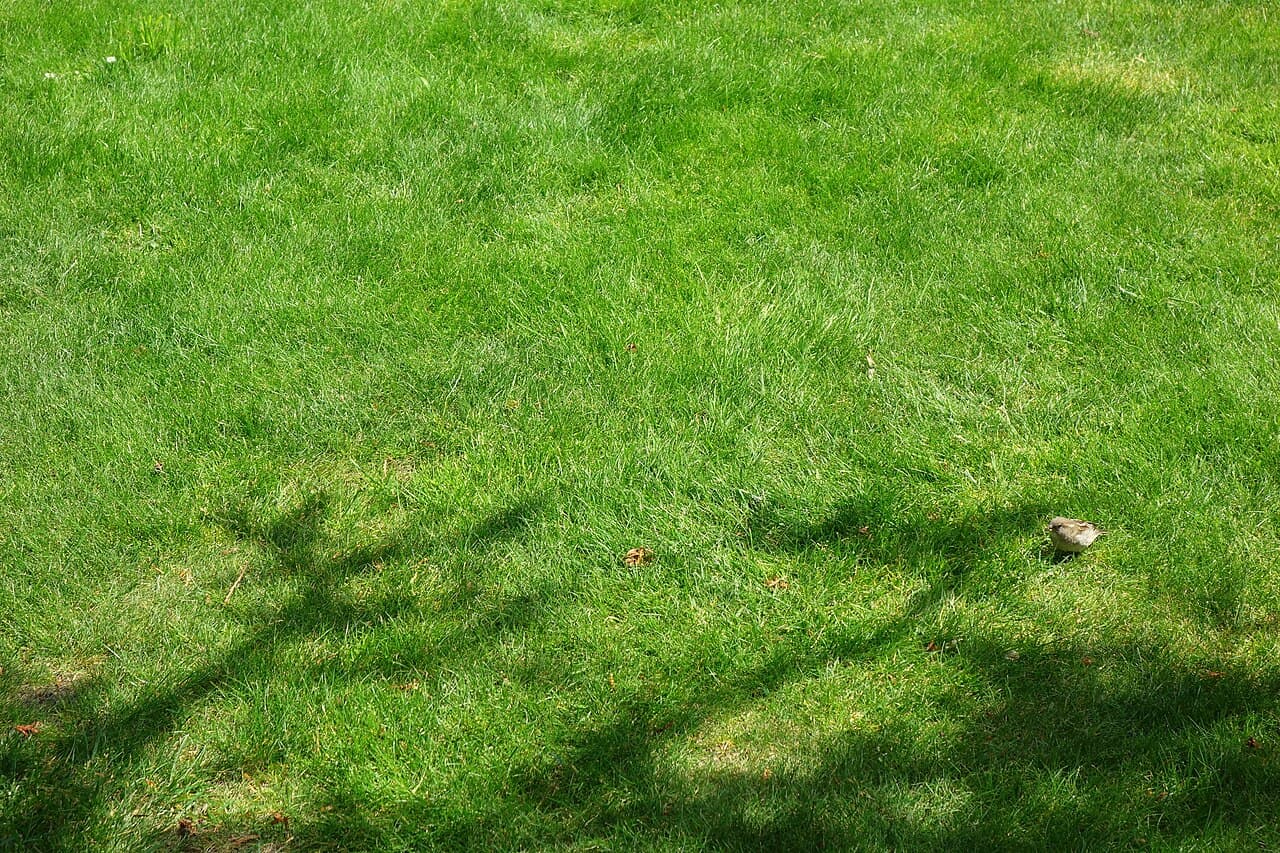
Photo: Harry Rose from South West Rocks, Australia · CC BY 2.0 · via Wikimedia Commons
Not sure it's Tall Fescue?
Snap a close-up of a few blades — our free AI identifies your grass in seconds. No app needed.
Patch & repair picks for Tall Fescue
Patch mixes put seed, mulch and fertilizer in one bag for small spots. For bigger areas, use straight tall fescue seed so the repair matches the rest of the lawn.
Paid links. As an Amazon Associate, MeasureLawn earns from qualifying purchases.

Scotts EZ Seed Patch & Repair Tall Fescue Lawns
Patch & repairBeginner friendlyTall fescue seed pre-mixed with a mulch that expands around the seed, a controlled-release fertilizer, a tackifier that helps keep seed from washing away, and a seedling protectant. Because the seed is tall fescue, the repaired spot grows back with the same coarse blade as the rest of the lawn instead of showing as a finer, softer patch.

Pennington Smart Patch Tall Fescue Mix
Patch & repairBeginner friendlyTall fescue seed pre-mixed with fertilizer, mulch, microbials with organic matter, and a water-soluble tackifier that helps hold seed in place on slopes and in rain. The mulch turns a lighter color as it dries, so it is easy to see when the patch needs water.

Jonathan Green Black Beauty Ultra
Tall Fescue seed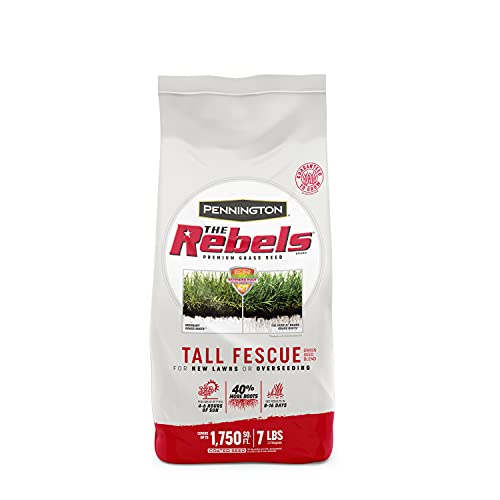
Pennington The Rebels Tall Fescue Mix
Tall Fescue seedBeginner friendly
Scotts Turf Builder Starter Food for New Grass
For new grassBeginner friendly
Scotts Turf Builder Lawn Soil (1.5 cu ft)
Fills bare spotsBeginner friendlyEnriched lawn soil for topdressing and leveling. Contains fertilizer.
How to fix bare patches in Tall Fescue
- 1Figure out why the spot died. Brown patch disease in hot, humid weather, heavy traffic and too much shade are common causes, and new seed will fail again if nothing changes.
- 2Do not wait for it to fill in. Tall fescue grows in clumps and spreads very slowly, so bare spots stay bare until you reseed them.
- 3Rake out the dead grass and loosen the top of the soil so the seed makes good contact.
- 4Sow a turf-type tall fescue that matches your lawn, not Kentucky 31, which stands out as coarse, lighter green clumps. Rake the seed in lightly.
- 5Keep the seedbed damp with light, frequent watering until the grass is up, then water less often but more deeply.
- 6Do the job in early fall if you can, since spring seedlings have to survive summer heat while still young. Skip crabgrass preventer on the patch, since most also stop grass seed; check the label.
Working out how much seed to buy? The grass seed calculator does the math for your square footage.
When to plant or repair Tall Fescue
Best time: August–September. Also workable: March–April, October.
- Grows from
- Seed or sod
- Soil temperature
- Warm late-summer soil gives the best start; seed sprouts slowly in cold soil
- Seed rate, new lawn
- 6–8 lb per 1,000 sq ft
- Seed rate, overseeding
- 3–4 lb per 1,000 sq ft
- Sprouts in
- 7–10 days
Seed works well: tall fescue sprouts in about 7 to 10 days and is the usual way to start or thicken a lawn. Sod, sometimes with a little bluegrass mixed in, gives an instant lawn where it is sold.
In Australia or New Zealand? The seasons flip — shift these months by six, or see the Southern Hemisphere lawn calendar.
Tall Fescue care at a glance
- Mowing height
- 3–4 in
- Water
- About 1 inch per week, including rain
- Sun
- Full sun to partial shade (4+ hours)
- Soil pH
- 6.0–7.2
- Fertilizer
- 3 lb nitrogen per 1,000 sq ft a year
- Growth habit
- Bunch-type, some short rhizomes
- Texture
- Coarse
- USDA zones
- 4-8
How it holds up
Mowing height by season
| Spring | Summer | Fall | Winter |
|---|---|---|---|
| 3"–3.5" | 3.5"–4" | 3"–3.5" | 3.5" if growing |
Varieties you'll see
Want these turned into a month-by-month schedule for your yard? Build a free lawn plan.
Tall Fescue pros and cons
Strengths
- Deep roots help it ride out heat and dry spells
- Holds up to regular foot traffic
- Grows in heavy clay as well as sandy soil
- Little or no thatch buildup
- Sprouts quickly from seed
- Few serious insect problems
- Crowds out weeds once the stand is thick
Weaknesses
- Spreads very slowly, so bare spots must be reseeded
- Brown patch disease in hot, humid summers
- Blades shred if mower blades are dull
- Coarser texture than bluegrass or ryegrass
- Old pasture types like Kentucky 31 look clumpy in a lawn
- Needs more frequent mowing than bluegrass to look its best
Problems to watch for
Where Tall Fescue grows best
Tall fescue is the go-to cool-season lawn grass across the transition zone, the band through the middle of the US that includes Kansas, Missouri, Kentucky, Tennessee, Virginia and North Carolina. Farther north it is also planted for its drought tolerance, though it should not go where ice sits in winter. Farther south, summer heat and disease make it harder to keep, and warm-season grasses usually take over. It is also grown as a lawn grass in cooler parts of southern Australia.
A common lawn choice in
Commonly confused with
Ryegrass blades are narrower, feel smoother along the edge and come out folded. Tall fescue blades are wider and stiffer, rough along the edge and come out rolled.
Quackgrass has long, claw-like auricles that wrap around the stem and spreads by long underground rhizomes. Tall fescue auricles are short and blunt, and it grows in clumps.
Crabgrass has a tall, see-through ligule where the blade meets the stem, and large crabgrass has hairy leaves and stems that root where they touch the ground. It is an annual that dies at the end of the growing season, while tall fescue has a ligule too small to see and stays green into winter.
Dallisgrass has a tall, see-through ligule and tall seed stalks with a few side branches lined with hairy seeds. It is a warm-season grass that browns in winter, while tall fescue stays green.
Know your grass? Put it to work →
Get a free 12-month plan built for Tall Fescue
Measure your yard on a satellite map in 30 seconds. We'll build a care schedule for tall fescue in your climate — mowing height, fertilizer, seed and weed control, with exact product amounts.
Measure my lawn — it's free →Tall Fescue FAQ
Does tall fescue spread?
Barely. Tall fescue is a bunch-type grass that grows in clumps, and even varieties that make short rhizomes spread slowly. It will not close bare spots the way Kentucky bluegrass or Bermuda grass can, so thin areas need reseeding, ideally in early fall.
What is the difference between Kentucky 31 and turf-type tall fescue?
Kentucky 31 is an old pasture variety with wide, coarse, lighter green blades. Turf-type tall fescues are bred for lawns, with narrower, darker and denser growth. They are the same species, but Kentucky 31 looks clumpy in a lawn and is best kept for pastures, roadsides and rough areas.
When is the best time to plant tall fescue?
Early fall. Farther north, aim for mid-August to mid-September; across most of the transition zone, mid-August to late September; and near the southern edge, mid-September to mid-October. Early spring is second best, but young plants then face summer heat and weeds before they are established.
Can I mix tall fescue with Kentucky bluegrass?
Yes, as long as tall fescue makes up most of the seed. A small share of Kentucky bluegrass adds rhizomes that help the lawn recover from wear and damage, and some sod farms include it for that reason. A common mix is about 90 percent tall fescue and 10 percent bluegrass by weight.
Why does my tall fescue lawn get brown patches in summer?
The usual cause is a fungal disease such as brown patch or gray leaf spot, which thrive in hot, humid weather. Heavy nitrogen in late spring or summer and evening watering both make them worse. Water early in the morning, save most feeding for fall, and reseed areas that have not recovered once the weather cools.
Other cool-season grasses
Sources
- Penn State Extension: Turfgrass Species for Pennsylvania
- University of Kentucky AGR-52: Selecting the Right Grass for Your Kentucky Lawn
- University of Kentucky AGR-251: Quick Identification Tips for Turfgrasses
- NC State Extension: Carolina Lawns
- Purdue Turf: Tall Fescue
- NC State Extension TurfFiles: Tall Fescue
- NC State Extension: Tall Fescue, Hard (Fine) Fescue, and Kentucky Bluegrass Home Lawn Calendar
- Purdue Extension AY-3: Establishing Turfgrass Areas From Seed
- K-State Research and Extension, Johnson County: Lawn Seeding in the Fall
- University of Minnesota Extension: Buying Turfgrass Seed for Minnesota Lawns
More free lawn tools:
Every lawn grass•Photo grass identifier•Grass seed calculator•Weed guide•Lawn care calendar