Slow to start, quick to heal
Bluegrass seed often takes two to three weeks to sprout, so seed in late summer to give young plants a fall and a spring to settle in before summer heat. Spring seeding works if you start early; in the transition zone, finish by mid-April. Once established, its rhizomes repair small bare spots without reseeding.
How to identify Kentucky Bluegrass
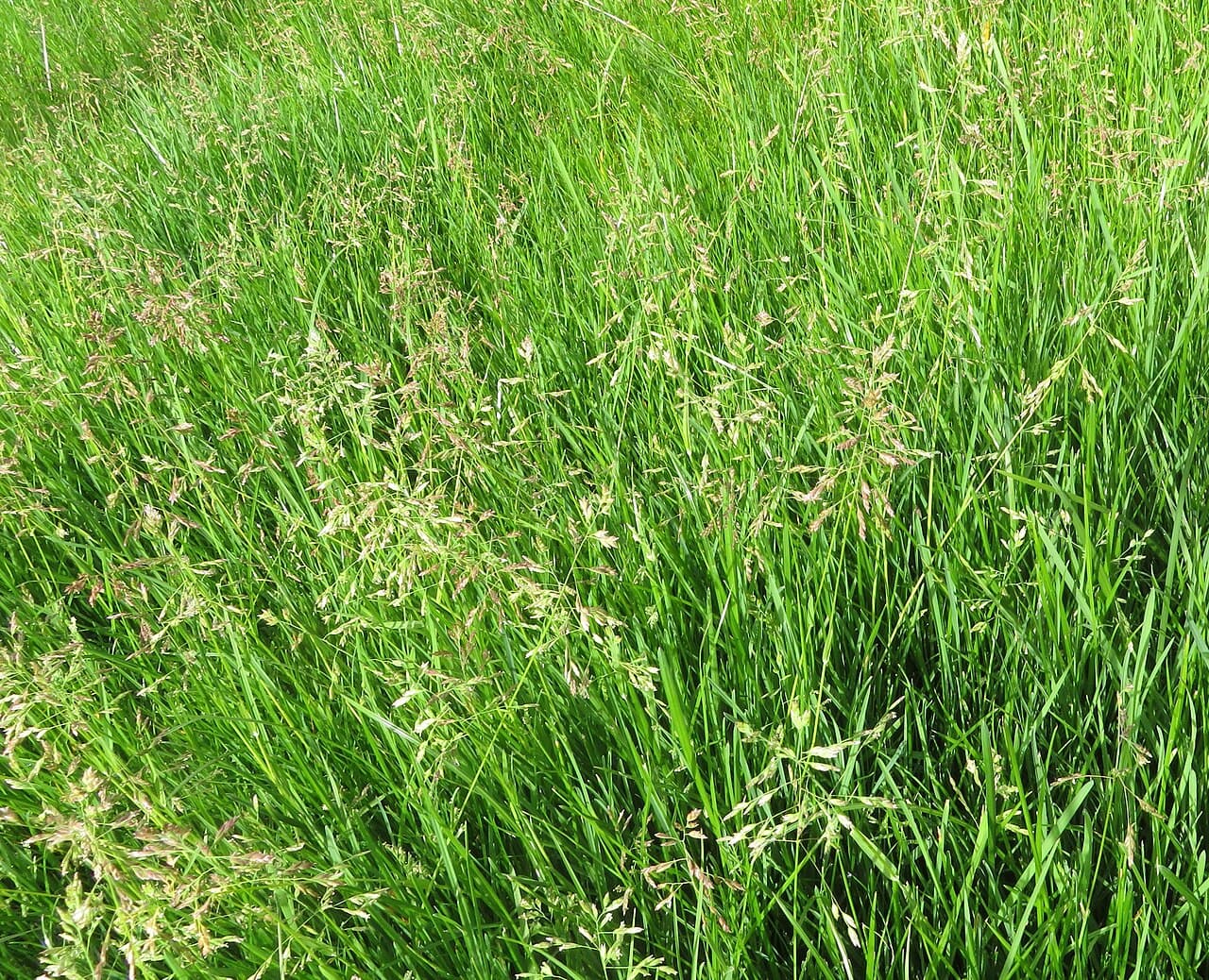
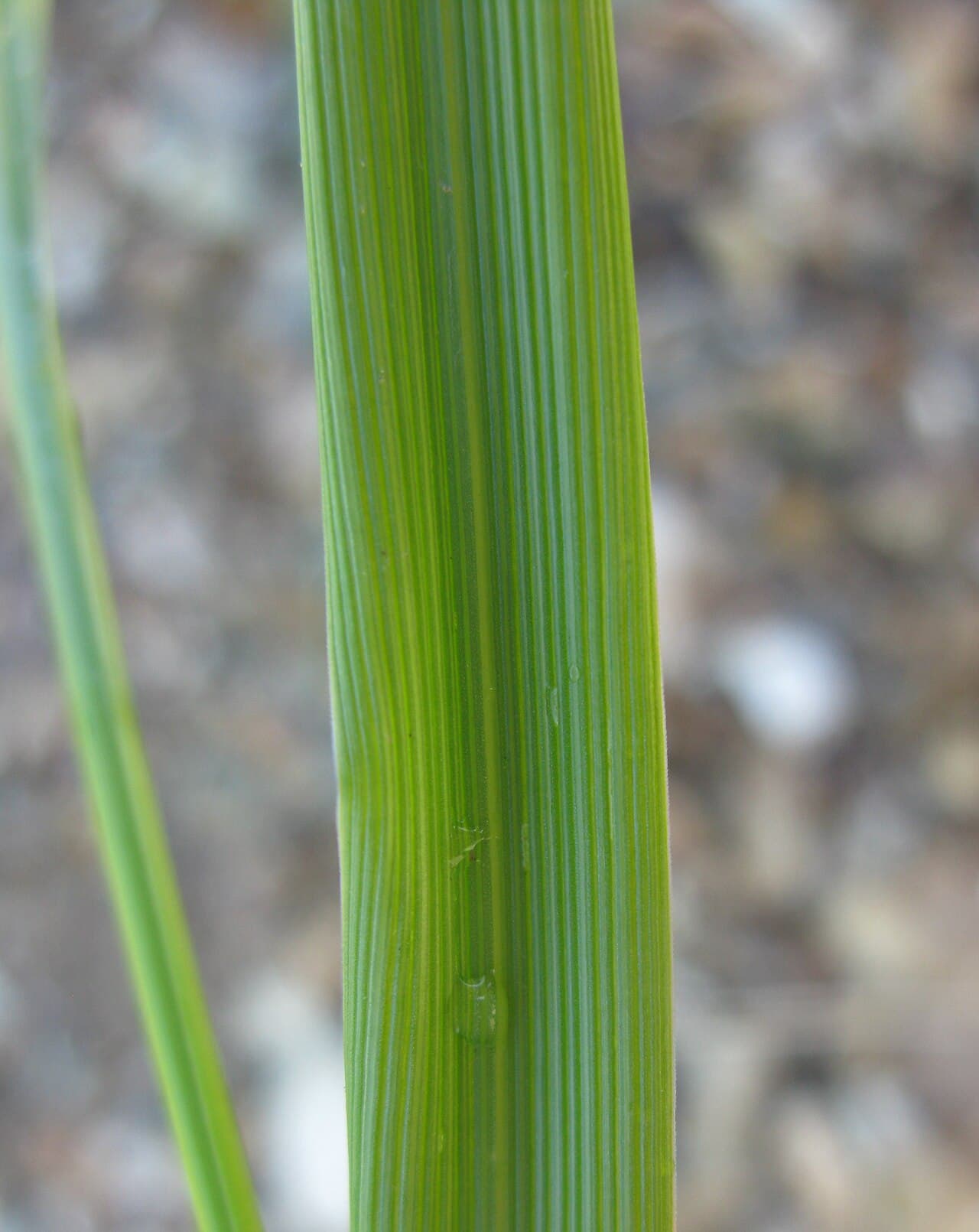
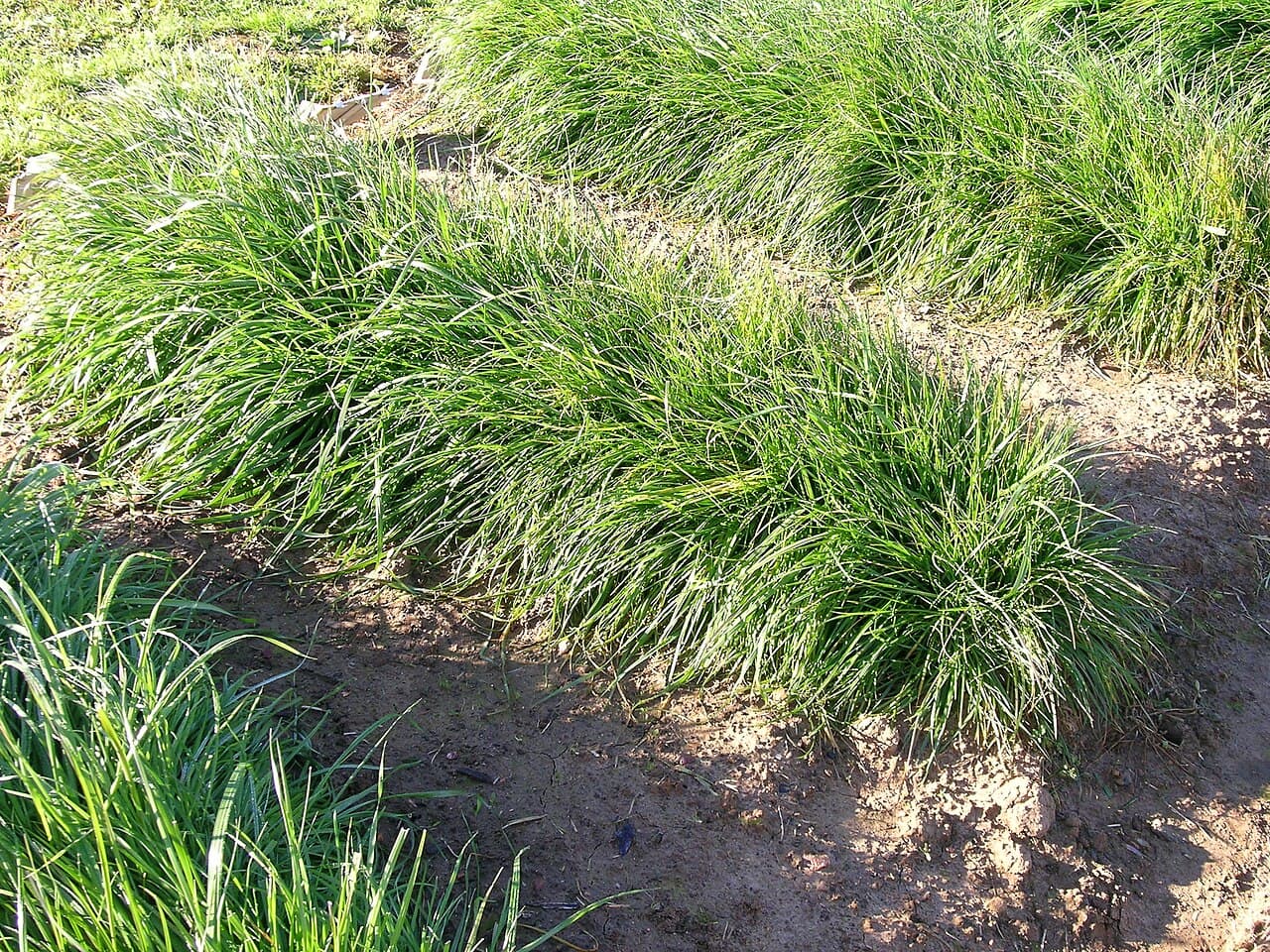
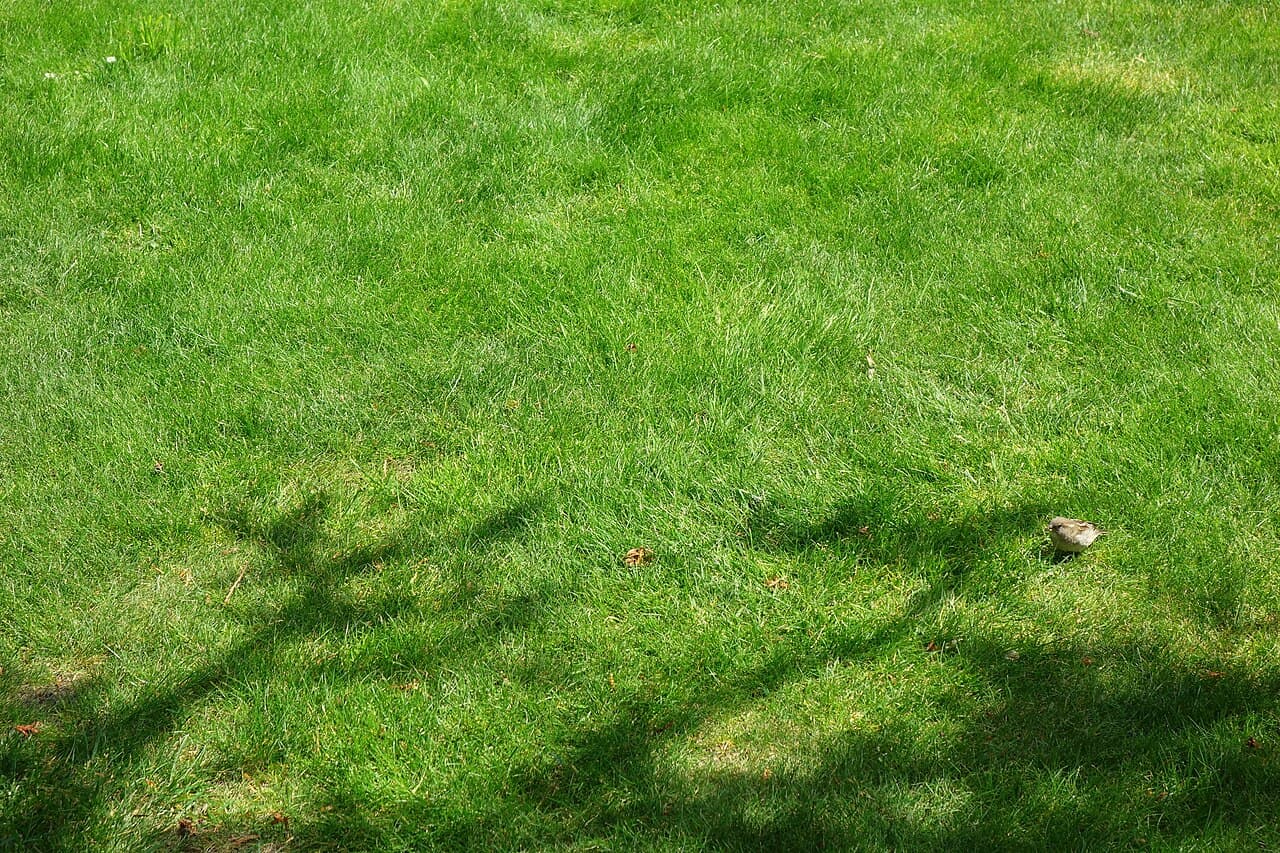
Kentucky bluegrass makes a dense, soft, dark green lawn with fine to medium blades. Look closely and each blade ends in a boat-shaped tip. Because it spreads underground, a healthy stand knits into a tight sod instead of growing in separate clumps. In hot, dry summers it often turns tan and goes dormant, then greens up again when cooler, wetter weather returns.
- Boat-shaped tip
- The leaf tip curves up to a rounded point, like the front of a canoe. Other bluegrasses share this, so check the features below too.
- Train tracks
- Hold a blade up to the light and look for two pale lines, one on each side of the center vein. Perennial ryegrass has a single center vein with ridges across the rest of the leaf.
- Rhizomes
- Dig up a small plug and look for underground stems running sideways to new shoots. They are what let bluegrass fill in thin spots.
- Folded bud
- Pull a shoot apart and look at the newest leaf. It comes out folded in half, not rolled like tall fescue.
- Tiny ligule
- Where the blade meets the stem, the ligule is too short to see easily. There are no auricles, the small claw-like flaps some grasses have at that joint.
- Dull underside
- The back of the leaf is dull. A shiny underside points to perennial ryegrass or rough bluegrass instead.
Photo: Sciencia58 · CC0 · via Wikimedia Commons
Not sure it's Kentucky Bluegrass?
Snap a close-up of a few blades — our free AI identifies your grass in seconds. No app needed.
Patch & repair picks for Kentucky Bluegrass
Patch mixes put seed, mulch and fertilizer in one bag for small spots. For bigger areas, use straight kentucky bluegrass seed so the repair matches the rest of the lawn.
Paid links. As an Amazon Associate, MeasureLawn earns from qualifying purchases.
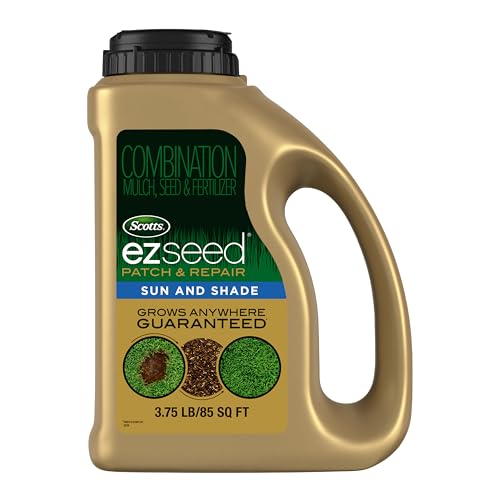
Scotts EZ Seed Patch & Repair Sun and Shade
Patch & repairBeginner friendlyAn all-in-one repair mix: Kentucky bluegrass, perennial ryegrass, creeping red fescue and chewings fescue seed blended with a super-absorbent mulch, a slow-release fertilizer, a tackifier that helps keep seed from washing away, and a seedling protectant. Rake out the dead grass, spread it until the soil is mostly covered, then soak it until the mulch turns dark brown.
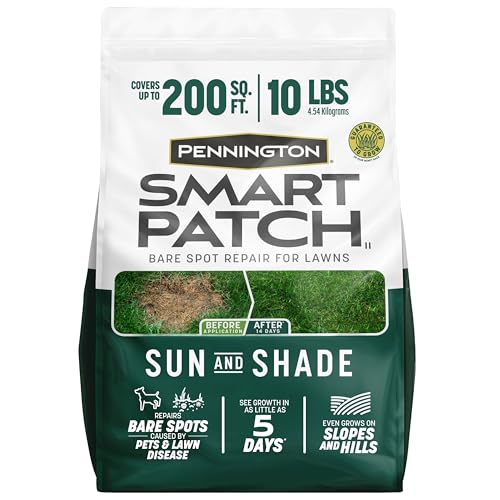
Pennington Smart Patch Sun & Shade Mix
Patch & repairBeginner friendlyPennington's all-in-one repair mix: American ryegrass, perennial ryegrass and Kentucky bluegrass seed with fertilizer, mulch, microbials with organic matter, and a water-soluble tackifier that helps hold seed in place on slopes and in rain. The mulch turns a lighter color as it dries, which tells you when to water again.

Pennington Smart Seed Kentucky Bluegrass
Kentucky Bluegrass seedBeginner friendly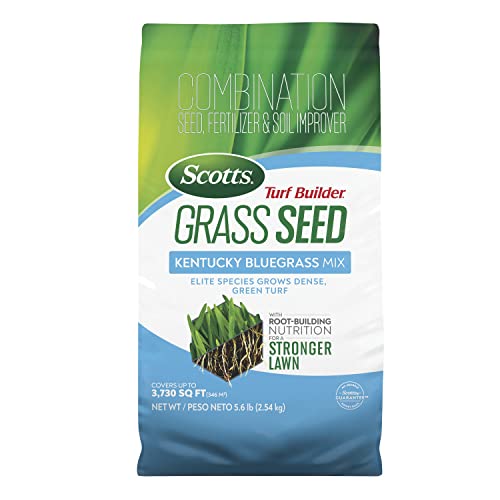
Scotts Turf Builder Kentucky Bluegrass Mix
Kentucky Bluegrass seedBeginner friendly
Scotts Turf Builder Starter Food for New Grass
For new grassBeginner friendly
Scotts Turf Builder Lawn Soil (1.5 cu ft)
Fills bare spotsBeginner friendlyEnriched lawn soil for topdressing and leveling. Contains fertilizer.
How to fix bare patches in Kentucky Bluegrass
- 1Find the cause first. Grubs, disease, pet urine, heavy shade and constant foot traffic all leave bare patches that come back if nothing changes.
- 2Give small thin spots time. Bluegrass sends rhizomes into gaps, and small spots in a healthy lawn often close on their own during spring and fall growth.
- 3For larger bare patches, rake out the dead grass and loosen the top of the soil so the seed makes good contact.
- 4Spread Kentucky bluegrass seed, or a bluegrass mix with a little perennial ryegrass for quicker cover, and rake it in lightly. Skip crabgrass preventer on the patch, since most also stop grass seed; check the label first.
- 5Keep the surface damp with light, frequent watering until the new grass is up. Bluegrass is slow, so plan on several weeks of this.
- 6For an instant fix, cut a piece of bluegrass sod to fit, set it level with the lawn and keep it moist until it roots.
Working out how much seed to buy? The grass seed calculator does the math for your square footage.
When to plant or repair Kentucky Bluegrass
Best time: August–September. Also workable: April–May.
- Grows from
- Seed or sod
- Soil temperature
- Warm late-summer soil gives the best start; seed sprouts slowly in cold soil
- Seed rate, new lawn
- 1.5–2 lb per 1,000 sq ft
- Seed rate, overseeding
- About 2 lb per 1,000 sq ft
- Sprouts in
- 10–21 days, longer in cool soil
Seed works but is slow: bluegrass takes weeks to sprout and a full season to thicken up. Sod is widely sold and gives you a finished lawn right away.
In Australia or New Zealand? The seasons flip — shift these months by six, or see the Southern Hemisphere lawn calendar.
Kentucky Bluegrass care at a glance
- Mowing height
- 2.5–3.5 in
- Water
- About 1 inch per week, including rain
- Sun
- Full sun to light shade
- Soil pH
- 6.0–7.0
- Fertilizer
- 3 lb nitrogen per 1,000 sq ft a year
- Growth habit
- Rhizomes
- Texture
- Fine
- USDA zones
- 2-8
How it holds up
Mowing height by season
| Spring | Summer | Fall | Winter |
|---|---|---|---|
| 2.5"–3" | 3"–3.5" | 2.5"–3" | 3" if growing |
Varieties you'll see
Want these turned into a month-by-month schedule for your yard? Build a free lawn plan.
Kentucky Bluegrass pros and cons
Strengths
- Spreads by rhizomes and fills small gaps on its own
- Dense, soft, dark green turf
- Handles cold winters well
- Survives summer drought by going dormant, then greens up again
- Widely sold as sod
- Cuts cleanly when mowed
Weaknesses
- Slow to sprout and slow to fill in from seed
- Struggles in hot, humid summers
- Thins out in heavier shade
- Builds thatch, especially when heavily fertilized
- Shallow roots make it an easy target for white grubs
- Turns brown in most summers unless watered
Problems to watch for
Where Kentucky Bluegrass grows best
Kentucky bluegrass is the classic lawn grass of the northern US, from New England and the Great Lakes across the Upper Midwest, and it is widely grown in watered lawns in the Mountain West. In the transition zone it is only marginally adapted: it does best in cooler, higher areas or as a small part of a tall fescue lawn, and it is a poor choice in the hot, humid South. In the UK, where it is called smooth meadow-grass or smooth-stalked meadow-grass, it is used mostly for sports pitches and commercial turf rather than in everyday lawn seed mixes.
A common lawn choice in
Commonly confused with
Annual bluegrass is a lighter lime green and has a tall, see-through ligule, like a strip of clear tape, where the blade meets the stem. On Kentucky bluegrass that ligule is short or missing.
Rough bluegrass
Rough bluegrass has a glossy leaf, a long pointed ligule, and spreads by runners on top of the soil instead of underground. It handles heat, drought and traffic poorly.
Ryegrass has a shiny underside, one center vein with ridges across the leaf, and a purplish stem base. Bluegrass has a dull underside and two pale lines beside the center vein.
Tall fescue has wider, stiffer blades with many raised veins and a rough edge you can feel. Its new leaves come out rolled, not folded.
Know your grass? Put it to work →
Get a free 12-month plan built for Kentucky Bluegrass
Measure your yard on a satellite map in 30 seconds. We'll build a care schedule for kentucky bluegrass in your climate — mowing height, fertilizer, seed and weed control, with exact product amounts.
Measure my lawn — it's free →Kentucky Bluegrass FAQ
Does Kentucky bluegrass spread?
Yes. Kentucky bluegrass spreads by rhizomes, underground stems that grow sideways and send up new shoots. That is why a healthy stand forms a tight sod and can close small thin spots without reseeding. Larger bare patches still fill in much faster if you seed or sod them.
How long does Kentucky bluegrass seed take to germinate?
Usually 10 to 21 days, and longer in cool soil. That is slower than tall fescue or perennial ryegrass, which is why many bluegrass seed mixes include a little ryegrass for quick cover. Keep the soil surface damp until the new grass is up, and expect the lawn to take a full season to thicken.
Can I mix Kentucky bluegrass with tall fescue?
Yes, as long as tall fescue makes up most of the seed, typically about 90 percent tall fescue and 10 percent bluegrass by weight. The bluegrass adds rhizomes that help the lawn recover from damage, and some sod farms grow tall fescue sod this way. Use a turf-type tall fescue, since old pasture types such as Kentucky 31 show up as coarse clumps in a lawn.
Why does Kentucky bluegrass turn brown in summer?
It is usually going dormant, not dying. In hot, dry weather bluegrass lets its leaves brown to protect its crowns and roots, then greens up when cool, wet weather returns. Most lawns handle four to six weeks of this without serious harm. Keep traffic off it. Brown patches in an otherwise green lawn are a different problem, often grubs or disease.
Does Kentucky bluegrass grow in shade?
It handles light shade but thins out under heavier shade from trees or buildings. For shady areas, a mix with fine fescue usually does better, because fine fescues are among the most shade-tolerant lawn grasses. Where the ground gets very little sun, no lawn grass does well, and mulch or a shade ground cover may be the better answer.
Other cool-season grasses
Sources
- Penn State Extension: The Cool-Season Turfgrasses: Identification
- University of Kentucky AGR-251: Quick Identification Tips for Turfgrasses
- University of Kentucky AGR-52: Selecting the Right Grass for Your Kentucky Lawn
- Purdue Turf: Which Is It, Annual Bluegrass or Kentucky Bluegrass?
- Iowa State Extension: Summer Dormancy in Cool-Season Lawns
- NC State Extension TurfFiles: Rough Bluegrass
- Purdue Extension AY-3: Establishing Turfgrass Areas From Seed
- K-State Research and Extension, Johnson County: Lawn Seeding in the Fall
- University of Minnesota Extension: Buying Turfgrass Seed for Minnesota Lawns
- Colorado State University PlantTalk: Xeriscape Turf Alternatives
- RHS: Poa pratensis (smooth meadow grass)
More free lawn tools:
Every lawn grass•Photo grass identifier•Grass seed calculator•Weed guide•Lawn care calendar