Check the label for annual ryegrass
Annual ryegrass, also called Italian ryegrass, looks similar and sprouts just as fast, but it is a short-lived grass meant for temporary cover. Before you seed a permanent lawn, read the seed label and make sure the ryegrass listed is perennial.
How to identify Perennial Ryegrass
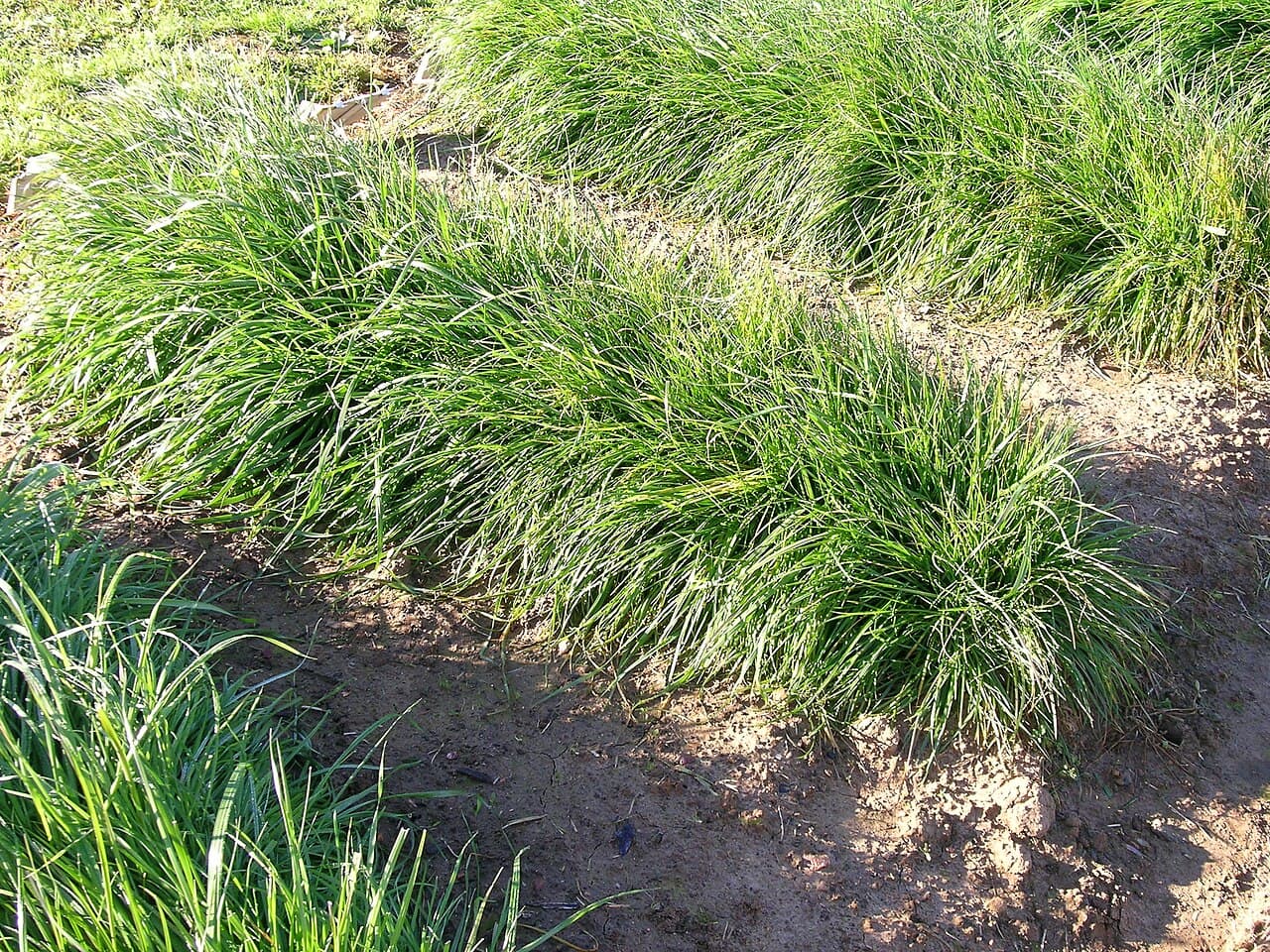
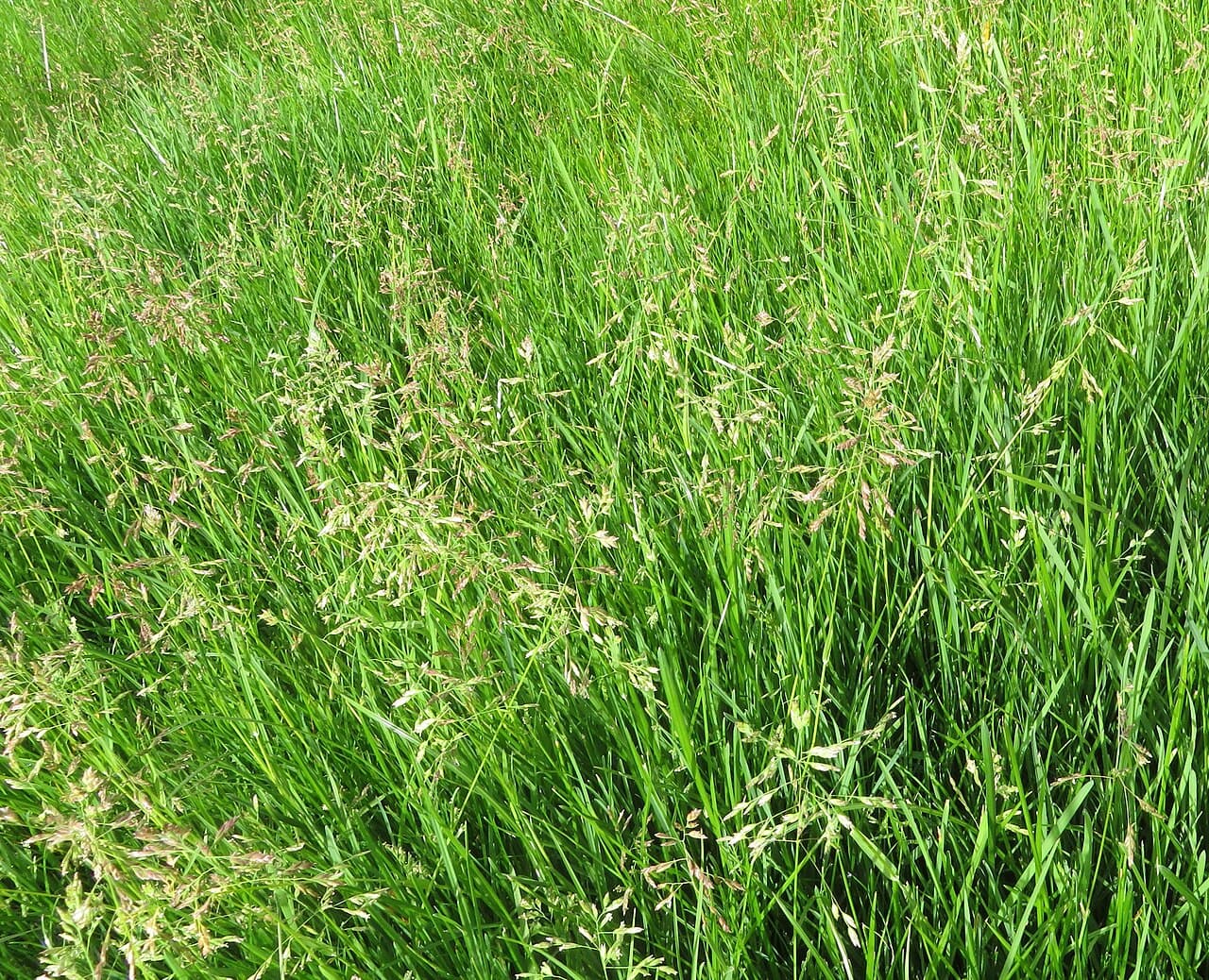
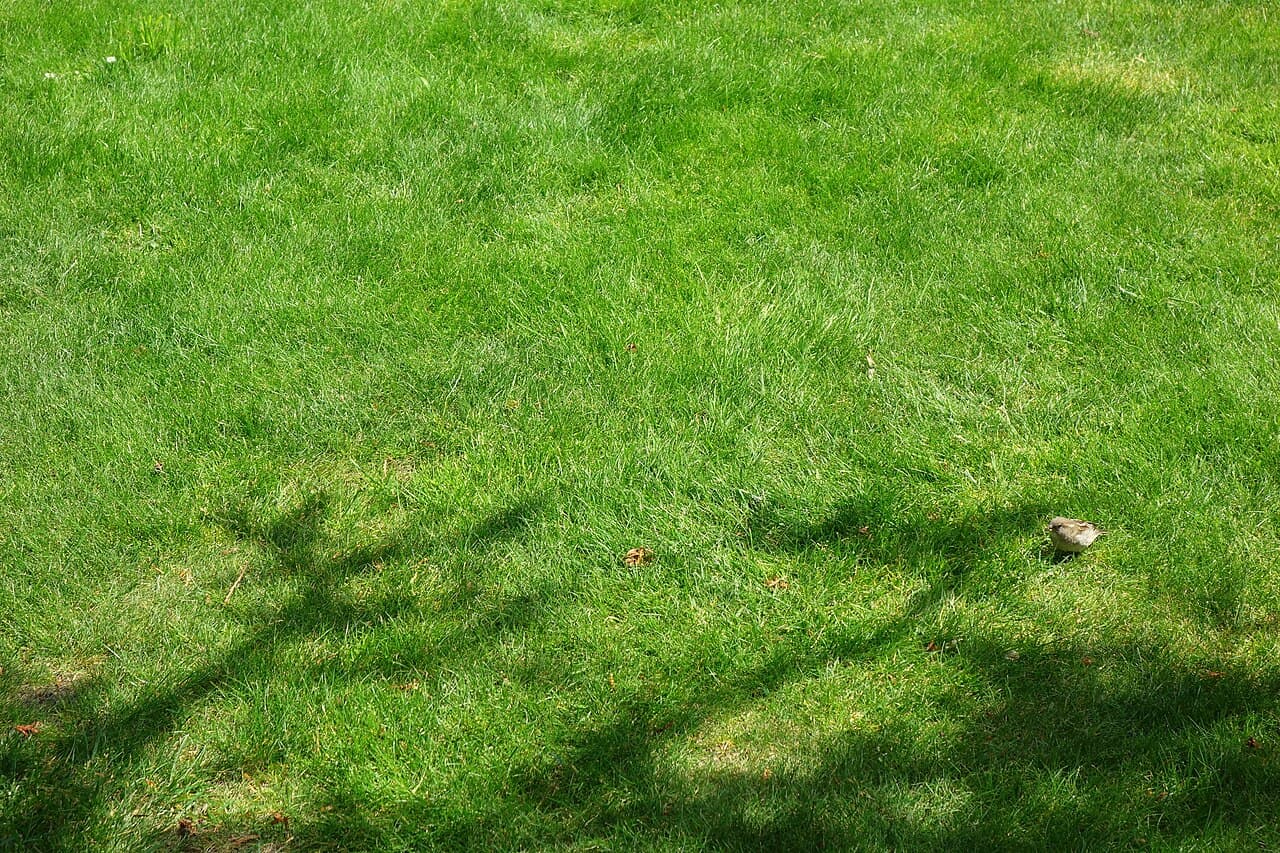
Perennial ryegrass has fine to medium blades that look much like Kentucky bluegrass, with a shine you notice when sunlight hits the lawn. A thick stand makes a dense, dark green turf. Because each plant grows as a clump, it does not knit together into sod, and a thin stand can look tufted.
- Shiny underside
- The back of the leaf is glossy and catches the light, so a ryegrass lawn shines when you look toward the sun. Kentucky bluegrass leaves are dull underneath.
- Purple base
- Pull up a shoot and check the bottom of the stem. It usually has a reddish-purple tint that Kentucky bluegrass lacks.
- Ridged, pointed blade
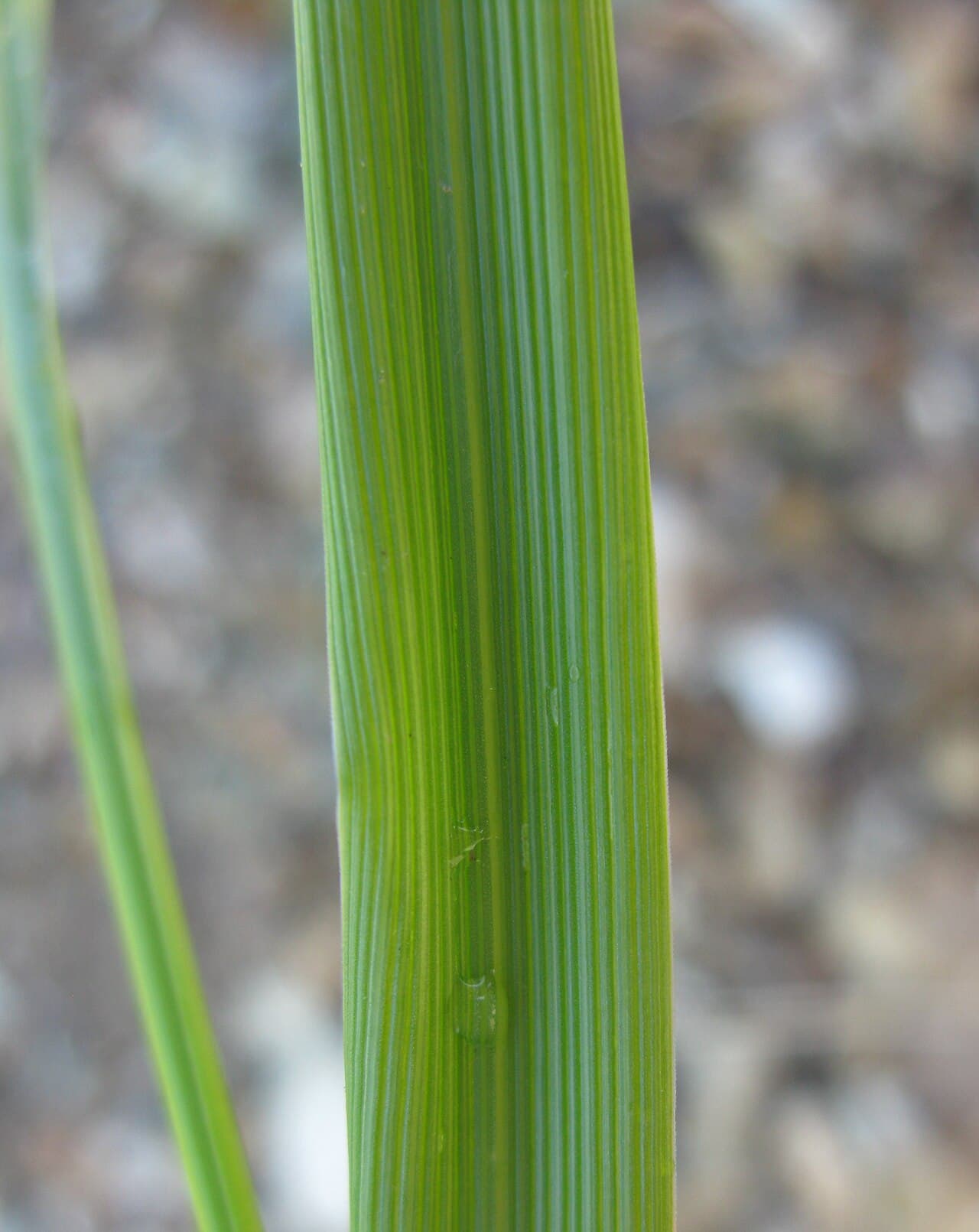
- The top of the blade has fine ridges like corduroy, one center vein and a tip that tapers to a point. Bluegrass has two pale lines beside its center vein and a boat-shaped tip.
- Folded bud
- New leaves come out folded in half. Annual ryegrass and tall fescue leaves come out rolled.
- Small auricles
- Where the blade meets the stem there are small, soft auricles, or almost none. Annual ryegrass has long auricles that clasp around the stem.
- Bunch habit
- Each plant grows as a clump with no rhizomes or runners, so it cannot creep into bare spots.
- Flat seedhead
- Unmowed stems carry a flat spike with seed clusters along both sides. The seeds usually have no bristles.
Photo: Harry Rose from South West Rocks, Australia · CC BY 2.0 · via Wikimedia Commons
Not sure it's Perennial Ryegrass?
Snap a close-up of a few blades — our free AI identifies your grass in seconds. No app needed.
Patch & repair picks for Perennial Ryegrass
Patch mixes put seed, mulch and fertilizer in one bag for small spots. For bigger areas, use straight perennial ryegrass seed so the repair matches the rest of the lawn.
Paid links. As an Amazon Associate, MeasureLawn earns from qualifying purchases.
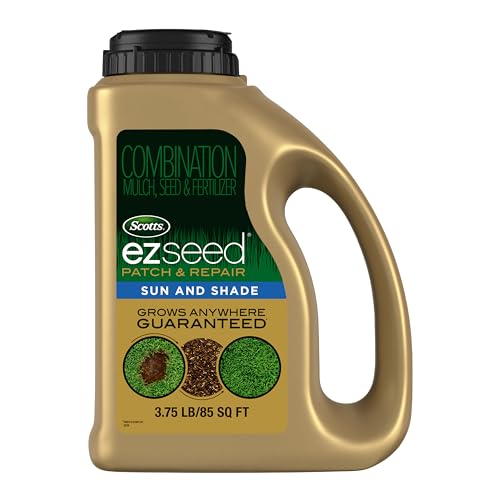
Scotts EZ Seed Patch & Repair Sun and Shade
Patch & repairBeginner friendlyAn all-in-one repair mix: Kentucky bluegrass, perennial ryegrass, creeping red fescue and chewings fescue seed blended with a super-absorbent mulch, a slow-release fertilizer, a tackifier that helps keep seed from washing away, and a seedling protectant. Rake out the dead grass, spread it until the soil is mostly covered, then soak it until the mulch turns dark brown.
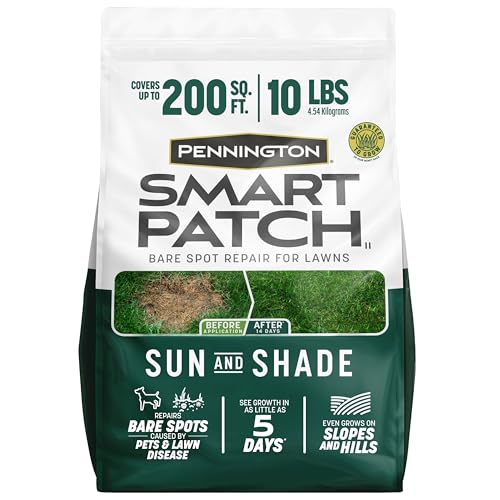
Pennington Smart Patch Sun & Shade Mix
Patch & repairBeginner friendlyPennington's all-in-one repair mix: American ryegrass, perennial ryegrass and Kentucky bluegrass seed with fertilizer, mulch, microbials with organic matter, and a water-soluble tackifier that helps hold seed in place on slopes and in rain. The mulch turns a lighter color as it dries, which tells you when to water again.
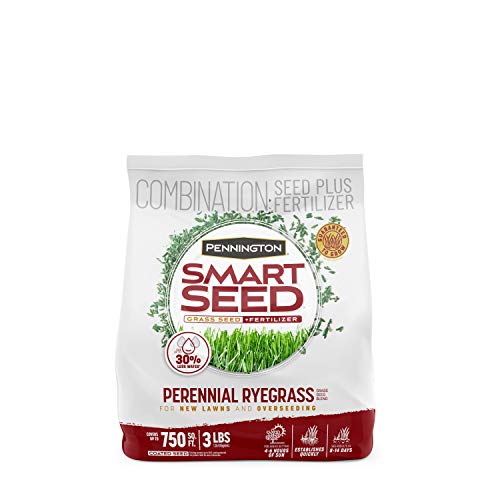
Pennington Smart Seed Perennial Ryegrass
Perennial Ryegrass seedBeginner friendly
Scotts Turf Builder Perennial Ryegrass Mix
Perennial Ryegrass seedBeginner friendly
Scotts Turf Builder Starter Food for New Grass
For new grassBeginner friendly
Scotts Turf Builder Lawn Soil (1.5 cu ft)
Fills bare spotsBeginner friendlyEnriched lawn soil for topdressing and leveling. Contains fertilizer.
How to fix bare patches in Perennial Ryegrass
- 1Find the cause before reseeding. Disease in hot, humid weather and winter injury in cold areas are the usual reasons ryegrass thins out.
- 2Reseed rather than wait. Ryegrass grows in clumps and has no runners, so bare spots will not close on their own.
- 3Rake out dead grass and scratch up the soil surface; ryegrass needs little soil preparation. Skip crabgrass preventer on the patch, since most also stop grass seed; check the label.
- 4Keep the seed damp until it sprouts, usually within a week, then water less often but more deeply.
- 5Start mowing with a sharp blade once the new grass grows taller than your normal mowing height. Ryegrass leaves shred when cut with a dull blade.
- 6If the same spots fail every summer, consider a grass better suited to your climate, such as tall fescue in the transition zone.
Working out how much seed to buy? The grass seed calculator does the math for your square footage.
When to plant or repair Perennial Ryegrass
Best time: August–September. Also workable: April–May, October.
- Grows from
- Seed
- Soil temperature
- Sprouts fastest in warm soil, and more slowly as fall soil cools
- Seed rate, new lawn
- 4–6 lb per 1,000 sq ft
- Seed rate, overseeding
- 4–6 lb per 1,000 sq ft
- Sprouts in
- 5–7 days
Perennial ryegrass is grown from seed, which sprouts faster than bluegrass or fescue. That speed makes it a favorite for quick patches and for adding to bluegrass seed mixes.
In Australia or New Zealand? The seasons flip — shift these months by six, or see the Southern Hemisphere lawn calendar.
Perennial Ryegrass care at a glance
- Mowing height
- 2–3 in
- Water
- About 1 inch per week, including rain
- Sun
- Full sun to partial shade (6+ hours ideal)
- Soil pH
- 6.0–7.2
- Fertilizer
- 3 lb nitrogen per 1,000 sq ft a year
- Growth habit
- Bunch-type
- Texture
- Fine
- USDA zones
- 3-7
How it holds up
Mowing height by season
| Spring | Summer | Fall | Winter |
|---|---|---|---|
| 2"–2.5" | 2.5"–3" | 2"–2.5" | 2.5" if growing |
Varieties you'll see
Want these turned into a month-by-month schedule for your yard? Build a free lawn plan.
Perennial Ryegrass pros and cons
Strengths
- Sprouts in about a week
- Handles heavy foot traffic
- Fine, dark green, glossy look
- Little thatch buildup
- Easy to overseed into thin turf with little preparation
- Many varieties carry endophytes that help fend off insects such as billbugs and sod webworms
Weaknesses
- Grows in clumps and cannot fill bare spots
- Prone to disease, including gray leaf spot, brown patch and Pythium blight
- Can die out in hot summers without water and disease control
- Can be injured or killed in harsh winters
- Shreds when mowed with a dull blade
- Crowds out slower grasses if it makes up too much of a seed mix
Problems to watch for
Where Perennial Ryegrass grows best
In the US, perennial ryegrass is mostly a quick-sprouting partner in Kentucky bluegrass mixes in the North. In the mild Pacific Northwest, extension experts recommend it for lawns in a mix with fine fescue. In the South it is sometimes sown over dormant Bermuda grass for winter color, though extension experts generally advise against this on home lawns because the ryegrass competes with the Bermuda grass. In the UK it is a standard ingredient of general-purpose, hard-wearing lawn seed.
A common lawn choice in
Commonly confused with
Annual ryegrass
Annual ryegrass has long auricles that clasp the stem and new leaves that come out rolled rather than folded. It is a short-lived grass meant for temporary cover, so check seed labels for "annual" or "Italian" ryegrass.
Bluegrass has a boat-shaped tip, two pale lines beside the center vein and a dull underside. Ryegrass has a pointed tip, a ridged top, a shiny underside and a purplish stem base.
Tall fescue has wider, stiffer blades with a rough edge you can feel, and its new leaves come out rolled. Ryegrass edges feel much smoother, and its new leaves come out folded.
Quackgrass spreads by long underground rhizomes and has claw-like auricles that wrap around the stem. Ryegrass grows in clumps with small auricles or none.
Know your grass? Put it to work →
Get a free 12-month plan built for Perennial Ryegrass
Measure your yard on a satellite map in 30 seconds. We'll build a care schedule for perennial ryegrass in your climate — mowing height, fertilizer, seed and weed control, with exact product amounts.
Measure my lawn — it's free →Perennial Ryegrass FAQ
Is perennial ryegrass the same as annual ryegrass?
No. They are separate grasses. Perennial ryegrass is a lasting lawn grass, while annual ryegrass, also called Italian ryegrass, is a short-lived grass used for quick, temporary cover. You can tell them apart by the auricles: annual ryegrass has long ones that clasp the stem, and perennial ryegrass has small ones or none.
Does perennial ryegrass spread?
No. Perennial ryegrass is a bunch-type grass with no rhizomes or runners, so each plant stays a clump. Bare spots will not fill in on their own, but ryegrass seed sprouts so quickly that reseeding them is fast and easy.
How fast does perennial ryegrass germinate?
Usually in 5 to 7 days when the soil is warm and moist, which is faster than Kentucky bluegrass or tall fescue. The seedlings grow quickly too, which is why ryegrass is used for fast cover. It will still sprout, more slowly, in cooler fall soil.
Can perennial ryegrass survive winter?
In mild climates, yes, but it is less winter-hardy than Kentucky bluegrass. In cold northern areas with harsh winters it can thin out or die, which is why it is usually kept to a small share of seed mixes there.
How much perennial ryegrass should be in a seed mix?
Keep it to a small share, about 15 percent by weight or less in a Kentucky bluegrass mix. Ryegrass sprouts and grows so fast that mixes with a quarter or more ryegrass end up dominated by it. In cold states such as Minnesota, extension experts suggest staying under 10 percent.
Other cool-season grasses
Sources
- Penn State Extension: The Cool-Season Turfgrasses: Identification
- University of Kentucky AGR-251: Quick Identification Tips for Turfgrasses
- University of Kentucky AGR-52: Selecting the Right Grass for Your Kentucky Lawn
- University of Minnesota Extension: Buying Turfgrass Seed for Minnesota Lawns
- NC State Extension TurfFiles: Annual Ryegrass
- NC State Extension TurfFiles: Perennial Ryegrass
- Penn State Extension: Lawn Establishment
- UMass Extension: Endophyte-Enhanced Grasses
- Clemson Extension HGIC: Overseeding With Ryegrass
- WSU Extension King County: Lawns (Tip Sheet 11)
- RHS: Starting a Lawn from Seed
More free lawn tools:
Every lawn grass•Photo grass identifier•Grass seed calculator•Weed guide•Lawn care calendar