Microclover Lawns: The Neat, Low-Growing Clover
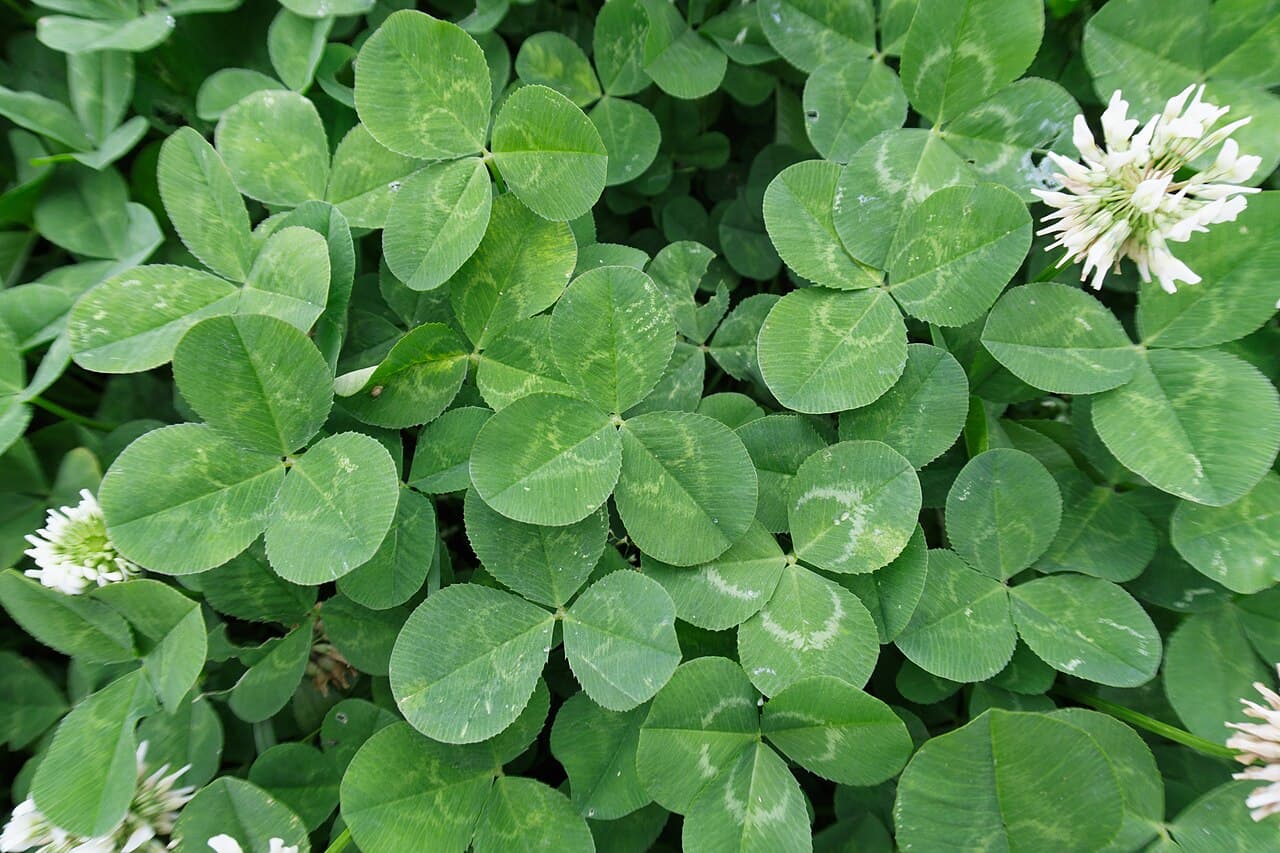
Microclover is a dwarf version of white clover, bred for tiny leaves and almost no flowers — so it blends into a lawn like turf instead of clumping. It still fixes its own nitrogen (no fertilizer) but looks far tidier and is more HOA-friendly than old-fashioned clover. The trade-offs: it costs more, and it shares clover's weaknesses (heat/drought dieback, no shade, periodic reseeding).
What is microclover?
Microclover isn't a separate species — it's a group of dwarf cultivars of common white clover (Trifolium repens), the same legume found in old-fashioned lawns, selected for much smaller leaves and a lower, less aggressive habit. University of Maryland and Illinois Extension both describe it as “a selection of white clover with smaller leaves and a slower, less aggressive growth habit.” Because it's still T. repens, it fixes its own nitrogen from the air (about 1–2 lb per 1,000 sq ft a year) — feeding itself and the grass around it.
The cultivars: Pirouette & Pipolina
- Pirouette — the most common US microclover; very small leaf, low dense habit, shy bloomer, sold raw or coated.
- Pipolina — leaves about one-third the size of common white clover, dwarf habit, flowers sparingly; often a touch finer than Pirouette.
- “Microclover” (DLF Seeds) — a brand name rather than a botanical cultivar; the bag is usually Pirouette and/or Pipolina genetics.
To a homeowner the two perform almost identically — pick on price and availability.
Microclover vs regular white clover
White clover vs microclover — same plant, different look
In a real lawn, microclover reads as a fine, even green underlayer rather than the patchy, white-flowered clumps of old-style clover. Leaves are about a third the size, and it stays low (around 3–6 inches unmown). The single biggest practical difference is flowering: mown regularly, microclover barely blooms — so it looks more like turf and draws fewer ground-level bees, which keeps it on the right side of most HOAs.
- Uniform, manicured look that blends into turf
- Barely flowers when mown — HOA-friendlier, fewer bees
- Finer texture mixes better with cool-season grass
- Tolerates close mowing better than standard clover
- Same nitrogen payoff (saves ~1 feeding/yr)
- Much cheaper and stocked everywhere
- Easier to spread (bigger seed, higher rates)
- The better choice if you want bee bloom
Both share the same weaknesses: heat/drought dieback, no shade, periodic reseeding, and death by broadleaf herbicide.
Microclover seeding rate
Enter your lawn size for the exact amount (the calculator defaults to microclover):
How much clover seed per 1,000 sq ft
| Goal | Microclover rate (per 1,000 sq ft) |
|---|---|
| New pure microclover lawn | 1–2 oz |
| Overseed into existing grass | 0.5–1 oz |
| Grass + microclover blend | ~5% of the seed mix by weight |
Microclover seed
Dwarf Pirouette / miniclover types that mow clean. Coated seed is the easiest to sow.

Mountain Valley Seed Co. Micro Clover Seed
True dwarf microclover with the widest bag range on Amazon — a 1 oz tester up to 25 lb bulk. Raw seed, so pair it with the inoculant below.

Outsidepride White MiniClover (Nitro-Coated)
Beginner friendlyThe best-known miniclover — a small-leaf dwarf that only reaches 4–6 in and mows clean like turf. Coated and ready to sow.
As an Amazon Associate, Measure Lawn earns from qualifying purchases. We only suggest products we'd use ourselves; the price you pay is the same.
How to grow & care for microclover
🍀 New to clover? Start with the complete clover lawn guide — pros and cons, planting, care and the seed calculator, all in one place.
Measure your lawn free in 2 minutes, then the calculator gives your precise seed amount — microclover seed is pricey, so no waste matters.
Measure my lawn free →Microclover questions, answered
What is microclover?
Microclover is a dwarf form of common white clover (Trifolium repens) — the same nitrogen-fixing legume, but bred for leaves about one-third the normal size, lower growth, and far fewer flowers. It blends into a lawn like turf rather than forming the patchy white-flowered clumps of old-style clover.
How is microclover different from regular white (Dutch) clover?
Same plant, different breeding. Microclover has much smaller leaves (~1/3 the size), grows lower (about 3–6 inches unmown), spreads and clumps less, and — most importantly — barely flowers when mown. That gives a uniform, manicured look that standard white clover can’t match.
What are the named microclover cultivars?
The two widely available cultivars in the US are 'Pirouette' and 'Pipolina', both dwarf selections of Trifolium repens. 'Microclover' is also sold as a DLF Seeds brand name, which typically contains Pirouette and/or Pipolina genetics. To a homeowner the two perform almost identically — choose on price and availability.
What is the seeding rate for microclover?
For a new pure stand, about 1–2 oz per 1,000 sq ft (microclover seed is tiny). To overseed into existing grass, about 0.5–1 oz per 1,000 sq ft. In a grass blend, keep microclover to roughly 5% of the total seed by weight and seed the grass at its normal rate.
What percentage of microclover should I put in a grass blend?
About 5% of the mix by weight (some go 3–5% for a grass-dominant look, up to ~10% maximum). Because the seed is so tiny and numerous, even 5% by weight germinates into a lot of clover plants spread evenly through the turf. Above ~10% it takes over and looks blotchy.
Does microclover need fertilizer?
No — that’s the main reason to grow it. As a legume it fixes its own nitrogen (~1–2 lb per 1,000 sq ft per year). Adding synthetic nitrogen backfires by letting the grass outgrow and smother the clover. Leave clippings on the lawn as a free organic nitrogen source.
How do you mow microclover?
Mow it on your normal grass schedule, around 3 inches. Regular mowing keeps it in its tight dwarf form and clips off the few flower stalks before they show, giving a near-flowerless green lawn. Mow less and it will flower more and attract bees.
Does microclover die back in summer or winter?
Yes — honestly, microclover has the same limits as all white clover. It struggles in high heat and drought and can thin or die back under summer stress, and in colder zones it goes dormant and browns in winter. It uses about 25% less water than grass but is not drought-proof.
Do you have to reseed microclover?
Usually yes. Microclover is not truly permanent or self-sustaining; most lawns need a light overseed roughly every 2–3 years (or whenever patches thin) to stay dense. Treat reseeding as routine maintenance.
What grass goes best with microclover?
Cool-season grasses. University of Maryland Extension pairs it with turf-type tall fescue and Kentucky bluegrass; tall fescue is the standout partner for a uniform microclover lawn.
Is microclover worth it versus regular clover?
If you want the tidy, low-flower, HOA-friendlier look and a finer blend with turf, yes — microclover behaves like a lawn component rather than a weed. But it costs more, is harder to find, and still shares clover’s weaknesses (heat/drought dieback, no shade, periodic reseeding, killed by broadleaf herbicides).
Sources
Photographs via Wikimedia Commons (CC / public domain), credited beneath each. General information, not a guarantee of results.