Clover Lawn vs Grass: Which Should You Choose?
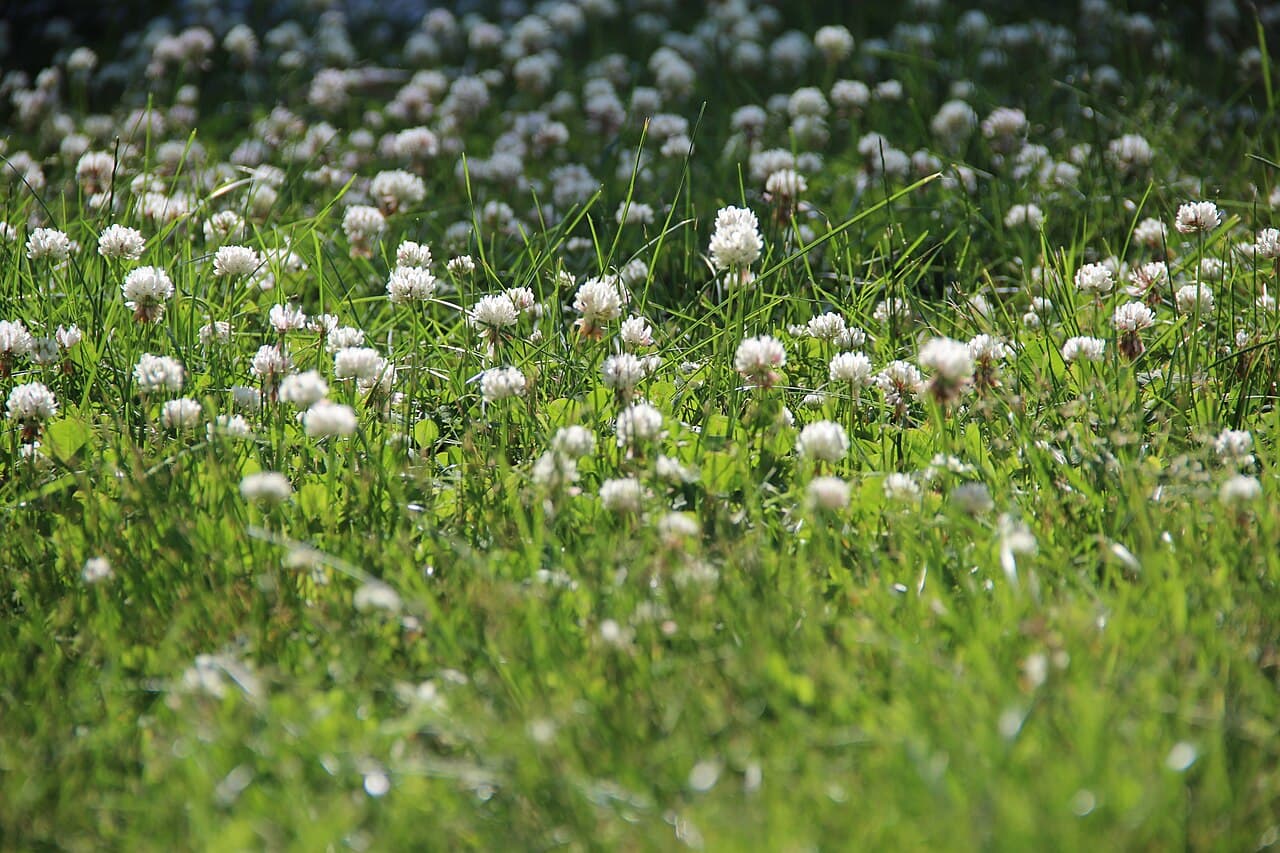
Clover is cheaper to run, greener in drought, and great for pollinators and dogs — but it's weak under traffic, hates shade, and can rile an HOA. Grass is durable and uniform but thirsty and hungry. For most yards the winner is neither extreme: a grass + ~5% microclover blend keeps a normal, durable lawn while cutting fertilizer and water.
Clover vs grass vs blend, line by line
| Clover | Grass | Blend | |
|---|---|---|---|
| Upfront cost | Cheapest seed ($1–10 / 1,000 sq ft) | Pricier seed ($40–80); sod far more | Low — mostly grass + a little clover |
| Ongoing cost | Lowest — little fed, watered or mown | Highest — fertilizer, water, mowing | Lower than grass |
| Fertilizer | None — fixes its own nitrogen | High — 1–4 feedings a year | Reduced — often skip one feeding/yr |
| Water | Low once established | Higher — browns without irrigation | Lower than grass — clover stays green |
| Mowing | Least — a few times a season | Most — frequent in season | In between (every 2–3 weeks) |
| Weed killers | Limited — broadleaf herbicides kill it | Full range available | Same limit as clover |
| Foot traffic | Weak | Strongest | Better than pure clover |
| Lifespan | Short-lived (3–5 yr); reseed every 2–3 | Most permanent with fall overseed | Most stable — self-renews |
| Appearance | Informal, less uniform | Most uniform | Best balance — uniform + green |
| Shade | Poor — needs sun | Better (fine fescues) | Grass carries the shaded areas |
| Drought / heat | Good in dry spells, dies back in heat | Browns without water | Good — clover keeps colour |
| Pollinators | Highest — 50+ native bee species | None | High, and intentional (a bee lawn) |
| Environment | Most benign — less N, water, pesticide | Highest footprint | Strong middle ground |
| Dogs | Excellent — no urine burn spots | Worst — urine burns yellow spots | Good — resists spots + durable |
| HOA friendliness | Riskiest — can read as a weed | Safest | Lower risk — reads as a lawn |
The blend column is shaded because, for most homeowners, it's the recommended middle path.
The biggest single difference: fertilizer
Grass is a nitrogen feeder — starve it and it thins and pales. Clover makes its own nitrogen, so it needs none and even feeds the grass beside it. That one fact drives most of clover's cost, water and environmental advantages.
How clover feeds itself (and your grass)
So which should you choose?
Low input and ecology are the whole point, the lawn sees only light use, and you have a sunny, hard-to-grow or poor-soil yard. Great for dog owners and pollinator fans who don't mind a more informal look.
You want a normal, durable, HOA-friendly lawn but lower bills. ~5% microclover in cool-season grass cuts fertilizer and water, resists dog spots and stays greener — with little downside.
You need maximum durability or uniformity, or the rules demand it: high-traffic play areas, sports, deep shade (use fine fescue), or a strict HOA. You can always add clover later.
Picked clover or a blend? Seed to start with
Microclover for a grass blend, white Dutch for a pure clover lawn. Coated/inoculated seed is the easiest to sow.

Mountain Valley Seed Co. Micro Clover Seed
True dwarf microclover with the widest bag range on Amazon — a 1 oz tester up to 25 lb bulk. Raw seed, so pair it with the inoculant below.

Outsidepride White MiniClover (Nitro-Coated)
Beginner friendlyThe best-known miniclover — a small-leaf dwarf that only reaches 4–6 in and mows clean like turf. Coated and ready to sow.

Outsidepride White Dutch Clover (Nitrocoated + Inoculated)
Beginner friendlyClassic Dutch white clover, already coated and inoculated so no separate inoculant is needed. Deepest bag ladder around — small yards to acreage.
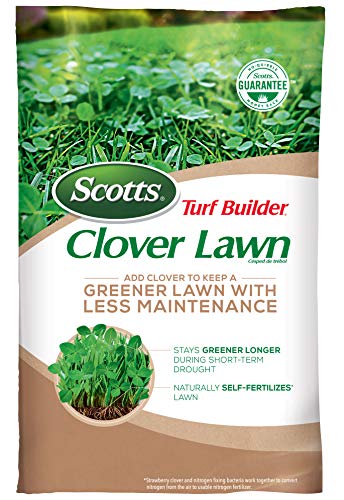
Scotts Turf Builder Clover Lawn
Beginner friendlyThe trusted Scotts name lowers the risk for first-timers. One 2 lb bag covers a typical small yard.
As an Amazon Associate, Measure Lawn earns from qualifying purchases. We only suggest products we'd use ourselves; the price you pay is the same.
Key takeaways
- For most homeowners the smart default is a grass-plus-microclover blend, not pure clover or pure grass.
- The biggest catch with any clover is weed control: once clover's in the lawn, broadleaf herbicides are off the table.
- Clover's superpowers: free nitrogen, no dog-urine burn, drought colour, and food for 50+ native bee species.
- Clover's real weaknesses (per US extensions): poor traffic tolerance, no shade, winter dieback, and a less uniform look.
- Extension consensus is that clover belongs as a component of a lawn, not a standalone replacement.
🍀 New to clover? Start with the complete clover lawn guide — pros and cons, planting, care and the seed calculator, all in one place.
Measure your lawn free, then size the grass and the ~5% microclover precisely with our calculators.
Measure my lawn free →Clover vs grass, answered
Is clover better than grass?
Neither is universally better — it depends on your priorities. Clover wins on inputs (no fertilizer, less water and mowing), pollinator value, drought colour and dog-urine resistance. Grass wins on durability, uniformity, shade tolerance and HOA acceptance. For most people a grass-clover blend captures the best of both.
What's the difference between a clover lawn and a grass-clover blend — and which should I choose?
A pure clover lawn is all clover: lowest input and best for pollinators, but it tolerates little traffic, no shade, dies back in winter leaving bare patches, and can upset an HOA. A blend is mostly grass with ~5% microclover — it keeps a normal, durable, HOA-friendly lawn while cutting fertilizer and water. The blend is the recommended default for most homeowners.
Can I use weed killer on a clover or clover-blend lawn?
Not the usual kind. Clover is a broadleaf, so standard broadleaf herbicides (like 2,4-D) kill clover along with dandelions. On any lawn containing clover you control weeds culturally — mow high, keep it thick, and hand-pull or spot-treat with a shield.
Does clover hold up to dogs and kids?
Pure clover has poor foot-traffic tolerance, so it suits light-to-moderate use better than constant play. The big plus for dog owners is that clover resists the urine burn spots that plague grass. A grass-clover blend is the better pick for active yards because the grass supplies durability.
Will a clover lawn get me in trouble with my HOA?
Possibly. Clover is botanically a broadleaf "weed," and some HOAs and municipal weed ordinances have fined homeowners for it. A predominantly-grass microclover blend, kept mown, reads as a maintained lawn and is the safest route where rules are strict — check your covenants first.
How often do I have to reseed clover compared to grass?
White clover is a short-lived perennial (about 3–5 years), so a pure clover lawn often needs a light overseed every 2–3 years. Grass persists for many years with routine fall overseeding. A grass-clover blend largely reseeds itself.
Does clover really replace fertilizer?
Largely, yes. As a legume working with Rhizobium bacteria, clover pulls nitrogen from the air and makes it available to itself and nearby grass — about 1–2 lb of nitrogen per 1,000 sq ft a year. A pure clover lawn needs no nitrogen, and a blend often lets you drop a feeding.