Grass Seed Calculator: How Much Seed Do I Need?
Enter your lawn size in square feet or acres. We calculate how much seed you need and recommend how many bags of each product to buy. When current Amazon prices are available, we compare each product’s bag sizes to find the lowest-cost combination for your lawn—even if a larger bag leaves seed to spare. No account needed.
How much seed do I need for overseeding?
A 5,000 sq ft tall-fescue lawn needs about 20 lb of seed for overseeding at 4 lb per 1,000 sq ft. That is a planning estimate for thickening existing grass. Bare areas need the new-lawn rate, and a coated seed or mixture may need a different amount according to its label.
| Grass type | 1,000 sq ft | 5,000 sq ft | 10,000 sq ft |
|---|---|---|---|
| Tall Fescue | 4 | 20 | 40 |
| Kentucky Bluegrass | 1.5 | 7.5 | 15 |
| Perennial Ryegrass | 3 | 15 | 30 |
| Fine Fescue | 2.5 | 12.5 | 25 |
Seed needed = lawn area ÷ 1,000 × the seeding rate. Buying bags? Divide your lawn area by the package’s overseeding coverage and round up. Choose the new-lawn coverage for bare soil.
Rate references: University of Maryland Extension for fescues and bluegrass; Penn State Extension for new-lawn rates; Cornell Cooperative Extension for perennial ryegrass overseeding. Local recommendations and your seed label take precedence.
Spreaders for even coverage

Chapin 8700G TurfPro Chest-Mount Spreader
Beginner friendlyRecommended for lawns under 5,000 sq ft. Hands-free chest-mount design for easy spreading of fertilizer seed and granular products.
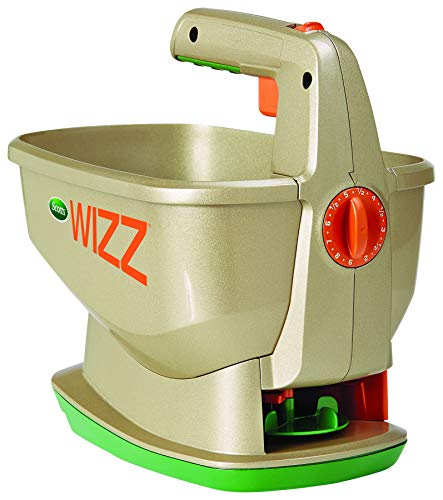
Scotts Wizz Battery-Powered Handheld
Beginner friendlyBattery-powered handheld spreader for spot-seeding and small lawns under 4,000 sq ft.
As an Amazon Associate, Measure Lawn earns from qualifying purchases.
How much grass seed per square foot?
Grass seed is measured in pounds per 1,000 square feet, and every grass is different — a fine, spreading grass like Bermuda needs far less seed than a coarse, bunch-type grass like tall fescue. The other big factor is the job: bare soil usually needs more seed than overseedingan existing thin lawn, because established grass fills in the gaps.
| Grass type | New lawn (lb/1,000 sq ft) | Overseeding / repair |
|---|---|---|
| Tall Fescue | 6–8 | 4 |
| Kentucky Bluegrass | 2–3 | 1.5 |
| Perennial Ryegrass | 4–5 | 3 |
| Fine Fescue | 4–5 | 2.5 |
| Bermuda (hulled) | 1–2 | 0.5–1* |
| Zoysia | 1–2 | 0.5–1* |
| Centipede | 0.25–0.5 | 0.25* |
| Bahia | 7–10 | 4–6* |
| Buffalo | 3–5 | 1–3* |
* Warm-season rates are for suitable repairs, not a recommendation to overseed every year. Check the grass-specific warning in the calculator before buying; many Bermuda and zoysia varieties need matching sod or plugs.
Pounds are only half the job — the other half is timing. For cool-season grass that means fall, and the fall overseeding guide has the window by region (roughly Aug 15 – Oct 10, sliding later the further south you are) plus the five steps that actually get seed to germinate. On compacted or clay soil, core aerate first and seed the same day — the open holes give better seed-to-soil contact than anything short of a slit-seeder.
Measure your lawn free on satellite imagery in 2 minutes — use the measured area to plan how much seed to buy.
Measure my lawn free →Grass seed questions, answered
How much grass seed do I need per 1,000 sq ft?
It depends on the grass and whether you are starting a new lawn or overseeding. Typical new-lawn rates per 1,000 sq ft: tall fescue 6–8 lb, Kentucky bluegrass 2–3 lb, perennial ryegrass 4–5 lb, fine fescue 4–5 lb, Bermuda 1–2 lb (hulled), zoysia 1–2 lb. Overseeding rates are lower; use the rate for your grass and follow the package label.
How much grass seed for overseeding?
As a planning estimate, use 4 lb per 1,000 sq ft for tall fescue, 1.5 lb for Kentucky bluegrass, 3 lb for perennial ryegrass or 2.5 lb for fine fescue. A 5,000 sq ft tall-fescue lawn needs about 20 lb. Follow the package’s overseeding rate for coated seed and mixtures.
How many bags of grass seed should I buy?
Bag counts use each product’s published coverage for your selected job. When current prices are available for all its sizes, the calculator finds the lowest total cost that covers your lawn, even if a larger bag leaves spare seed. It compares seed blends separately and flags missing price or coverage information. Confirm the label and final Amazon price, including shipping and tax.
Can I calculate grass seed by the acre?
Yes. Choose Acres beside the lawn-size field and enter your area, including fractions such as 0.25 or 0.5. One acre equals 43,560 square feet. The calculator converts the area for seed amounts and product bag quantities; switching units preserves your original measured area.
Should I overseed every grass type?
No. Overseeding thin cool-season lawns is common, but warm-season lawns need different guidance. Hybrid Bermuda cannot be reproduced from seed, and many zoysia varieties need matching sod or plugs. Avoid ryegrass overseeding on centipede. Bahia and buffalograss can be repaired with seed when needed; this is different from routine fall overseeding. The calculator shows a warning for each warm-season grass.
What happens if I use too much or too little seed?
Too little leaves bare patches that weeds invade. Too much makes seedlings compete for water and nutrients, so they grow thin and weak and are prone to disease. Staying in the recommended range gives the thickest, healthiest lawn.
When is the best time to plant grass seed?
Cool-season grasses (fescue, bluegrass, ryegrass) seed best in late summer to early fall; local dates vary. Spring is a backup option. Warm-season grasses (Bermuda, zoysia) seed best in late spring to early summer once soil is reliably warm. The calculator shows the window for your selected grass.