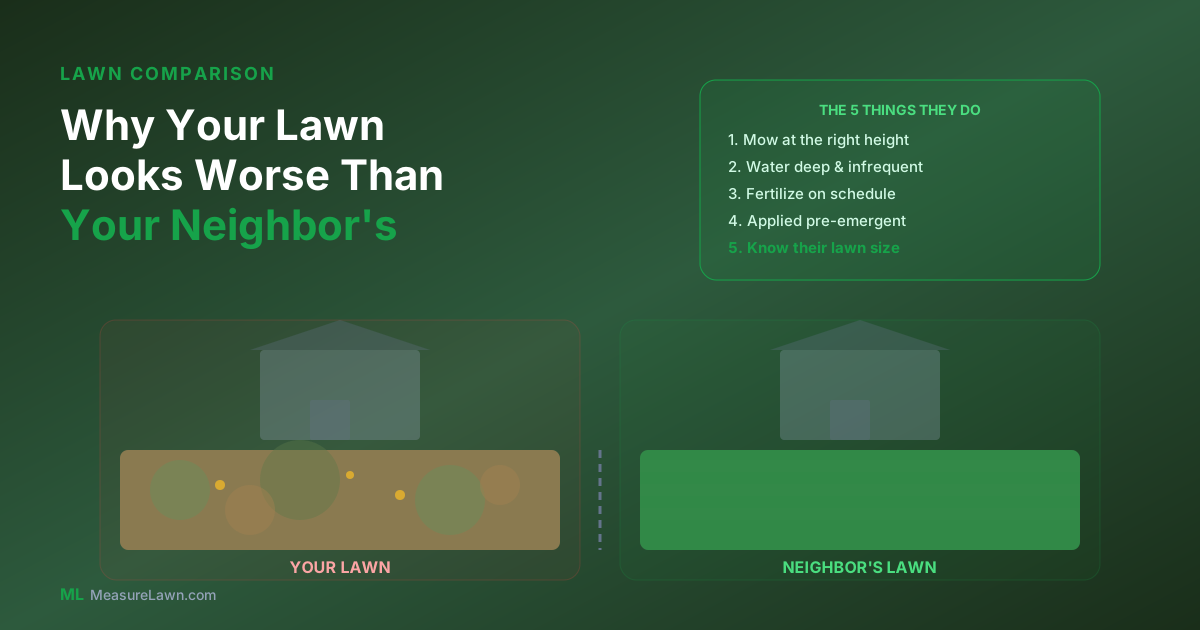
Why Your Lawn Looks Worse Than Your Neighbor's (And the 5 Things They're Doing That You're Not)
You water your lawn. You mow it. You even fertilized once this year. So why does your neighbor's yard look like a magazine cover while yours looks like a neglected park? The answer isn't genetics, luck, or a secret product. It's five specific habits.
Every neighborhood has one: the house with the impossibly green, thick, weed-free lawn that makes every other yard look sad by comparison. You've probably assumed they spend thousands on professional care, have some rare grass variety, or inherited magic soil.
They probably don't. What they almost certainly do is five things that most homeowners skip, underestimate, or do wrong. None of them are expensive. All of them compound over time. And the difference between a good lawn and a great lawn is usually just consistency in these five areas.
Are You Mowing at the Right Height?
This is the single biggest difference between an okay lawn and a great one, and it costs literally nothing.
Most homeowners mow too short. They set their mower to 2 inches and never think about it again. Their neighbor with the great lawn has their mower set to 3–3.5 inches for cool-season grass, or the proper height for their specific warm-season variety.
That extra inch of grass blade does three things. It shades the soil surface, preventing weed seeds from getting the sunlight they need to germinate. It increases the leaf area available for photosynthesis, producing more energy for root growth. And it insulates the soil, keeping it cooler in summer and retaining more moisture between waterings.
The neighbor isn't fighting fewer weeds because they spray more herbicide. They have fewer weeds because their mowing height prevents weeds from establishing in the first place. A thick lawn mowed at 3+ inches is the most effective weed barrier you can create — more effective than any chemical.
If you do one thing after reading this article, go raise your mower deck to the recommended height for your grass type. You'll see a difference within two mows.
Are You Watering Your Lawn the Wrong Way?
The instinct is to water a little bit every day. It feels responsible. It feels like you're "taking care" of your lawn. But shallow daily watering is one of the worst things you can do for turf grass.
When you water the top half-inch of soil every day, grass roots have no reason to grow deeper. Why would they? The moisture is right at the surface. The result is a shallow root system that can't access deeper soil moisture, can't survive even short dry spells, and is vulnerable to disease (constantly wet surface = fungal paradise).
Your neighbor waters once per week, deeply. They put down a full inch of water in one session, which soaks 4–6 inches into the soil. Their grass develops deep roots that chase that moisture downward, creating a drought-resistant lawn that stays green during the dry spells that turn your shallow-rooted lawn brown.
One inch per week is the standard for most grass types during active growing season. Use a rain gauge or set out a straight-sided can to measure your sprinkler output. Subtract any rainfall that week. Water in early morning (4–9 AM) to minimize evaporation and disease.
How Often Should You Really Fertilize Your Lawn?
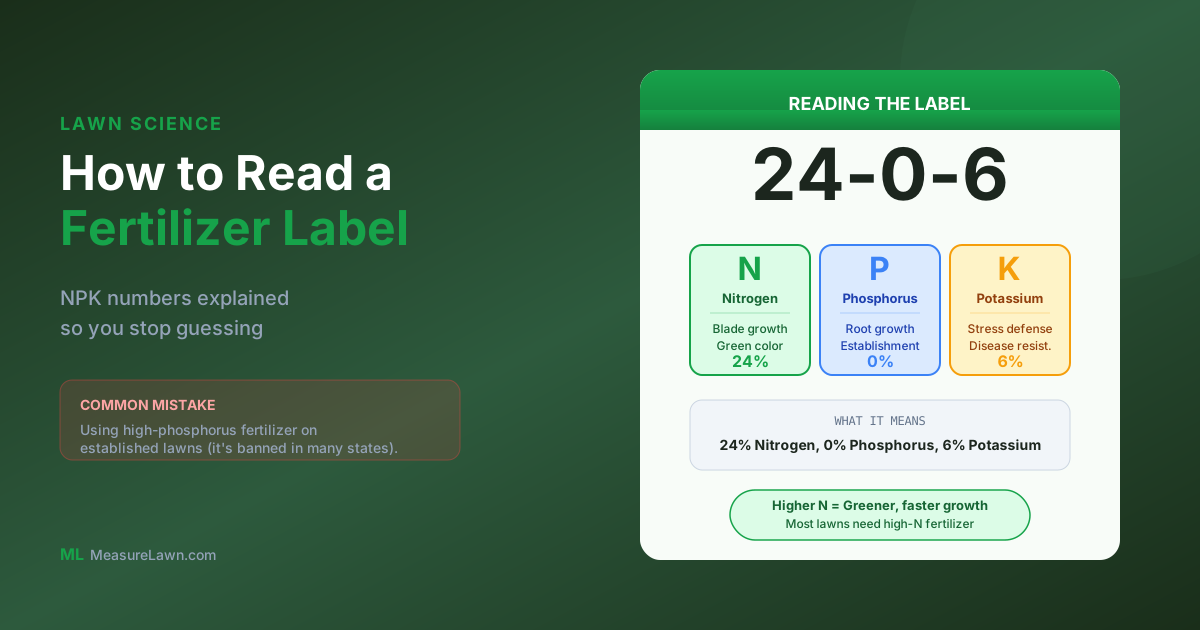
Your neighbor applies fertilizer 2–4 times per year at specific times matched to their grass type's growth cycles. You buy a bag when the hardware store has it on sale and spread it whenever you get around to it.
Timing matters enormously with fertilizer. Cool-season grasses need their primary feeding in spring (when growth starts) and fall (when roots are building reserves for winter). Warm-season grasses need feeding in late spring and midsummer (their peak growth periods).
Fertilizing at the wrong time doesn't just waste product — it can cause harm. Nitrogen-heavy fertilizer applied to cool-season grass during summer heat stress pushes weak, disease-prone growth. Fall fertilizer applied too late to warm-season grass going dormant sits on the soil doing nothing.
Your neighbor doesn't have a secret fertilizer. They have a schedule. They know that April and October are their two most important applications (for cool-season grass), and they don't miss those windows.
The amount matters too. A bag of fertilizer that covers 5,000 square feet doesn't make your 8,000 square foot lawn 60% green. It makes 5,000 square feet green and leaves 3,000 square feet untreated. Your neighbor knows their lawn size and buys accordingly.
Did You Miss the Pre-Emergent Window?
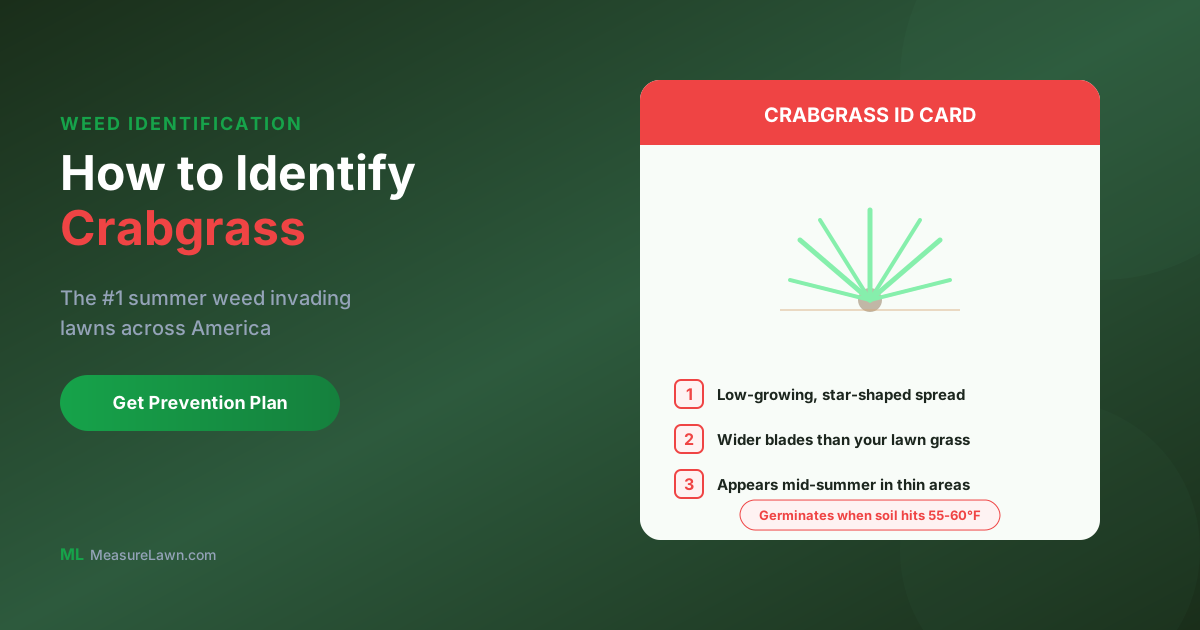
This is the invisible difference. Your neighbor's lawn isn't weed-free because they pull every weed by hand or spray herbicide constantly. It's weed-free because they applied pre-emergent herbicide in early spring, which prevented 90% of annual weeds from ever germinating.
Pre-emergent is a one-time application in early spring (when soil temperature hits 55°F) that creates a barrier preventing weed seeds from sprouting. One application, 30 minutes of work, and crabgrass never appears. Skip it and you spend all summer fighting a losing battle with post-emergent spot treatments.
Your neighbor might also apply a second pre-emergent round in late summer to prevent cool-season weeds (chickweed, henbit) from establishing over winter. Two applications per year, maybe an hour of total work, and their lawn stays clean year-round.
The irony: pre-emergent is one of the cheapest lawn care products. A bag covering 5,000 square feet costs $25–$50. The time and money you spend fighting weeds without it far exceeds the cost of preventing them.
Do You Actually Know Your Lawn Size?
Every habit above depends on applying the right amount of product to the right amount of lawn. Your neighbor knows their lawn is 6,800 square feet. You think yours is "about 5,000, maybe." That 36% difference means you're chronically under-applying everything.
Under-applying fertilizer means thin, pale grass that can't compete with weeds. Under-applying pre-emergent means gaps in the barrier where weeds germinate freely. Under-applying seed during overseeding means thin results that take two seasons to fill in instead of one.
Your neighbor didn't measure their lawn because they're obsessive. They measured it because they got tired of buying the wrong amount of product, getting mediocre results, and watching money go to waste. One measurement, done once, and every product calculation for every season becomes accurate.
Why Do These Five Habits Compound Over Time?
Here's what makes your neighbor's lawn look so much better: these five habits compound. A lawn mowed at the right height suppresses weeds, which means herbicide works better. Deep watering produces stronger roots, which means fertilizer is absorbed more efficiently. Pre-emergent prevents weed competition, which means new grass from overseeding establishes faster.
Each habit makes the others more effective. Miss one and the others work harder to compensate. Miss two or three and you're fighting an uphill battle that no single product can fix.
The reverse is true too. Start with correct mowing height (free), add proper watering technique (free), apply fertilizer on schedule with accurate quantities (minimal cost), and apply pre-emergent once in spring (minimal cost), and within one season your lawn looks dramatically different.
What's the First Step to a Better Lawn?
The five habits are straightforward, but they all begin with one number: your actual lawn size. It determines how much fertilizer, how much pre-emergent, how much seed, and how much water your lawn needs.
MeasureLawn gives you that number in under a minute, then builds a complete plan around it — what to apply each month, how much, and which specific products work for your grass type. It's the same approach your neighbor uses. They just figured it out through trial and error over several years. You can start right now.
Ready to measure your lawn?
Get a free, AI-customized lawn care plan with exact product quantities for your property.
Measure My Lawn — It's Free →