What Is My Soil Temperature? Free Zip Code Lookup & Treatment Timing Guide
Soil temperature is the single most important factor for lawn care timing — more important than air temperature, calendar dates, or even your neighbor's lawn. Yet most homeowners have no idea what their soil temperature actually is. This guide shows you exactly why soil temperature matters, how to check yours for free, and when to apply every lawn treatment based on your region's soil temperature curve.
Soil Temperature Tracker
Enter your ZIP code to see your soil temperature curve and treatment timing
Why Does Soil Temperature Matter for Lawn Care?
Your soil temperature determines everything about lawn care timing. Seeds won't germinate. Weeds won't emerge. Treatments won't work. And yet most homeowners apply fertilizers, herbicides, and seeds based on the calendar or air temperature — which is precisely why so many lawn care efforts fail.
Soil temperature is the trigger for biological activity underground. Grass roots respond to soil warmth. Weed seeds respond to soil warmth. Beneficial microbes respond to soil warmth. When you ignore soil temperature and rely on air temperature instead, you're making decisions based on something that has almost no correlation with what's actually happening in your soil.
Here's the disconnect: air temperature can swing 30 degrees in a single day, but soil temperature changes slowly and consistently. This lag is crucial. In spring, the air might reach 70°F while your soil is still at 45°F. Many homeowners see that warm spring day and think it's time to seed or treat. But seeds won't germinate at 45°F soil temperature, and most herbicides are completely ineffective at that temperature. You've wasted your time, money, and product.
The other critical misunderstanding: surface soil temperature is misleading. What matters is soil temperature at 4 inches deep — the depth where grass roots and weed seeds actually exist. Surface soil can warm quickly on a sunny day while the 4-inch depth remains cold for weeks. This is why the old advice to "check your soil temperature manually" with a thermometer becomes tedious. You need multiple readings over multiple days to understand the true trend.
Additionally, soil temperature directly affects the efficacy of lawn treatments. Pre-emergent herbicides need soil above 55°F to create the chemical barrier that stops crabgrass from germinating. Below that temperature, the product breaks down too quickly to be effective. Similarly, spring fertilizers are pointless below 55°F because grass isn't actively growing and won't absorb the nutrients. Post-emergent weed killers need warmer soil (often 65°F+) to work. Apply them in cold soil and you're spraying expensive chemicals that the plant won't effectively process.
Soil temperature also determines pest pressure. Grubs don't start their life cycle until soil reaches 60°F. Chinch bugs need consistent warmth above 70°F to reproduce rapidly. Knowing your soil temperature tells you exactly when pest problems are about to spike — and when preventative treatments will actually work.
Bottom line: soil temperature is not a nice-to-know metric. It's the foundational data point for every lawn care decision. Without it, you're essentially guessing.
What Is the Ideal Soil Temperature for Lawn Treatments?
Different lawn treatments have different soil temperature requirements. Applying them at the wrong temperature wastes money and won't deliver results. Here's what you need to know for every major lawn treatment:
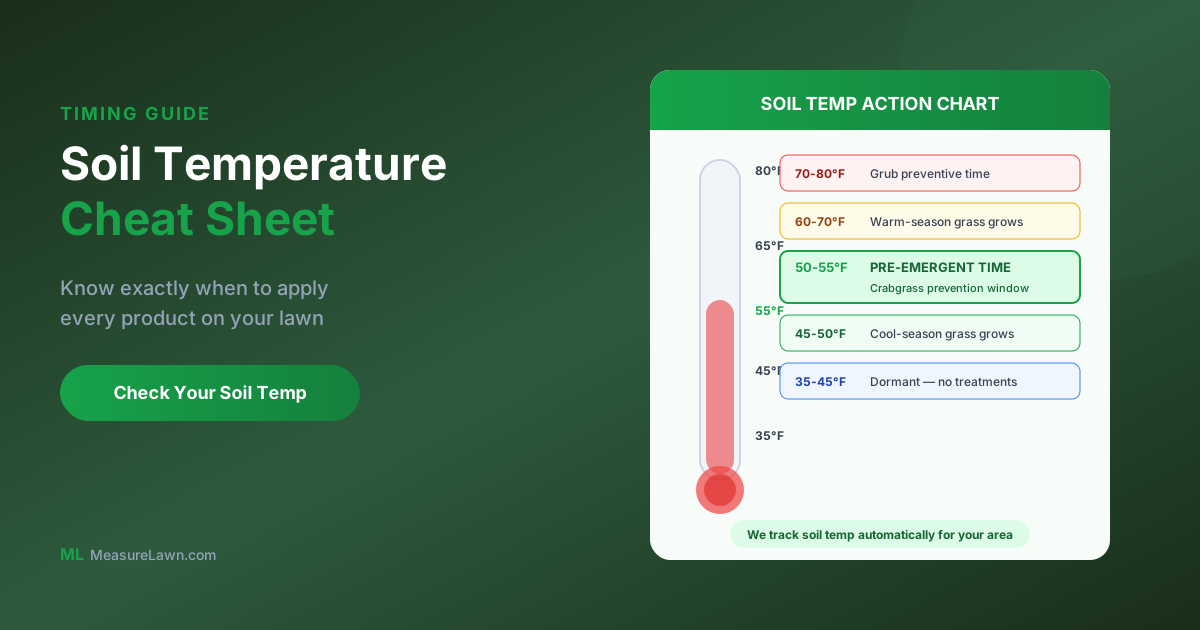
Pre-Emergent Herbicide (Crabgrass Prevention): Apply when soil temperature reaches and stays at 55°F consistently. This is the trigger point where crabgrass seeds begin to germinate. You must apply before this temperature is reached. A second application is often recommended when soil reaches 65-70°F for extended season-long protection. Missing the 55°F window means crabgrass is already emerging and you'll need post-emergent treatment instead.
Spring Fertilizer: Apply when soil temperature is consistently 55-65°F and grass is actively growing. This timing ensures the grass plant can absorb and utilize nitrogen for green, vigorous growth. Below 55°F, roots aren't actively taking up nutrients. Above 75°F, spring is turning into early summer and your focus should shift to heat stress prevention rather than growth promotion.
Grub Prevention (Insecticide): Apply when soil temperature reaches 60-70°F in late spring or early summer. This timing targets grubs in their vulnerable larval stage before they tunnel deep into soil. Applying too early wastes the product; applying too late means the damage is already done.
Fall Overseeding (Cool-Season Grasses): Plant seeds when soil temperature is 50-65°F, typically late August through September. Cool-season grass seeds germinate best in this range, and the cooler fall conditions reduce heat stress on new seedlings. Soil temperature is more important than calendar date — a warm September might require waiting until soil cools in October.
Fall Fertilizer: Apply when soil temperature drops to 50-60°F in late September or October. This timing encourages root growth (rather than blade growth) without pushing tender new growth into winter dormancy. It's often called "winterizer" fertilizer for this reason.
Winterizer (Late Fall Application): Apply when soil temperature is 40-50°F, typically October through early November. At this temperature, grass is preparing for dormancy and will store the nutrients for spring green-up rather than using them for immediate growth.
Warm-Season Grass Seeding (Bermuda, Zoysia, Centipede): Warm-season grasses need soil temperature at 65-70°F or higher. These grasses are dormant in spring, so soil temperature is even more critical than for cool-season species.
Here's a quick reference table for the most common treatments:
| Treatment | Soil Temperature | Timing Notes |
|---|---|---|
| Pre-Emergent (1st app.) | 55°F | Spring — must apply before germination starts |
| Pre-Emergent (2nd app.) | 65-70°F | Extended season coverage |
| Spring Fertilizer | 55-65°F | When grass actively growing |
| Grub Prevention | 60-70°F | Late spring; targets vulnerable larvae |
| Fall Overseeding | 50-65°F | Late summer/fall for cool-season grasses |
| Fall Fertilizer | 50-60°F | Late fall; promotes root growth |
| Winterizer | 40-50°F | Early winter preparation |
| Warm-Season Seeding | 65-70°F+ | Spring for warm-season species |
How Do I Check My Soil Temperature?
There are two traditional approaches to checking soil temperature, and both have serious limitations.
The Manual Thermometer Method: Buy a soil thermometer (typically $10-30), push it 4 inches into the soil at several locations in your yard, wait for the reading, and record it. In theory, this works. In practice, it's tedious. You need to take readings over multiple days to understand the trend (single readings are unreliable). You need to read it at the same time each morning for consistency. You need multiple spots in your yard because sun exposure, soil type, and drainage all affect soil temperature. Most homeowners do this once, decide it's too much work, and never check again.
The Agricultural Extension Data Method: Call your local university extension office or dig through USDA soil temperature databases. The data exists, but it's scattered across different government websites, uses academic terminology, and requires you to find the weather station nearest your location. It takes 30-45 minutes to find data that might be 10-15 miles away from your actual lawn.
The Modern Solution: Digital Lookup by Zip Code: This is why MeasureLawn developed a free soil temperature lookup widget. Instead of buying thermometers or digging through government data, you simply enter your zip code and instantly see:
- Your current soil temperature (city-wide average at 4 inches depth)
- The historical soil temperature curve for your region (showing the annual pattern)
- Exactly when soil will reach each critical temperature threshold for your treatments
- Alerts when soil temperature crosses into the ideal range for the next recommended treatment
The data comes from regional weather stations and agricultural monitoring networks, aggregated and processed to show you meaningful, actionable information for your exact location.
This approach has a critical advantage over manual thermometer readings: it's based on consistent, science-backed data from professional weather monitoring stations. Your single manual reading on a Tuesday morning might be influenced by recent rain or unusual sun exposure. The aggregated regional data removes those anomalies and shows you the true soil temperature trend that matters for biological activity.
Try Our Free Soil Temperature Lookup
Enter your zip code in the interactive tool below to see your current soil temperature, the annual temperature curve for your region, and exactly when to time your lawn treatments.
Soil Temperature Tracker
Enter your ZIP code to see your soil temperature curve and treatment timing
Note: Soil temperatures shown are city-wide averages from regional weather station data. Your specific soil temperature may vary based on sun exposure, soil type, and moisture levels.
What Is the Average Soil Temperature by Month?
Soil temperature varies dramatically by region in the United States. A region with cold winters and short springs (like Minnesota) has a completely different soil temperature curve than a warm climate with mild winters (like Georgia). Understanding your region's curve is essential for timing treatments.
Northern States (Cool-Season Grass Region): States like Minnesota, Wisconsin, Michigan, New York, and Pennsylvania experience severe winters with soil temperatures dropping to 30-45°F. January and February are the coldest months, with soil temperatures often below 32°F and remaining frozen for extended periods. March and April see gradual warming as spring arrives, with soil temperatures reaching 45-55°F. May and June bring rapid warming, crossing the critical 55°F and 65°F thresholds where pre-emergent herbicides are applied. Summer soil temperatures peak in July and August at 75-85°F. September and October cool gradually as fall arrives, making this the ideal season for overseeding cool-season grasses. By November, soil temperatures drop below 60°F, and by December, they're back in the 30-45°F range.
Transition Zone (Mixed Grass Species): States like Pennsylvania, Ohio, Kentucky, and northern Virginia experience moderate winters with soil temperatures typically 35-55°F in winter. Spring warming happens faster than northern states, with soil reaching 55°F in late April or early May. This zone benefits greatly from the soil temperature approach because traditional calendar-based advice fails here — spring timing varies by 3-4 weeks year to year depending on winter severity. Summer peaks at 70-80°F. Fall is shorter but still ideal for cool-season overseeding (August through September) before soil drops below 60°F.
Southern States (Warm-Season Grass Region): States like Georgia, South Carolina, Texas, and Florida rarely experience freezing soil temperatures. Winter soil temperatures might drop to 45-60°F but seldom freeze solid. Spring arrives early, with soil reaching 55°F by late March or early April. This early spring timing changes everything — pre-emergent applications happen earlier, warm-season grasses can be seeded earlier, and the overall growing season is longer. Summer soil temperatures often exceed 85°F, sometimes reaching 90°F+. Fall cooling is gradual; soil might not drop below 60°F until November. This extended warm season is why warm-season grasses thrive in these regions.
The critical insight: soil temperature curves overlap regions by several weeks. A warm spring in Minnesota might look like an average spring in Ohio. An early fall in Texas might behave like an average fall in Georgia. This is why calendar dates are so unreliable for lawn care. Soil temperature is the only metric that accounts for year-to-year variation and regional differences.
The interactive widget below shows YOUR region's specific soil temperature curve — not a generic "this is what usually happens" curve, but data specific to your zip code based on historical weather patterns and current conditions.
When Should I Apply Pre-Emergent Based on Soil Temperature?
Pre-emergent herbicide timing is where soil temperature matters most. This is the most critical application on most homeowners' lawns, and timing determines success or failure. Many homeowners apply pre-emergent too late, watching crabgrass germinate anyway because the chemical barrier wasn't established in time.
The 55°F Threshold: Crabgrass seeds begin germinating when soil temperature reaches 55°F consistently (over several days, not just one warm day). This is not a hard switch — germination doesn't happen instantly at exactly 55°F. Rather, germination rates increase as soil temperature rises from 50°F to 60°F. But 55°F is the practical trigger point where you can no longer avoid crabgrass emergence through dormancy; you must apply pre-emergent before this threshold.
The Timing Problem: Many homeowners wait for the calendar. "April 15th — that's usually when I apply pre-emergent." In a cold spring, soil might not reach 55°F until late April or May. In a warm spring, soil reaches 55°F by late March. The crabgrass doesn't care about the calendar; it only cares about soil temperature. Apply on April 15th when soil temperature is still 45°F, and your pre-emergent will break down before the soil even warms up. The crabgrass will still germinate. You've wasted the product.
Conversely, apply too early when soil is still cold, and the chemical barrier will dissipate before crabgrass even begins germinating — another wasted application.
The Two-Application Strategy: Most lawn care professionals recommend two pre-emergent applications:
First Application: When soil reaches 55°F. This targets early-season crabgrass germination.
Second Application: When soil reaches 65-70°F, typically 2-4 weeks later. This extends the chemical barrier to catch late-season crabgrass germination throughout spring and early summer.
This two-application approach accounts for the extended germination window. Crabgrass doesn't all germinate in one week; it's a continuous process over many weeks as temperatures rise. Two applications ensure the chemical barrier exists during this entire period.
The Post-Emergent Reality: If you miss the pre-emergent window and crabgrass already germinated, you're now forced to use post-emergent herbicide. Post-emergent products kill visible crabgrass but are more expensive per application, less effective than prevention, and require multiple applications for complete control. Prevention through proper pre-emergent timing is dramatically more cost-effective than treatment after germination.
This is where MeasureLawn's soil temperature monitoring becomes invaluable. The system tracks soil temperature daily for your region and alerts you when it reaches 55°F — exactly when to apply pre-emergent. You don't guess, don't rely on the calendar, and don't risk missing the window. You apply at the precisely correct time for maximum effectiveness.
How Does Soil Temperature Affect Grass Seed Germination?
Soil temperature is the primary factor determining whether grass seeds germinate, how quickly they germinate, and whether the seedlings survive. Different grass types have different temperature requirements, which is why timing overseeding or new seeding to your grass type AND your soil temperature is essential.
Cool-Season Grasses (Fescue, Bluegrass, Ryegrass): These grasses germinate best when soil temperature is 50-65°F. This is why fall overseeding (August through September) works so well in northern and transition zone regions — soil temperatures are naturally in the ideal range. In spring, soil temperature might reach this range by late April or May in northern regions, but by then the days are warming rapidly and seedlings struggle with heat stress. Fall provides consistent cool temperatures for germination and establishment before winter dormancy.
Within the 50-65°F range, germination speed increases with temperature. At 50°F soil temperature, cool-season grass seed germinates in 14-21 days. At 60°F, germination happens in 7-10 days. At 65°F, germination happens in 5-7 days. But above 65°F, germination rates actually decline. At 70°F+, cool-season grass seed becomes inconsistent or fails altogether. This is why fall seeding produces much better results than spring seeding for cool-season grasses — even if you can technically seed in spring, fall's cooler temperatures ensure faster, more reliable germination and establishment.
Warm-Season Grasses (Bermuda, Zoysia, Centipede, Buffalo): These grasses need soil temperature of 65-70°F or higher for germination. Many need even higher temperatures — Bermuda grass seeds particularly struggle below 70°F. This is why warm-season grass seeding happens in late spring (May-June) when soil reaches the required warmth, not in fall when soil temperatures are dropping. Attempting to seed warm-season grass in cool soil results in poor germination and weak seedlings.
The Germination Window: Even within the ideal temperature range, soil temperature must be consistent. A single warm day followed by a cold night doesn't count. Seeds respond to multi-day average soil temperature. This is why weather fluctuations in spring (warm days, cold nights) are problematic for spring seeding. Fall's more consistent temperatures (gradually cooling, without drastic day-to-day swings) produce more reliable germination.
Seedling Stress: Even if seeds germinate at the wrong temperature, seedlings often fail. Cool-season grass germinating in warm soil (accidentally seeded in late spring) might germinate okay but then face heat stress before roots establish. Warm-season grass struggling to germinate in cool soil might produce weak seedlings that struggle in summer heat. Timing germination to your region's natural seasonal conditions ensures not just germination but successful establishment and survival.
The MeasureLawn Advantage: When you create a free lawn care plan at MeasureLawn, the system automatically times overseeding or new seeding recommendations to match your soil temperature curve and grass type. If you have cool-season grass, it recommends fall seeding when soil temperatures are ideal. If you have warm-season grass, it recommends spring seeding. You get the perfect timing without calculating anything yourself.
Why Is Soil Temperature Different from Air Temperature?
This is the fundamental misconception that causes most homeowners to apply treatments at the wrong time: air temperature and soil temperature are not the same thing. Not even close.
Soil is Thermally Inert: Soil has high thermal mass, meaning it absorbs heat slowly and releases it slowly. Air temperature can swing 30 degrees in a single day, but soil temperature might change only 2-3 degrees in that same day. Soil "lags" behind air temperature because it takes days or weeks of consistent warm or cold air to actually change soil temperature at depth.
The Spring Lag: In spring, this lag is especially problematic. The air might reach 70°F, 75°F, even 80°F on warm days in March or early April. But the soil at 4 inches deep is still at 45°F or 50°F. The warm air hasn't penetrated the soil yet. Many homeowners see a beautiful 75°F spring day and think "time to seed" or "time to fertilize." But if soil temperature is only 45°F, seeds won't germinate and fertilizer won't be taken up by roots.
This lag persists for weeks. In many northern regions, air temperatures reach 70°F+ by late April, but soil temperature doesn't reach 60°F until mid-May. That's a 3-week lag. Any lawn care decision based on air temperature instead of soil temperature is off by up to 3 weeks.
The Fall Persistence: In fall, the lag works in reverse. Air temperatures drop rapidly in September and October, but soil temperatures cool much more slowly. Soil might stay at 65°F while air temperatures drop to 55°F or lower. This is actually advantageous for fall overseeding — the air is cool (reducing heat stress on seedlings) while the soil is still warm enough for germination. You get ideal conditions that don't exist in spring.
Why Calendar Dates Fail: This is why applying treatments "on April 15th" or "in September" is unreliable. Calendar dates don't account for the soil temperature lag or year-to-year variation. A warm winter results in soil reaching 55°F by late March. A cold winter keeps soil below 55°F until May. The crabgrass doesn't care about the calendar; it only responds to soil temperature.
Why Your Neighbor's Timing Might Be Wrong for You: Your neighbor in the next town over might have slightly different soil temperature patterns based on elevation, proximity to water, or average cloud cover. If you both apply pre-emergent "on the same day," one of you is probably wrong. Soil temperature is location-specific, which is why a free soil temperature lookup by zip code is far more useful than general regional advice.
The Scientific Bottom Line: Biological processes in soil (seed germination, root growth, microbial activity, pest emergence) all respond to soil temperature, not air temperature. Every lawn care treatment is built on this soil temperature biology. Ignoring soil temperature and relying on air temperature is like baking a cake by monitoring room temperature instead of oven temperature. It simply doesn't work.
How Can I Monitor Soil Temperature All Season?
Most homeowners fall into one of three camps: they ignore soil temperature entirely (and apply treatments at the wrong times), they check it obsessively with a thermometer (and then give up because it's tedious), or they try to track USDA data (and give up because it's confusing). There's a better way.
Option 1: Manual Soil Thermometer (Time-Consuming)
Buy a soil thermometer, push it 4 inches into the soil in multiple locations around your yard, take readings every 2-3 days, and track the data manually. In theory, this gives you your exact soil temperature. In practice: it's tedious, inconsistent (your specific soil temperature varies greatly based on sun exposure and drainage), requires commitment every few days, and produces readings that don't necessarily reflect the deeper biological trends that matter. Most homeowners do this once, give up, and never monitor again.
Option 2: USDA/Agricultural Extension Data (Complex)
Check your local university extension office website, find the nearest USDA soil temperature monitoring station (which might be 20 miles away), look up current and historical data in formats designed for agricultural scientists, and try to translate that into actionable timing for your lawn. The data exists and it's free, but the process requires significant time and requires understanding of agricultural terminology. This approach also requires you to manually monitor throughout the season and remember when to apply each treatment.
Option 3: Free MeasureLawn Lawn Care Plan (Automated & Easy)
Create a free lawn care plan at MeasureLawn.com. The system does all the soil temperature monitoring for you and automatically tells you exactly when to apply each treatment. Your plan includes:
- Current Soil Temperature Display: See your regional soil temperature right now, updated daily
- 7-Day Average Tracking: Soil temperature viewed as multi-day average (more meaningful than single daily readings)
- Ideal Range Indicators: Visual indicators showing when soil temperature enters the ideal range for pre-emergent, spring fertilizer, grub prevention, overseeding, and fall treatments
- Go/Wait Status: For each recommended treatment, the system says "Go" (soil temperature is ideal) or "Wait" (soil temperature isn't ready yet)
- Automatic Alerts: Receive notification when soil temperature reaches the threshold for the next recommended treatment
- Integrated Treatment Schedule: Not just soil temperature data, but a complete lawn care plan accounting for soil temperature, grass type, region, weather forecast, and your specific lawn
For pre-emergent applications alone, this system saves you weeks of guessing and the risk of missing the critical 55°F window. For overseeding, it ensures you plant at the perfect time for your grass type. For every treatment throughout the season, it accounts for soil temperature automatically.
The plan takes just 2 minutes to set up (enter your zip code, grass type, and lawn size), and then the system does all the monitoring for you throughout the season.
Ready to measure your lawn?
Get a free, AI-customized lawn care plan with exact product quantities for your property.
Measure My Lawn — It's Free →