The Rise of Electric Mowers: Why Battery-Powered Is Replacing Gas in Lawns Across America
The lawn mower aisle at home improvement stores looks dramatically different than it did a decade ago. Where gas-powered mowers once dominated shelf space, battery-powered alternatives now command prime real estate—and for good reason. A combination of breakthrough battery technology, environmental regulations, and genuine performance improvements has triggered a seismic shift in how Americans are choosing to cut their grass. What started as a niche, underpowered alternative to gas has evolved into a legitimate replacement that's attracting not just homeowners, but professional landscapers and municipalities too. Let's explore what's driving this transformation and what it means for your next mower purchase.
How fast is the electric mower market actually growing?
The growth trajectory of electric mowers is something traditional gas mower manufacturers likely didn't anticipate a decade ago. The market has been expanding at a 10 to 15% annual growth rate, with some analysts projecting even steeper increases in coming years.
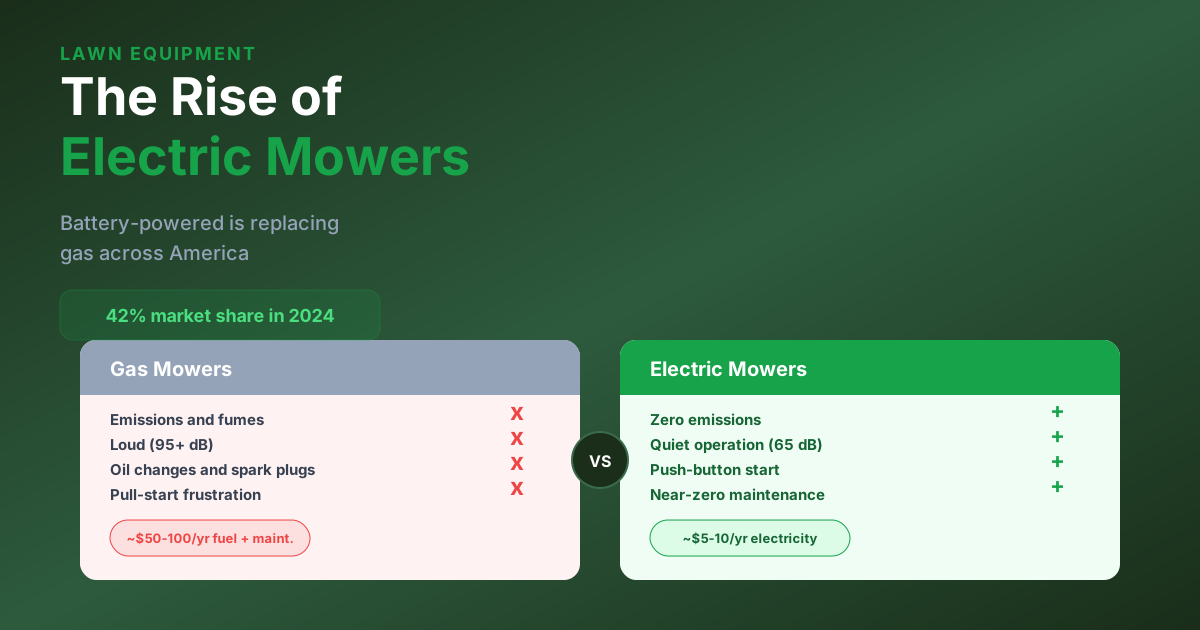
To put this in perspective: in 2015, electric mowers represented a tiny fraction of the lawn mower market—estimated at around 5 to 7% of total sales. By 2024, that share had climbed to roughly 25 to 30% of the market. In major metropolitan areas and environmentally conscious states like California, electric mowers now account for nearly 40% of new mower sales.
The acceleration is notable. For years, growth was steady but gradual. But starting around 2019 to 2020, the adoption curve bent sharply upward. This inflection point coincided with two key developments: battery technology finally matured enough to handle the demands of residential lawns, and major manufacturers (Greenworks, EGO, DeWalt, Milwaukee, Ryobi) committed to flooding the market with quality options.
What's even more telling is the professional market. Commercial landscapers—people for whom equipment reliability and performance are literally their livelihood—are increasingly switching to electric. This represents a major vote of confidence. Professionals don't adopt equipment out of ideology; they adopt it because it works and makes economic sense. When commercial contractors start choosing electric over gas, the market has truly shifted.
The trajectory suggests that by 2030, electric mowers could represent 50% or more of new residential mower sales in the United States. This isn't speculation—it's backed by market research and actual purchase data.
Mowers worth considering
From budget push mowers to robotic — compare before you buy.
As an Amazon Associate, Measure Lawn earns from qualifying purchases.
What changed to make battery mowers competitive with gas?
The turning point was battery technology. Specifically, the rise of 56V and 80V lithium-ion battery platforms dramatically altered what was possible in a residential mower.
For years, electric mower batteries suffered from several critical limitations: they didn't hold enough charge to mow a typical lawn in one session, they took forever to recharge, and they degraded quickly. A mower that could handle 20 minutes of cutting before needing a 2-hour recharge simply didn't compete with gas.
Modern lithium-ion batteries, particularly the higher-voltage platforms (56V and 80V), changed everything. These batteries:
Hold Significantly More Energy: A single charge now lasts 45 to 60 minutes of actual cutting time—enough for most residential lawns without needing a second battery.
Recharge Quickly: Most 56V batteries recharge in 60 to 90 minutes. Newer fast-charging models can be ready to go in 30 to 45 minutes. This is the same timeframe as refilling a gas tank.
Maintain Consistent Power Output: Early electric mowers would lose cutting power as the battery drained. Modern batteries maintain voltage throughout the discharge cycle, so your last pass cuts just as cleanly as your first.
Are More Durable: Today's lithium batteries retain 80% of their capacity after 3 to 5 years of regular use. This is far superior to the quick degradation seen in earlier electric mower generations.
Additionally, motor technology improved. Modern brushless electric motors are more efficient, generate less heat, and deliver more torque—the rotational force that actually spins the blade and cuts grass. You're not getting slower, weaker performance anymore; you're getting consistent, reliable power.
There's also the ecosystem advantage. Many modern electric mowers use battery platforms that work across an entire brand's tool lineup—cordless drills, chainsaws, hedge trimmers, and leaf blowers. This means homeowners who already own, say, a Ryobi cordless drill, can buy a mower that uses the same battery. This interchangeability is a game-changer for adoption.
Measure My Lawn — It's Free → can help you determine your exact lawn size, which is directly relevant to whether one battery charge will suffice for your property or whether you'd benefit from a two-battery setup.
Are electric mowers powerful enough for thick grass?
This is the question that still makes some gas mower loyalists hesitant, and it deserves an honest answer: for the vast majority of homeowners, yes. For a small percentage, maybe not.
Modern electric mowers—particularly the 80V models from brands like EGO and Greenworks—deliver cutting power that's genuinely competitive with mid-range gas mowers. They handle typical lawn conditions: moderately thick grass, standard heights, and seasonal growth without issue.
The real-world experience from thousands of homeowners confirms this. In forums and review sites, electric mower owners frequently report that performance meets or exceeds their expectations. They're cutting through regular grass without difficulty.
Where electric mowers do struggle:
Very Tall, Overgrown Grass: If your lawn is severely overgrown or hasn't been cut in several weeks, an electric mower will work, but you might need to make two passes or cut more slowly. Gas mowers handle this slightly better.
Extremely Thick, Dense Grass: Certain grass types and growth conditions create an unusually thick mat. High-powered gas mowers have a slight edge here, though modern electric mowers still perform acceptably.
Wet Grass: Wet grass is harder to cut than dry grass—it clogs the blade and requires more motor power. Both gas and electric mowers struggle in this condition, but a gas mower typically has a slight advantage.
Continuous Commercial Use: If you're mowing multiple properties back-to-back for 6 to 8 hours a day, a gas mower's infinite fuel capacity is advantageous. Electric batteries will eventually need charging during your workday.
For the vast majority of homeowners mowing once a week during the growing season? An electric mower is absolutely powerful enough. Most grass simply isn't that challenging.
The way to think about it: would you prefer a tool that's 95% as powerful but requires no gas, less maintenance, and makes almost no noise? For most people, that's an easy trade-off.
How do electric mower costs compare to gas over 5 years?
This is where the economics get interesting. The initial purchase price of an electric mower is often higher than a gas alternative, but the total cost of ownership over 5 years tells a different story.
Initial Purchase Price:
- Gas mower: $200 to $400 (mid-range models)
- Electric mower (56V): $300 to $500
- Electric mower (80V): $400 to $700
On first glance, electric is more expensive. But let's look at the complete picture over 5 years of ownership.
Gas Mower 5-Year Cost:
- Initial purchase: $300
- Fuel (approximately): $50 to $100 per year × 5 = $250 to $500
- Oil changes and maintenance (spark plug, air filter): $50 to $100 per year × 5 = $250 to $500
- Potential repairs (carburetor cleaning, fuel line issues): $100 to $200
- Total estimated cost: $900 to $1,400
Electric Mower 5-Year Cost:
- Initial purchase: $400
- Electricity to charge battery (minimal): ~$15 to $30 per year × 5 = $75 to $150
- Maintenance (essentially none—no oil, no spark plugs, no seasonal prep): ~$0 to $50
- Battery replacement (if needed after 4 to 5 years): $100 to $200
- Total estimated cost: $575 to $800
Over a 5-year period, the electric mower is $300 to $600 cheaper to own and operate. The operational cost advantage comes from eliminating fuel, oil, spark plugs, and seasonal maintenance. Electric mowers are genuinely low-maintenance devices.
This calculation shifts even more in favor of electric when you factor in time. Gas mower maintenance takes time—winterizing, spring preparation, spark plug changes. This invisible cost (your time) often isn't calculated but definitely has value.
There's also the resale value consideration. A 5-year-old gas mower typically has seen significant depreciation and potential mechanical wear. A 5-year-old electric mower in good condition retains value better because batteries, while they degrade slightly, are far more reliable than gas engine components.
Why are commercial landscapers switching to electric?
Commercial adoption is perhaps the strongest signal that electric mowers have truly become viable. Landscapers make purchasing decisions based purely on economics and reliability—sentiment doesn't enter the equation.
Operational Cost Reduction: A landscape company running 10 mowers might spend $5,000 to $10,000 per year on gas and oil across the fleet. Switching to electric cuts that to near zero. Over 10 years, that's $50,000 to $100,000 saved.
Maintenance Elimination: Gas mowers require regular tune-ups, seasonal prep, spark plug replacements, and occasional repairs. A fleet manager coordinating 10 mowers knows this creates logistical headaches and downtime. Electric mowers simply don't break down the same way.
Noise Reduction: This is underrated. Electric mowers are substantially quieter—typically 70 to 75 decibels compared to 85 to 95 decibels for gas. Many municipalities have regulations restricting when you can mow. Electric mowers allow landscapers to start work earlier in the morning and finish earlier, effectively adding productive hours to their day.
Environmental Regulations: California and several other states have implemented or are implementing regulations that restrict or phase out gas-powered lawn equipment. Commercial operators in these regions are essentially forced to transition to electric. This regulatory momentum is accelerating adoption across the industry.
Employee Health: Gas fumes and noise exposure are occupational hazards for landscapers. Electric mowers eliminate both. This improves working conditions, which indirectly impacts employee satisfaction and retention.
Productivity: Paradoxically, switching to electric can actually increase productivity. Less maintenance means less downtime, and multiple battery setups mean continuous operation (while one battery charges, you use another). The logistics work out favorably.
The fact that professional landscapers—the people most critical about equipment—are making this switch in increasing numbers is a powerful validation.
What are the downsides of electric mowers that nobody mentions?
It's important to be honest about the limitations. Electric mowers aren't perfect, and they're not the right choice for every homeowner.
Battery Runtime Limitations: Even quality 80V batteries max out at 45 to 60 minutes of cutting time. This is sufficient for lawns up to about 1 acre, but if you have a larger property, you'll need a second battery (additional $150 to $250) or be prepared to charge mid-session. Gas mowers have unlimited runtime.
Less Power in Extreme Conditions: While modern electric mowers are powerful, they don't quite match the raw torque output of high-end gas mowers. If you're regularly cutting very thick, overgrown, or wet grass, gas might give you a slight performance edge.
Battery Degradation: Lithium batteries don't last forever. After 3 to 5 years of regular use, most are retaining about 80% of their capacity. Eventually, you'll need a replacement battery ($100 to $250). This is a foreseeable cost that doesn't exist with gas mowers (though they need other maintenance).
Weather Sensitivity: While modern batteries perform better in cold weather than older lithium batteries, extreme cold still reduces efficiency and runtime. If you mow in northern climates during early spring or late fall when it's freezing, expect slightly reduced performance.
Higher Initial Investment: The entry price for a quality electric mower is higher than a comparable gas model. If budget is the only consideration, gas is cheaper upfront.
Charging Infrastructure Required: You need access to an outlet and time to recharge between sessions. If you're mowing a large property and need two batteries, you need to plan for a full recharge on the second battery. This isn't a huge inconvenience, but it's a logistical consideration that gas mowers don't require.
Less Suitable for Extreme Professional Use: If you're running a landscape business with multiple properties and non-stop mowing from dawn to dusk, gas mowers' infinite runtime still has an edge. Most homeowners won't hit this limit, but it's worth knowing.
The key insight: these aren't dealbreakers for most homeowners. They're trade-offs. You're giving up unlimited runtime in exchange for lower operating costs, less maintenance, quieter operation, and environmental benefits. For the majority of people, that's a favorable trade.
Which electric mower brands are leading the market?
Several brands have emerged as market leaders, and each brings distinct strengths.
EGO (part of Greenworks): EGO is aggressively pushing the premium segment with their 80V platform. They offer extensive battery interoperability across tools, strong customer service, and consistent positive reviews for cutting performance. EGO mowers are priced in the $500 to $700 range but deliver performance and reliability that justify the premium.
Greenworks: Greenworks offers a broader price range, from budget-friendly 40V models around $300 to premium 80V options above $600. They have the advantage of extensive distribution and a wide product ecosystem.
Ryobi: Ryobi leads in terms of sheer market penetration, largely because they're aggressively distributed through Home Depot and offer compelling prices ($350 to $500). Their battery ecosystem across tools is excellent, and they're the "entry point" for many homeowners.
DeWalt: DeWalt brought their respected brand reputation from professional tools to residential mowers. Their electric mowers are high-quality and priced competitively ($450 to $650). They appeal to homeowners already invested in the DeWalt cordless ecosystem.
Milwaukee: Milwaukee, like DeWalt, leveraged their pro-tool reputation to enter the residential market. They offer high-end models ($600 to $800) aimed at quality-focused homeowners.
Snapper and Toro: Traditional mower manufacturers have released electric models to stay competitive. They're good quality but generally priced at a premium ($700 to $1,000+).
Budget Brands: You'll also see off-brand electric mowers online and in big-box stores for $250 to $350. These are hit-or-miss—some are serviceable, others have reliability issues and poor customer support.
For most homeowners, the brands offering the best balance of price, performance, and ecosystem integration are Greenworks, EGO (for premium), and Ryobi (for budget-conscious buyers).
How does your lawn size determine which mower type makes sense?
Lawn size is genuinely one of the most important factors in choosing between electric and gas mowers—and it's often overlooked.
Small lawn (Under 5,000 sq ft): Best choice: Electric (one battery sufficient)
- A single 56V or 80V battery easily handles this in one session.
- Lower operating costs make the higher upfront price even more attractive.
- Quiet operation is a genuine benefit in typically closer-knit neighborhoods.
- Maintenance simplicity is valuable.
Medium lawn (5,000 to 10,000 sq ft): Best choice: Electric (consider two batteries for comfort)
- One battery will technically work, but you're cutting it close on runtime.
- A second battery ($150 to $250) removes any anxiety about mid-mow charging.
- Still comes out ahead on total cost of ownership compared to gas.
- The convenience factor of easy maintenance and no gas makes sense here.
Large lawn (10,000 to 15,000 sq ft): Best choice: Electric or gas (depends on personal preference)
- You definitely need two batteries for electric, or you're planning to charge mid-session.
- Gas becomes more attractive here because unlimited runtime eliminates logistical concerns.
- Cost per year favors electric, but the convenience of just filling up and mowing without battery management might favor gas for some.
- Consider: do you value operating cost savings and maintenance reduction enough to manage a second battery?
Very large lawn (Over 15,000 sq ft): Best choice: Gas (or multi-battery electric setup)
- The logistical overhead of managing multiple batteries becomes real.
- Gas mowers' unlimited runtime is genuinely valuable here.
- If you insist on electric, expect to invest in a robust battery setup or be prepared for extended mowing sessions with charging breaks.
Knowing your exact lawn size makes this decision much clearer. Measure My Lawn — It's Free → will give you precise square footage, allowing you to calculate battery runtime requirements and make an informed choice.
Why Does the Electric Mower Trend Matter Beyond Just Mowing?
The shift from gas to electric mowers represents something larger: the quiet transformation of household equipment. The same technology and cost dynamics driving electric mower adoption are playing out in leaf blowers, chainsaws, and other gas-powered tools.
For homeowners, this shift means:
- Lower operating costs and less routine maintenance
- Quieter neighborhoods and earlier morning mowing without disturbing residents
- Simpler equipment with fewer seasonal hassles
- Better environmental outcomes through elimination of direct emissions
For the industry, it represents a genuine technological advancement where the newer option isn't just environmentally better—it's actually cheaper and more convenient to use.
If you're in the market for a new mower, the calculus has genuinely changed. Electric mowers are no longer the "alternative"—they're the practical choice for most homeowners. The combination of competitive pricing, proven performance, and real cost savings makes them difficult to ignore.
Start by understanding your lawn size and mowing patterns. Measure My Lawn — It's Free → takes the guesswork out of this. Then you can confidently choose whether electric or gas makes sense for your specific situation—with full knowledge that electric is now a genuinely viable option, not a compromise.
Ready to measure your lawn?
Get a free, AI-customized lawn care plan with exact product quantities for your property.
Measure My Lawn — It's Free →