The Best Weed Treatment for Every Type of Lawn Weed (Pre vs Post-Emergent Guide)
Choosing the right weed killer feels overwhelming when you're standing in the lawn care aisle facing dozens of products. But here's the truth: most homeowners are using the wrong herbicide for their specific weed problem—either spraying after it's too late, or missing the critical window to prevent weeds before they sprout. This guide breaks down every major weed type and shows you exactly which treatment works, when to apply it, and how much you actually need for your lawn size.
What's the Difference Between Pre-Emergent and Post-Emergent Herbicide?
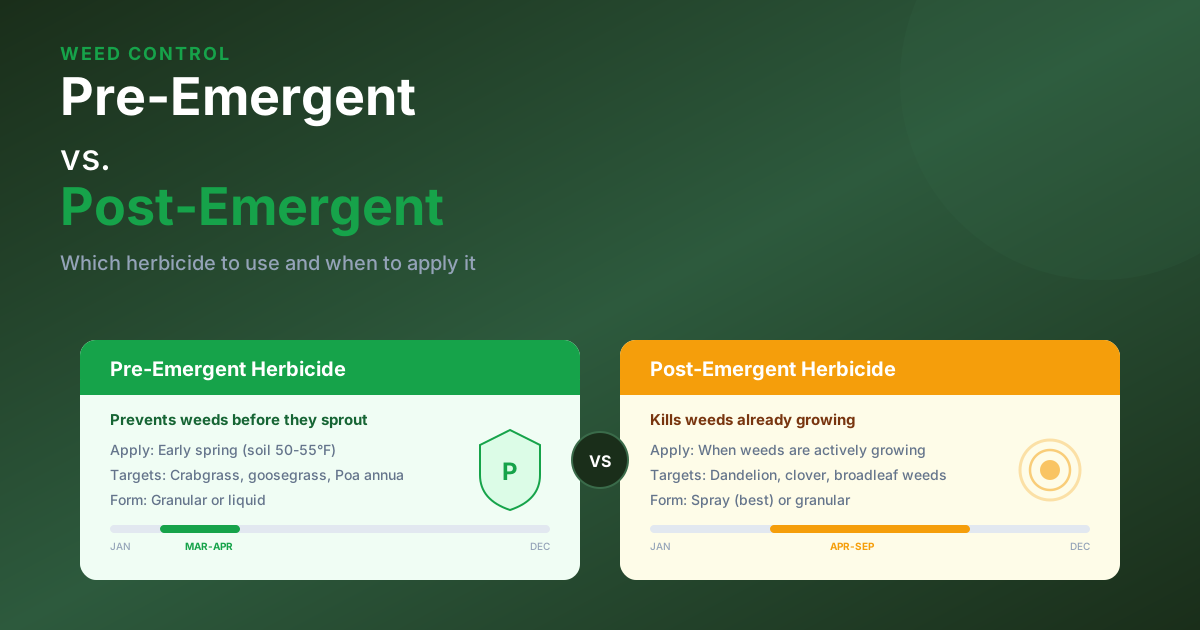
The fundamental split in weed control comes down to timing. Pre-emergent herbicides are preventative—they kill weed seeds in the soil before they germinate and sprout above ground. Post-emergent herbicides are curative—they kill weeds that are already visible in your lawn.
Pre-emergent works by creating a chemical barrier in the top layer of soil. When germinating weed seeds absorb this barrier, they die before roots develop. The catch: pre-emergent only works on seeds, not established plants. Once a weed has sprouted and started growing, pre-emergent can't touch it.
Post-emergent herbicides work through absorption and translocation. Broadleaf post-emergents (like 2,4-D) kill through contact and systemic uptake—they damage the plant's vascular system so the whole plant dies, roots included. Grassy weed post-emergents work differently, targeting specific growth patterns that broadleaf plants don't share.
The timing difference is critical: you apply pre-emergent in spring (and sometimes fall) before weed seeds germinate. You apply post-emergent when you see active weeds already growing. Most homeowners should use both—pre-emergent stops the majority of summer weeds, and post-emergent handles the stragglers and off-season weeds.
Measure My Lawn — It's Free → to get exact square footage, then cross-reference your lawn size against product recommendations below.
Weed killers for this job
Match the product to your weed — see the treatment notes above.

BioAdvanced All-In-One Weed & Feed (22-0-4)
Beginner friendly
Ortho WeedClear Lawn Weed Killer Concentrate (Northern)
Beginner friendlyAll-around broadleaf + crabgrass killer for northern lawns — dandelion, clover, chickweed, crabgrass

Ortho WeedClear Ready-to-Spray Hose-End (Northern)
Beginner friendlyEasiest broadleaf + crabgrass treatment — just attach to your garden hose and spray
As an Amazon Associate, Measure Lawn earns from qualifying purchases.
Which Weeds Does Pre-Emergent Prevent?
Pre-emergent is your most cost-effective weed control tool because it stops weeds before they become a problem. The catch is it only prevents annual weeds—plants that germinate, grow, flower, set seed, and die all in a single year. Perennial weeds, which return from established root systems year after year, can't be stopped by pre-emergent.
Annual weeds pre-emergent prevents:
- Crabgrass (the #1 summer weed in most lawns)
- Foxtail and other annual grasses
- Spurge (especially prostrate spurge)
- Purslane
- Pigweed and amaranth species
- Chickweed (winter varieties)
- Henbit and deadnettle
The two most popular pre-emergent active ingredients are:
Pendimethalin (found in Scotts Halts) — Blocks cell division in germinating seeds, preventing root development. Effective on a broad range of grasses and broadleaf annuals. Typically applied at about 1.5 to 2 pounds per 1,000 square feet depending on formulation. Works for 8-12 weeks.
Prodiamine (found in Andersons Barricade) — Creates a persistent barrier layer in soil. Needs moisture to activate properly. Often preferred for spring application because it resists early summer heat degradation better than pendimethalin. Apply at 0.84 pounds per 1,000 square feet.
Dithiopyr (found in Dimension 2EW) — The premium option because it offers both pre-emergent and early post-emergent activity. If you apply it early enough, it can kill crabgrass that's already beginning to germinate. Apply at 0.37 to 0.6 ounces per 1,000 square feet.
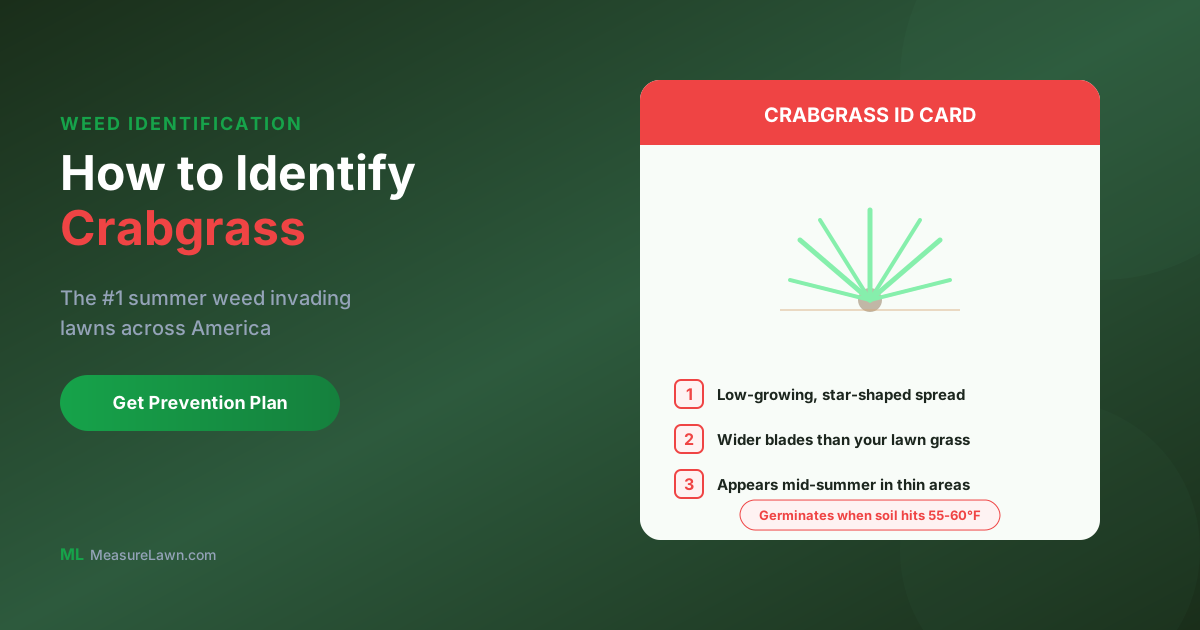
For most homeowners, timing matters more than which specific pre-emergent you choose. Apply in early spring (late March to mid-April in the North, February-March in the South) when soil temperatures reach 55°F consistently. Miss this window, and crabgrass will germinate before your pre-emergent is active.
Which Weeds Require Post-Emergent Herbicide?
Post-emergent becomes necessary when you have established weeds already growing. This includes annual weeds that escaped pre-emergent (because you applied it late or didn't apply it at all) and perennial weeds that can't be prevented—they need to be actively killed.
Perennial weeds requiring post-emergent:
- Dandelions (the most common homeowner complaint)
- Plantain
- Clover (white clover especially)
- Ground ivy (also called creeping charlie)
- Violets
- Chickweed (winter varieties established from prior years)
- Sedges (nutsedge, yellow nutsedge)
- Crabgrass that emerged before pre-emergent was applied
Perennial weeds are fundamentally different from annuals. They develop deep root systems, often reproducing through underground runners (rhizomes and stolons) in addition to seeds. This is why pulling dandelions rarely works—break the root at any point, and the remaining root segment can regenerate a new plant. Post-emergent herbicide must kill the entire plant, including all root tissue.
Post-emergent herbicides split into two categories based on which weeds they kill: broadleaf post-emergents (which kill dandelions, clover, plantain) and grass-specific post-emergents (which kill grassy weeds but won't affect your lawn grass, assuming you treat at the right growth stage).
What's the Best Product for Grassy Weeds Like Crabgrass?
Grassy weeds—crabgrass especially—require a different post-emergent approach than broadleaf weeds. Your regular lawn grass is also a grass, so broadleaf herbicides (like 2,4-D) won't touch crabgrass. You need a selective grass herbicide that kills unwanted grasses while leaving your desirable turf untouched.
Drive XLR8 (quinclorac-based) — The industry standard for post-emergent crabgrass control. Apply when crabgrass is actively growing, ideally in early to mid-summer. Quinclorac works by disrupting cell division and metabolism in young grassy weeds. Typical application rate is 0.19 ounces per 1,000 square feet. Best results come when crabgrass is in the 1-4 leaf stage; larger plants are harder to kill. Rain within 4 hours of application can reduce effectiveness, so check the forecast.
Acclaim Extra (fenoxaprop-based) — Another premium grass herbicide, particularly effective on young crabgrass and annual bluegrass. Applied at 0.38 ounces per 1,000 square feet. Works slightly faster than quinclorac (visible damage in 3-5 days) but works best on smaller weeds.
Scotts Weed & Feed (contains quinclorac plus fertilizer) — Combines grassy weed post-emergent with nitrogen fertilizer. More on weed & feed below, but worth noting: if you want to feed and kill grassy weeds simultaneously, this is convenient. Read the label carefully for application rates per 1,000 square feet.
The critical timing factor: grassy weeds are hardest to kill in their early growth stages (1-4 leaves). By mid-summer, established crabgrass with multiple tillers (shoots) becomes resistant to post-emergent herbicide. This is why pre-emergent matters so much—it stops crabgrass before it reaches this resistance stage.
If you apply post-emergent to large, mature crabgrass plants, you'll often need a second application 10-14 days after the first. Check the specific product label for reapplication windows.
What's the Best Product for Broadleaf Weeds Like Dandelions?
Broadleaf weeds like dandelions, clover, and plantain are actually easier to kill with post-emergent herbicide than grassy weeds. They have larger leaf surfaces that absorb herbicide more readily, and most herbicides are formulated to target their plant biology.
Ortho WeedClear (2,4-D based) — One of the oldest and most reliable broadleaf herbicides. 2,4-D has been used since the 1940s and remains highly effective. It's absorbed through leaves and roots, moving through the plant's vascular system. Apply at 0.38 to 0.5 fluid ounces per 1,000 square feet. Works best in warm weather (60°F+) when weeds are actively growing. Effects appear in 3-5 days, with complete death of leaves in 1-2 weeks, and root death over the following weeks.
Scotts Weed & Feed (contains 2,4-D plus fertilizer) — The convenience option for feeding your lawn while killing broadleaf weeds. Doubles as a fertilizer application. Some homeowners prefer this because they're not making two separate trips to feed and spray.
Tenacity (mesotrione-based) — A newer option that works on both broadleaf weeds and some grassy weeds. Mesotrione is gentler on cool-season grasses, making it ideal if you have fescue or bluegrass and want to avoid stress from stronger herbicides. Apply at 0.2 ounces per 1,000 square feet. Works slightly slower than 2,4-D (7-14 days for full effect) but offers more flexibility on when you can apply.
The advantage of broadleaf herbicides is their ease of use and affordability. A gallon of 2,4-D concentrate costs $15-30 and covers thousands of square feet when properly mixed. Broadleaf weeds die quickly and completely—you'll see results in days.
One note: these herbicides work best when applied to actively growing weeds. Weeds under drought stress, dormancy, or extreme heat are tougher to kill. Morning application (when weeds are turgid and take up water readily) works better than late-day application.
How Do You Treat Sedges Like Nutsedge?
Sedges represent one of the most frustrating lawn weed problems because regular post-emergent herbicides simply don't work on them. Sedges aren't grasses or broadleaf plants—they're in their own plant family entirely. Killing nutsedge with 2,4-D or quinclorac is like trying to use a car key to open a house door; they're completely incompatible.
Nutsedge (yellow nutsedge especially) spreads through small underground tubers that survive most treatments. The weed forms dense patches that look like coarse grass and grow faster than your desirable turf, creating an eyesore even in otherwise well-maintained lawns.
Sedge-specific post-emergent herbicides:
Halosulfuron-methyl (found in products like Sedgehammer) — The gold standard for sedge control. Blocks amino acid synthesis in sedges, causing death within 7-14 days. Apply at 0.75 ounces per 1,000 square feet when sedges are actively growing. Repeat applications every 14 days for 2-3 applications to kill emerging tubers. Results aren't instant, but this is the most effective option available to homeowners.
Sulfentrazone (found in Drive XLR8 Plus) — Combines the grassy weed herbicide quinclorac with sulfentrazone for sedge control. Single product for multiple weed types.
The challenge with sedge control is that tubers can survive in the soil for years. Even after killing the visible plant, you'll get regrowth from tubers. This is why repeated applications matter—you're essentially starving the tuber bank by killing regrowth each season.
Some homeowners have success with hand digging small patches, removing all visible tubers, then treating the area. For large infestations, repeated herbicide applications over 2-3 years may be necessary.
Can You Mix Weed Control with Fertilizer (Weed and Feed)?
Weed & Feed products are convenient—one trip, one application, and you're feeding your lawn while killing weeds. But they come with trade-offs worth understanding.
Weed & Feed Pros:
- Convenience: single application covers both feeding and broadleaf weed control
- Cost-effective compared to buying fertilizer and herbicide separately
- Intuitive for homeowners new to lawn care
- Products like Scotts Weed & Feed deliver reliable results on common weeds
Weed & Feed Cons:
- Timing conflict: Weed control timing (when weeds are actively growing) doesn't always match fertilizer timing (typically early spring and fall). Applying in summer to kill weeds means you're fertilizing in heat when the grass is stressed.
- No pre-emergent option: Weed & Feed products only include post-emergent herbicides. They don't prevent weeds; they only kill existing ones.
- No grassy weed control: Most Weed & Feed products target broadleaf weeds only. If crabgrass is your main problem, regular Weed & Feed won't help.
- Inflexible dosing: Weed & Feed spreads fertilizer and herbicide in one granule. You can't apply extra herbicide to problem areas without over-fertilizing.
- Limited product range: Premium herbicides like mesotrione (Tenacity) or older effective options like pendimethalin only come in dedicated herbicide formulations, not Weed & Feed blends.
When Weed & Feed makes sense: Use it if you have moderate broadleaf weed pressure in early summer, you're planning to fertilize anyway, and your primary goal is convenient, simple lawn care.
When to skip Weed & Feed: Avoid it if you need pre-emergent (spring preventative), if you have grassy weed problems, if you need post-emergent strength that rivals dedicated herbicide products, or if you prefer separating fertilizer and herbicide timing for better results.
The best lawn care approach actually avoids Weed & Feed and instead:
- Apply pre-emergent in spring (late March to mid-April)
- Apply post-emergent in summer when weeds actively grow
- Apply fertilizer on a separate schedule (spring and fall) optimized for your grass type
This takes more effort, but results are noticeably better. Post-emergent herbicides work best when applied at proper strength. Pre-emergent timing becomes critical and is impossible with Weed & Feed's fixed formulation.
How Much Herbicide Do You Need for Your Lawn Size?
This is where most homeowners make expensive mistakes. Product labels list application rates per 1,000 square feet. If you don't know your lawn's actual square footage, you'll either:
- Underapply (using too little herbicide, leaving weeds untreated)
- Overapply (using too much herbicide, wasting money and risking turf damage)
Every product example I've mentioned above includes a per-1,000-square-feet rate because that's the universal lawn care measurement. But the process is useless if you guess at your lawn size.
How to calculate lawn square footage:
- Measure your lawn's length and width
- Multiply: length × width = square footage
- For irregularly shaped lawns, break them into rectangles, calculate each, and add them together
- For a 0.25-acre lawn (a common suburban size), that's roughly 10,900 square feet
Example calculation:
- Lawn is 100 feet × 150 feet = 15,000 square feet
- You want to apply Drive XLR8 at 0.19 ounces per 1,000 square feet
- You need: (15,000 ÷ 1,000) × 0.19 = 2.85 ounces total
Getting this right matters because:
- Pre-emergent applied too thin won't prevent weeds
- Post-emergent applied too thin won't kill existing weeds
- Both applied too strong can stress or damage your lawn grass
- Over-application is wasteful and expensive
Measure My Lawn — It's Free → gets your exact square footage and tells you precisely how much of each product you need, tailored to the size of your specific lawn.
How Do You Build a Complete Weed Control Plan?
Most homeowners need both pre-emergent and post-emergent in a season. Here's the timeline:
Early Spring (March-April):
- Apply pre-emergent (Scotts Halts, Andersons Barricade, or Dimension 2EW) at the product's specified rate per 1,000 square feet
- This prevents crabgrass, spurge, purslane, and other annual summer weeds
- Check weather: soil temperatures should be consistently 55°F+
Late Spring/Early Summer (May-June):
- Scout for weeds that emerged before pre-emergent was applied
- Apply post-emergent for any visible dandelions, clover, or other broadleaf weeds (Ortho WeedClear or Tenacity)
- Don't apply to drought-stressed grass
Mid-Summer (July-August):
- Watch for crabgrass growth
- If visible, apply grassy weed post-emergent (Drive XLR8 or Acclaim Extra) when crabgrass is young (1-4 leaves)
- Repeat application 10-14 days later if needed
- Never apply strong herbicides during heat stress or drought
Fall (September-October):
- Some perennial weeds become easier to kill in cooler weather
- Consider a fall post-emergent application for winter annuals like chickweed
- Second pre-emergent application (optional) prevents winter annual weeds in cooler climates
The science is straightforward: prevent what you can with pre-emergent, kill what escapes with post-emergent, apply at the right time, and use correct rates per square foot. MeasureLawn helps with the last part—getting your exact square footage so your calculations are accurate.
Ready to measure your lawn?
Get a free, AI-customized lawn care plan with exact product quantities for your property.
Measure My Lawn — It's Free →