Pet-Safe Lawn Care: How to Keep Your Lawn Green Without Harming Your Dog
If you share your lawn with dogs, cats, or other pets, every lawn care decision becomes more complex. You want a thick, healthy, attractive lawn — but not at the cost of your pet's health and safety. The good news is that you can absolutely maintain a beautiful lawn while keeping your pets completely safe. The key is understanding which products are genuinely harmful, which are safe when applied correctly, and how to time your lawn care work to minimize any exposure risks. A customized lawn care plan that considers your pets from the beginning takes the guesswork out of the equation.
Are Lawn Care Chemicals Actually Dangerous for Pets?
This is the question that keeps pet owners up at night, and it deserves a straight answer: some lawn chemicals pose real risks to pets, while others are essentially harmless when applied as directed.
The danger depends on several factors: the specific chemical, the concentration and quantity used, the pet's exposure level, the pet's size, and whether the pet ingests the product or merely walks on treated grass.
Herbicides vary dramatically in their toxicity. Many common herbicides used for selective weed control in lawns have very low toxicity to mammals. However, some herbicides — particularly non-selective ones like glyphosate (Roundup) — can cause intestinal irritation and other issues if pets ingest contaminated grass or water. Pets also risk exposure if they walk on treated grass and then lick their paws.
Insecticides are generally where the highest toxicity risk lies. Organophosphate and carbamate insecticides, while older products, can pose significant risks to pets at higher concentrations. Neonicotinoid insecticides (like imidacloprid) have lower mammalian toxicity but still warrant caution. Pyrethrin and pyrethroid insecticides have moderate toxicity.
Fungicides are often overlooked in the pet safety discussion, but some fungicides can cause mild gastrointestinal upset or skin irritation in pets if exposure is significant.
Fertilizers are generally low-toxicity, though high-nitrogen synthetic fertilizers can cause mild gastrointestinal irritation if a pet consumes large quantities. Organic fertilizers like bone meal or blood meal may attract pets because they smell like food, creating a behavioral risk rather than a chemical toxicity risk.
The reality: the risk depends on the product, the amount, and the exposure. Complete safety comes from choosing the right products, applying appropriate quantities, and respecting wait times before allowing pets back on treated grass.
Which Lawn Products Are Safe for Dogs?
Several categories of lawn products pose minimal risk to dogs when applied as directed:
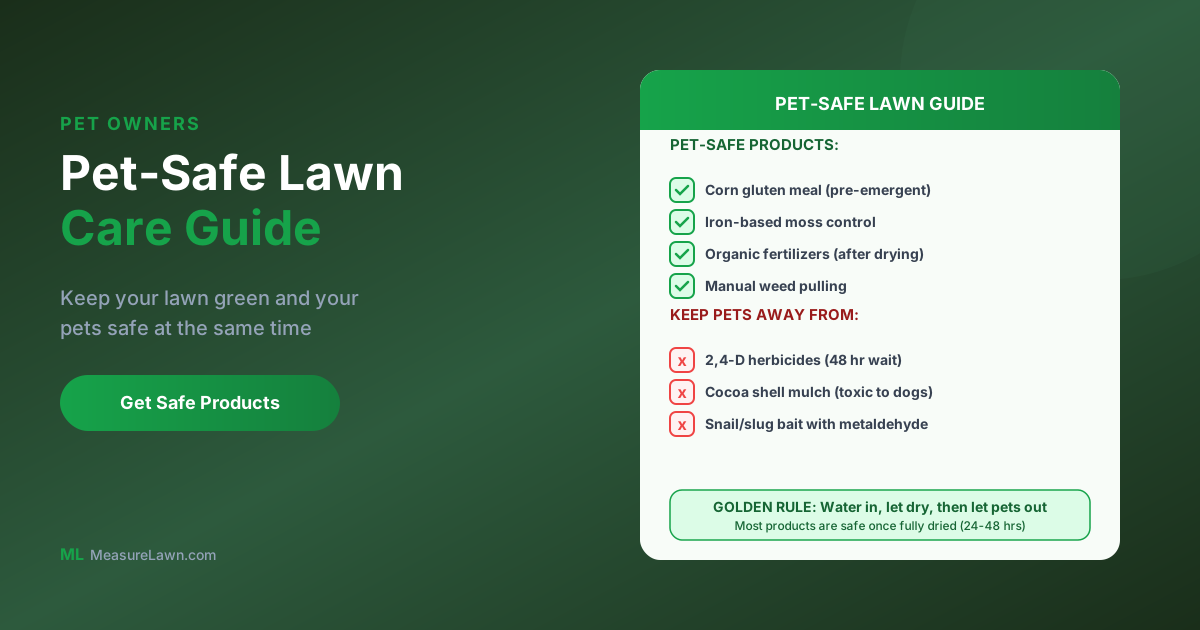
Post-emergent selective herbicides like 2,4-D (2,4-dichlorophenoxyacetic acid), MCPA, and MCPP have low oral toxicity to dogs. These are the products that kill broadleaf weeds without harming grass. Studies have suggested no increase in cancer risk to dogs from exposure to these products at lawn application rates, though the research continues to evolve.
Fungicides with sulfur or copper are generally considered safe for pets at application rates. These inorganic fungicides don't persist in the environment or accumulate in tissue.
Biological insecticides like Bacillus thuringiensis (Bt) are highly selective to insects and have essentially no toxicity to mammals. Products using Spinosad (derived from soil bacteria) are similarly low-toxicity to dogs.
Organic or slow-release fertilizers pose minimal risk to pets, particularly when they're watered in and allowed to dry. Products made from compost, kelp, fish emulsion, or other organic materials don't present the same hazards as synthetic chemicals.
Pre-emergent herbicides like dithiopyr or pendimethalin, when applied as directed, have minimal toxicity to mammals. These products prevent seed germination before the grass emerges, so they're less likely to be ingested by pets.
Iron supplements for moss control (ferrous sulfate) are considered safe at application rates, though high concentrations can cause gastrointestinal upset.
The common thread: products with lower mammalian toxicity, applied in appropriate quantities, with adequate wait time before pet exposure, present minimal risk.
Which Products Should You Avoid?
Some lawn care products warrant genuine caution around pets:
Organophosphate insecticides (like diazinon and chlorpyrifos) have higher mammalian toxicity and should be avoided if you have pets, or applied only when pets can be kept away for extended periods.
Glyphosate herbicides (Roundup and similar products) are non-selective, meaning they kill any plant they contact. While toxicity studies show relatively low acute toxicity to mammals, their widespread use means widespread exposure, and pets can ingest residues on grass or water sources. Many pet owners prefer to avoid them entirely.
Neonicotinoid insecticides (imidacloprid, clothianidin) are increasingly restricted because of environmental concerns, and their neurotoxic mechanism warrants caution around pets.
Liquid fertilizers with high nitrogen concentration can cause gastrointestinal irritation if pets consume them in quantity.
Products containing zinc phosphide or strychnine should never be used if pets have access to the lawn.
Newly seeded grass treatments that contain fungicides or insecticides should be researched carefully before application if pets will use the lawn.
The safest approach: if you have pets, prioritize products with documented low toxicity to mammals, apply at recommended rates only, and follow all label wait times religiously.
How Long After Treatment Should Pets Stay Off the Lawn?
Wait times are your critical safety tool. They allow applied products to dry completely, settle into soil, or degrade to safer levels before pet exposure.
For most herbicide treatments, 24-48 hours is the standard safe wait time. After this period, the product has dried on the leaf surface and is no longer on your pet's paws. The grass can be walked on without direct contact with wet product.
For insecticide treatments, wait times are typically longer — 48 hours is common, though some products recommend 72 hours. Check the product label specifically; this is non-negotiable information that comes from safety testing.
For fungicide treatments, 24 hours is usually sufficient.
For fertilizer applications, wait times vary. Granular fertilizers that have been watered in are generally safe once dry — typically 24 hours. Liquid fertilizers need to be fully dry before pets walk on the grass.
For pre-emergent herbicides, once the product has been watered in and the grass is dry, pets can typically return to the lawn. However, many prudent pet owners still wait 24 hours.
The critical practice: set a phone reminder for the wait time, and don't let pets on the treated lawn until the reminder sounds. Write the wait time on your calendar or in your lawn care app so you never rely on memory.
Also important: even after the wait time, hose off your dog's paws if they'll be spending extended time on the lawn over the next few days. This removes any residual product that might be on the leaf surface.
What About Organic vs. Synthetic — Is Organic Always Safer?
This is where homeowner understanding often breaks down. "Organic" doesn't automatically mean "safe," and "synthetic" doesn't automatically mean "dangerous."
Organic pesticides and herbicides are derived from natural sources, but "natural" doesn't equal "non-toxic." For example, pyrethrin comes from chrysanthemum flowers and is organic — but it's still an insecticide with some toxicity risk. Neem oil is organic but can cause skin and respiratory irritation.
Conversely, many synthetic lawn products have very low toxicity to mammals. Some synthetic fungicides and herbicides are safer than their organic alternatives.
The real distinction: focus on the specific product's toxicity profile, not whether it's labeled "organic" or "synthetic." Read the safety data sheet (SDS) for the product. Check the LD50 (lethal dose) for mammals. Look at what the product label says about pet safety.
A synthetic selective herbicide with 15-day acute LD50 greater than 5,000 mg/kg is safer than an organic product with lower values. The chemistry matters more than the source.
For pet owners, the practical approach is:
- Prioritize products specifically labeled as safe for pets on the label
- Research the specific product's toxicity, not just the product category
- Ask your lawn care provider what they use and why they consider it safe for your pet
- Look for products certified by the EPA or other regulatory bodies
- When in doubt, choose the option with lower toxicity, regardless of whether it's organic or synthetic
How Do You Fix Dog Urine Spots Naturally?
Dog urine creates a specific lawn problem: concentrated nitrogen and salts that burn the grass, creating dead patches often surrounded by a ring of dark green from excess nitrogen.
Understanding the problem: dog urine contains high nitrogen content (dogs are carnivores producing nitrogen-rich waste). This excess nitrogen burns the grass tissue, but the surrounding grass absorbs some nitrogen, creating the characteristic dark ring.
Prevention is easier than cure:
- Encourage your dog to urinate in a designated potty area, away from ornamental lawn
- If multiple dogs use the lawn, increase watering to dilute the concentration of urine nitrogen and salts
- Consider a dedicated "potty patch" with dog-appropriate groundcover instead of grass
To repair existing spots:
- In summer, lightly dethatch the dead area to remove dead tissue and allow seed contact with soil
- Water heavily for 3-4 days to flush out excess salts
- Overseed with shade-tolerant or traffic-tolerant varieties (depending on that lawn area's sunlight)
- Keep the area consistently moist for 2-3 weeks until new grass establishes
- Resume normal watering once grass is established
Dog-specific grass varieties: some grass breeders have developed varieties more tolerant of concentrated urine salts. Perennial ryegrass varieties marketed for sports fields and high-traffic areas have some tolerance. In warm-season regions, Bermuda grass is relatively tolerant of concentrated urine.
The reality: completely eliminating urine spots is difficult if your dog regularly uses the lawn. Managing it means designating a potty area, maintaining good overall lawn health so the grass can recover faster, and accepting that some brown spots are part of dog ownership.
Can You Have a Great Lawn AND Happy Pets?
Absolutely, but it requires prioritizing the right things.
A great lawn for a pet household looks different than a lawn with no pets. Expect some wear patterns, some sparse areas, possibly some damage from urine spots. The lawn still serves its purpose — it provides green space, cushioning, and aesthetic appeal — even if it's not magazine-cover perfect.
The priority hierarchy for pet owners should be:
- Pet safety (non-toxic products, appropriate wait times)
- Lawn health (good soil, appropriate grass varieties, consistent care)
- Aesthetic perfection (this comes after the first two)
Accept that a pet-friendly lawn might have:
- Slightly higher mowing height to hide wear patterns
- Designated potty areas with alternative groundcover
- Tolerance for occasional brown spots from urine
- More frequent overseeding to maintain density in high-traffic areas
- Fewer intensive chemical treatments
What you gain: peace of mind that your pet is safe, a healthy lawn that tolerates pet use, and freedom from the stress of trying to maintain a perfect lawn while worrying about your dog's health.
The value of a customized plan: a lawn care plan built with your pets in mind from the start recommends products, timing, and practices that keep your dog safe without sacrificing lawn quality.
How Does a Customized Plan Reduce Chemical Exposure?
Generic lawn care advice often leads to over-application of products. A homeowner might apply a fungicide that the lawn doesn't need, use an insecticide when the pest pressure doesn't warrant it, or apply fertilizer at rates higher than necessary.
This over-application increases chemical exposure to pets without providing benefit to the lawn. It's wasteful, expensive, and unnecessary.
A customized plan solves this by recommending only the treatments your lawn actually needs, at the exact quantities appropriate for your lawn size and conditions. If your lawn doesn't have a significant fungal disease, you won't receive a fungicide recommendation. If insect populations are below threshold, you won't treat. If soil nutrient levels are adequate, you won't over-fertilize.
Measure My Lawn — It's Free → customizes your plan based on your grass type, region, soil conditions, and climate. If you indicate that pets use your lawn, the system recommends pet-safe products and respects appropriate wait times. The exact product quantities mean you're never over-applying, reducing the chemical load on your lawn and your pet's exposure.
Instead of buying a generic "lawn care bundle" that might include treatments you don't need, a customized plan identifies your lawn's actual requirements and recommends only those treatments, at the right time, at the right rate.
This approach is safer for your pet, better for your lawn's long-term health, and more cost-effective than the one-size-fits-all approach.
How Do You Build a Complete Pet-Safe Lawn Care Strategy?
Your pet-friendly lawn starts with honest assessment: what does my specific lawn need right now? Not what does generic advice say it needs, but what does my lawn actually need?
Choose products rated as safe for pets. Check the label specifically for pet safety statements. Research the specific product's toxicity profile. When possible, choose products with longer track records of safe use in pet households.
Apply products at label rates only — never "a little extra to be safe." Label rates are based on efficacy and safety testing. More product doesn't mean better results; it means unnecessary chemical exposure.
Respect wait times religiously. If a product recommends 48 hours, that's 48 hours, not 24. If your schedule makes this difficult, consider whether you need the treatment at all.
Work with a lawn care provider who takes pet safety seriously. Ask them what products they use, why they chose those products, and what their wait time protocols are. A quality provider will welcome these questions.
Measure My Lawn — It's Free → helps you build a complete pet-safe lawn care strategy. Your customized plan recommends pet-safe products, builds in appropriate wait times, and suggests only the treatments your lawn truly needs. You'll know exactly what's going on your lawn, why, when, and how to keep your dog safe.
The result: a healthy, attractive lawn where your pet can play safely, and you can stop worrying about whether your lawn care is harming your dog.
Ready to measure your lawn?
Get a free, AI-customized lawn care plan with exact product quantities for your property.
Measure My Lawn — It's Free →