Nutsedge: How to Identify and Kill the Weed That Looks Like Grass
Nutsedge hides in plain sight, and ordinary weed killers cannot touch its underground tubers. How to spot it and kill it for good - the right product and timing.
What is nutsedge and why does it look like grass?
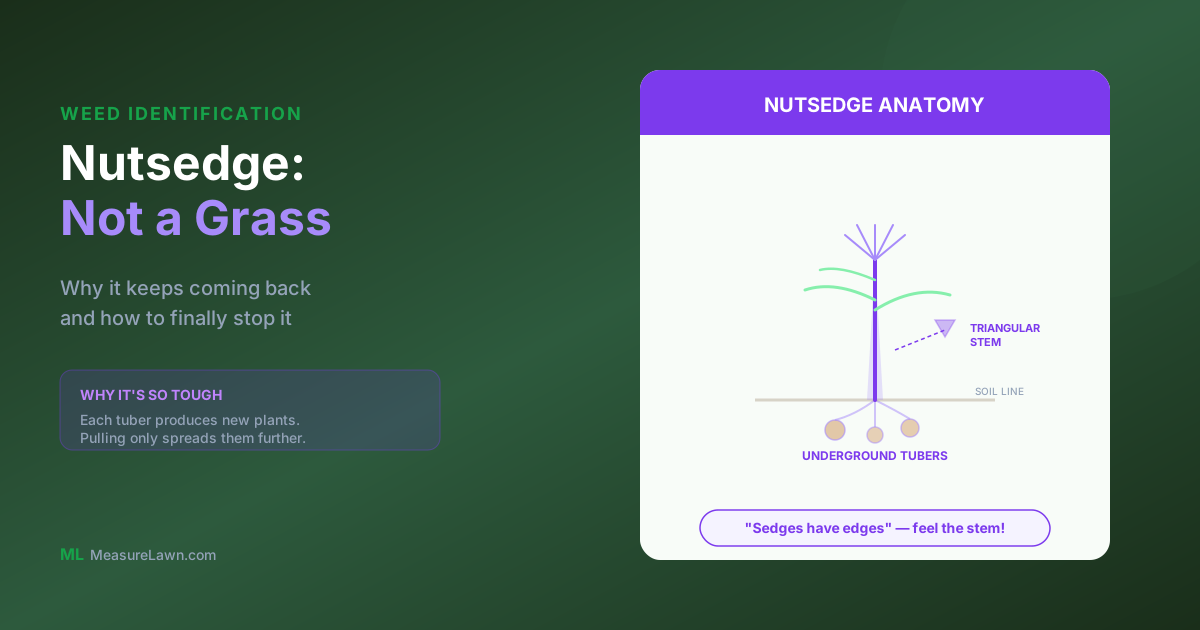
Nutsedge belongs to the sedge family—a group of grass-like plants that are technically not true grasses. Here's what makes it such a problem: nutsedge sprouts earlier in spring than your dormant turf, grows faster than surrounding grass, and produces a network of underground tubers (tiny potato-like structures) that store energy and allow the plant to regenerate. Even when you think you've killed it, those tubers send up new shoots.
The plant gets its name from these tubers, which look like small nuts when pulled from the soil. But the real danger isn't what you see above ground—it's what's hiding beneath.
Nutsedge thrives in warm, moist conditions, which is why it's particularly aggressive in the Southeast and South-Central regions during summer months. If you've got standing water or poorly drained soil, you're essentially inviting nutsedge to move in permanently.
Measure My Lawn — It's Free → to get your regional weed identification and a customized plan that targets sedges before they spread.
Products that actually kill sedge
Ordinary weed-and-feed won’t touch nutsedge — these are formulated for it.

SedgeHammer Plus Turf Herbicide (13.5g)
Beginner friendlyYellow and purple nutsedge, kyllinga, horsetail — the go-to sedge herbicide for homeowners

Image Kills Nutsedge Concentrate (24 oz)
Beginner friendlyNutsedge and dollarweed on warm-season lawns — attacks tubers underground for lasting control

Blindside Herbicide WDG (8 oz)
Dual broadleaf + sedge control in one product — dollarweed, nutsedge, doveweed, virginia buttonweed
As an Amazon Associate, Measure Lawn earns from qualifying purchases.
How can you tell nutsedge apart from your lawn grass?
Here's the golden rule: "Sedges have edges." This phrase is your best friend when identifying nutsedge in the field.
Feel the stem between your fingers. Nutsedge stems are triangular—literally three-sided. Your lawn grass has round stems. Run your thumb and forefinger along a suspicious blade of grass, and if it feels distinctly angular, you've found nutsedge.
The second visual clue is growth rate. Nutsedge grows noticeably faster than surrounding grass. You'll mow on Saturday, and by Wednesday, those sedge shoots are already poking above the freshly cut lawn. This aggressive growth is powered by those underground tubers, which is why the plant always looks fresher and more vigorous than mature turf.
Color is another hint. Nutsedge often appears slightly lighter green or yellowish-green compared to your lawn. It stands out like a sore thumb once you know what you're looking for, even from a distance.
Finally, examine the base of the plant. Nutsedge grows in clusters from a single central tuber, while grass spreads horizontally through rhizomes. This clustering pattern becomes obvious when you look at an infestation across your lawn—you'll see distinct patches rather than a uniform spread.
What's the difference between yellow and purple nutsedge?
Two main species plague U.S. lawns: yellow nutsedge and purple nutsedge. They're identified by the color of their seed heads, but the differences go much deeper than that.
Yellow nutsedge is the more common problem across most of the United States. It germinates when soil temperature reaches 60-70°F, which means it's one of the first weeds to appear as spring warming begins. Yellow nutsedge is particularly aggressive in the Southeast (Georgia, North Carolina, South Carolina, Florida, Virginia) and South-Central regions (Texas, Louisiana, Arkansas, Mississippi, Alabama). This species prefers slightly cooler conditions than its purple cousin, which is why it dominates in transitional and warm-season climates.
Purple nutsedge is the more aggressive species and prefers warmer soil conditions, germinating at 70-80°F. It's more problematic in the warmest regions—particularly Georgia, Florida, South Carolina, and North Carolina during peak summer months. Purple nutsedge produces larger tubers and spreads faster once established. It's also slightly tougher to kill with herbicides, making early identification and treatment even more critical.
The key point: both species reproduce through underground tubers, making mechanical removal (pulling) completely ineffective. Breaking tubers just fragments them and stimulates growth. You need a dedicated sedge herbicide, regardless of which species you're facing.
Why is nutsedge so hard to kill?
Standard lawn herbicides fail against nutsedge because of those underground tubers. When you spray a broadleaf or general-purpose herbicide, it kills the above-ground shoots. But the tuber network remains intact in the soil, dormant and waiting.
Within days or weeks, new shoots emerge from undamaged tubers, and you're right back where you started. This frustrating cycle can repeat all season unless you use a herbicide specifically formulated to attack the entire plant—including the tuber system.
Pulling makes the problem worse. Digging out nutsedge breaks tubers into fragments, each of which can develop into a new plant. You might remove one shoot but create three more in the process. This is why pulling should never be your first response to nutsedge.
The timing of treatment also matters. Nutsedge tubers are most vulnerable when the plant is actively growing and channeling energy into above-ground growth. If you wait until mid-summer when the plant is shutting down to produce seed, herbicide effectiveness drops significantly. The best window is late spring through early summer, when the plant is putting all its energy into growth.
Additionally, nutsedge adapts to mowing. Regular mowing doesn't kill it—the plant simply grows back denser and more aggressive. Without herbicide treatment, mowing alone will never solve a nutsedge problem.
Measure My Lawn — It's Free → to receive timing recommendations based on your local soil temperature and regional weed patterns.
What herbicide actually works on nutsedge?
Not all herbicides are created equal when it comes to sedges. This is crucial: standard broadleaf herbicides, post-emergent general-purpose weed killers, and even many "complete lawn weed" products contain absolutely no active ingredient effective against nutsedge.
The herbicides proven to control nutsedge are:
Halosulfuron-methyl is one of the most effective options and is found in products like Sedgehammer. This sulfonylurea herbicide works by disrupting the plant's amino acid synthesis, which kills both above-ground growth and the tuber system. It's effective against both yellow and purple nutsedge when applied at the right growth stage.
Metolachlor and similar pre-emergent herbicides can prevent nutsedge seed germination, but they won't kill established plants. These are best used preventatively after successful eradication.
Bentazon is another post-emergent option that shows promise, though it's less commonly available in homeowner-grade products than halosulfuron.
Imazapyr products also control nutsedge, though application rates and timing are critical for effectiveness.
The problem? Most of these herbicides aren't available at standard garden centers. You'll need to source them from agricultural suppliers, specialty lawn care companies, or order online. Cost runs higher than generic broadleaf herbicides, but you're paying for actual effectiveness.
Application is equally important. Nutsedge herbicides work best when the plant is actively growing in warm soil. Spraying in cool spring weather or dormant plants yields poor results. Repeat applications are often necessary—rarely does a single application eliminate an established infestation. Most effective programs involve 2-3 applications spaced 10-14 days apart during the peak growing season.
When should you treat nutsedge for best results?
Timing determines whether you'll actually kill nutsedge or just temporarily slow it down.
Late spring (May-June) is the optimal window for initial treatment. At this point, soil has warmed sufficiently for maximum plant metabolism, the above-ground growth is vigorous, and you're several weeks ahead of seed head formation. Nutsedge at this stage is channeling all available energy into growth, making it most vulnerable to systemic herbicides.
Yellow nutsedge should be treated as soon as you identify it in May, since it germinates earlier and reaches peak growth by mid-June. By mid-July, many yellow nutsedge plants are already producing seed heads, and their growth rate slows.
Purple nutsedge tolerates warmer soil temperatures and doesn't reach peak aggression until late June or July, so treatment can be delayed slightly. However, don't wait too long—August applications are less effective because the plant naturally slows growth as fall approaches.
Soil temperature is your guide. When soil reaches and stays at 65-70°F consistently (measured 4 inches deep), nutsedge is actively growing and vulnerable. Most lawn care professionals use soil temperature as their trigger point for sedge herbicide applications.
Repeat applications 10-14 days apart significantly improve success rates. The first application kills most above-ground growth. The second application catches re-sprouting shoots and tuber-originated new growth. A third application may be necessary for heavy infestations.
Avoid treating when temperatures exceed 85°F or when the plant is drought-stressed. Stressed plants don't translocate herbicides effectively, and heat can reduce product performance.
Measure My Lawn — It's Free → because our soil temperature alerts tell you exactly when conditions are perfect for nutsedge treatment in your region.
Can you prevent nutsedge from coming back?
Prevention is far easier than elimination. Once you've successfully killed an infestation, keeping nutsedge out requires three strategies: proper lawn maintenance, soil management, and preventative herbicides.
Drainage is foundational. Nutsedge thrives in wet, poorly drained soil. If you've had standing water or soggy areas, fix the drainage problem and nutsedge will be far less likely to return. Aeration helps, as does grading to redirect water away from problem areas. In extreme cases, installing french drains or modifying soil structure becomes necessary—and worthwhile if you've dealt with severe nutsedge.
Dense, healthy turf is your best defense. A thick, vigorously growing lawn crowds out sedge seedlings before they establish. Regular fertilization based on your soil test, proper mowing height (never below 2.5 inches), and adequate irrigation all contribute to turf density that nutsedge can't penetrate.
Pre-emergent herbicides prevent new seed germination. After successfully eradicating established nutsedge, apply a pre-emergent in early spring (around 60°F soil temperature) to prevent new seeds from germinating. Timing matters—apply too early and the herbicide breaks down before germination; apply too late and seeds have already sprouted.
Persistent vigilance is non-negotiable. Even one missed shoot will regenerate tubers. Scout your lawn regularly during warm months and remove any nutsedge immediately if you spot it. Early intervention prevents small problems from becoming infestations.
For homeowners in high-pressure regions like Georgia, Florida, South Carolina, and coastal areas, consider annual preventative applications even if nutsedge isn't currently visible. These regions' climate makes nutsedge perpetually aggressive.
Ready to measure your lawn?
Get a free, AI-customized lawn care plan with exact product quantities for your property.
Measure My Lawn — It's Free →