8 Mowing Mistakes That Are Slowly Killing Your Lawn
Mowing is the one lawn care task everyone does. It's also the one task most people do wrong. Fix these 8 mistakes and your lawn will look noticeably better within two mows — no products required.
You could buy the most expensive fertilizer, apply pre-emergent at the perfect moment, and water on an ideal schedule — and still have a mediocre lawn if you're mowing wrong.
Mowing is the single most impactful thing you do for your lawn. Done right, it strengthens grass, suppresses weeds, and builds a thick turf that resists drought and disease. Done wrong, it weakens every blade of grass in your yard and rolls out a welcome mat for every problem you're trying to prevent.
The good news: mowing mistakes are free to fix. No products to buy, no services to hire. Just knowledge and a willing adjustment to your routine.
How Short Is Too Short When Mowing?
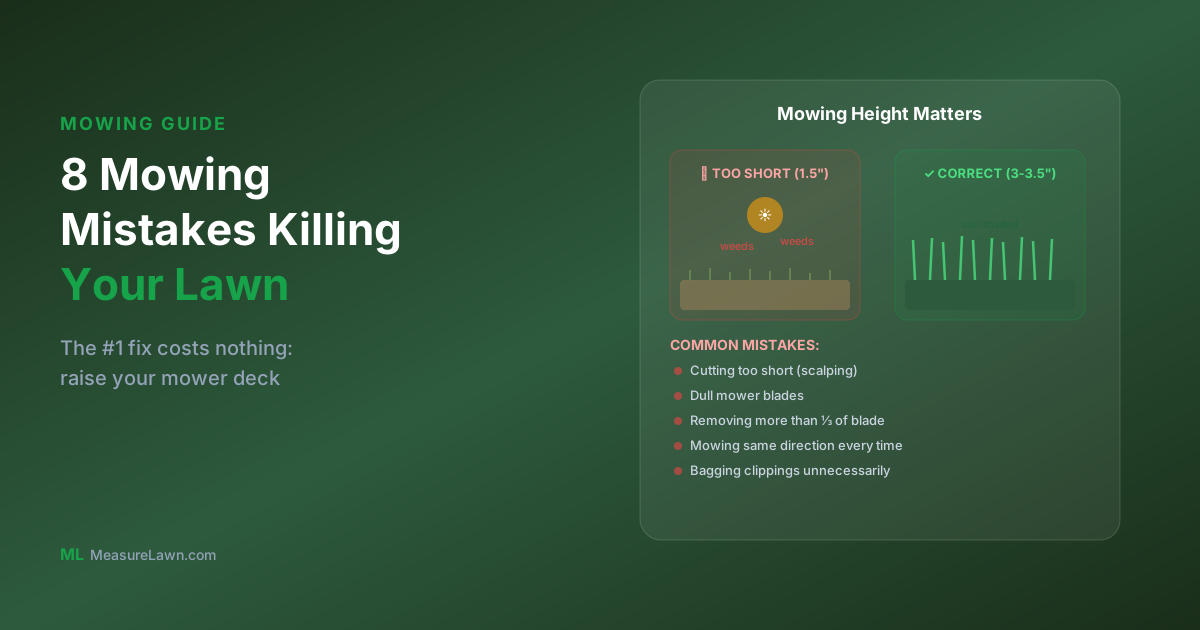
This is the most damaging mowing mistake in residential lawn care, and it's epidemic. Homeowners see golf courses mowed at half an inch and think shorter is better. It's not. Golf courses have full-time maintenance crews, specialized equipment, and daily management routines. Your lawn has you and a push mower on Saturdays.
Grass blades are solar panels. They photosynthesize sunlight into energy that feeds root growth. Cut them too short and the plant can't generate enough energy to maintain deep roots, fight off disease, or compete with weeds.
The right mowing height depends on your grass type. Kentucky Bluegrass: 2.5–3.5 inches. Tall Fescue: 3–4 inches. Perennial Ryegrass: 2–3.5 inches. Bermuda: 0.75–1.5 inches. Zoysia: 1–2 inches. St. Augustine: 2–3.5 inches.
Notice that most cool-season grasses want to be 3+ inches tall. If your mower is set to 2 inches and you have Tall Fescue, you're scalping your lawn every single time you mow. The fix takes 30 seconds: raise the mower deck to the correct height for your grass type.
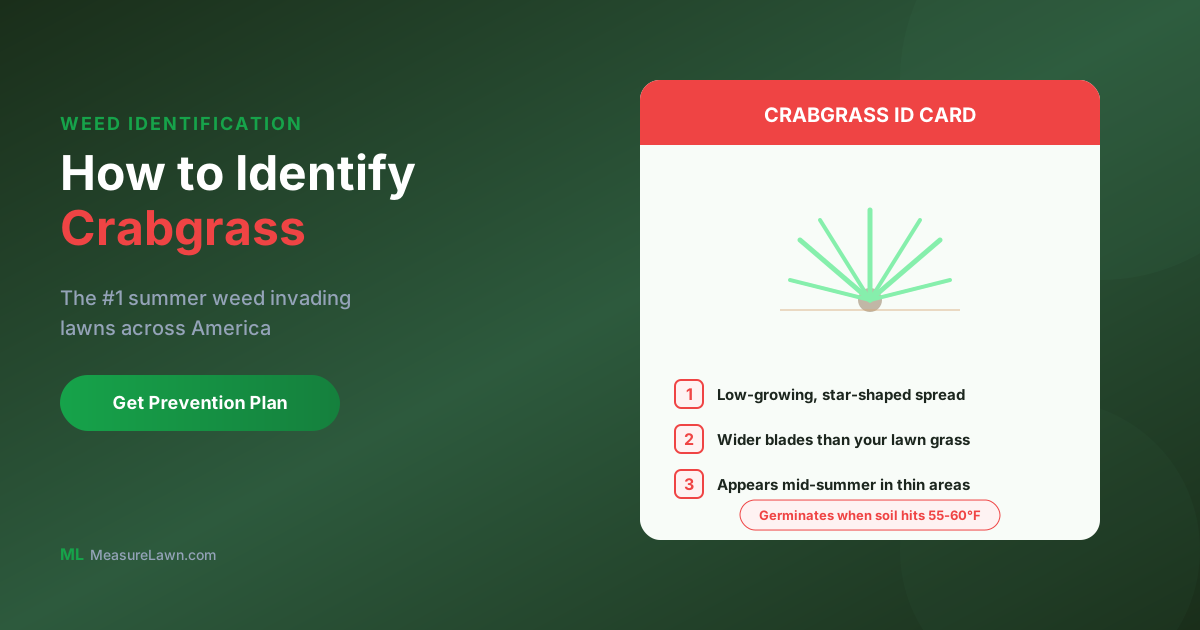
Taller grass also shades the soil surface, which directly prevents weed seed germination. Crabgrass needs sunlight on bare soil to sprout. A lawn mowed at 3.5 inches has far less exposed soil than one mowed at 2 inches.
Mowers worth considering
From budget push mowers to robotic — compare before you buy.
As an Amazon Associate, Measure Lawn earns from qualifying purchases.
Why Should You Never Cut More Than One-Third of the Grass Blade?
The one-third rule is the most important mowing principle most homeowners have never heard of: never cut more than one-third of the grass blade height in a single mow.
If your target height is 3 inches, you should mow when the grass reaches 4.5 inches — not when it hits 6 inches because you skipped a week. Cutting from 6 inches to 3 inches removes half the blade, which shocks the plant, exposes soil, and sets back root growth by weeks.
When you fall behind (and everyone does), resist the urge to catch up in one mow. Instead, cut it down to 4.5 inches, wait 3–4 days, then cut to 3 inches. Two mows over a week is far less stressful on your lawn than one drastic scalping.
How Do You Know If Your Mower Blade Is Dull?
A dull mower blade doesn't cut grass — it tears it. The difference is visible under a magnifying glass: a sharp blade leaves a clean, angled cut that heals quickly. A dull blade shreds the tip into ragged fibers that turn brown, lose moisture rapidly, and become entry points for fungal disease.
If your lawn has a brownish cast 1–2 days after mowing, even though it's healthy and green otherwise, your blade is dull. That brown tinge is thousands of torn grass tips dying back.
Sharpen your blade every 20–50 hours of mowing time. For most homeowners mowing weekly, that's 1–2 times per season. A sharpening takes 15 minutes with a file or angle grinder, or you can take it to a hardware store for $10–$20.
Starting the season with a freshly sharpened blade and sharpening again at midsummer is a reasonable schedule for most lawns.
Should You Mow on a Schedule or by Grass Height?
"I mow every Saturday" is how most people approach mowing. The problem is that grass doesn't grow at a constant rate. In cool spring weather with regular rain, cool-season grass might need mowing every 5 days. In a hot, dry August, it might only need mowing every 10–12 days.
The correct schedule is: mow when grass reaches 1.3 times your target height. If your target is 3 inches, mow when it hits about 4 inches. Some weeks that's every 5 days. Some weeks it's every 10 days. During dormancy, it might be once a month.
Mowing on growth rather than calendar means you're always removing the right amount at the right time, instead of alternately scalping fast-growing grass and mowing dormant grass that didn't need it.
Why Should You Change Your Mowing Direction?
Most people mow in the same pattern every time — back and forth in north-south rows, or in the same spiral from the outside in. This creates two problems: soil compaction along your mow lines (your wheels follow the same track every time) and grass that leans in one direction.
Alternate your mowing direction every 1–2 mows. If you went north-south last time, go east-west this time. Or alternate between straight lines and diagonal patterns. The variation spreads wheel compaction across the entire lawn and keeps grass growing upright.
This takes zero extra time and makes a visible difference in how uniform and healthy your lawn looks.
Should You Bag or Mulch Your Grass Clippings?
Unless your clippings are excessively long (over 1 inch) or you're dealing with disease, leave them on the lawn. Mulched clippings decompose within days and return nitrogen to the soil, reducing your fertilizer needs by roughly 25%.
That's free fertilizer you're throwing away every time you bag clippings. Over a full season, those returned nutrients are equivalent to about one full fertilizer application — $25–$50 in product you didn't have to buy.
The exception: if clippings are so long they sit in visible clumps on top of the grass, they'll smother the turf underneath. In that case, bag them or mow again in 2–3 days to chop them finer. But this only happens if you violated the one-third rule and let the grass get too tall between mows.
Is It Bad to Mow Wet Grass?
Wet grass clumps, clogs your mower deck, leaves uneven cuts, and can tear turf from the soil when the mower wheels slip. It also spreads fungal spores more easily than dry mowing.
Wait at least 6 hours after rain or heavy dew before mowing. Early morning mowing right after dew settles is common but not ideal — mid-morning after the dew dries is better. If you can only mow in early morning, it's not a disaster, but dry conditions always produce cleaner results.
If you absolutely must mow wet grass (extended rainy periods where you're falling behind on the one-third rule), raise your mower height by half an inch, mow slowly, bag the clippings to prevent clumping, and clean the mower deck immediately after.
Should You Change Your Mowing Height by Season?
The right mowing height for April isn't the right height for July, and neither is right for October.
During peak growing season, mow at the standard height for your grass type. During summer heat stress (cool-season grasses) or winter dormancy approach (warm-season grasses), raise the mower by 0.5 inches. Taller grass shades the soil, retains moisture, and insulates the crown of the plant during temperature extremes.
In late fall (for cool-season grasses), gradually lower the mowing height by 0.5 inches over 2–3 mows. Going into winter at a slightly shorter height (1.5–2 inches) prevents matting under snow and reduces the risk of snow mold. Just don't scalp — lower gradually.
What's the Correct Mowing Checklist?
Fix these 8 mistakes and your lawn improves without spending a dollar on product. Correct mowing height alone solves roughly 40% of common lawn problems. Add proper timing, a sharp blade, and mulched clippings, and you've built the foundation that makes everything else — fertilizer, weed control, overseeding — work better.
Of course, when you do apply product, you need the right amount. And that starts with knowing your lawn size.
Ready to measure your lawn?
Get a free, AI-customized lawn care plan with exact product quantities for your property.
Measure My Lawn — It's Free →