How Often Should You Water Your Lawn? Schedule by Grass Type
Most lawns need 1-1.5 inches of water a week. Get the exact schedule - days per week, minutes per zone, and the best time of day - for your grass type and season.
How Much Water Does Your Lawn Actually Need Each Week?
The simple answer: most lawns need between 0.75 and 2.0 inches of water per week, but the exact amount depends on your grass type, season, temperature, and soil conditions.
Water requirement isn't random—it's rooted in plant physiology. Grass plants use water for photosynthesis, nutrient transport, and cooling through transpiration. During hot summers, demand increases dramatically. In spring and fall, when temperatures are mild and growth is moderate, requirements drop. Winter dormancy (for warm-season grasses) or slow growth (for cool-season types) means minimal watering.
The 1-inch-per-week rule you've heard? It's a decent starting point, but it's not precise. Your actual needs depend on whether you grow Kentucky bluegrass, Bermuda, tall fescue, or another variety entirely. Each grass type evolved in different climates and has different water demands.
Measure My Lawn — It's Free → to get a customized watering plan tailored to your exact grass type, location, and season.
Tools for an effortless watering routine
A smart timer and a moisture meter take the guesswork out of the schedule above — set it once and forget it.

Flexzilla Garden Lead-In Hose 5/8 in. x 10 ft.
Beginner friendlySPRING/SUMMER | Best for: Small lawns <2,000 sq ft | Short lead-in hose perfect for connecting faucet to sprinkler timer or reel. Also great as the only hose you need for a tiny yard. Premium Flexzilla quality at a budget price.

SONKIR MS02 3-in-1 Soil Tester (Moisture/Light/pH)
Beginner friendlySPRING/SUMMER | Best for: All lawn sizes | Tests moisture, light, AND soil pH — three tools in one. No batteries. Helps you dial in perfect watering AND identify soil acidity issues that affect nutrient uptake. Great companion to your lawn care plan.

XLUX T10 Soil Moisture Meter
Beginner friendlySPRING/SUMMER | Best for: All lawn sizes | No batteries needed. Probe soil to instantly see moisture level on a 1-10 scale. Takes the guesswork out of watering — know exactly when your lawn needs water instead of guessing. Essential for overseeding success.
As an Amazon Associate, Measure Lawn earns from qualifying purchases.
What's the Difference Between Deep Watering and Shallow Watering?
Deep watering and shallow watering aren't just different volumes—they create fundamentally different root systems and lawn health outcomes.
Shallow watering means applying 0.25 to 0.5 inches of water in a single session. This wets only the top 2–4 inches of soil, where grass roots can't efficiently access it for long periods. Shallow, frequent watering actually weakens your lawn by:
- Encouraging roots to stay near the surface, chasing moisture
- Making grass more vulnerable to heat stress and drought
- Promoting thatch buildup and fungal diseases
- Requiring more frequent watering sessions to maintain grass color
Deep watering applies enough water (typically 0.75 to 1.5 inches per session) to penetrate 6–8 inches into the soil. This approach:
- Encourages deep root development, creating resilience
- Allows grass to access water reserves during hot spells
- Reduces disease pressure by keeping foliage drier between waterings
- Builds a stronger, more self-sufficient lawn
The goal isn't to water more—it's to water smarter. Three deep waterings per week beats seven shallow sprinklings. Deep watering deposits moisture where grass roots live, so plants can extract it efficiently over several days.
Soil type matters here too. Sandy soils drain quickly, so deep waterings might be 4–5 sessions per week of moderate volume. Clay soils retain moisture longer, so 2–3 deeper sessions work better.
How Often Should You Water Cool-Season Grasses?
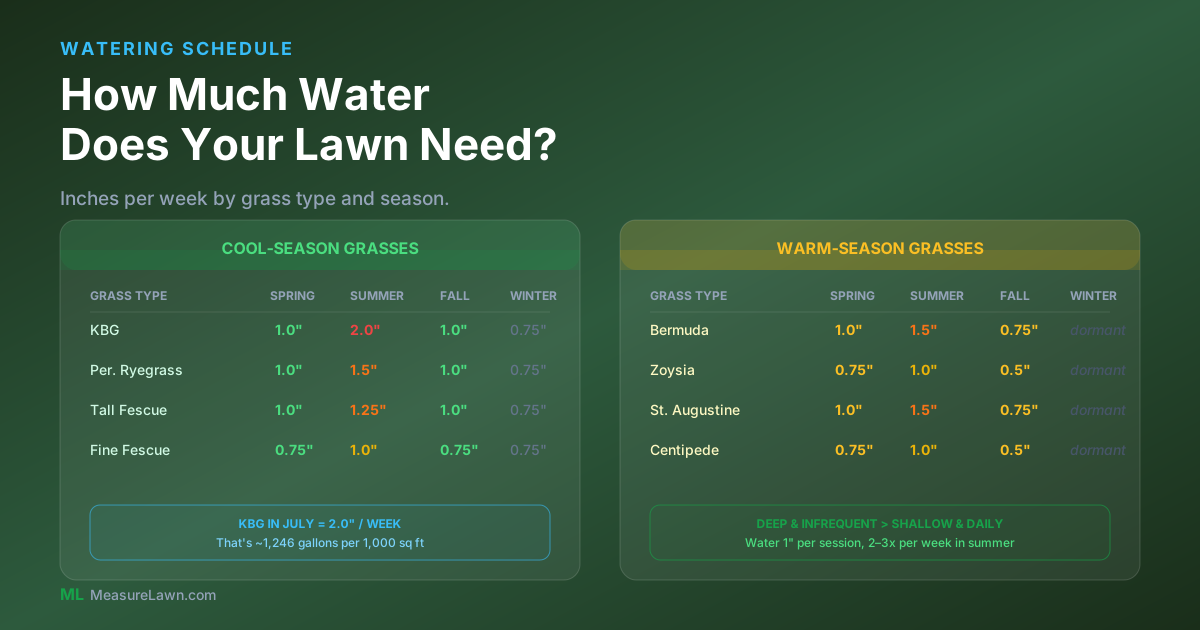
Cool-season grasses—like Kentucky bluegrass, perennial ryegrass, tall fescue, and fine fescue—thrive in northern climates and have peak growth in spring and fall. Their watering needs shift dramatically by season.
Kentucky Bluegrass (common in northern lawns):
- Spring: 1.0 inch per week, delivered in 1–2 sessions
- Summer: 1.5–2.0 inches per week, delivered in 2–3 sessions (peak demand in July, reaching ~1,246 gallons per 1,000 sq ft for the 2.0-inch target)
- Fall: 1.0 inch per week, delivered in 1–2 sessions
- Winter: 0.75 inches per week, delivered in 1 session (dormant period, minimal water needed)
Perennial Ryegrass:
- Spring: 1.0 inch per week, 1–2 sessions
- Summer: 1.25–1.5 inches per week, 2–3 sessions
- Fall: 1.0 inch per week, 1–2 sessions
- Winter: 0.75 inches per week, 1 session
Tall Fescue (deep-rooted, more drought-tolerant):
- Spring: 1.0 inch per week, 1–2 sessions
- Summer: 1.0–1.25 inches per week, 2–3 sessions
- Fall: 1.0 inch per week, 1–2 sessions
- Winter: 0.75 inches per week, 1 session
Fine Fescue (most shade-tolerant, lowest water demand):
- Spring: 0.75 inches per week, 1 session
- Summer: 0.75–1.0 inches per week, 1–2 sessions
- Fall: 0.75 inches per week, 1 session
- Winter: 0.75 inches per week, 1 session
Notice the pattern: cool-season grasses need moderate water in spring and fall, peak in midsummer, and drop in winter. This mirrors their growth cycle. The transition into summer is critical—many homeowners under-water just as peak heat arrives, stressing their lawns right when resilience matters most.
How Often Should You Water Warm-Season Grasses?
Warm-season grasses—including Bermuda, zoysia, St. Augustine, and centipede—dominate southern lawns. They're dormant in winter (turning brown), so your watering schedule is essentially May through September in most regions.
Bermuda Grass (high-traffic tolerant):
- Spring: 1.0 inch per week, 1–2 sessions
- Summer: 1.25–1.5 inches per week, 2–3 sessions
- Fall: 0.75 inches per week, 1 session
- Winter: 0 inches per week (fully dormant, no watering needed)
Zoysia Grass (dense, shade-tolerant):
- Spring: 0.75 inches per week, 1 session
- Summer: 1.0 inches per week, 2–3 sessions
- Fall: 0.5 inches per week, 1 session
- Winter: 0 inches per week (dormant)
St. Augustine Grass (shade and salt-tolerant):
- Spring: 1.0 inch per week, 1–2 sessions
- Summer: 1.5 inches per week, 2–3 sessions
- Fall: 0.75 inches per week, 1 session
- Winter: 0 inches per week (dormant)
Centipede Grass (low-maintenance):
- Spring: 0.75 inches per week, 1 session
- Summer: 1.0 inches per week, 2–3 sessions
- Fall: 0.5 inches per week, 1 session
- Winter: 0 inches per week (dormant)
Warm-season grasses generally need less total water than cool-season types because they're adapted to heat. However, summer peaks (especially for Bermuda and St. Augustine) demand serious volume during peak heat. The winter dormancy period is your rest—no watering needed until spring greening begins.
Should You Adjust Your Watering Schedule Based on Rainfall?
Absolutely. Rainfall is free water, and ignoring it wastes your money and strains local water supplies.
The smart approach: track rainfall and reduce or skip scheduled watering when rain provides moisture.
If your weekly watering target is 1.5 inches and you receive 0.75 inches of rain, you only need to apply 0.75 inches that week. If rain delivers your full target, skip watering entirely.
This isn't guesswork—it's measurable. Place a rain gauge in your lawn (away from building overhangs) and check it after each rain event. Record the depth and subtract it from your target.
Better yet, use weather integration. MeasureLawn's 14-day weather forecasts automatically adjust your watering plan. If rain is predicted, the app adjusts your schedule downward or skips sessions entirely, so you don't water when nature is already delivering. This adaptive approach saves thousands of gallons and prevents overwatering mistakes.
Rain deeply soaks soil and often brings cooler temperatures—both things your lawn loves. Never waste that opportunity by sticking to a rigid schedule.
What's the Best Time of Day to Water Your Lawn?
Timing affects water efficiency, disease pressure, and evaporation rates.
Early morning (4–9 AM) is the clear winner. Here's why:
- Lower temperatures: Cool morning air means less water evaporates before it soaks in. Afternoon heat can evaporate 20–30% of your applied water before it reaches the soil.
- Wind is typically calm: Morning winds are gentler than afternoon gusts, so water lands where you intend it.
- Foliage dries quickly: Morning dew naturally wets grass blades. Your sprinklers add water that then dries as the day warms. Dry foliage reduces fungal disease risk (unlike evening watering, when grass stays wet all night).
- Less competition: Early morning typically has lower municipal water demand, so pressure is often higher and more consistent.
Avoid evening watering (5 PM onwards). Wet grass staying wet all night creates the ideal environment for fungal diseases like powdery mildew, dollar spot, and brown patch.
Never water during the day (10 AM–3 PM). Midday heat causes rapid evaporation, wasting 25–40% of your water before it soaks in.
Plan for 30–45 minutes of watering time early morning, split across 2–3 sessions if your yard is large.
How Can You Tell If You're Overwatering Your Lawn?
Overwatering is one of the most common lawn mistakes, and unlike underwatering, it's hard to reverse quickly.
Signs of overwatering:
- Soft, squishy soil that stays soggy for days after rain
- Fungal diseases like brown patch, dollar spot, or fairy ring appearing regularly
- Mushrooms or toadstools in your lawn (fungi fruiting bodies only appear in saturated soil)
- Grass color fading to a lighter, washed-out green (nutrients are being leached downward)
- Compacted, anoxic soil where grass roots struggle to breathe
- Shallow root systems that make grass vulnerable to drought
- Thatch buildup accelerating (excess moisture promotes decomposition-resistant conditions)
- Moss or algae taking over, especially in shaded areas (indicators of perpetually wet conditions)
- Wet grass early morning even when you haven't watered recently
Overwatered lawns are also weaker and more susceptible to disease and insect pressure. They look lush in the short term but fail during heat stress.
The solution: Cut back frequency. Water less often but deeper. Let soil dry slightly between waterings. Adjust your schedule downward if you're seeing these signs.
How Can You Tell If You're Underwatering Your Lawn?
Underwatering shows different symptoms—and they're easier to spot and reverse.
Signs of underwatering:
- Wilting or drooping grass blades that don't recover overnight
- Footprints remaining visible in grass for hours (a sign of dehydration)
- Dull, grayish-green color instead of vibrant green (grass closes stomata to conserve water)
- Thin, sparse growth with visible soil showing through
- Edges and high spots browning first (corners and exposed areas dry faster)
- Soil pulling away from edges of beds or concrete (severe desiccation)
- Summer dormancy or dieback when temperatures spike
- Weeds invading (drought-stressed grass can't compete)
Underwatering is easier to fix: increase frequency or volume. The response is typically visible within days.
What's the Best Approach for Using Sprinklers?
Sprinkler choice and setup directly impact how effectively water reaches your grass.
Oscillating sprinklers (the classic back-and-forth type):
- Good for rectangular areas
- Cover medium distances (25–35 feet)
- Uneven distribution at edges (apply more in the middle, less at edges)
- Budget-friendly
- Best for supplemental watering, not primary systems
Rotary/impact sprinklers (the spinning, clicking kind):
- Better coverage of large, irregular areas
- Adjust range and pattern
- More even distribution
- Slower application rate (good for sandy soils)
- Ideal for open lawns
Stationary sprinklers (fixed-head types):
- Cover circles or partial circles
- Excellent for corners and edges
- Easy to overlap for complete coverage
- Often have adjustable pattern and distance
- Great for precision watering
In-ground irrigation systems:
- Most efficient (low pressure loss, precise coverage)
- Can incorporate soil moisture sensors
- Highest upfront cost
- Best for large properties or high-value lawns
Key sprinkler tips:
- Overlap coverage by 20–30% to ensure no dry spots
- Test your system by running it for 15 minutes, then measuring water depth with a can or ruler at several spots. Adjust nozzles until distribution is even.
- Check spray patterns regularly—debris can clog nozzles and create dead zones
- Water before soil becomes completely dry (proactive watering prevents wilt damage)
- Use a timer to ensure consistent, automatic watering without guesswork
How Much Water Does Your Lawn Actually Need? (Calculate Gallons)
Understanding inches is important, but visualizing gallons makes the investment clear.
For example: Kentucky Bluegrass in July needs 2.0 inches of water per week on a 1,000-square-foot lawn = approximately 1,246 gallons total for that week.
To calculate your lawn's needs:
Formula: (Target inches per week ÷ 12) × Square footage × 7.48 gallons per cubic foot
Example for a 5,000-square-foot Bermuda lawn in summer (1.5 inches target):
- (1.5 ÷ 12) × 5,000 × 7.48 = 4,677 gallons per week
That's substantial. Over a 12-week summer, you're using roughly 56,000 gallons—unless rain reduces your target.
This is where precision watering saves real money. Under-applying water stresses your lawn; over-applying wastes both water and money. Measure My Lawn — It's Free → calculates your exact gallon requirements based on your lawn size, grass type, and location. MeasureLawn's soil temperature alerts and 14-day weather forecasting automatically adjust your plan, so you're always watering the right amount at the right time.
Should You Water Differently During Extreme Heat?
Heat spikes demand special attention. When temperatures exceed 85–90°F for multiple days, grass goes into survival mode.
During heat waves:
- Increase watering frequency slightly (an extra session mid-week if you normally do 2–3)
- Don't skip scheduled waterings—think deep and regular rather than reactive
- Water early morning before heat peaks (give grass access to moisture before peak stress)
- Monitor soil moisture by squeezing soil at root depth. If it crumbles, you need water. If it's moist, you're good.
- Avoid fertilizing during extreme heat (feeding stresses already-stressed grass)
- Don't mow during peak heat—let grass grow taller to shade soil and roots
Conversely, during cool periods or rainy weeks, reduce watering frequency immediately. Soggy conditions in cool weather are a disease invitation.
How Do Seasonal Changes Affect Your Watering Plan?
Seasons shift water demand more dramatically than most people realize.
Spring (March–May in northern zones, February–April in southern zones):
- Soil is cool and holds moisture longer
- Grass is growing but not at peak
- Rainfall is often adequate
- Strategy: 1–2 waterings per week, moderate depth; reduce if rain is frequent
Early summer (June):
- Transition period between moderate and peak demand
- Heat increases but not extreme yet
- Good time to establish consistent watering habits
- Strategy: Increase to 2–3 times weekly; gradually boost depth
Midsummer (July–August):
- Peak water demand across all grass types
- Heat and low humidity increase evaporation
- Soil dries fastest
- Strategy: 2–3 deep waterings weekly, early morning; skip only if significant rain falls
Fall (September–October in north, September–November in south):
- Demand decreases as temperatures drop
- Second growth flush for cool-season grasses
- Less evaporation
- Strategy: Reduce to 1–2 waterings weekly; monitor soil before watering
Winter (November–March in north, dormant period for warm-season grasses):
- Cool-season grasses slow dramatically
- Warm-season grasses go fully dormant (no watering)
- Rainfall often handles cool-season needs
- Strategy: Minimal watering for cool-season types; none for warm-season varieties
What Role Does Soil Type Play in Watering?
Soil texture fundamentally determines how water infiltrates, drains, and is retained.
Sandy soils:
- Drain very quickly (within hours)
- Don't retain water well
- Need frequent, moderate watering (more sessions, less volume per session)
- Nutrient leaching is a risk
- Require less time to avoid overwatering
Clay soils:
- Retain water for days
- Drain slowly and stay soggy
- Need less frequent watering (fewer, deeper sessions)
- Higher overwatering risk
- Benefit from aeration to improve drainage
Loamy soils (ideal):
- Balanced drainage and water retention
- Hold adequate moisture but drain excess
- Can handle standard watering schedules
- Most forgiving
Test your soil by digging a hole, filling it with water, and observing how fast it drains. Fast drainage (drains within 1 hour) = sandy. Slow drainage (stays wet for hours) = clay. Medium = loam.
Adjust your session frequency and depth accordingly. Sandy lawns might need daily summer watering in very hot areas. Clay lawns might manage with 2–3 weekly sessions, with careful monitoring to prevent oversaturation.
How Can Weather Forecasting Improve Your Watering Plan?
Modern lawn care integrates weather data to prevent both under- and over-watering.
When you know rain is coming, you can confidently skip tomorrow's watering. When a heat wave is forecast, you can increase your next session's volume. Temperature and humidity trends tell you whether your current schedule is still appropriate.
MeasureLawn integrates 14-day weather forecasts directly into your plan. As conditions change, your recommendations adapt automatically. If rain is predicted, your plan adjusts downward. If a heat spike is coming, it increases slightly. This dynamic approach means you're never watering reactively—you're always one step ahead.
Tracking is simple: note your watering dates, volumes, and local rainfall. After 3–4 weeks, you'll see patterns. Combined with weather forecast, you'll develop intuition for when your lawn genuinely needs water versus when Mother Nature is handling it.
What Are Common Watering Mistakes to Avoid?
Learning from others' mistakes accelerates your success.
Top watering errors:
- Watering on a fixed schedule regardless of rain – Adjust for rainfall every single week
- Shallow, frequent watering – Build deep roots by delivering substantial water fewer times weekly
- Evening watering – Early morning avoids disease and evaporation
- Watering during the day – Heat evaporates 25–40% before it soaks in
- Applying different amounts to different parts of your lawn – Consistency prevents weak zones
- Ignoring signs of overwatering – Fungal diseases and soggy soil are red flags; reduce immediately
- Not adjusting for seasons – July needs nearly 2× the water of May; plan accordingly
- Using sprinklers without testing coverage – Uneven distribution leaves dead zones
- Forgetting about soil type – Sandy and clay lawns need different frequencies
- No flexibility during extreme weather – Heat waves and cold snaps both require schedule shifts
How Do You Create a Personalized Watering Schedule?
A truly customized plan accounts for your grass type, lawn size, local climate, soil conditions, and real weather patterns.
Steps:
- Identify your grass type (Kentucky bluegrass, Bermuda, zoysia, etc.)
- Measure your lawn area in square feet
- Note your soil type (sandy, loamy, or clay)
- Check your climate zone (USDA hardiness zone)
- Get your exact weekly target from the tables above (grass type + season)
- Calculate total gallons needed using the formula provided earlier
- Choose 2–3 watering sessions per week (spread across different days)
- Set a timer for each session based on your sprinkler's output rate
- Adjust weekly based on rainfall (subtract rain from target)
- Monitor soil and grass appearance and shift as needed
MeasureLawn automates this entire process. Input your grass type, lawn size, and location, and you get a customized weekly watering schedule with exact session times, durations, and gallon targets. The app adjusts automatically for 14-day weather forecasts and sends soil temperature alerts. Measure My Lawn — It's Free → and let AI-customized watering take the guesswork out of lawn care.
What Are the Key Takeaways for Your Lawn Watering Schedule?
- Cool-season grasses need 0.75–2.0 inches per week depending on season and type; peak in summer
- Warm-season grasses need 0.5–1.5 inches per week when actively growing; zero in winter dormancy
- Deep, infrequent watering beats shallow, frequent watering—aim for 2–3 sessions weekly
- Early morning watering (4–9 AM) maximizes infiltration and minimizes disease risk
- Adjust for rainfall weekly—don't water if rain delivers your target
- Season, soil type, and weather all shift your schedule—flexibility is critical
- Overwatering creates fungal diseases and weak roots; underwatering stresses grass and invites weeds
- Precision watering saves thousands of gallons and dollars annually
Your lawn's health depends on consistency and precision. The right amount of water at the right time builds deep roots, resilience, and a lawn you'll be proud of year-round.
Ready to measure your lawn?
Get a free, AI-customized lawn care plan with exact product quantities for your property.
Measure My Lawn — It's Free →