How to Grow Grass in Shade Under Trees (Complete Guide)
Thin, patchy grass under your trees? Choose shade-tolerant grass and these proven techniques to grow a thick, healthy lawn where most grass gives up.
Why Does Grass Struggle in Shade?
Grass is fundamentally a sun-loving plant. The photosynthesis process that allows grass to convert sunlight into energy becomes severely limited when trees block 50% or more of direct sunlight. In deeply shaded areas, grass blades weaken, roots don't develop properly, and the plant becomes susceptible to disease and moss invasion.
Most standard lawn grasses require full sun to truly excel. When you reduce available light, you reduce the energy the plant can produce. This means less robust root systems, thinner leaf blades, and reduced ability to recover from stress like foot traffic, drought, or insect damage. Additionally, shaded areas often retain more moisture because the sun doesn't dry them out as quickly, which can promote fungal diseases like powdery mildew and leaf spot.
The competition is another factor. Tree roots extend far beyond what's visible above ground, and they're incredibly efficient at pulling water and nutrients from the soil. Your grass is literally competing with these mature root systems, and the grass usually loses. This creates a double problem: less light AND less available water and nutrients.
Grass seed for this job
Pair with a starter fertilizer and the right seeding rate — measure your lawn for the exact amount.
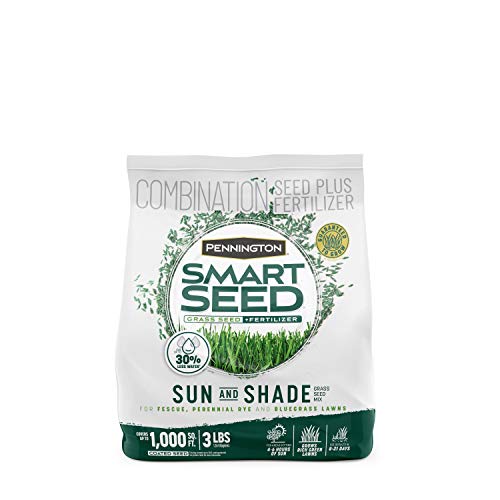
Pennington Smart Seed Sun & Shade
Beginner friendly
Pennington Annual Ryegrass (Bulk)
Beginner friendly
Barenbrug Pensacola Bahiagrass Seed
Beginner friendlyPensacola bahiagrass from Barenbrug, the standard seeded bahia for Southern lawns.
As an Amazon Associate, Measure Lawn earns from qualifying purchases.
Which Grass Types Tolerate Shade Best?
Not all grass varieties are created equal when it comes to shade tolerance. The answer depends on your climate zone, but there are clear winners for shaded lawns.
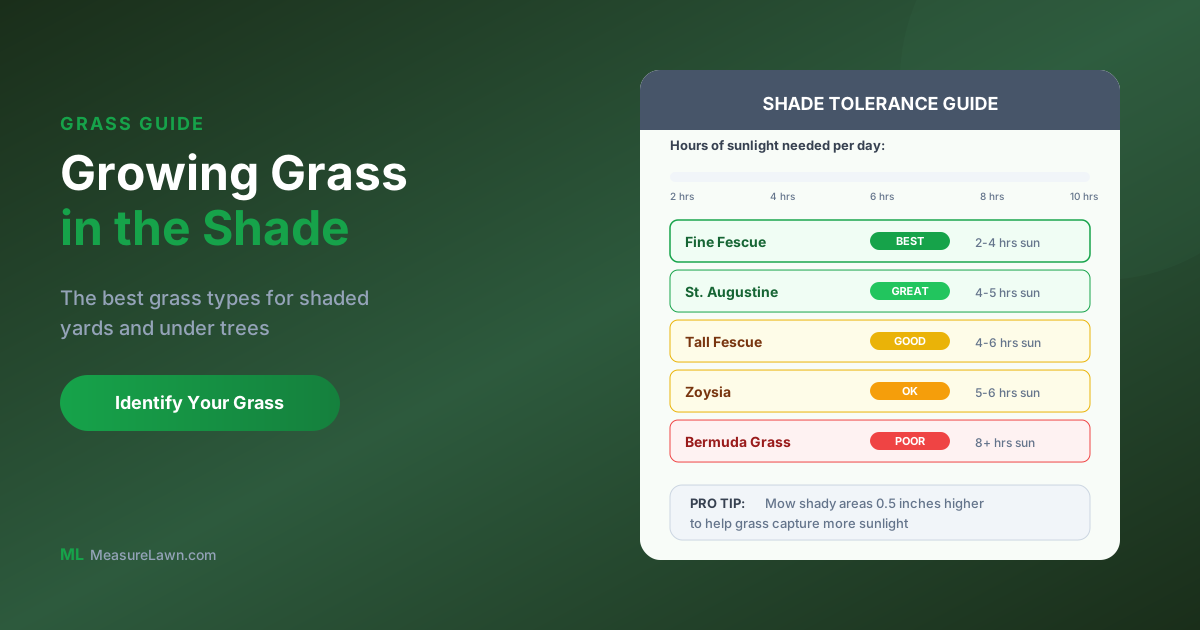
For cool-season climates, fine fescue is the undisputed champion of shade. Fine fescue varieties like creeping red fescue, hard fescue, and chewings fescue can thrive in areas with as little as 3-4 hours of direct sunlight per day. These grasses have evolved to survive in forest understories, and they bring that capability to residential lawns. Tall fescue is moderately shade-tolerant and is often mixed with fine fescue for blend that offers both shade tolerance and durability. Perennial ryegrass is less shade-tolerant than fescue but still performs better in shade than Kentucky bluegrass.
For warm-season climates, St. Augustine grass is the shade champion. This coarse-textured grass can handle 3-4 hours of sunlight and maintains good density even in partial shade. Zoysia grass is moderately shade-tolerant, handling 4-6 hours of sun, making it versatile for mixed sun and shade situations. Bahiagrass and Buffalograss both offer moderate shade tolerance as well.
The key is matching your grass choice to your specific climate and sunlight conditions. An area that receives morning sun but afternoon shade needs a different grass than an area in constant dappled shade beneath a pine tree.
Measure My Lawn — It's Free → can help you identify exactly which grass types grow in your region and which will perform best in your specific shade conditions.
How Much Sunlight Does Grass Actually Need?
This is the critical question that determines whether you can save a struggling shaded lawn or need to consider alternatives.
Most common lawn grasses need a minimum of 4-6 hours of direct sunlight daily to maintain acceptable density and appearance. Kentucky bluegrass, which dominates many cool-season lawns, typically needs 6+ hours. Perennial ryegrass is similar. If your shaded area receives less than 4 hours of direct sun, these standard grasses will inevitably decline.
However, shade-adapted varieties have lower light requirements. Fine fescue can survive on 3-4 hours, and in some cases as little as 2-3 hours of dappled light. St. Augustine grass similarly performs acceptably with 3-4 hours of sunlight. This doesn't mean the grass will look perfect — it will be thinner and slower-growing — but it will survive and maintain ground cover.
The type of shade matters too. Morning sun followed by afternoon shade is ideal because the grass gets early light and then relief from the hottest part of the day. Dappled shade under trees (where light filters through leaves) is better than solid shade. Deep, permanent shade from a building or dense evergreen is the most challenging.
To assess your situation accurately, track the sunlight patterns in your shaded areas over a week. Use a smartphone timer or note when direct sun touches the grass and for how long. This data will tell you whether you need shade-tolerant varieties or whether you should consider shade alternatives like groundcovers or hardscaping.
Should You Prune Trees to Help Your Lawn?
The temptation to solve shade problems with pruning is understandable, but it requires careful judgment.
Strategic pruning can help by removing lower branches (crown raising) or thinning the canopy to allow dappled light rather than solid shade. This is a smart move if you have older trees with dense, low-hanging branches that create a complete light barrier.
However, aggressive pruning can weaken trees, make them susceptible to disease and storm damage, and may not provide as much light improvement as you'd hope. A mature oak or maple might lose significant moisture regulation if you over-prune, and you could spend hundreds of dollars to achieve only modest light gains.
Before you call a tree service, talk to a certified arborist. They can assess your specific trees and recommend pruning that improves light penetration without compromising tree health. Often, judicious removal of the lowest 6-8 feet of branches is sufficient to allow more light to reach the grass while keeping the tree healthy and attractive.
In many cases, adapting your grass choice to the existing shade is more practical and cost-effective than modifying your trees.
What Mowing Adjustments Help Grass in Shade?
Your mowing practices must change when you're working with shade-adapted grasses, or you'll sabotage your own efforts.
Mow higher in shaded areas. This is perhaps the single most important adjustment. Shade-tolerant grasses should be mowed at 3-3.5 inches instead of the standard 2-2.5 inches. The extra height allows more leaf surface area to capture whatever light is available. Additionally, taller grass provides more surface area for photosynthesis and helps shade the soil, which reduces weed pressure and maintains soil moisture.
Mow less frequently. Shade-adapted grasses grow more slowly than sun-loving varieties. Mowing on a traditional weekly schedule may mean you're cutting grass that hasn't fully recovered from the previous mowing. Consider extending your mowing cycle to 10-14 days, or mow only when the grass reaches about 4-4.5 inches tall. This gives each blade more time to photosynthesize and store energy.
Use sharp blades. This matters everywhere, but especially in shade. Shade-stressed grass doesn't recover as quickly from a ragged cut. Dull blades tear the leaf blade, making it more prone to disease. Keep your mower blades sharp, and sharpen them more frequently than you would for sun-loving grasses.
Avoid heavy foot traffic on shaded lawns. These grasses are already stressed by limited light. Concentrated foot traffic compounds the problem. If possible, redirect pathways or create stepping stones to reduce wear patterns in shaded areas.
Can You Overseed Shaded Areas to Improve Them?
Overseeding is a valuable tool for improving shaded lawns, but timing and variety selection are critical.
The best time to overseed depends on your climate. In cool-season regions, fall is ideal (late August through September) because cool weather favors seed germination, and the grass has time to establish before winter. In warm-season regions, late spring (May) works well, just before peak summer heat.
Choose the right seed. If you're overseeding a mixed-shade area, use a blend that emphasizes shade-tolerant varieties. For cool-season lawns, select seed mixes with at least 50% fine fescue. Don't just buy whatever grass seed is on sale at the garden center — you need species specifically selected for shade tolerance.
Prepare properly. In shaded areas with existing thin grass, you'll need to improve soil contact. Rough up the soil surface with a dethatcher or rake, removing moss and thatch buildup. Water deeply a day or two before overseeding to ensure good seed-to-soil contact. Apply seed at the high end of recommended rates to compensate for shade conditions.
Plan to maintain the new grass. Newly seeded grass in shade is particularly vulnerable. Keep the soil consistently moist for 2-3 weeks after seeding. Once established, increase mowing height immediately — don't follow standard mowing practices with newly seeded shade-tolerant grass.
Overseeding won't transform deep shade into a sun-loving grass paradise, but it can meaningfully improve thin, patchy shaded areas where there's at least 3-4 hours of light.
What Are the Alternatives to Grass in Deep Shade?
Some areas simply won't support grass no matter what you do. Accepting this reality saves frustration and money.
Areas receiving less than 3 hours of sunlight per day are candidates for shade alternatives. These include:
- Shade-tolerant groundcovers like creeping phlox, ajuga, liriope, or shade-tolerant sedges
- Mulched shade gardens with shade-loving perennials like hostas, ferns, astilbe, and coral bells
- Hardscaping solutions like composite deck extensions, mulch paths, or stone patios
- Dense evergreen groundcovers like vinca (periwinkle) or pachysandra
These alternatives can be more attractive and require less maintenance than struggling to keep thin, diseased grass alive in unsuitable conditions. They also eliminate the frustration of expensive seed, frequent overseeding, and repeated failure.
The key is deciding where your time and money are best spent. If you have a 200-square-foot area under a large spruce tree that barely receives any light, a shade garden or hardscape solution might be the best investment rather than perpetual attempts to grow grass there.
How Does MeasureLawn Help With Shade Challenges?
Measure My Lawn — It's Free → is designed to solve exactly this kind of lawn care challenge. When you create your free lawn map, you can identify and mark shaded areas, and the AI-customized plan accounts for them from the start.
MeasureLawn recommends grass varieties specifically suited to your region and the sunlight conditions of different lawn areas. If you have 40% of your lawn in shade, the platform won't recommend a sun-loving grass that will always struggle. Instead, it suggests shade-tolerant varieties appropriate for cool-season or warm-season regions.
The customized plan also accounts for the specific care requirements of shade-adapted grasses, including appropriate mowing heights, timing for aeration and overseeding, and product quantities that ensure you're not over-applying treatments that can damage shade-stressed turf.
Beyond variety selection, MeasureLawn tracks 14-day weather patterns to help you time overseeding correctly and avoids recommending intensive treatments during periods when shade-adapted grass is most vulnerable.
Measure My Lawn — It's Free → means your lawn care plan is customized to your reality — including those challenging shaded areas — rather than generic advice that doesn't account for your specific conditions.
How Do You Manage Shade for Long-Term Lawn Success?
Growing healthy grass in shade is absolutely achievable with the right approach. Start by honestly assessing your sunlight conditions — 3 hours daily? 5 hours? Complete shade? This determines whether you adapt with shade-tolerant varieties or transition to alternative solutions.
Choose appropriate grasses for your climate and light levels. Fine fescue in cool-season regions and St. Augustine in warm-season regions provide the foundation for shade success.
Adjust your management practices with higher mowing heights, longer mowing intervals, and careful attention to soil health. Don't expect shaded grass to look identical to sun-loving grass — different conditions support different appearances, and that's perfectly acceptable.
Consider overseeding strategically in fall or spring to improve density in marginal shade areas. And don't hesitate to replace deep shade areas with attractive alternatives that will actually thrive.
When all your lawn care decisions account for shade conditions rather than fighting against them, you'll have a healthier, more attractive lawn overall.
Ready to measure your lawn?
Get a free, AI-customized lawn care plan with exact product quantities for your property.
Measure My Lawn — It's Free →