How to Fix a Patchy Lawn: The $200 Fall Renovation That Actually Works
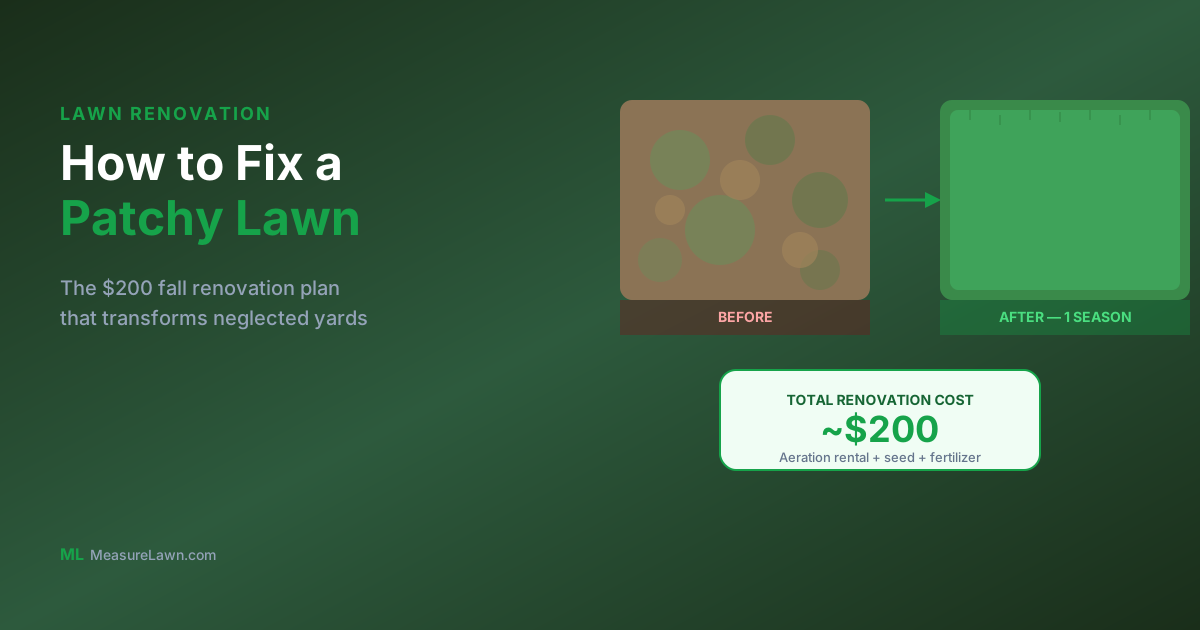
Your lawn has bare spots, thin areas, and more weeds than grass. You're considering paying $5,000+ to rip it out and start over. Don't. A fall renovation with aeration and overseeding costs under $200 and fixes 90% of patchy lawns in one season.
There's a moment every homeowner with a struggling lawn hits: the "should I just start over?" moment. The grass is thin, weeds are winning, and the bare spots keep getting bigger. Sod companies will happily charge $5,000–$15,000 to tear everything out and lay fresh turf.
Before you write that check, consider this: most patchy lawns aren't dying from some unfixable disease or hopelessly degraded soil. They're thin because of compacted soil, insufficient seed density, and the accumulated effects of mowing too short and under-fertilizing. All of those problems have a $200 fix.
Why Is Fall the Best Time to Fix a Patchy Lawn?
Fall renovation works for cool-season grasses (Kentucky Bluegrass, Tall Fescue, Perennial Ryegrass, Fine Fescue) because August through September is the perfect germination window. Soil is still warm from summer, air temperatures are cooling, rainfall is increasing, and weed pressure is declining.
Spring overseeding is tempting but flawed. New grass seedlings have to compete with crabgrass and other annual weeds that germinate at the same time. Then summer heat arrives and stresses the young plants before they've established deep roots. Most spring-seeded lawns look great by May and terrible by July.
Fall seeding avoids both problems. Weed seeds are going dormant as your grass seeds are germinating, and the seedlings get cool fall weather plus an entire winter to develop root systems before their first summer.
For warm-season grasses, the timing is different — late spring is your overseeding window, when soil temperatures are warm enough for Bermuda, Zoysia, or other warm-season seeds to germinate. But the renovation principles are the same.
Grass seed for this job
Pair with a starter fertilizer and the right seeding rate — measure your lawn for the exact amount.

Pennington Smart Seed Sun & Shade
Beginner friendly
Pennington Annual Ryegrass (Bulk)
Beginner friendly
Barenbrug Pensacola Bahiagrass Seed
Beginner friendlyPensacola bahiagrass from Barenbrug, the standard seeded bahia for Southern lawns.
As an Amazon Associate, Measure Lawn earns from qualifying purchases.
What Are the Three Steps to Renovate a Patchy Lawn?
Step 1: Core Aeration ($60–$100 rental)
Compacted soil is the silent killer of lawns. When soil is packed tight — from foot traffic, mowing, and natural settling — water can't penetrate, roots can't grow deep, and air can't reach the root zone. The grass thins, weeds move in, and no amount of fertilizer or seed fixes the underlying problem.
Core aeration punches 2–3 inch plugs out of the soil, creating channels for water, air, and nutrients to reach deep into the root zone. You can rent a core aerator from most equipment rental companies for $60–$100 per day. The machine walks behind you like a mower — no special skill required.
Make two passes over your entire lawn in perpendicular directions. Leave the soil plugs on the surface; they'll break down in 1–2 weeks and return nutrients to the soil.
Aeration timing: early fall for cool-season grasses (2–3 weeks before overseeding is ideal), or early spring for warm-season grasses. The grass needs to be actively growing to recover from aeration.
Step 2: Overseeding ($50–$150 in seed)
Immediately after aerating — ideally the same day — spread grass seed across your entire lawn. The aeration holes give seed direct contact with loose soil, dramatically improving germination rates.
Seed rates depend on your grass type. Tall Fescue overseeding typically calls for 5–8 lbs per 1,000 square feet. Kentucky Bluegrass needs 2–3 lbs per 1,000 square feet. Perennial Ryegrass germinates fastest at 5–8 lbs per 1,000 square feet.
Here's where lawn size becomes critical. A 6,000 square foot lawn overseeded with Tall Fescue at 6 lbs per 1,000 square feet needs 36 lbs of seed. Buy 40 lbs to ensure coverage. Under-seeding creates the exact patchiness you're trying to fix — thin areas where weeds re-establish.
Use a broadcast spreader for even distribution. Make two passes at half rate (each pass at 3 lbs per 1,000 sq ft) in perpendicular directions for more uniform coverage than one pass at full rate.
Step 3: Starter Fertilizer ($20–$40)
After seeding, apply a starter fertilizer (high in phosphorus, like a 10-10-10 or Scotts Starter with a ratio around 24-25-4). Phosphorus promotes root development, which is exactly what new seedlings need.
Don't use a regular high-nitrogen lawn fertilizer on new seed — it pushes leaf growth at the expense of roots, making seedlings vulnerable. Starter fertilizer is formulated specifically for establishment.
Again, quantity depends on lawn size. A bag covering 5,000 square feet won't cut it for a 7,500 square foot lawn.
How Should You Water After Overseeding?
Seed needs constant moisture to germinate. Not flooding — just consistent dampness in the top inch of soil.
For the first 7–14 days after seeding, water lightly once or twice daily. The goal is keeping the soil surface moist, not saturated. Early morning and mid-afternoon are the best times. Each session should be 5–10 minutes — just enough to dampen the surface.
After you see germination (tiny green sprouts emerging, typically 7–10 days for Ryegrass, 10–14 for Fescue, 14–21 for Bluegrass), begin transitioning to deeper, less frequent watering. Over 2 weeks, move from daily light watering to your normal schedule of 1 inch per week in one or two sessions.
This transition is critical. Keeping up daily watering after germination creates shallow roots and promotes fungal disease. Deep, infrequent watering pushes roots down, building a drought-resistant lawn.
How Long Does It Take for a Patchy Lawn to Fill In?
After overseeding, patience is required. Here's a realistic timeline:
Week 1–2: Seed sits on the soil surface, absorbing water. You won't see anything yet. Keep watering.
Week 2–3: First sprouts appear. Ryegrass shows first, then Fescue, then Bluegrass. The lawn looks messy — a mix of old grass, new sprouts, and bare soil. This is normal.
Week 4–6: New grass thickens. You can mow for the first time when seedlings reach 3–4 inches (set the mower to the highest setting). The lawn starts looking like an actual lawn again.
Week 8–12: By late fall, the new grass has established enough to survive winter. The lawn looks dramatically better than it did in August.
Following spring: The real payoff. Roots that developed over fall and winter support vigorous spring growth. Areas that were bare or thin are now filled in. The lawn looks like a different property.
When Should You Replace Your Lawn Instead of Renovating?
Fall renovation fixes most patchy lawns, but not all. It won't fix persistent fungal disease (you need fungicide and improved drainage), severe grub infestations (treat grubs first, then reseed), or areas with less than 4 hours of sunlight per day (shade-tolerant varieties can help, but no grass thrives in deep shade).
If more than 70% of your lawn is bare, you're renovating rather than overseeding, and the approach is slightly different — you'll want to kill everything first, till or heavily aerate the bare soil, then seed at new-lawn rates rather than overseeding rates.
For lawns that are 30–70% thin or patchy, the aerate-overseed-fertilize method is the most cost-effective path back to a thick, healthy lawn.
How Do You Calculate Seed and Product Quantities?
The difference between a successful renovation and a failed one often comes down to product quantities. Too little seed leaves gaps. Too little fertilizer starves the seedlings. Too little water kills them.
MeasureLawn calculates everything based on your satellite-measured lawn size: how many pounds of seed for your grass type, which starter fertilizer and how many bags, and a watering schedule calibrated to your climate. One measurement, one plan, one season to a better lawn.
Ready to measure your lawn?
Get a free, AI-customized lawn care plan with exact product quantities for your property.
Measure My Lawn — It's Free →