Mulch Calculator: How Much Mulch Do I Need? (Free Tool)
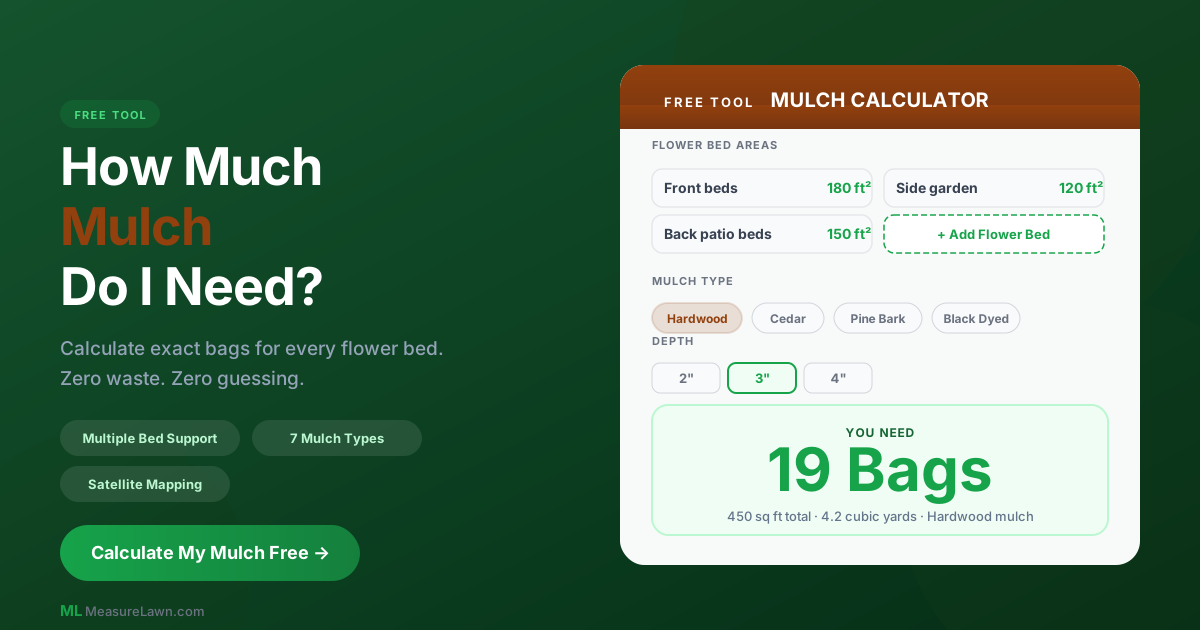
Free mulch calculator — enter your flower bed sizes, pick your mulch type and depth, and get the exact number of bags you need. Supports multiple beds. No sign-up required.
Why Do Most People Buy the Wrong Amount of Mulch?
The truth is uncomfortable: the vast majority of homeowners don't measure their flower beds properly when buying mulch. Instead, they guess.
Here's what happens when you guess: You either buy 25-30% too much or 25-30% too little. Neither option is pleasant.
If you overbuy, those extra bags pile up in your garage. Mulch deteriorates when stored—it molds, compacts, and becomes unpleasant to handle. Within a year, you're throwing out $50-100 worth of unusable mulch. Money literally rotting in your driveway.
If you underbuy, you're faced with an even worse scenario: a second trip to the store (or paying delivery fees again), inconsistent coverage across your beds, and the frustration of having to make decisions about which areas get enough mulch and which don't.
The average American household spends $200-400 on mulch annually. If 25% of that is wasted due to poor estimation, that's $50-100 in unnecessary spending every single year. For households with large landscaping projects, the number is even higher.
But here's the good news: there's a better way.
Mulch for your beds
Calculate bags by bed size — measure your beds for the exact amount.

Oregon 21-Inch Gator Mulching Blade
Beginner friendlyBest for: All lawn sizes with 21" deck mowers | Upgrade your mulching performance. Gator teeth create a powerful air vortex that cuts clippings into fine pieces for natural fertilization. Check the fit list against your mower model before you buy.
Earthgro by Scotts Black Wood Shredded Mulch (1.5 cu ft)
Beginner friendlyHome Depot. Black dyed wood mulch. Year-long color guarantee. Budget option. Free delivery available. | Available at Home Depot (non-affiliate link)
Earthgro by Scotts Brown Wood Shredded Mulch (1.5 cu ft)
Beginner friendlyHome Depot. Brown dyed wood mulch. Year-long color guarantee. Budget option. Free delivery available. | Available at Home Depot (non-affiliate link)
As an Amazon Associate, Measure Lawn earns from qualifying purchases.
How Do You Calculate How Much Mulch You Need?
The traditional formula for calculating mulch is straightforward:
Length × Width × Depth (in feet) ÷ 27 = Cubic Yards
Or, if you prefer to calculate bags (most common for retail purchases):
(Length × Width × Depth in inches ÷ 12) ÷ 2 = Number of 2 cu ft Bags
Let's walk through a real example. Suppose you have a flower bed that measures 10 feet long by 6 feet wide, and you want to spread mulch 3 inches deep:
- Length: 10 feet
- Width: 6 feet
- Depth: 3 inches (0.25 feet)
- Calculation: 10 × 6 × 0.25 = 15 cubic feet ÷ 27 = 0.56 cubic yards (or about 15 two-cubic-foot bags)
Simple enough for rectangular beds, right?
But here's where reality hits. Most of us don't have perfectly rectangular flower beds. Your beds curve around trees, follow the fence line, have irregular corners, and include island plantings. Once you have three or four irregularly shaped beds, the math becomes a nightmare. You're trying to break beds into triangles and trapezoids, measuring curved edges with a tape measure (nearly impossible), and adding up multiple calculations.
Add island beds around trees? Now you're calculating donut-shaped areas. Trees in the middle of the bed? You're subtracting that area. It gets complicated fast, and mistakes compound quickly.
That's exactly why we built the Mulch Calculator — scroll up to try it, or map your beds on satellite imagery at MeasureLawn.com for professional-grade precision with irregular shapes, curves, and multiple beds.
How Thick Should I Spread Mulch?
Mulch depth isn't one-size-fits-all. The right depth depends on your goals, the condition of your beds, and what you're trying to achieve.
2 inches is the refresh depth. If your flower beds already have mulch from last year and you're just topping them up to restore coverage and appearance, 2 inches is perfect. This adds new material, covers soil showing through, and refreshes the color without excessive buildup.
3 inches is the standard application depth for most new flower beds and seasonal refreshes. At 3 inches, mulch provides excellent weed suppression (blocks sunlight from weed seeds), retains soil moisture effectively (reducing watering by 25-50%), and moderates soil temperature. This is the sweet spot for most homeowners and the depth we recommend if you're unsure.
4 inches is the heavy-duty depth. Use this for brand-new beds (starting fresh), areas that had severe weed problems last season, or regions with hot, dry summers where extra moisture retention is valuable. Four inches provides maximum benefits but requires more material and cost.
Never exceed 4 inches. Going deeper than 4 inches creates problems: you're suffocating plant roots by preventing air exchange, mulch collects moisture right against stems and trunks (causing root rot and disease), and you're wasting money on material that provides no additional benefit.
Keep mulch 2-3 inches away from plant stems and tree trunks. This is critical. Creating a "mulch volcano"—piling mulch high against a tree trunk—causes serious problems: the bark stays too wet, fungal diseases develop, insect pests find shelter, and the tree's natural growth flare (where roots widen at the base) gets buried and eventually girdled. Leave a clear ring of soil around each tree and shrub. Your plants will be healthier, and you'll prevent costly damage.
What Type of Mulch Is Best for Flower Beds?
Not all mulch is created equal. Different types serve different purposes and have different costs, longevity, and benefits.
Hardwood mulch is the most popular choice for a reason. It's made from chipped hardwood trees (oak, maple, hickory) and typically costs $4-6 per 2 cubic foot bag. Hardwood mulch looks natural and attractive, breaks down over 1-2 years (enriching your soil with organic matter), and provides excellent weed suppression and moisture retention. The downside: it decomposes relatively quickly, so you'll need to refresh annually or every other year. Most homeowners choose hardwood mulch because it offers the best overall value for appearance, function, and soil health.
Cedar mulch is premium mulch for homeowners willing to pay more. Cedar costs $6-8 per 2 cubic foot bag and lasts longer than hardwood (2-3 years). Its natural properties repel insects, which is a significant benefit in areas with termites, carpenter ants, or other wood-damaging pests. Cedar has a pleasant, distinctive smell and a beautiful reddish-brown color. The tradeoff: it's more expensive, and while it lasts longer, many homeowners prefer to refresh mulch more frequently for appearance purposes anyway.
Pine bark mulch is slightly less common but excellent for specific situations. At $4-5 per bag, it's competitively priced. Pine bark is notably acidic, making it ideal for acid-loving plants like azaleas, rhododendrons, blueberries, and mountain laurel. If you have these plants and want to optimize soil chemistry, pine bark is worth the targeted approach. In neutral-pH beds, it still works fine but won't provide the pH benefit.
Rubber mulch is the longevity champion. Made from recycled tires, it lasts 5-10 years without decomposing and costs $8-12 per bag. It looks modern and stays in place (won't blow away or wash away as easily). The tradeoff: it doesn't break down into soil, providing no organic matter or soil enrichment. It heats up more in the summer sun than organic mulch. And there's ongoing debate about whether tire crumbles leach chemicals—research is inconclusive, but if you have concerns, opt for organic alternatives. It's best used for low-maintenance, high-visibility areas where appearance consistency matters.
Colored mulch (red, black, or brown) is treated hardwood or bark with added dyes. It costs $5-8 per bag and provides a distinct visual effect. Red mulch creates stunning curb appeal, black mulch offers a modern aesthetic, and brown is a middle ground. Look for products with chemical-free, vegetable-based dyes if this is a priority. Colored mulch works exactly like regular hardwood mulch otherwise—it decomposes over time and needs refreshing annually or every other year. The color fades with UV exposure, which you'll notice after 6-12 months.
Cost comparison summary:
- Standard hardwood: $4-6/bag
- Cedar: $6-8/bag
- Pine bark: $4-5/bag
- Rubber: $8-12/bag
- Colored hardwood: $5-8/bag
For most homeowners in most situations, hardwood mulch offers the best balance of cost, appearance, and soil benefit. If you have specific plant needs (acidic soil) or pest concerns (termites), choose cedar or pine accordingly. Rubber mulch is best for high-traffic or decorative landscape features where longevity is the priority.
How Does the Mulch Calculator Work?
MeasureLawn's Mulch Calculator gives you two ways to get exact mulch quantities:
Option 1: Quick Estimate (Above)
Enter your total flower bed area in square feet, choose your mulch type and preferred depth, and get an instant bag count. This works great if you already know your bed sizes or want a quick ballpark figure.
Option 2: Satellite Mapping (Recommended)
For the most accurate results, map your flower beds on satellite imagery at MeasureLawn.com. Here's how it works:
Step 1: Enter your address. Satellite imagery of your property loads instantly. You're looking at your actual lawn and landscaping from above.
Step 2: Map your flower beds. Trace around each flower bed on the satellite image. This takes about 2 minutes total, even for properties with multiple beds. The tool handles any shape: rectangles, curves, islands around trees, beds along fences, irregular borders — whatever your landscape includes.
Step 3: Choose your mulch type and depth. Select whether you're using hardwood, cedar, pine bark, rubber, or colored mulch. Choose your preferred depth (2, 3, or 4 inches).
What you get:
- Exact square footage for each bed (even irregular shapes)
- Total cubic yards needed
- Exact number of bags to buy (accounting for bag size)
- A full AI-powered lawn care plan with product recommendations
- Direct links to order your exact quantity online
Because satellite measurement handles the difficult stuff — curved beds, island plantings, multiple beds, beds along fences — you get precision that's impossible with a tape measure.
The result: zero waste, zero guessing.
Can I Order Mulch Online with Free Delivery?
Yes, and this is a game-changer for mulch shopping.
Once the Mulch Calculator gives you your exact bag count, you can order from Home Depot, Lowe's, or Amazon with free delivery to your door. No loading bags in your car, no trips to the store, no hassle.
Why is this significant? Consider logistics: a typical sedan or SUV can fit about 10-15 bags of mulch. If you need 40 bags (common for moderate landscape projects), that's three separate trips to the store, assuming you have roof racks or a truck. Factor in time, gas, wear on your vehicle, and the physical labor of loading and unloading, and delivery suddenly looks very reasonable.
Online ordering with exact quantities means:
- No overbuying (which means less storage waste)
- No underbuying (which means no second trip)
- One delivery to your house
- More time for actual landscaping instead of shopping
- Predictable cost (no surprise upsells at the store)
For homeowners with large properties or multiple project areas, free delivery mulch is a genuine convenience.
How Often Should You Replace Mulch?
Mulch replacement schedules depend on the type of mulch you choose.
Organic mulch (hardwood, cedar, and pine bark all fall into this category) breaks down over time. Hardwood mulch typically lasts 1-2 years before significant decomposition. Cedar lasts 2-3 years. Pine bark typically lasts 1-2 years. Instead of removing all old mulch and starting fresh, most homeowners top up their beds annually or every other years with 1-2 inches of fresh mulch.
The advantage of this approach: old mulch has broken down into your soil, enriching it with organic matter. New mulch sits on top, freshening appearance and adding a functional layer. Over several years, you're actively improving soil quality.
Rubber mulch rarely needs replacing. Quality rubber mulch can last 5-10 years without significant degradation. If you use rubber mulch, you might refresh once per decade rather than annually, saving substantial money on replacement material.
Signs you need new mulch:
- Soil is visibly showing through in patches (coverage is thin)
- Mulch has faded significantly and looks tired
- Mulch has decomposed to the point where it looks like soil (it's no longer mulch)
- Weeds are breaking through (usually indicates inadequate depth or decomposition)
Best practice: Use the Mulch Calculator each spring to calculate your top-up amount. Choose a 2-inch refresh depth and order accordingly. This keeps your beds looking fresh, maintains weed suppression and moisture retention, and gradually improves soil quality. Most homeowners spend $50-150 annually on mulch top-ups, which is far less than the $200-400 they'd spend replacing it entirely.
What Are the Benefits of Mulching Your Flower Beds?
Mulch isn't just for appearance—though it certainly improves curb appeal. Mulch provides serious functional benefits that keep your plants healthier and reduce maintenance work.
Weed suppression is perhaps the most valuable benefit. Mulch blocks sunlight from reaching the soil, preventing weed seeds from germinating. Most weed seeds need light to sprout. A 3-inch layer of mulch creates a light-blocking barrier that dramatically reduces weed growth. You'll spend less time pulling weeds and more time enjoying your landscape.
Moisture retention reduces watering needs by 25-50%. Mulch insulates soil, preventing rapid evaporation from sun and wind. In hot summers, this is the difference between healthy plants and stressed plants that need frequent watering. For busy homeowners and those in drought-prone regions, this benefit saves both water and time.
Temperature regulation protects plant roots. In summer, mulch keeps soil cooler, reducing heat stress on shallow-rooted plants. In winter, mulch insulates soil, moderating temperature fluctuations and protecting roots from frost damage. This is especially important in areas with freeze-thaw cycles.
Soil enrichment happens as organic mulch decomposes. Over time, organic matter breaks down and incorporates into soil, improving soil structure, water-holding capacity, and nutrient content. You're literally building better soil each year by mulching. (Note: rubber mulch doesn't provide this benefit.)
Erosion prevention protects soil from heavy rain. Without mulch, rain impact can compact soil and wash it away. Mulch absorbs rain impact and keeps soil in place, protecting your landscaping investment from erosion.
Curb appeal is immediate and dramatic. Fresh mulch transforms the appearance of any landscape. New mulch gives properties a finished, well-maintained look that's noticeable from the street. Many homeowners report that fresh mulch is one of the highest-ROI landscaping improvements they make—it's inexpensive but visually impactful.
How Do You Mulch Around Trees and Shrubs Correctly?
Tree and shrub mulching is where many homeowners make costly mistakes. The wrong approach can damage trees. The right approach protects them.
The "mulch donut," not the "mulch volcano." This is the critical rule. Create a ring of mulch around your tree, but leave a 2-3 inch gap of exposed soil right at the trunk. This gap is essential—it allows the trunk to breathe, prevents disease and rot, and protects the tree's natural growth flare (the area where roots widen at the base).
A "mulch volcano" is what happens when mulch is piled high against the trunk. It looks deliberate and formal, which makes it visually appealing to many homeowners—but it's one of the worst things you can do for tree health. Mulch against bark keeps the bark perpetually wet, promoting fungal disease. It suffocates the trunk, preventing air exchange. It provides habitat for insects and rodents that damage trees. And over years, as the tree grows, buried bark can girdle the tree, cutting off nutrient flow and eventually killing it.
Extend mulch to the drip line if possible. The drip line is the outer extent of the tree's canopy—the area directly below the outermost branches. This is where the tree's feeder roots are most concentrated. Extending mulch to the drip line (or as close as possible) protects those vital roots, retains moisture where it matters most, and supports tree health.
3 inches is the ideal depth around trees. This provides good root protection and moisture retention without the problems associated with deeper mulch.
The Bottom Line: Stop Guessing, Start Calculating
Mulch is a simple, inexpensive landscaping treatment that delivers outsized benefits. But buying the right amount is surprisingly complex when you're dealing with irregular beds, curves, and multiple planting areas.
The Mulch Calculator solves this problem — enter your bed area for a quick estimate, or map your beds on satellite imagery for exact measurements. In 2 minutes, you get exact quantities, zero waste, and the confidence that your flower beds will be perfectly mulched.
This spring, before you head to the garden center or place an online order, try the Mulch Calculator. Map your beds, calculate your needs, and order with confidence. Your wallet (and your flower beds) will thank you.
Ready to measure your lawn?
Get a free, AI-customized lawn care plan with exact product quantities for your property.
Measure My Lawn — It's Free →