Granular vs. Liquid Lawn Treatments: Which Is Right for You?
When you build your lawn care plan on MeasureLawn, one of the first choices you'll make is granular or liquid. Both work. Neither is "better." But one is almost certainly a better fit for your situation. Here's how to decide.
Walk into any hardware store's lawn care aisle and you'll see two completely different product formats sitting side by side: bags of granular pellets and bottles of liquid concentrate. They contain the same active ingredients. They target the same problems. They cost roughly the same per application.
So why does it matter which one you choose? Because the application method changes everything about how you'll spend your Saturday mornings — how long it takes, what equipment you need, how evenly the product spreads, and how forgiving the process is when you make mistakes.
What Are Granular Lawn Treatments and How Do They Work?
Granular lawn treatments are dry pellets or prills — small, uniform pieces of compressed product that you spread across your lawn with a broadcast or drop spreader. Fertilizers, pre-emergent herbicides, grub control, and some post-emergent weed killers all come in granular form.
The pellets sit on the soil surface and dissolve gradually with watering or rainfall. For fertilizers, this means a slow, steady release of nutrients over 4–8 weeks (for slow-release formulas) or a faster burst over 2–4 weeks (for quick-release). For herbicides, the active ingredient washes into the top layer of soil where it creates its barrier or is absorbed by plant roots.
Common granular products you'd find in a MeasureLawn plan include Scotts Halts Crabgrass Preventer, Scotts Turf Builder fertilizer, Milorganite slow-release fertilizer, and The Andersons Barricade pre-emergent. These are the workhorses of DIY lawn care — widely available, well-tested, and beginner-friendly.
Top-rated products for a greener lawn
All dosed by square foot — measure your lawn first for the exact bag count.

Scotts Turf Builder WinterGuard 32-0-10
Beginner friendly
Scotts Turf Builder Starter Food for New Grass
Beginner friendly
Simple Lawn Solutions Fall Lawn Booster 3-18-18
Beginner friendlyAs an Amazon Associate, Measure Lawn earns from qualifying purchases.
What Are Liquid Lawn Treatments and How Do They Work?
Liquid treatments are concentrated solutions that you mix with water and spray onto your lawn. Some come as ready-to-spray bottles with a hose-end attachment; others are concentrates you mix in a pump sprayer. Fertilizers, herbicides, fungicides, and soil amendments all come in liquid form.
The liquid contacts leaf surfaces and soil directly, which means faster absorption. A liquid post-emergent herbicide touches weed leaves and begins working within hours. Liquid fertilizer is absorbed through both leaves (foliar feeding) and roots, giving you visible results in days rather than weeks.
Common liquid products include SpeedZone broadleaf herbicide, Tenacity pre/post-emergent, and various liquid fertilizer concentrates like Simple Lawn Solutions products.
How Do Granular and Liquid Treatments Compare Side by Side?
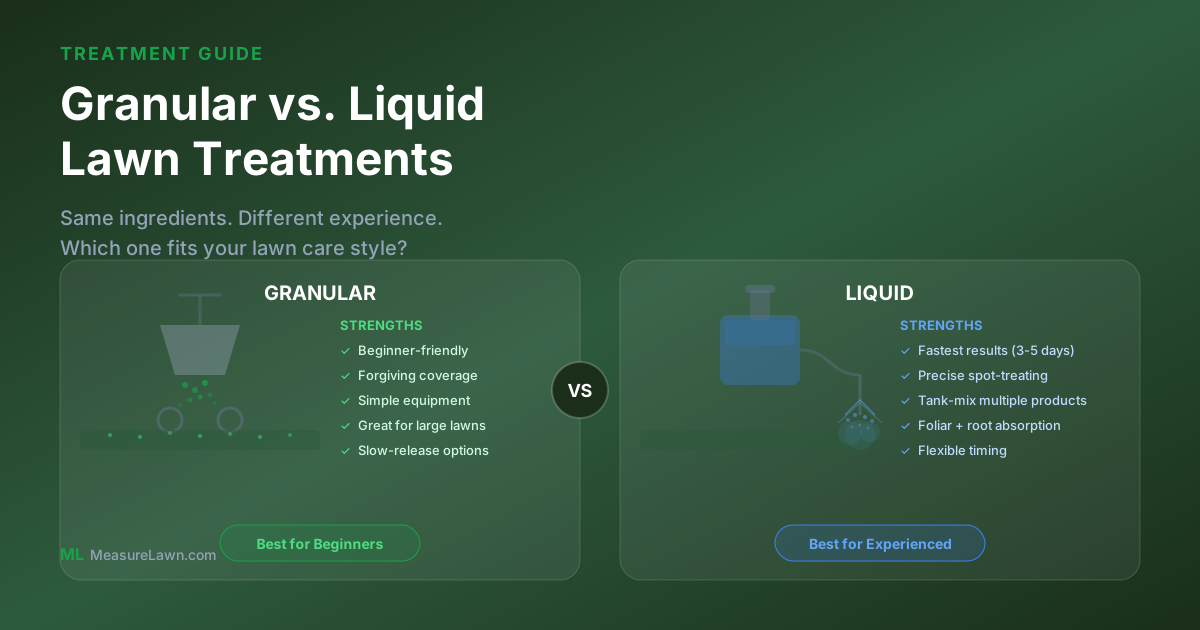
Ease of Use: Granular Wins for Beginners
Granular products are the easier entry point, and it's not close. You fill a spreader, set the dial to the rate on the bag, and walk back and forth across your lawn. The spreader does the distribution. If you overlap slightly, you get a little extra product — usually not enough to cause damage.
Liquid products require more steps: mixing the concentrate with the correct amount of water, calibrating your sprayer's output rate, and walking at a consistent pace while spraying evenly. Uneven spraying creates visible streaks — dark green stripes where you sprayed heavily and pale strips where you missed. With herbicides, uneven application means some weeds die and others don't.
For someone doing their first year of lawn care, granular with a broadcast spreader is the forgiving choice. That's why MeasureLawn defaults to granular when you first create your plan.
Speed of Results: Liquid Wins
Liquid fertilizer shows visible results in 3–5 days. Granular fertilizer takes 2–4 weeks. For herbicides, the gap is similar: liquid post-emergent starts killing weeds within hours, while granular herbicide needs to dissolve and be absorbed over days.
If you want the fastest green-up or the quickest weed kill, liquid delivers. This makes it popular with experienced lawn care enthusiasts who want to see rapid response and fine-tune their applications.
Coverage Consistency: Granular Is More Forgiving
A calibrated broadcast spreader distributes granular product with reasonable uniformity across your lawn. Even an uncalibrated spreader on a "medium" setting gets you in the ballpark. The margin for error is wide — a little more or less product per square foot doesn't usually cause visible problems.
Liquid spraying requires careful, overlapping passes at a consistent walking speed. Walk too fast and you under-apply. Walk too slow and you over-apply. Miss a strip and it shows. Wind can drift your spray onto garden beds, sidewalks, or your neighbor's lawn.
For most homeowners who aren't treating their lawn as a serious hobby, granular's built-in forgiveness prevents a lot of headaches.
Cost: Roughly Equal
Bag for bag and application for application, granular and liquid products cost about the same for the same coverage area. Granular products tend to have lower upfront equipment costs (a $30–$50 broadcast spreader vs. a $20–$40 pump sprayer), but neither is expensive.
The cost difference comes from waste. Under-applying granular means you need another bag; over-applying liquid means you've used product you didn't need. Both waste money, but granular waste is easier to avoid because the spreader settings and bag coverage math are straightforward.
Timing Flexibility: Liquid Has an Edge
Liquid products can be applied in the morning and watered in the same day. Granular products need water to activate — either rainfall within 48 hours or manual irrigation. If you live in an area with unpredictable rainfall, liquid gives you more control over timing because the product activates the moment it hits the lawn.
Granular also shouldn't be applied to wet grass (it sticks to blades instead of falling to the soil), so you need to wait for the lawn to dry. Liquid can be applied to slightly damp grass without issues.
Mixing and Stacking: Liquid Is More Versatile
Experienced lawn care enthusiasts love liquid because you can mix multiple products in one tank. Fertilizer, micronutrients, herbicide, and a surfactant all go in the same sprayer for a single pass across the lawn. With granular, each product requires a separate pass with the spreader.
This "tank mixing" saves time and allows precise customization, but it's an advanced technique. Mixing the wrong products or wrong concentrations can damage your lawn. Beginners should stick to one product at a time regardless of format.
When Should You Use Granular Lawn Treatments?
Choose granular if any of these describe you:
You're new to lawn care. The learning curve is gentler, mistakes are less visible, and the equipment is simpler. A broadcast spreader, a bag of product, and 20 minutes of walking is all it takes.
You want predictable, low-effort applications. Fill the spreader, walk the lawn, water it in. Done. No mixing, no calibrating spray rates, no worrying about drift.
Your lawn is large (over 5,000 square feet). Granular covers large areas faster than hand-spraying. A broadcast spreader flings product in a 6–10 foot arc, which means fewer passes.
You don't want to buy or maintain a sprayer. A spreader is simpler equipment with fewer things to go wrong — no clogged nozzles, no pump maintenance, no mixing and rinsing after every use.
When Should You Use Liquid Lawn Treatments?
Choose liquid if any of these describe you:
You want the fastest possible results. Liquid fertilizer and herbicide show visible effects in days, not weeks. If patience isn't your strength, liquid delivers faster feedback.
You have specific weed problems that need targeted treatment. A pump sprayer lets you spot-treat individual weeds without covering your entire lawn with herbicide. This is more precise and uses less product.
You're comfortable with equipment calibration. If you're willing to spend 10 minutes calibrating your sprayer's output rate, liquid gives you more control over exactly how much product each square foot receives.
You're an experienced DIYer looking for efficiency. Tank mixing multiple products in a single pass saves significant time across a season of treatments.
How Does MeasureLawn Help You Choose Between Granular and Liquid?
When you create your plan on MeasureLawn, you choose your preference — granular or liquid — and the plan recommends specific products in that format. Your lawn size determines the quantity: how many bags of granular or how many bottles of concentrate you need.
You can change your preference anytime and the plan updates with the appropriate product swaps. Some homeowners use granular for most tasks (fertilizer, pre-emergent) but switch to liquid for targeted post-emergent weed control — and that's a perfectly valid approach.
The important thing isn't which format you choose. It's that you apply the right products at the right time in the right amounts for your lawn size. Granular applied correctly beats liquid applied incorrectly, and vice versa.
Which Is Better for Your Lawn: Granular or Liquid?
For most homeowners starting out, granular is the right choice. It's simpler, more forgiving, and produces the same end results with less technique required. As you gain experience and confidence, you might add liquid products to your routine for specific tasks — particularly spot-treating weeds and foliar feeding for fast green-up.
Either way, the math starts with your lawn size. Whether you're buying bags of granular or bottles of concentrate, the quantity you need is calculated from your square footage.
Ready to measure your lawn?
Get a free, AI-customized lawn care plan with exact product quantities for your property.
Measure My Lawn — It's Free →