Your First Year of Lawn Care: A Month-by-Month Beginner's Guide
You just bought a house. Or you've lived in it for years but never really "done" lawn care. Either way, you're staring at your yard wondering where to start. Here's the complete beginner's roadmap — one year, twelve months, from clueless to confident.
Lawn care advice online is overwhelming. A thousand forums, a hundred YouTube channels, and every single one assumes you already know the basics. They tell you to "apply pre-emergent when the forsythia blooms" as if you know what forsythia is.
This guide assumes you know nothing. You have a lawn. You want it to look better. You're willing to put in some work but you don't have unlimited time or money. Here's exactly what to do, month by month, starting from wherever you are right now.
What Three Things Should Every Beginner Figure Out First?
1. What Grass Do You Have?
This determines everything — mowing height, fertilizer timing, product selection, watering needs. Cool-season grasses (Kentucky Bluegrass, Tall Fescue, Perennial Ryegrass, Fine Fescue) grow in the northern half of the country and are most active in spring and fall. Warm-season grasses (Bermuda, Zoysia, St. Augustine, Centipede, Bahia) grow in the South and are most active in summer.
If you don't know your grass type, pull a single blade and compare it to online photo guides, or take a sample to your local garden center or university extension office. Most neighborhoods have 1–2 dominant grass types, so your neighbors might know too.
2. What Region Are You In?
The United States breaks into three lawn care regions: North (cool-season grass territory), South (warm-season), and the Transition Zone (a band through the middle where both types coexist). Your region determines the timing of every seasonal task.
Your state's USDA hardiness zone (easily searchable) narrows it further. Zones 2–5 are firmly northern. Zones 8–11 are firmly southern. Zones 6–7 are the transition zone.
3. How Big Is Your Lawn?
This is the number that determines how much of every product you need. Not your property size — your actual grass area, minus the house, driveway, patio, garden beds, and walkways.
Most people guess, and most guesses are 25–40% off. That error compounds across every product application, every season. Spending 60 seconds measuring your lawn via satellite imagery saves you hundreds of dollars in wasted or insufficient product over the coming years.
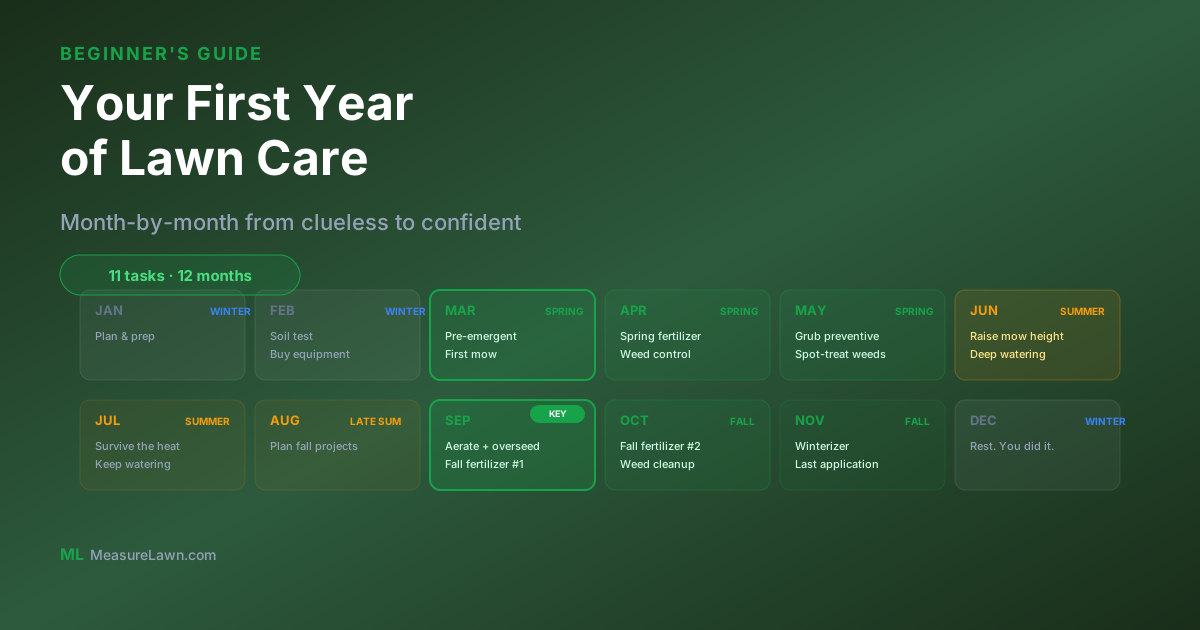
What Does a Full Year of Lawn Care Look Like Month by Month?
If you have warm-season grass, the calendar shifts: your most active months are May–September instead of March–June and September–November. The same principles apply, just on a different timeline.
January–February: Plan and Prepare
Your lawn is dormant. There's nothing to do outside except clean up any fallen branches or debris after storms.
Use this time to get ready. Figure out your grass type, measure your lawn, and look up the recommended mowing height for your grass. If you need equipment, now is when it goes on sale — a push mower, a broadcast spreader, and a garden hose with a sprinkler are the essentials.
Consider getting a soil test. Your local university extension offers mail-in tests for about $30 that tell you your soil pH, nutrient levels, and what amendments (if any) you need. This is the single best $30 you'll spend on lawn care because it eliminates guesswork about what your soil actually needs.
March: Spring Clean-Up and First Mow
As temperatures warm and snow melts, your lawn starts showing signs of life. Rake out matted leaves, dead grass, and winter debris. This lets sunlight and air reach the turf, preventing fungal diseases that thrive under matted organic material.
When the grass starts growing (you'll see it turning green and getting taller), give it its first mow. Set your mower to the correct height for your grass type — for most cool-season grasses, that's 3–3.5 inches. Sharpen your blade first.
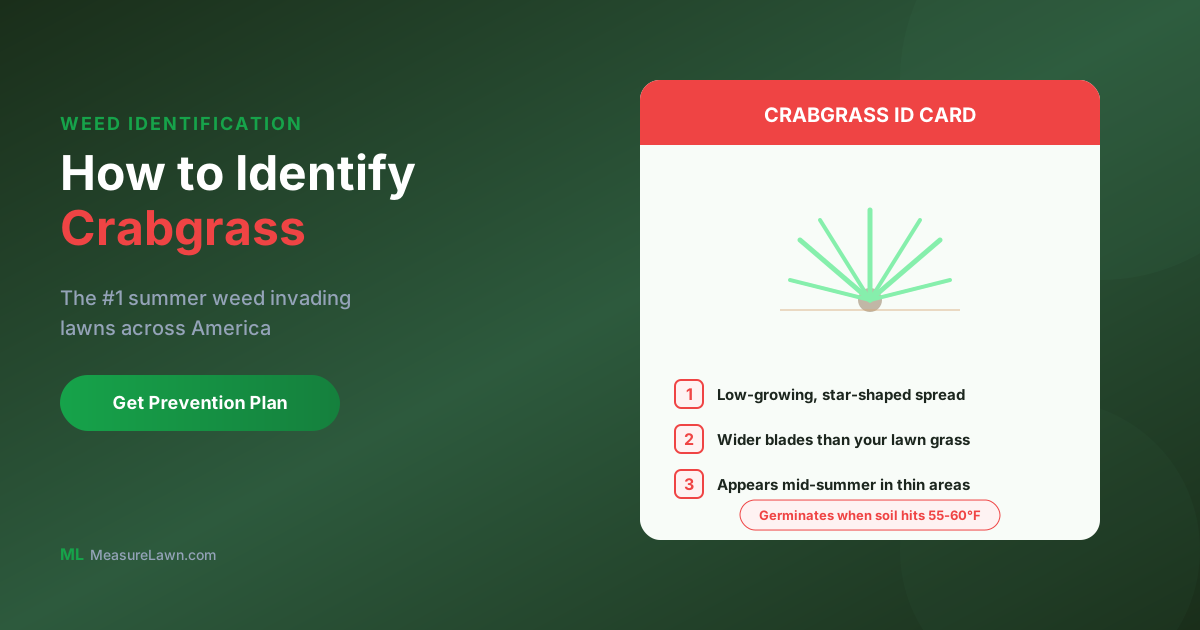
If you're in the transition zone or mid-Atlantic, late March may also be pre-emergent time. Watch soil temperature: when it hits 50–55°F consistently, apply pre-emergent herbicide to prevent crabgrass. In northern states, this usually comes in April.
April: Pre-Emergent and Spring Fertilizer
For most northern lawns, April is the critical month. Soil temperatures are crossing the threshold, and you need to get pre-emergent down before crabgrass germinates.
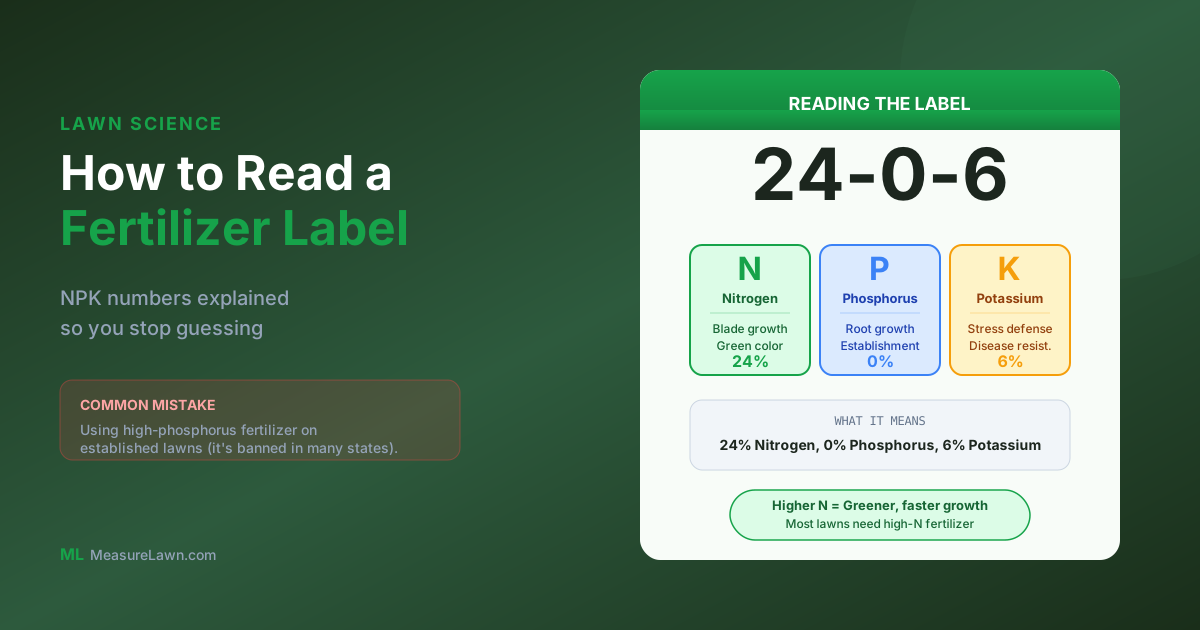
Once grass is actively growing (you've mowed it 2–3 times), apply spring fertilizer. A nitrogen-heavy formula pushes leaf and blade growth during the season when cool-season grasses grow fastest.
Start mowing weekly. Follow the one-third rule: never cut more than one-third of the blade height in a single mow. If your target is 3 inches, mow when the grass hits 4 inches.
Begin your watering routine if rainfall isn't providing 1 inch per week. Water deeply and infrequently — one thorough session per week is better than daily light sprinkles.
May: Maintain and Spot-Treat
Your lawn should be greening up nicely. Mow weekly, water as needed, and watch for weeds that snuck past the pre-emergent barrier.
For any existing weeds (dandelions, clover, broadleaf weeds), spot-treat with a selective post-emergent herbicide. Don't spray the whole lawn — target individual weeds or weed patches. Apply on calm, dry days when temperatures are between 60–80°F.
This is also a good time to identify any persistent problems: areas that aren't greening up, patches that seem unusually thin, or spots where water pools after rain. Make notes — you'll address these in fall.
June: Transition to Summer Mode
As temperatures climb above 80°F, cool-season grasses begin to slow down. Growth rate decreases, stress increases, and your lawn shifts from active growth to survival mode.
Raise your mowing height by 0.5 inches. Taller grass shades the soil, reducing water loss and keeping root temperatures cooler. Continue mowing on growth (not calendar) — you may only need to mow every 8–10 days as growth slows.
Make sure you're hitting that 1 inch of water per week, especially if rainfall decreases. In extreme heat, 1.25 inches may be needed. Water in early morning only.
Don't fertilize heavily in summer heat. If your lawn looks pale, a light application of slow-release fertilizer is acceptable, but don't push aggressive growth when the plant is already stressed.
July–August: Survive the Heat
This is the hardest period for cool-season lawns. The grass naturally slows down or goes semi-dormant. It might brown slightly — that's normal and not a sign of death. It's a survival mechanism.
Your job is simple: keep mowing at the higher setting, keep watering to prevent complete dormancy (1 inch per week minimum), and don't apply heavy fertilizer or herbicide. Stressed grass plus chemicals equals damage.
Late August is when you start thinking about fall — the most productive season for cool-season lawn care.
September: The Most Important Month
September is when great lawns are made. Cool temperatures return, rainfall increases, and your grass enters its second growth surge of the year. Everything you do this month has outsized impact.
Aerate if your soil is compacted (if the ground feels hard when you push a screwdriver in, it's compacted). Rent a core aerator for $60–$100 and make two passes over the lawn.
Overseed immediately after aerating. Spread grass seed matched to your existing type at the overseeding rate (typically 5–8 lbs per 1,000 sq ft for Tall Fescue, 2–3 lbs for Bluegrass). The aeration holes give seed direct soil contact for better germination.
Apply fall fertilizer. A high-potassium formula (like 5-10-20) strengthens roots and prepares the grass for winter. This single application has more impact on next spring's green-up than any other fertilizer timing.
Water newly seeded areas daily for 2 weeks until germination, then transition to deep, weekly watering.
October: Keep the Momentum
Continue mowing as grass grows. Gradually lower mowing height by 0.5 inches over the month — going into winter slightly shorter (2–2.5 inches for most cool-season grasses) prevents matting and snow mold.
If you didn't apply fall fertilizer in September, early October still works. Late October is pushing it — you want the grass to absorb nutrients before growth stops.
Mulch fallen leaves by mowing over them. A thin layer of shredded leaves adds organic matter to the soil. If leaves are thick enough to smother the grass (more than 0.5 inches), either mow more frequently or rake the excess.
Some homeowners apply a second round of pre-emergent in September or October to prevent winter weeds (chickweed, henbit) from germinating. This is especially useful in the transition zone and mid-South.
November: Wind Down
Growth slows dramatically. You may only mow once or twice this month. Continue mulching leaves as they fall.
No fertilizer, no herbicide, no major tasks. The grass is banking energy in its roots for winter survival and spring green-up. Leave it alone.
December: Rest
Your lawn is dormant. Nothing to do except clean up any debris and dream about next spring.
If you followed this guide, your lawn is entering winter with a recent aeration, fresh seed establishment, a fall fertilizer application boosting root reserves, and 8 months of proper mowing under its belt. Come March, you'll see the difference.
What Changes in Your Second Year of Lawn Care?
The first year is the steepest learning curve. By year two, you know your grass type, your lawn size, your region's timing, and the products that work. The routine becomes almost automatic: mow correctly, water deeply, fertilize 2–4 times, apply pre-emergent in spring, and aerate/overseed in fall.
Each year the lawn gets thicker, weeds get fewer, and the effort gets lighter. A thick, healthy lawn is largely self-sustaining — it crowds out weeds, retains moisture efficiently, and recovers from stress faster.
How Can Beginners Get a Custom Lawn Care Plan?
Everything in this guide — the timing, the products, the quantities — depends on your grass type, your region, and your lawn size. MeasureLawn puts it all together into a personalized monthly plan.
Measure your lawn on real satellite imagery, select your grass type (or accept our AI suggestion based on your location), and we build your calendar: what to apply each month, which specific products to use, and how many bags you need. No more Googling "when should I fertilize in Ohio" or guessing at product quantities. One plan, one year, one transformed lawn.
Ready to measure your lawn?
Get a free, AI-customized lawn care plan with exact product quantities for your property.
Measure My Lawn — It's Free →