Dethatching and Aeration: Does Your Lawn Actually Need It? (How to Tell)
Dethatching and aeration are two of the most misunderstood lawn care practices. Some homeowners never think about them and miss opportunities to solve serious problems. Others apply them religiously every year whether their lawn needs them or not, wasting time and money. The reality is more nuanced: some lawns benefit tremendously from dethatching or aeration, while others have no need for either. The key is understanding what thatch actually is, recognizing the signs that your lawn needs these practices, and knowing the best timing for your specific grass type. A poorly executed dethatching or aeration can damage your lawn, while the right treatment at the right time can transform a struggling lawn into a thriving one.
What Is Thatch and When Does It Become a Problem?
Thatch is the layer of dead grass, grass roots, and other organic material that accumulates between the green grass above and the soil below. It sounds like a problem, but a thin layer of thatch is actually beneficial — it provides insulation, buffers against temperature extremes, and improves moisture retention.
The problem emerges when thatch accumulates faster than it decomposes.
Healthy thatch measures less than ½ inch thick. At this level, water and nutrients move freely from soil to grass, grass roots have good contact with soil for nutrient uptake, and the thatch layer provides its benefits without creating problems.
Problematic thatch exceeds ¾ inch thick. At this thickness, thatch becomes a barrier. Water begins to penetrate poorly — it sits in the thatch layer rather than reaching soil, creating conditions for fungal disease. Nutrients are locked in the thatch layer rather than available from soil. Grass roots can't reach soil nutrients and water, so they grow shallow and weak within the thatch layer instead of deeply into the soil. Insects and disease organisms find sanctuary in the thatch layer. The lawn becomes increasingly unhealthy despite your efforts.
Causes of excessive thatch accumulation:
- Acidic soil slows decomposition of organic matter. Acidic soils are often associated with excessive thatch because decomposer organisms work less efficiently.
- Dense, fine-textured grass varieties produce fine roots and leaf blades that decompose slowly. Bentgrass, fine fescues, and creeping bluegrass are notorious for thatch production.
- Over-fertilizing produces lush growth faster than thatch can decompose. More grass growth means more thatch production.
- Poor soil biology from overuse of synthetic chemicals reduces the microbial and fungal populations that decompose thatch.
- Compacted soil inhibits decomposition. Thatch that sits in anaerobic (oxygen-poor) conditions decomposes very slowly.
- Excessive watering in regions where this creates anaerobic soil conditions.
Interestingly, thatch accumulation is often a sign of too much lawn care, not too little. Over-fertilized, over-watered lawns with chemical inputs that suppress soil organisms often develop excessive thatch.
Aeration & dethatching tools
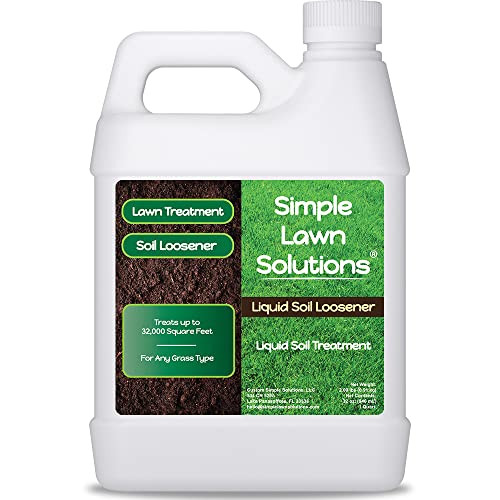
Simple Lawn Solutions Liquid Soil Loosener
Beginner friendly
Yard Butler Lawn Coring Aerator
Beginner friendlyManual step-on coring aerator — best for lawns under 5,000 sq ft, or spot-treating compacted patches on any lawn.

Covington Liquid Lawn Aerator
Beginner friendlyAs an Amazon Associate, Measure Lawn earns from qualifying purchases.
How Do You Measure Thatch Thickness?
Before you decide to dethatch, measure. Most lawn problems blamed on excessive thatch are actually caused by something else entirely.
The simple method: Remove a small section of soil and grass about 3-4 inches on each side and 1-2 inches deep. This soil plug should show three layers: green grass on top, the brown thatch layer in the middle, and dark soil at the bottom.
Measure the thickness of that brown middle layer with a ruler or measurement scale. Less than ½ inch is fine. ½ to ¾ inch is borderline. More than ¾ inch indicates that dethatching might be beneficial.
Do this in multiple locations across your lawn — thatch thickness varies. If some areas have ¾+ inch thatch and others have minimal thatch, you might detatch only the problem areas.
Be honest about what you're seeing. Many homeowners think they see "thatch" when they're actually seeing:
- Matted dead grass from winter that will break up naturally as new growth begins
- Mulched grass clippings from mowing
- Compacted clay soil that looks dark and solid
- Moss that has died and dried out
True thatch is distinctly brown, fibrous, and spongy. It has a specific layer, distinct from both living grass and soil. If you're not sure whether what you're seeing is actually excessive thatch, take photos and consult with a lawn care professional or your local cooperative extension.
What's the Difference Between Dethatching and Aeration?
These are two completely different practices that address two different problems, and it's critical not to confuse them.
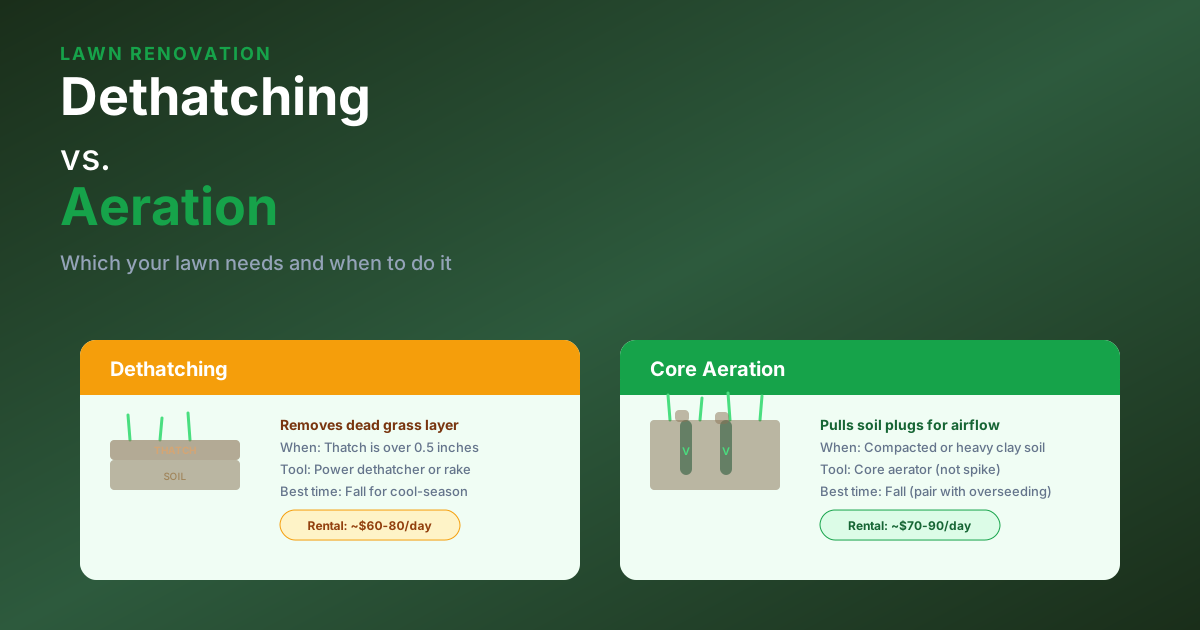
Dethatching removes the thatch layer itself. A dethatcher (also called a power rake or vertical mower) has vertical tines or blades that dig into the thatch layer, pull it to the surface, and eject it. The result is a lawn that looks absolutely destroyed — covered in brown thatch debris — but the living grass is mostly fine. The goal is to remove enough thatch that water, nutrients, and roots can again reach soil effectively.
Dethatching is aggressive and stressful. It's not something you do lightly, and doing it at the wrong time can significantly damage lawn. Most lawns need dethatching infrequently — perhaps every 5-10 years if thatch is a problem, or never if you maintain healthy soil conditions.
Aeration is much less aggressive. A core aerator removes small plugs of soil (typically ½ inch diameter and 2-3 inches deep) from the lawn, creating holes. These holes relieve compaction, improve air exchange, improve water penetration, and create pathways for roots to grow more deeply.
The soil plugs are left on the surface to break down. Aeration is physical — it doesn't remove anything, it just reorganizes the soil and creates space. The grass survives aeration easily and even benefits from it.
Aeration addresses compaction. Dethatching addresses thatch. They're not interchangeable, and you might need one, both, or neither.
The confusion: Many people use "aeration" and "dethatching" interchangeably, or think that aeration removes thatch. It doesn't. Core aeration creates plugs but doesn't remove the thatch layer. If you have thatch problem and get aerated but not dethatched, your thatch problem persists.
When Does Your Lawn Need Core Aeration?
Aeration is most beneficial when your soil is compacted, preventing water, air, and roots from penetrating effectively.
Signs that your lawn needs aeration:
- Water runs off rather than soaking in: If you water your lawn and the water pools and runs off rather than soaking in, compaction is likely the culprit. Healthy soil absorbs water readily.
- High traffic areas show compaction: Areas where children play, dogs run, or foot traffic is heavy become compacted. Aeration in these areas helps recovery.
- Clay soils: Clay naturally compacts more than sandy or loamy soils. If you have clay soil, aeration is often beneficial.
- New construction or home improvement projects: Construction equipment compacts soil dramatically. If you've had major digging, equipment use, or new landscaping, aeration helps soil recover.
- Lawn shows thin, weak growth despite good care: If your lawn should be thriving but looks thin and weak, soil compaction might be the limiting factor.
- The soil is hard to dig: Try pushing a screwdriver into your lawn soil. If it's very difficult to push in, the soil is compacted. If it pushes in easily, compaction isn't a limiting factor.
Aeration is less critical if:
- Your lawn shows thick, healthy growth
- Water soaks in readily when you water
- You have sandy or loamy soil naturally
- Traffic on your lawn is light
- Your lawn has been established in the same place for years without construction disturbance
The honest assessment: Many lawns don't actually need aeration. If your lawn is healthy and water soaks in readily, you may never need it. Aeration is beneficial for specific conditions, not something every lawn needs every year.
Measure My Lawn — It's Free → assesses your lawn's conditions and recommends aeration when it's actually beneficial, rather than suggesting it reflexively.
What's the Best Time of Year to Dethatch and Aerate?
Timing is crucial for both practices because they stress the grass, and stressed grass needs optimal growing conditions to recover.
For cool-season grass (Kentucky bluegrass, perennial ryegrass, tall fescue, fine fescue):
- Optimal timing: Fall (late August through September): Cool temperatures promote recovery, and the grass has time to establish before winter. Fall dethatching allows the grass to recover over months before summer stress arrives.
- Secondary timing: Early spring (March-April): Spring works if fall isn't possible, though recovery happens faster in fall.
- Avoid: Summer (May-August): Dethatching or aerating in summer stresses warm-stressed grass and makes recovery difficult.
For warm-season grass (Bermuda, Zoysia, St. Augustine, Bahia, Buffalograss):
- Optimal timing: Late spring (May-June), just before peak summer growth. Warm-season grass is entering its most vigorous growth period, so it recovers quickly from the stress.
- Secondary timing: Early summer (June-early July): Still acceptable if you miss late spring.
- Avoid: Fall and winter: Warm-season grass is slowing down in fall, and winter dormancy means it has no energy for recovery. Dethatching or aerating in dormancy is a disaster.
The critical principle: Dethatch or aerate when the grass is entering or in its peak growing season. That's when it has maximum energy to recover from the stress.
Never dethatch or aerate during dormancy (winter for cool-season, winter for warm-season) or during peak stress (summer heat for cool-season). These practices damage grass if done at the wrong time.
Should You Aerate Before Overseeding?
This is a common question, and the answer is conditional.
If you're aerating: Yes, aeration creates pathways and loosened soil that are beneficial for seed-to-soil contact. Seeds dropped after aeration fall into the holes and have excellent contact with soil. Aerate first, then overseed 1-2 days later.
If you're dethatching: Maybe. If you're dethatching heavy and the thatch debris is significant, it's better to remove most thatch debris before seeding. However, aggressive raking immediately before overseeding can create too-loose soil conditions that make seed-to-soil contact difficult. A better approach is to dethatch, wait for most debris to be removed or broken down, then overseed.
For minimal thatch issues: You might overseed without aeration or dethatching at all. Rough up the soil surface with a rake to improve seed contact, then seed. Not every overseeding project needs aeration or dethatching.
The key: prepare soil conditions so that seeds make good contact with soil. Aeration is one approach; aggressive raking is another; both work, and the choice depends on your specific situation.
Can You Rent Equipment or Should You Hire Out?
Both options are viable, but the choice depends on your lawn size, the intensity of treatment needed, and your willingness to learn equipment operation.
Renting a dethatcher or aerator:
- Pros: Significantly cheaper than hiring. You control the timing and intensity. Owning the equipment for a day teaches you about the process.
- Cons: You're responsible for operation — improper use can cause problems. Rental equipment is often heavy, difficult to control, and harder on your lawn than professional-grade equipment. You have to haul the equipment and operate it, which is physically demanding.
- Best for: Small lawns (under 5,000 square feet) or one-time projects where the cost of hiring is prohibitive.
Hiring a professional:
- Pros: Professional-grade equipment is better tuned and causes less damage. Professionals know the optimal timing and intensity for your specific situation. You avoid the physical work.
- Cons: Significantly more expensive. You have less control over timing and intensity.
- Best for: Large lawns (over 5,000 square feet), heavy thatch, severely compacted soil, or situations where the work is critical to lawn recovery.
The honest assessment: For most homeowners, hiring a professional for dethatching is the better choice. Rental dethatcher operation is genuinely difficult, and mistakes are costly. Aeration is easier to do yourself with rental equipment, so many people successfully rent aerators.
If you choose to rent, watch instructional videos before your rental. Understand the proper speed, depth, and pattern for your specific equipment. Don't assume you'll figure it out as you go — that's how damage happens.
How Does Aeration Fit Into Your Annual Lawn Care Plan?
Aeration isn't something every lawn needs every year. It's a practice that addresses specific problems at specific times.
For lawns that benefit from aeration (compacted soil, clay soils, high traffic areas):
- Core aerate once annually in the optimal season for your grass type
- Plan it before overseeding, so aeration creates ideal conditions for new seed
- Avoid other stressful practices for 3-4 weeks after aeration — let the grass recover
For lawns that don't need aeration:
- Don't aerate. The practice stresses grass even if it's not addressing a problem.
- Assess annually. If soil conditions change (heavy equipment use, new construction), aeration might become beneficial.
Integration with other practices:
- Aerate before overseeding for improved seed-to-soil contact
- Don't aerate and dethatch in the same season — that's too much stress
- Avoid intensive fertilizing for 2-3 weeks after aeration
- Aerate in optimal growing season for your grass type
A good lawn plan recognizes that aeration is a tool for specific situations, not a routine annual practice for every lawn.
How Does Dethatching Fit Into Your Annual Lawn Care Plan?
Dethatching is even more situation-specific than aeration. Many lawns never need it.
For lawns with excessive thatch (¾+ inch):
- Dethatch once, in the optimal season for your grass type
- Measure thatch depth after dethatching — you should see significant improvement
- If thatch quickly reaccumulates (within 2-3 years), address the underlying cause: soil pH, over-fertilizing, poor soil biology, or overwatering
- Don't dethatch again without addressing why thatch is accumulating
For healthy lawns (thatch under ½ inch):
- Don't dethatch
- Avoid practices that promote thatch: heavy fertilizing, excessive watering, chemical inputs that suppress soil organisms
- Maintain soil health so decomposer organisms keep thatch under control
The critical insight: Dethatching is treating a symptom. The real problem is usually one of the underlying causes — soil pH, excess fertilizer, or poor soil biology. Fixing the underlying problem prevents thatch reaccumulation. Simply dethatching and then repeating the same management practices means the thatch returns.
A good lawn plan identifies thatch problems, addresses them, and then adjusts management to prevent recurrence.
How Does MeasureLawn Help You Know When to Aerate?
Measure My Lawn — It's Free → assesses your lawn's specific situation and builds aeration into your plan only when it's actually beneficial.
Your customized plan considers:
- Your grass type and climate: Optimal timing for your grass type
- Soil conditions: Whether compaction is likely a limiting factor
- Lawn usage: Traffic patterns that might create compaction
- Existing lawn health: Whether aeration is needed to improve water and nutrient penetration
Rather than suggesting aeration reflexively, the plan recommends it when your lawn conditions warrant it. If your lawn doesn't need aeration, it's not recommended. If it does, the plan specifies optimal timing and integration with other lawn care practices.
The platform also tracks soil conditions year to year. If compaction develops due to construction, equipment use, or heavy traffic, the plan adjusts to recommend aeration when it becomes beneficial.
How Do Dethatching and Aeration Fit Into Your Annual Lawn Care Plan?
The most expensive mistakes in lawn care often involve doing things that sound good or that a salesperson recommends, without understanding whether the lawn actually needs them.
Dethatching and aeration are valuable tools, but only when applied to address actual problems. Before you hire someone to dethatch your lawn, measure thatch depth. Before you aerate, determine whether compaction is actually a limiting factor.
A customized plan builds this understanding into your lawn care strategy. It identifies your lawn's actual conditions, recommends practices that address those conditions, and avoids unnecessary work and expense.
Your lawn doesn't need everything on the lawn care menu — it needs the specific practices that solve its specific problems. Measure My Lawn — It's Free → identifies what your lawn actually needs, when it needs it, and how to time it for maximum benefit.
The result: a healthier lawn and more effective use of your time and money.
Ready to measure your lawn?
Get a free, AI-customized lawn care plan with exact product quantities for your property.
Measure My Lawn — It's Free →