How to Identify Common Lawn Weeds (And What to Do About Each One)
A healthy lawn starts with knowing your enemy. Whether you're dealing with aggressive crabgrass, stubborn dandelions, or mysterious sedges popping up in your turf, the key to successful weed control is identification. This guide walks you through the most common lawn weeds and explains what actually works to eliminate them.
Why Can't I Just Kill Everything Without Knowing What It Is?
Understanding which weeds are invading your lawn matters more than you might think. Different weeds respond to different herbicides, germinate at different soil temperatures, and require different timing strategies. Applying a broadleaf killer to a grassy weed, for example, won't work—you'll waste money and still have a weedy lawn.
More importantly, timing is everything. Pre-emergent herbicides (which prevent seeds from germinating) work differently than post-emergent treatments (which kill existing weeds). Some weeds are winter annuals that peak in spring, while others are summer annuals that explode in heat. Knowing which is which helps you get ahead of the problem instead of chasing it all season.
That's why regional identification matters too. Yellow nutsedge is a nightmare in the warm, wet Southeast, while Annual Bluegrass dominates the Pacific Northwest and causes devastating spring dead spot in transition zones. The weeds you're battling depend on your location, soil type, and grass species.
Weed killers for this job
Match the product to your weed — see the treatment notes above.

BioAdvanced All-In-One Weed & Feed (22-0-4)
Beginner friendly
Ortho WeedClear Lawn Weed Killer Concentrate (Northern)
Beginner friendlyAll-around broadleaf + crabgrass killer for northern lawns — dandelion, clover, chickweed, crabgrass

Ortho WeedClear Ready-to-Spray Hose-End (Northern)
Beginner friendlyEasiest broadleaf + crabgrass treatment — just attach to your garden hose and spray
As an Amazon Associate, Measure Lawn earns from qualifying purchases.
What Are the Three Main Types of Lawn Weeds?
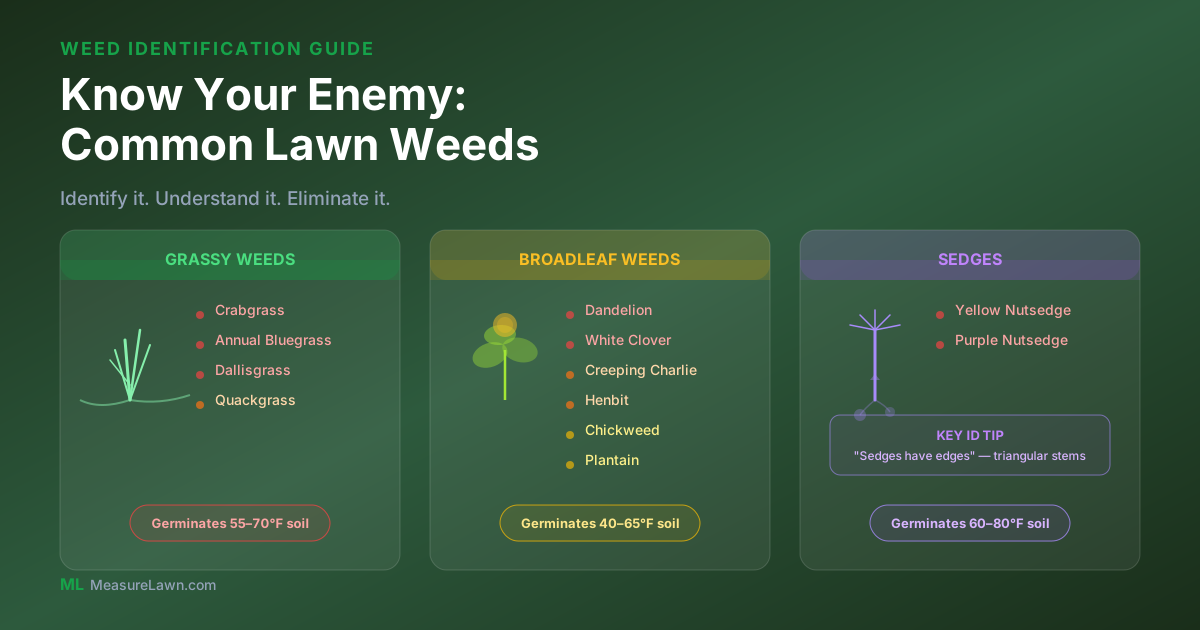
Lawn weeds fall into three broad categories, and it's important to know the difference:
Grassy weeds look like grass but grow faster, thicker, or with a different texture. They need grass-specific herbicides (graminicides) to kill without harming your lawn.
Broadleaf weeds have wide leaves and distinct shapes—dandelions, clover, plantain. Broadleaf herbicides target these without hurting grass.
Sedges are the trickiest. They're technically not grass or broadleaf—they're a completely different plant family. They're usually tough, persistent, and require specialized control methods.
Understanding which category you're dealing with is step one. Now let's break down the most common culprits by type.
What Are the Most Common Grassy Weeds in Lawns?
What Does Crabgrass Look Like and When Should I Treat It?
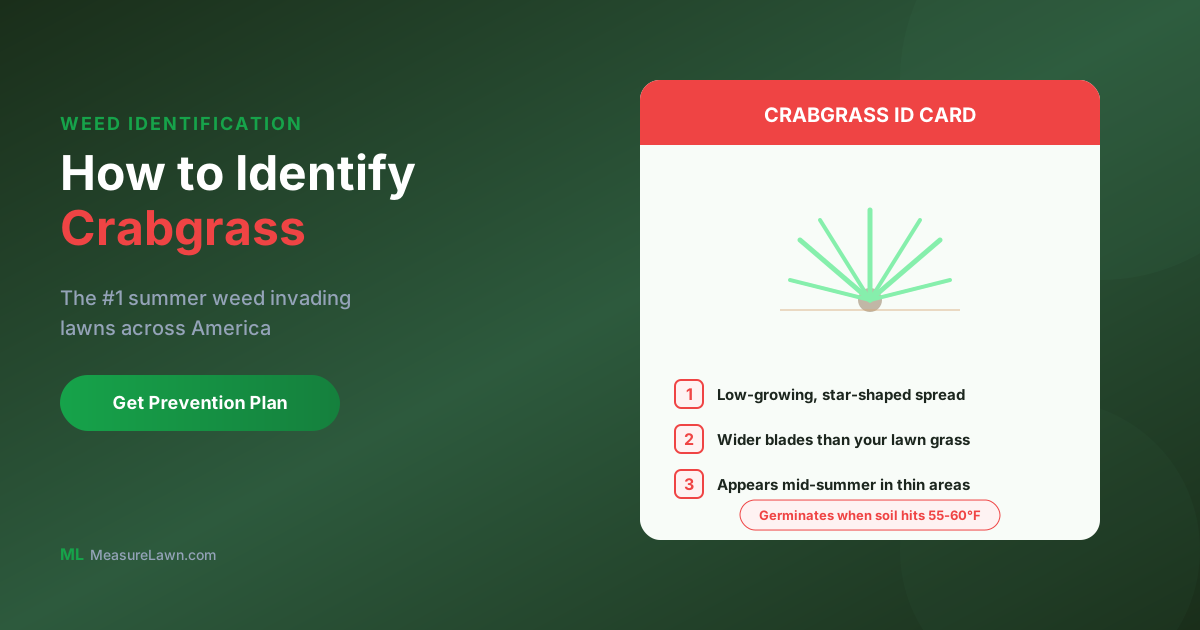
Crabgrass is the #1 lawn weed complaint in the United States, and for good reason. It germinates in spring when soil temperatures hit the right range, grows aggressively, and dies off in winter, leaving bare spots in your turf.
Identification: Crabgrass looks like coarse grass growing in a circular, star-like pattern radiating from a center point. It's much thicker and lighter green than your lawn grass. There are two types: smooth crabgrass and large/hairy crabgrass. Smooth crabgrass germinates earlier (soil temps 55-65°F) while large/hairy germinates later (60-70°F soil temp).
Where it's worst: Every warm-season region, plus transition zones from the upper Midwest to the mid-Atlantic. It's less of an issue in cool-season regions of the far North.
How to control it: Pre-emergent herbicides applied before soil temperatures consistently hit 55°F are your best bet—usually late winter or early spring depending on your region. If you're already seeing it, post-emergent options exist but work best on young crabgrass. Once it's fully established, you're better off killing it, reseeding, and preventing next year's germination.
Measure My Lawn — It's Free → tracks soil temperature for your exact location and sends alerts when it's time to apply pre-emergent before crabgrass germinates.
How Do I Identify Annual Bluegrass (Poa annua) and Why Is It Such a Problem?
Annual Bluegrass might be the most frustrating weed in America, especially if you're in the Pacific Northwest or a transition zone. Here's why: it looks almost exactly like regular bluegrass lawn grass, it germinates in fall when good grass is dormant, and it dies in summer heat—leaving dead patches that look like disease.
Identification: The seedheads are the giveaway. Annual Bluegrass produces distinctive, fine, delicate seedheads that look almost feathery compared to the coarser heads of perennial bluegrass. The leaves are also softer and lighter green. Poa annua germinates at 50-60°F soil temperatures, meaning it's already growing when you're trying to prevent it.
Where it's worst: The entire Pacific West (California, Oregon, Washington) where cool, moist conditions favor it year-round. It's also a serious problem in the transition zone (Ohio, Indiana, Missouri, Kentucky) where it overwinters easily.
How to control it: Annual Bluegrass is incredibly difficult to control with herbicides—it's naturally resistant to many options. Prevention through good cultural practices (proper mowing height, drainage, aeration) is crucial. If you have a serious infestation, targeted dormant-season applications or even renovation might be necessary.
What Is Dallisgrass and How Do I Get Rid of It?
Dallisgrass is a warm-season grassy weed that looks deceptively similar to your lawn grass until it produces aggressive, distinctive seedheads. It's particularly problematic in the Southeast and lower Midwest.
Identification: Dallisgrass grows in clumps of coarse grass that stick up above your lawn. The seedhead is the real identifier—it looks like a hand with four to six spiky fingers radiating from a center point. These seedheads appear in late spring through summer.
Where it's worst: Warm, humid climates from North Carolina to Texas. Rare in cool climates.
How to control it: Pre-emergent herbicides are less effective against dallisgrass than against crabgrass. Post-emergent graminicides work, but timing matters. Seedheads should be prevented from setting seed—mow before they mature. For stubborn clumps, repeated applications or manual removal may be necessary.
What Are the Most Common Broadleaf Weeds in Lawns?
How Do I Identify Dandelions and Why Are They So Hard to Kill?
Dandelions are perhaps the most recognizable lawn weed in America. Every homeowner knows what they look like, and every homeowner wants them gone. Yet they persist—because they're incredibly well-adapted to lawn environments.
Identification: You know this one: bright yellow flowers, distinctive seed-head "clocks," deeply toothed leaves growing in a rosette pattern from the soil. Dandelions are active and germinate at relatively cool soil temperatures (40-50°F), which means they get a head start in spring.
Where it's worst: Everywhere. Dandelions thrive coast to coast, in every climate zone, in almost every condition. They're particularly bad in compacted, poorly maintained lawns.
How to control it: Broadleaf herbicides kill dandelions effectively, especially when applied to young plants in spring or fall. However, dandelions have deep taproots that make mechanical removal difficult without breaking off the root (which allows regrowth). The best strategy combines herbicide application with good lawn density—a thick, healthy lawn crowds out dandelion seeds. Prevention through soil testing and proper fertilization can reduce dandelion pressure significantly.
What Does White Clover Look Like and Should I Even Worry About It?
White clover is unusual—many homeowners don't mind it, and some actually prefer it for the nitrogen it adds to soil and the pollinators it attracts. But if you want a pure turfgrass lawn, here's what to know.
Identification: White clover has round, three-leaflet leaves (the classic shamrock shape) that grow low to the ground. In spring and summer, it produces white ball-shaped flower clusters. It spreads via runners and can form dense patches.
Where it's worst: Cool-season regions from the Northeast to the upper Midwest. It tolerates shade better than most weeds and thrives in compacted soil.
How to control it: Broadleaf herbicides kill white clover, but the real solution is improving soil fertility (especially nitrogen) and increasing lawn density through proper care. Clover indicates poor nitrogen levels—when you fix that, the grass outcompetes the clover. Post-emergent herbicides work well on young plants; established patches may need repeated applications or manual removal followed by overseeding.
How Do I Spot Henbit and Why Does It Show Up in Winter?
Henbit is a winter annual weed that's extremely common in the Southeast and Midwest, but often goes unidentified because it peaks in late winter and early spring—after other weeds seem dormant.
Identification: Henbit has square stems (a characteristic of the mint family) with opposite leaves that are heart-shaped and slightly hairy. The leaves don't have petioles (leaf stems) like many plants—they clasp directly around the stem. Purple flowers appear on the upper stem. It's typically 4-12 inches tall.
Where it's worst: The entire Midwest and upper South (Ohio, Indiana, Illinois, Missouri, Kentucky, North Carolina, South Carolina). Less common in far northern states and deep southern regions.
How to control it: Because henbit is a winter annual, it germinates in fall and is most visible in late winter/early spring before dying naturally in heat. Post-emergent broadleaf herbicides work well, especially in early spring before flowers set seed. The key is treating before warm weather shuts it down—wait too long and it's already dying. Preventing germination with fall pre-emergent applications is the best long-term strategy.
What Is Chickweed and How Is It Different From Other Winter Weeds?
Chickweed comes in two varieties: mouse-ear chickweed (perennial) and common chickweed (winter annual). Both are common in cool, moist conditions and can look deceptively innocent.
Identification: Chickweed has small, opposite leaves (mouse-ear is fuzzier and more rounded; common is smoother and more pointed). Both produce tiny white flowers. They grow low and mat-like, often in shady areas.
Where it's worst: Cool-season zones and shadier areas nationwide. More problematic in wetter years or poorly drained lawns.
How to control it: Both types respond to broadleaf herbicides, though mouse-ear chickweed (being perennial) requires more aggressive or repeated treatment. Cultural control is important—improving drainage, reducing shade through pruning, and increasing air circulation helps prevent conditions chickweed loves.
How Do I Identify Broadleaf Plantain?
Broadleaf plantain is often overlooked because it looks completely different from other common weeds. But once you know what to look for, you'll spot it everywhere.
Identification: Broadleaf plantain has large, oval leaves with distinctive parallel veins running from the base to the tip. Leaves form a tight rosette. The seedhead is a tall, thin spike with small flowers clustered tightly along it. It's much smaller and more delicate than a dandelion seedhead.
Where it's worst: Compacted, high-traffic areas and disturbed soil throughout the United States. It tolerates poor soil better than most plants.
How to control it: Broadleaf herbicides work well on young plants. The challenge is that plantain's flat growth habit and deep root make it competitive in poor soil. Improving soil quality, increasing fertility, and increasing lawn density through proper care work best for long-term control.
What Is Creeping Charlie (Ground Ivy) and Why Is It So Aggressive?
Creeping Charlie, also called Ground Ivy, is a persistent, creeping perennial that's particularly problematic in shady, moist areas. Once established, it can take over large sections of lawn.
Identification: Creeping Charlie has small, round leaves with scalloped edges that look almost like tiny scales. It spreads via runners that root at nodes as they creep along the soil. Purple flowers appear in spring. The foliage has a distinctive musty smell if crushed.
Where it's worst: Shady, moist areas in cool-season regions, especially the Northeast and Pacific Northwest. It thrives in poorly maintained, compacted areas with low fertility.
How to control it: This is a tough one. Broadleaf herbicides work, but only on actively growing tissue. Because it spreads via runners and has deep root systems, a single application rarely works. Repeated applications, cultural practices (improve drainage, reduce shade, increase air flow), and potentially renovation of seriously infested areas are necessary. The key is addressing the conditions that allowed it to thrive—shade, moisture, and poor soil fertility.
What Are Sedges and How Do You Identify Them?
What Is Nutsedge and Why Is It So Different From Other Weeds?
Nutsedge is in a completely different plant family than grass or broadleaf weeds, which is why it's so difficult to control. It's not affected by many common herbicides because it's fundamentally different—and it spreads via underground tubers, making it almost unstoppable once established.
Identification: Nutsedge looks like coarse, grass-like growth, but it's actually a sedge. It grows in distinct clumps that stand up above the lawn. The leaves are thick, waxy, and arranged in a triangular pattern rather than flat like grass. The real identifier is the seedhead—it's a tuft of reddish-brown or golden-brown spikes radiating from a center point.
There are two common types: yellow nutsedge (germinates at 60-70°F soil temps) and purple nutsedge (germinates at 70-80°F soil temps).
Where it's worst: Yellow nutsedge is a serious problem in the warm, humid Southeast and lower Midwest. Purple nutsedge is primarily a problem in the deep South (Louisiana, Texas, Florida). Both are less common in northern cool-season regions.
How to control it: This is the challenge. Standard broadleaf herbicides don't work because nutsedge isn't a broadleaf. Sedge-specific herbicides are available, but prevention and cultural control are crucial. Yellow nutsedge prevention with pre-emergent applications is possible when you know soil temperatures are approaching 60-70°F. However, the real issue is the tubers—if they're already in your soil, repeated applications and consistent management are necessary. Some growers use selective sedge herbicides repeatedly throughout the growing season.
Regional Weed Pressure: What Should You Expect Where You Live?
Your biggest weed challenges depend on your climate and location:
Northeast (New York, Pennsylvania, New England): Expect dandelions, white clover, chickweed (both types), ground ivy in shady areas, and some crabgrass.
Upper Midwest (Ohio, Indiana, Illinois, Michigan, Wisconsin): Crabgrass (moderate to severe), henbit, white clover, dandelions, and some ground ivy.
Mid-South (Kentucky, Tennessee, Missouri, Arkansas): Heavy crabgrass, dallisgrass, henbit, nutsedge (yellow), and dandelions.
Southeast (North Carolina, South Carolina, Georgia, Florida): Yellow nutsedge (severe in wet areas), dallisgrass, crabgrass, purple nutsedge in coastal areas, henbit.
South/Southwest (Texas, Louisiana, Oklahoma, Arizona): Purple nutsedge, dallisgrass, crabgrass (variable by subregion), sandbur in sandy soils.
Pacific Northwest (Washington, Oregon, Northern California): Annual Bluegrass (severe), chickweed, some crabgrass at lower elevations, ground ivy in moist areas.
Upper West (Colorado, Utah, Wyoming): Fewer weeds overall due to aridity, but crabgrass possible in irrigated lawns, some broadleaf weeds.
California: Regional variation—coastal areas deal with Annual Bluegrass; inland areas more crabgrass and summer annuals.
The Timing Game: When Should You Act?
Knowing when to treat is as important as knowing what to treat. Here's the reality:
Spring (March-May): Pre-emergent applications prevent crabgrass and other summer annuals from germinating. This is the most critical treatment window in most regions. If you miss this window, you're playing catch-up all season.
Late Winter/Early Spring (February-March): Henbit peaks and should be treated with post-emergent broadleaf herbicides before it flowers and sets seed.
Summer (June-August): Post-emergent treatments for crabgrass, broadleaf weeds, and nutsedge. Pre-emergent for summer annuals should already be down.
Fall (August-October): This is critical for winter annual prevention. Fall pre-emergent applications prevent henbit, chickweed, and other winter annuals from germinating. This is your second-most-important treatment window.
Winter (November-February): Dormant oil applications or targeted herbicide applications in mild climates. This is when winter annuals are actively growing in warm-season climates.
How Can Technology Help You Identify and Control Weeds?
You don't have to guess about timing, regional pressure, or herbicide recommendations. Measure My Lawn — It's Free → analyzes your specific location, soil conditions, and grass type to show you:
- Exact weed pressure in your area (which weeds are most likely to be a problem)
- Soil temperature alerts so you know when to apply pre-emergent
- Customized treatment plans with exact product recommendations
- Pre-emergent timing based on your region's unique climate patterns
- 14-day weather forecasts so you know when to apply treatments
Rather than guessing or treating everything with everything, let customized data guide your weed control strategy. The right treatment, at the right time, in the right dose—that's how you actually win against weeds.
Ready to measure your lawn?
Get a free, AI-customized lawn care plan with exact product quantities for your property.
Measure My Lawn — It's Free →