Can Your Mowing Service Spread Weeds to Your Lawn? (What Every Homeowner Should Know)
Most homeowners don't think twice about what happens between the moment a mowing crew leaves one yard and arrives at the next. But a professional mower is a weed vector—a moving delivery system for seeds, stolons, and disease pathogens. Whether you hire a commercial service or handle the blades yourself changes how many weeds end up in your lawn through one simple mechanism: equipment contamination. This article explains the real risk, what professional services actually do about it, and whether you should be worried.
How Do Mowing Services Actually Spread Weeds Between Lawns?
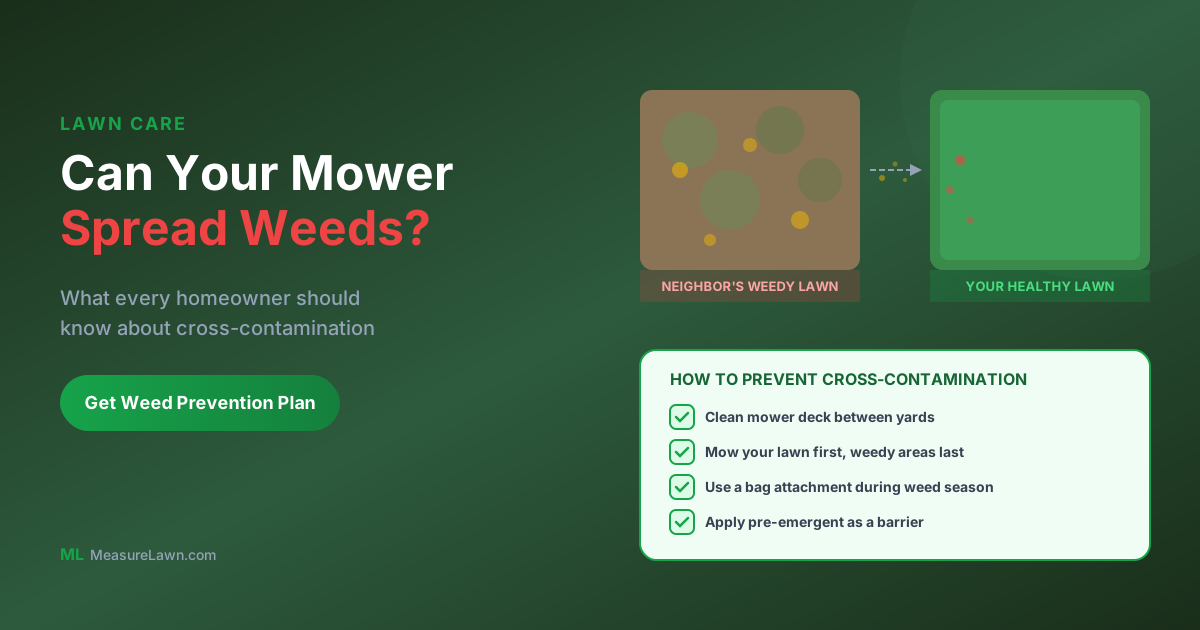
Commercial mowing routes typically cover 15-30 properties in a single day. A crew arrives at a lawn at 9 AM, mows for 20-30 minutes, loads equipment, and drives to the next property 5 minutes away. Then again, and again. That lawn in the morning might have crabgrass seedlings, wild onion, or sedge patches. By noon, traces of those weeds are traveling in the mower deck, caught in blades, embedded in the undercarriage, and stuck to boots.
The mechanics of weed spread:
Weed seeds — Mature weeds that have flowered and set seed scatter reproductive material constantly. When a mower blade cuts through a flowering dandelion or a crabgrass plant in seed stage, seeds get shredded, pulverized, and distributed everywhere. Some seeds make it into the mower deck. When equipment moves to the next yard, those seeds fall onto new turf.
Vegetative fragments — Perennial weeds reproduce through underground runners (rhizomes and stolons). When a mower cuts a patch of white clover, ground ivy, or certain sedge varieties, it can dislodge fragments of these runners. These fragments are capable of regenerating into new plants. A rhizome piece the size of a dime can become a new plant in the right conditions.
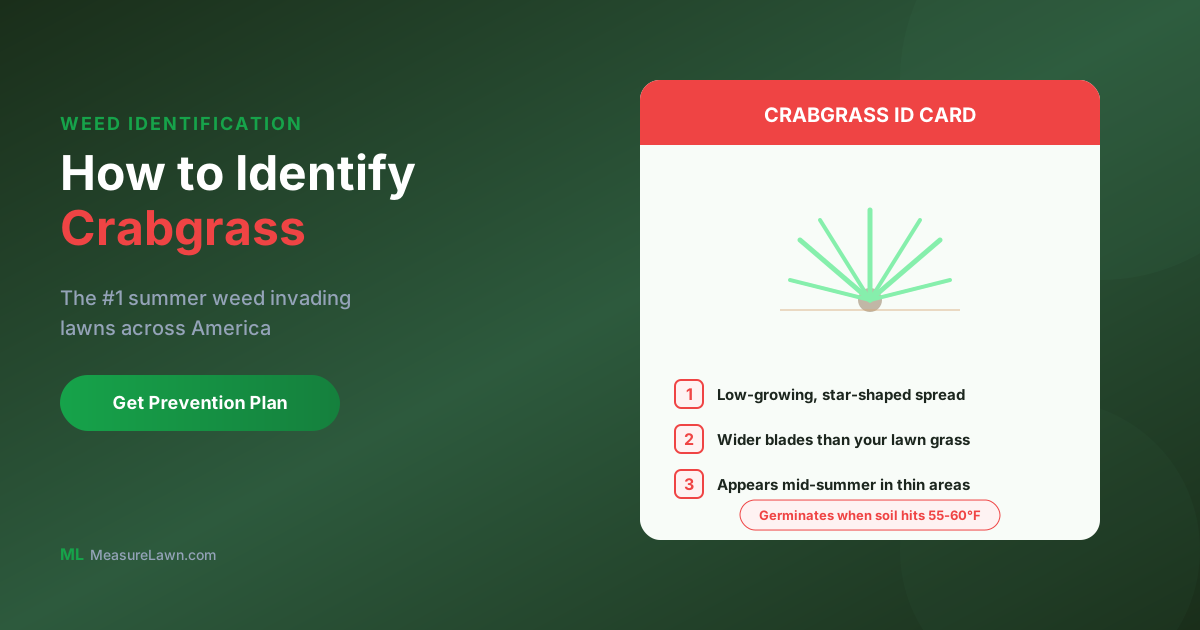
Crabgrass specifically — Crabgrass is a supreme seed producer. A single mature plant can produce 150,000 seeds. When mowed, seeds are launched everywhere—into the deck, onto the wheels, into the grass clippings. Commercial mowers run rapidly between properties, meaning a landscape crew can transfer 50,000+ crabgrass seeds from one yard to the next.
The path of contamination:
- Mower deck — The underside of the mower, where clippings accumulate, is a perfect trap for debris
- Blades — The spinning blades collect plant material in crevices and gaps
- Wheels — Tires pick up seeds and soil particles that stick in tread patterns
- Boots and clothing — Crew members walk between properties, transferring seeds on shoe soles
- Equipment frame — Any part of the mower that contacts grass collects material
None of these transfer mechanisms are obvious. You're not seeing massive amounts of visible weed debris. You're seeing microscopic contamination that, over weeks and months, introduces unwanted plants into your landscape.
Weed killers for this job
Match the product to your weed — see the treatment notes above.

BioAdvanced All-In-One Weed & Feed (22-0-4)
Beginner friendly
Ortho WeedClear Lawn Weed Killer Concentrate (Northern)
Beginner friendlyAll-around broadleaf + crabgrass killer for northern lawns — dandelion, clover, chickweed, crabgrass

Ortho WeedClear Ready-to-Spray Hose-End (Northern)
Beginner friendlyEasiest broadleaf + crabgrass treatment — just attach to your garden hose and spray
As an Amazon Associate, Measure Lawn earns from qualifying purchases.
Which Weeds Spread Most Easily on Mowing Equipment?
Some weeds are far better at hitching rides on mowing equipment than others. The weeds that spread most readily have specific characteristics: they produce abundant seeds, their seeds are small and sticky, or they break apart easily when cut.
Crabgrass — The poster child for mower-spread weeds. Crabgrass seeds are tiny, numerous, and easily dislodged. They stick to everything. A single mowing pass through a crabgrass patch distributes thousands of seeds. Equipment contamination is one reason why homeowners in neighborhoods see crabgrass suddenly appear in their yards even when they've never had it before.
Annual bluegrass (Poa annua) — Similar to crabgrass in its affinity for mower transmission. Produces abundant small seeds that are difficult to rinse off equipment. Common in winter in warm-season grass regions and can establish quickly once introduced.
Wild onion and wild garlic — These perennial weeds produce small bulblets (miniature bulbs) that detach easily and stick to mower equipment. A mower contaminated with wild onion can introduce hundreds of bulblets to a new lawn. Bulblets are even more problematic than seeds because they're essentially pre-formed plants ready to establish.
White clover — While less dependent on seeds, white clover spreads through stolons (runners). When a mower cuts through clover, it can fragment stolons, which then travel on equipment. A single runner fragment can regenerate into a new clover patch.
Ground ivy (creeping charlie) — Another stoloniferous perennial. When mowed, fragments are distributed readily. In areas where ground ivy is established in some yards, mower cross-contamination spreads it through neighborhoods.
Sedges — Particularly problematic because they produce abundant seeds and some species (like yellow nutsedge) produce tubers that can survive on equipment and transplant to new locations.
Chickweed and other winter annuals — These establish in fall and early spring when they're more likely to have seeds mature on them. Equipment contamination spreads them between properties in fall.
The common thread: weeds that are mature (in seed or flowering stage) and produce abundant reproductive material spread most easily. This is why late-summer mowing is particularly risky. Weeds have had all season to grow and set seed. A mowing crew working yards in August and September is essentially spreading seeds from the most prolific weed populations to properties that might not have the problem.
Do Professional Mowing Crews Clean Their Equipment Between Properties?
This is the uncomfortable truth that most homeowners don't know: the vast majority of commercial mowing services do not clean equipment between properties.
From a business perspective, it doesn't make sense. A mowing crew that cleans equipment between every property loses 20-30 minutes per property cycle. With a route of 20 properties, that's 6-10 extra hours per day, meaning they'd complete 40-50% fewer yards, cut their revenue roughly in half, and increase labor costs. The economics don't work.
What professional services actually do:
Nothing at all — Most crews blow clippings off the mower at the end of a property, check the blades are sharp, and move to the next job. No water washing, no deck cleaning, no equipment inspection.
Blow off visible debris — Some better-managed services have crews blow out visible grass clippings from the deck using a leaf blower. This removes loose material but doesn't eliminate contamination. Weed seeds and fragments are often embedded in dried grass residue and won't blow out easily.
Occasional deck washing — A few higher-end services have crews wash decks at the end of the day or between complex properties. But washing between every property simply doesn't happen at any meaningful scale. It's mentioned in some companies' marketing materials, but the operational reality is different.
The exception: Specialized services (like contractors managing athletic fields, golf courses, or very high-end estates) might have equipment cleaning protocols. These represent a tiny fraction of the market.
Why equipment cleaning is harder than it sounds:
- Dried-on grass material requires pressure washing to remove effectively
- Water access at properties is limited (and using customer water adds time and cost)
- Mobile equipment cleaning isn't practical in a daily route
- Most residential mowing companies don't have the infrastructure for deck washing at each stop
Equipment contamination is essentially an unavoidable externality of commercial mowing. Individual homeowners aren't doing anything wrong; it's the system itself that creates risk.
What Should You Ask Your Mowing Service About Weed Prevention?
If you use a professional mowing service, asking the right questions can help minimize weed spread risk. You'll likely get honest answers about their practices, and those answers matter.
Questions to ask:
"Do you clean or wash your equipment between properties?" — Listen to the specific answer. "We blow out clippings" is not cleaning. "We wash decks daily" is good. "Sometimes" is honest but concerning. Ask specifically about protocol, not promises.
"What's your process for equipment maintenance?" — Do they have a scheduled cleaning routine? Do they clean under decks where contamination accumulates? Do they inspect blades daily? Services with structured maintenance protocols care more about cross-contamination.
"Have you ever dealt with crabgrass or weed issues from yard-to-yard spread?" — Many landscape companies have noticed patterns—neighborhoods where crabgrass appeared simultaneously across properties. An honest company will acknowledge this as a known issue.
"What's your route structure?" — If your property is at the beginning of a route, you're at lower risk than if you're at the end. If all their properties are on one street, contamination risk is lower than if they service a wide geographic area mixing different neighborhoods.
"Do you offer separate quotes for weed treatments?" — Services that sell separate weed control work have financial incentive to keep weed spread low. If your contract includes both mowing and weed treatment, the company directly profits from contamination (more weeds = more treatment revenue). Some mowing companies handle only mowing; others control weeds too. Ask who handles each service.
"Can you avoid mowing my weeds until I've treated them?" — If your lawn has visible crabgrass or other problematic weeds, you can ask your service to wait until you've applied herbicide. This prevents your specific weed problem from being spread to other properties.
The reality: most mowing services haven't thought deeply about weed spread. They see themselves as lawn maintenance companies, not weed vectors. An honest conversation might result in better practices even if widespread change isn't possible.
Measure My Lawn — It's Free → to understand your weed problems, then you can make informed decisions about whether professional mowing aligns with your weed control goals.
Is Mowing Your Own Lawn Better for Weed Control?
Here's the direct answer: yes, if you have already eliminated or minimized weed problems. Mowing your own lawn with your own equipment means you're only spreading your own weeds—and once you've controlled them, that risk is gone.
DIY mowing and weed control advantages:
No cross-contamination — Your mower only contacts your property. Weeds from your lawn don't spread to neighbors' properties (though neighbors' weed spread doesn't reach you either, so the benefit is mutual). You're breaking the cycle of year-round weed transmission.
Control over timing — You choose when to mow. If you know your lawn has wild onion or crabgrass in seed stage, you can delay mowing until after herbicide application, preventing those seeds from being spread.
Flexibility with treatments — You decide whether to mow before or after applying pre-emergent, post-emergent, or fertilizer. Professional services follow a fixed schedule regardless of your lawn's condition.
Blade maintenance — You control blade sharpness. Dull blades tear grass, stress plants, and make lawns more susceptible to disease and weeds. Many commercial mowers don't sharpen blades daily; DIY mowers often maintain sharper equipment.
Learning advantage — Mowing your own lawn makes you more observant of weed patterns, early-stage infestations, and seasonal changes. This awareness improves your overall lawn management.
Cost savings — Depending on region and property size, mowing service costs $35-100+ per visit. DIY eliminates this expense.
Financial reality: For most homeowners, DIY mowing pencils out financially within 2-3 years (assuming you don't already own a mower). A decent push mower costs $300-600. A commercial mowing service costs $40-60 per visit, 30+ times per year. After 2 years, you've paid $2,400-3,600 for service and own nothing, whereas DIY costs $400-600 for a mower you'll own for decades.
Why homeowners choose professional services despite weed spread risk:
Time — Mowing takes 45-90 minutes depending on property size. Some homeowners lack time or prefer not to spend weekends on lawn work.
Physical ability — Mowing is demanding. Older homeowners or those with physical limitations might not be able to push-mow or operate a riding mower safely.
Equipment ownership — Not everyone has space for a mower, has interest in equipment maintenance, or can afford the upfront cost.
Landscaping scope — Some services handle mowing plus trimming, edging, and cleanup. DIY mowing means you're still handling ancillary tasks.
Convenience — Schedule predictability matters. A service arrives every week at the same time. DIY requires self-discipline to stay on schedule.
What Other Benefits Come From Mowing Your Own Lawn?
Beyond weed control, DIY mowing offers unexpected benefits that commercial services can't provide.
Grasscycling — When you mow your own lawn, you control whether clippings stay on the lawn (grasscycling) or are removed. Leaving clippings on the lawn returns nitrogen and organic matter, reducing fertilizer needs and improving soil structure. Commercial services typically remove clippings or mulch them with no nutrient return benefit. Most homeowners don't realize how much nutrient value is lost when clippings are removed.
Disease pressure reduction — Commercial mowers, because they move between properties, are disease vectors too. Fungal diseases like anthracnose, brown patch, and leaf spot spread through contaminated equipment. If you mow yourself, you're reducing fungal disease risk significantly.
Soil compaction control — Heavy commercial equipment causes soil compaction over time. A regular push mower or consumer-grade riding mower causes less compaction. This improves water infiltration and root development.
Observation and early detection — Mowing your own lawn makes you intimately familiar with your turf. You notice disease, insect damage, and weed infestations immediately. Commercial services mow without detailed observation. By the time they mention a problem, you might have skipped the window for effective treatment.
Personalized care — You know your lawn's microclimates, drainage patterns, and wet/dry zones. You can adjust mowing height, timing, and technique for specific areas. A commercial service uses a one-size-fits-all approach.
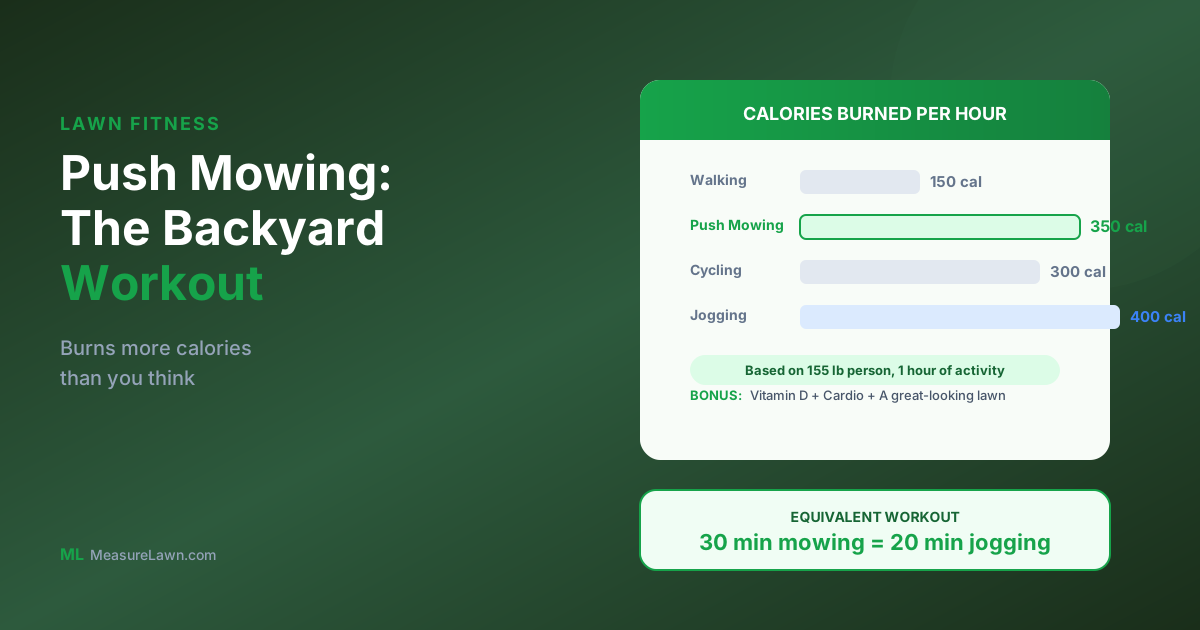
Environmental impact — A push mower uses zero fuel. A walk-behind electric mower produces zero emissions. Even a gas-powered consumer mower produces less total emissions than heavy commercial equipment running between multiple properties daily.
Satisfaction — For many homeowners, lawn care is genuinely enjoyable. The smell of fresh-cut grass, the visible immediate results, and the sense of accomplishment aren't available if you outsource mowing.
How Does DIY Mowing Fit Into a Complete Lawn Care Plan?
The most successful homeowner lawn programs combine DIY mowing with a structured treatment plan. You're not managing everything yourself, but you're controlling the high-frequency, high-impact activity (mowing).
A realistic DIY + treatment model:
Mowing (DIY) — You mow weekly or every 10 days during growing season, controlling blade height for your grass type and season. You're building familiarity with your lawn, controlling equipment contamination, and building grasscycling benefits.
Weed treatment (DIY or professional) — You apply pre-emergent in spring (or hire a service for this one application). You scout for post-emergent weeds and treat them yourself with a simple sprayer, or hire a service to handle problem areas.
Fertilization (DIY or professional) — You apply fertilizer 2-4 times per year based on your grass type and season, or hire for one annual treatment if DIY feels overwhelming.
Soil health (DIY observation) — You notice soil compaction, moisture issues, or drainage problems and take corrective action (aeration, amendment, improved drainage).
Disease and insect monitoring (DIY observation) — You watch for problems and address them early before they become established.
This model gives you the contamination control advantages of DIY mowing while keeping professional support for services that benefit from equipment or expertise (like spring pre-emergent, which requires knowledge of timing and product selection).
MeasureLawn's role in this plan: MeasureLawn builds customized lawn care plans that include specific timing for mowing height, pre-emergent and post-emergent applications, fertilization, and seasonal adjustments. When you mow yourself, you have complete control over following the plan precisely. You're not dependent on a service's schedule or equipment limitations.
Measure My Lawn — It's Free → and you'll get a detailed plan showing exactly when to mow, what height to mow at, when to apply what treatments, and what to watch for seasonally. You maintain the lawn; the plan guides every decision.
What's the Bottom Line on Mowing Services and Weed Spread?
Professional mowing services provide genuine value. They save time, handle complex landscaping tasks, and deliver reliable results. But they do have a real, documented downside: they spread weeds between properties as an unavoidable consequence of their operational model.
If you already have your weed problems controlled (crabgrass under control, broadleaf weeds managed, no sedge infestations), using a professional service probably won't create new weed problems. The constant influx of seeds and fragments is a risk factor, but the math depends on your neighborhood's overall weed burden.
If you have active weed issues and want to maximize control, DIY mowing is your advantage. You're breaking the contamination cycle. You're controlling timing relative to treatments. You're observing your lawn closely enough to catch problems early.
Most homeowners can find a middle path. Mow yourself or use a service, but be intentional about weed treatment. Apply pre-emergent before spring germination. Apply post-emergent to visible weeds in their early growth stages. Let your equipment choices and weed management strategy align.
Measure My Lawn — It's Free → gets your exact lawn size, grass type, and soil conditions, then builds a plan that accounts for whether you're mowing yourself or using a service. Some treatments time better with DIY mowing. Some are more efficient with professional service handling. The plan adapts to your chosen approach.
Ready to measure your lawn?
Get a free, AI-customized lawn care plan with exact product quantities for your property.
Measure My Lawn — It's Free →